Missouri Gold Buyers & Jewelry: A Beginner's Selling Guide
Learn how to navigate Missouri gold buyers & jewelry markets. Discover testing methods, MO pawn laws, melt value math, and red flags to avoid.


When navigating the world of Missouri gold buyers & jewelry markets, beginners often feel overwhelmed by the jargon, the varying offers, and the fear of getting lowballed. Whether you inherited a box of vintage 14k gold bangles from a relative in Kansas City, found some broken 10k chains at an estate sale in Springfield, or want to liquidate assets in St. Louis, selling scrap gold requires a strategic approach. The Show-Me State has a diverse network of precious metal buyers, ranging from high-end estate jewelers in the Clayton area to tourist-heavy pawn shops in Branson. This comprehensive guide breaks down the exact mechanics of the local market, the legal frameworks protecting you, and the mathematical formulas you need to know before walking into a buyer's shop.
The Missouri Gold Buying Landscape: Who Actually Buys Your Jewelry?
Not all buyers operate with the same business model or profit margin requirements. In Missouri, you will generally encounter three distinct types of gold buyers. Understanding the difference is the first step to maximizing your payout and avoiding predatory practices.
| Buyer Type | Typical Payout (% of Melt) | Best For | Primary Testing Tech |
|---|---|---|---|
| Pawn Shops | 50% - 70% | Quick cash, low-karat scrap, immediate walk-out transactions. | Acid Touchstone, Electronic Testers |
| Coin & Bullion Dealers | 75% - 85% | High-karat jewelry (18k+), gold coins, larger estate lots. | XRF Analyzers, Specific Gravity |
| Specialized Refiners | 85% - 95% | Dental gold, massive quantities of scrap, industrial contacts. | Assay Melting, XRF Spectrometry |
For the average consumer selling a few rings or chains, a reputable local coin or bullion dealer is usually the best option. Pawn shops have high overhead and need to resell items on their showroom floors or hold them for collateral loans, meaning their scrap gold margins must be wider to sustain the business. Dedicated refiners, while offering the highest percentages, often require minimum weights (e.g., 20+ Troy ounces) and operate on mail-in or scheduled appointment models.
Missouri Legal Requirements: Holding Periods and Pawn Laws
Selling gold in Missouri isn't just a simple handshake transaction; it is heavily regulated to prevent the fencing of stolen goods. Under Missouri Revised Statutes Chapter 367, pawnbrokers and secondhand dealers must adhere to strict reporting and holding laws.
What to Expect at the Counter
- Identification: You must present a valid, government-issued photo ID (driver's license or passport). The buyer will record your ID number and physical description.
- Database Reporting: Licensed Missouri buyers are required to log transactions into law enforcement databases like LeadOnline. This allows police to cross-reference serial numbers and item descriptions against regional stolen property reports.
- Holding Periods: State law generally mandates a holding period (often 15 days for pawnbrokers) before the buyer can legally melt or resell the item. Note that some municipalities, such as St. Louis City or Kansas City, may have local ordinances extending this hold up to 30 days for certain secondhand transactions.
Pro Tip: Because of these holding periods, legitimate buyers will never pressure you to "melt it down right now." If a buyer offers to immediately throw your jewelry into a crucible before the paperwork is signed, walk away.
How Missouri Buyers Test Your Gold (And How to Pre-Test)
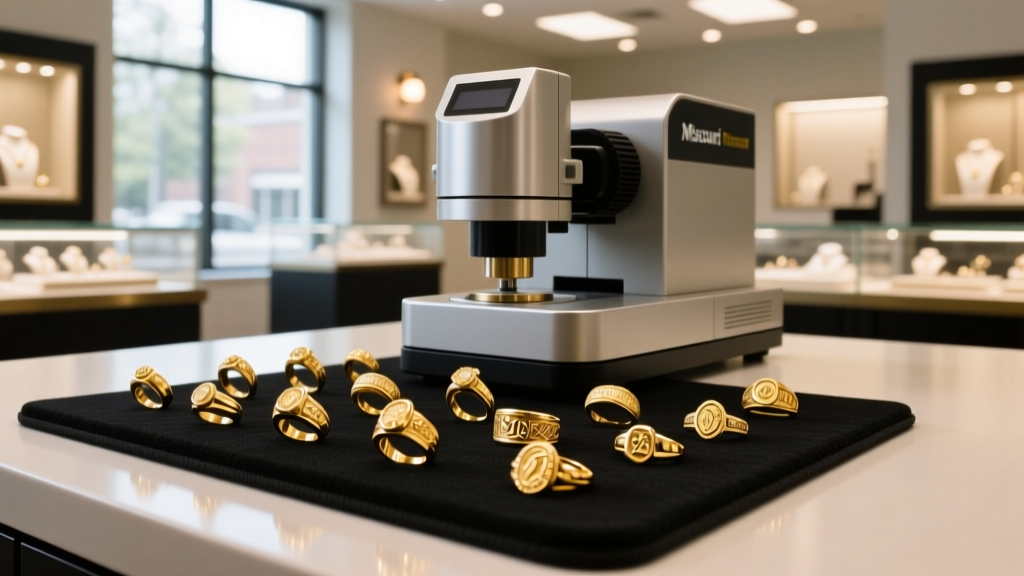
Before making an offer, buyers must verify both the authenticity and the karat purity of your jewelry. While you can buy a home testing kit, understanding the professional methods used by Missouri gold buyers & jewelry experts will help you follow their process and catch any discrepancies.
1. The Acid Touchstone Test
This is the oldest and most common method. The buyer rubs your jewelry on a black basalt stone to leave a metallic streak. They then apply a drop of nitric acid (or a mix of nitric and hydrochloric acid for higher karats) to the streak. If the streak dissolves, the gold is below the karat rating of the acid. If it remains bright and unchanged, the gold meets or exceeds that purity. It is highly accurate for solid gold but requires filing into the piece to test for gold-plated items with base metal cores.
2. X-Ray Fluorescence (XRF) Spectrometry
High-end coin shops and specialized buyers use XRF machines, which shoot X-rays into the metal and measure the fluorescent light bouncing back to determine exact elemental composition. According to the Federal Trade Commission Jewelry Guides, accurate representation of metal purity is legally required, and XRF provides a non-destructive, highly precise readout. However, XRF only reads the surface layer (about 10-20 microns deep). If a piece is heavily gold-plated over tungsten or lead, an XRF machine might be fooled unless the buyer also performs a specific gravity test or uses a file to expose the core.
The Melt Value Formula: Do the Math Before You Negotiate
The biggest mistake beginners make is walking into a shop without knowing the baseline "melt value" of their items. Melt value is the exact worth of the pure gold content based on the current spot market, ignoring any craftsmanship, brand names, or gemstones. You can track live spot prices on authoritative sites like Kitco.
Step-by-Step Melt Calculation
- Find the Spot Price: Let's assume the current spot price of gold is $2,350 per Troy ounce.
- Convert to Grams: One Troy ounce equals exactly 31.103 grams. Divide $2,350 by 31.103 to get the price per gram of pure 24k gold ($75.55/gram).
- Apply the Karat Multiplier: Jewelry is rarely pure. Multiply the pure gram price by your jewelry's purity percentage:
- 10k: 41.7% pure (Multiplier: 0.417)
- 14k: 58.3% pure (Multiplier: 0.583)
- 18k: 75.0% pure (Multiplier: 0.750)
- 22k: 91.6% pure (Multiplier: 0.916)
Example: You have a 14k gold chain that weighs 15 grams.
$75.55 (Pure 24k Gram Price) × 0.583 (14k Purity) = $44.04 per gram of 14k melt value.
15 grams × $44.04 = $660.60 Total Melt Value.
If a buyer offers you $450 for that chain, they are paying you roughly 68% of the melt value, keeping 32% for their margin and refining costs. A fair offer from a reputable coin dealer should be between 80% and 90% of the calculated melt value.

Red Flags: Common Tactics Used by Unscrupulous Buyers
While the majority of Missouri gold buyers are honest business owners, the cash-for-gold industry does attract bad actors. Watch out for these specific red flags:
- The Pennyweight Switcheroo: The precious metals industry uses "pennyweights" (dwt) for pricing, where 1 Troy ounce = 20 pennyweights (and 1 dwt = 1.555 grams). Shady buyers will weigh your item in pennyweights but quote you a "per gram" price, drastically confusing the math and shortchanging you. Always demand the weight be displayed in grams.
- Scale Tampering: Bring a known weight (like a brand-new, unopened US Quarter, which weighs exactly 5.67 grams) and ask to test their scale before they weigh your gold. If the scale reads 5.2 grams, the scale is rigged.
- "Gemstone Deduction" Scams: Buyers will only pay for the gold weight. However, some unethical buyers will weigh the item with the stones included, quote you a low per-gram price, and then claim they need to "deduct weight for the stones" after the fact, effectively double-dipping on the margin. Always insist the stones are removed and weighed separately before the gold is weighed.
- Bait-and-Switch Advertising: Beware of billboards or radio ads promising "$100 per gram for 14k gold" when the actual spot market math dictates a much lower number. These are usually lead-generation scams that result in high-pressure mail-in kits where you receive a fraction of the promised amount.
Your Pre-Sale Action Checklist
To ensure a smooth and profitable transaction when dealing with Missouri gold buyers & jewelry markets, complete this checklist before leaving your house:
- Sort by Karat: Separate your 10k, 14k, and 18k items into different piles. Look for hallmarks (e.g., "14K", "585", "750", "10K").
- Remove Non-Gold Components: Take out any easily removable gemstones, steel clasps, or leather cords.
- Weigh at Home: Use a digital kitchen or jewelry scale to weigh each pile in grams. Write these numbers down.
- Calculate Melt: Use the formula above with today's live spot price to determine your baseline.
- Call Three Buyers: Call a local pawn shop, a dedicated coin dealer, and a jewelry buyer. Ask: "What percentage of the spot melt price are you paying for 14k scrap today?" Choose the highest percentage.
By treating your scrap gold like a financial asset rather than old clutter, you strip away the emotion and confusion of the selling process. Armed with a firm grasp of Missouri's legal landscape, testing methodologies, and melt value mathematics, you can confidently negotiate and secure the maximum return on your precious metals.


