Is PVD Gold Jewelry Worth It? A Budget & Value Guide
Discover if PVD gold jewelry is worth your budget. We break down cost-per-wear, durability, and how it compares to vermeil and gold-filled pieces.

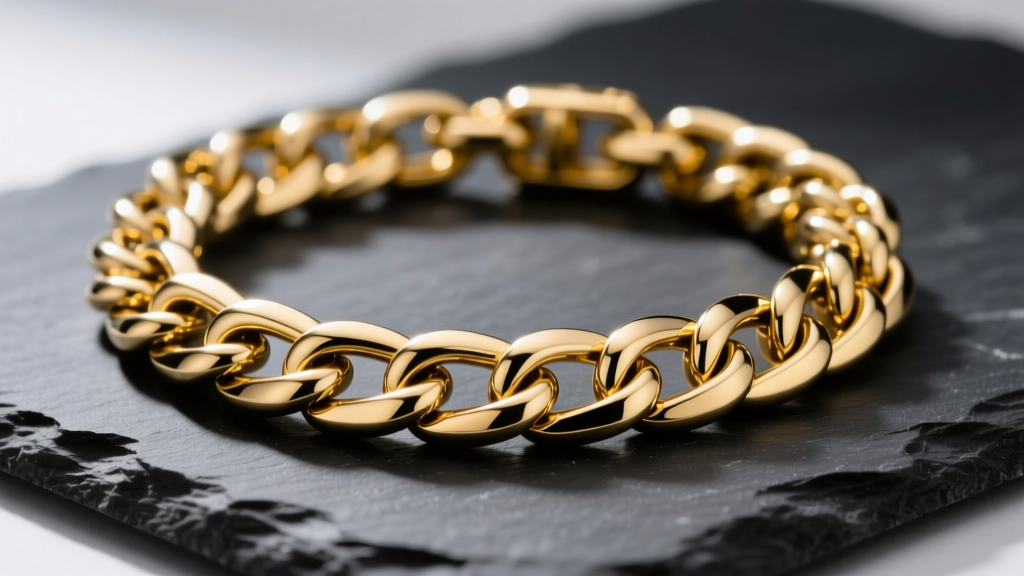
The Rise of PVD: A Paradigm Shift in Accessible Gold
For decades, budget-conscious jewelry shoppers faced a frustrating trilemma: buy cheap gold-plated brass that turns your skin green, stretch your budget for gold vermeil that eventually wears through, or save for months to afford solid 14k gold. Enter PVD gold jewelry. Physical Vapor Deposition (PVD) has disrupted the accessible luxury market, promising the look of solid gold with a durability profile that laughs at sweat, water, and daily friction. But from a strict budget and value assessment perspective, is the premium you pay for PVD over traditional electroplating actually justified?
As a jewelry style analyst, I have evaluated hundreds of metallurgical profiles and consumer wear-tests. In this guide, we will dismantle the marketing jargon, look at the raw cost-per-wear data, and determine exactly where PVD gold jewelry fits into a smart, value-driven wardrobe.
Decoding the Metallurgy: What Makes PVD Different?
To assess value, you must first understand the manufacturing process. Traditional gold plating relies on electroplating—a chemical bath where an electrical current bonds a microscopic layer of gold to a base metal. It is inherently soft and prone to delamination.
PVD, conversely, is a vacuum-coating process. According to AZoM Materials Science, the jewelry is placed in a vacuum chamber where real gold (often 14k or 18k) is vaporized at the atomic level. These gold ions are propelled into the base metal—almost always 316L surgical stainless steel or Grade 5 titanium—creating a molecular bond rather than a superficial layer.
The Secret Weapon: The TiN Undercoat
High-quality PVD gold jewelry rarely relies on gold alone. The best manufacturers first apply a sub-layer of Titanium Nitride (TiN). TiN is incredibly hard and provides a sticky, stable surface for the gold ions to grip. This dual-layer approach is what gives premium PVD pieces their legendary scratch resistance, a feature entirely absent in standard electroplated or even gold-filled alternatives.
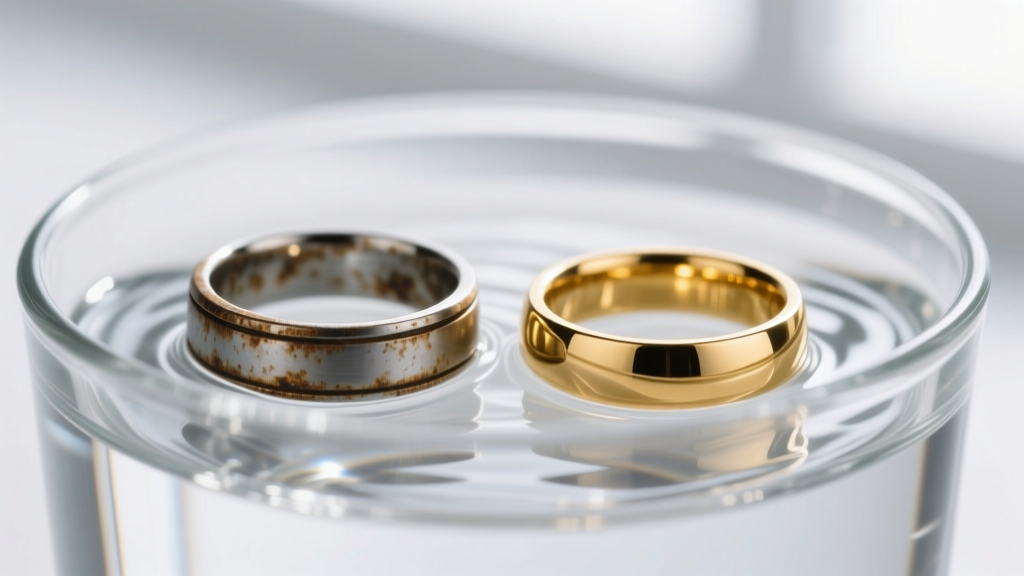
Cost-Per-Wear Analysis: PVD vs. The Alternatives
When evaluating budget jewelry, the sticker price is a vanity metric. The true measure of value is cost-per-wear (CPW). A $30 gold-plated chain that tarnishes in two months costs you $15 per month of wear. A $90 PVD chain that lasts five years costs you $1.50 per month. Below is a data-driven breakdown of how PVD stacks up against other common gold alternatives in the sub-$200 market.
| Coating Type | Base Metal | Avg. Thickness | Avg. Price Range | Lifespan (Daily Wear) | Estimated CPW (Monthly) |
|---|---|---|---|---|---|
| Flash Gold Plated | Brass / Copper | < 0.1 microns | $15 - $35 | 1 - 3 Months | $11.60 |
| Gold Vermeil | Sterling Silver | 2.5 microns | $60 - $150 | 6 - 18 Months | $8.30 |
| Gold Filled | Jeweler's Brass | ~5% of total weight | $40 - $120 | 1 - 3 Years | $3.30 |
| PVD Gold Coated | 316L Steel / Titanium | 0.2 - 0.5 microns | $50 - $140 | 3 - 10+ Years | $1.15 |
While PVD gold jewelry often commands a higher initial price point than gold-filled or vermeil, the molecular bond and the hardness of the 316L stainless steel base result in a drastically lower long-term cost. For everyday staples like hoop earrings, signet rings, and Cuban chains, PVD offers the highest return on investment in the accessible market.
Real-World Durability and Failure Modes
Despite the glowing data, PVD is not indestructible. To make an informed budget decision, you need to understand how and why PVD gold jewelry eventually fails. The Gemological Institute of America (GIA) notes that pure gold is inherently soft (25 on the Vickers Hardness scale). However, the PVD process, combined with TiN undercoats, can push the surface hardness of the jewelry well over 2000 HV.
Where PVD Excels
- Water and Sweat Resistance: Because the base is 316L surgical steel (which contains molybdenum to prevent chloride corrosion), you can wear PVD jewelry in the ocean, the gym, or the shower without fear of the base metal rusting or turning your skin green.
- Friction Wear: The smooth, dense surface of PVD resists the micro-abrasions caused by clothing friction, which usually rubs traditional plating off the back of pendants and necklace clasps.
The Breaking Point: Edge and Impact Wear
PVD coatings are incredibly hard, but hardness often correlates with brittleness. If you drop a PVD-coated signet ring onto a tile floor, the gold layer will not scratch, but it might chip or micro-fracture along the sharp edges. Furthermore, rings and bracelets that endure constant high-impact strikes against hard surfaces (like typing on a metal laptop chassis or lifting cast-iron weights) will eventually experience edge-wear, revealing the silver-grey steel beneath. For high-impact items, a PVD-coated titanium piece is preferable to steel, as titanium absorbs shock slightly better.
"Budget shoppers should allocate their PVD spending toward low-impact, high-visibility pieces like chains, hoop earrings, and pendants, where the coating faces almost zero structural friction. Save solid gold or platinum for high-impact items like wedding bands and daily-wear signet rings."
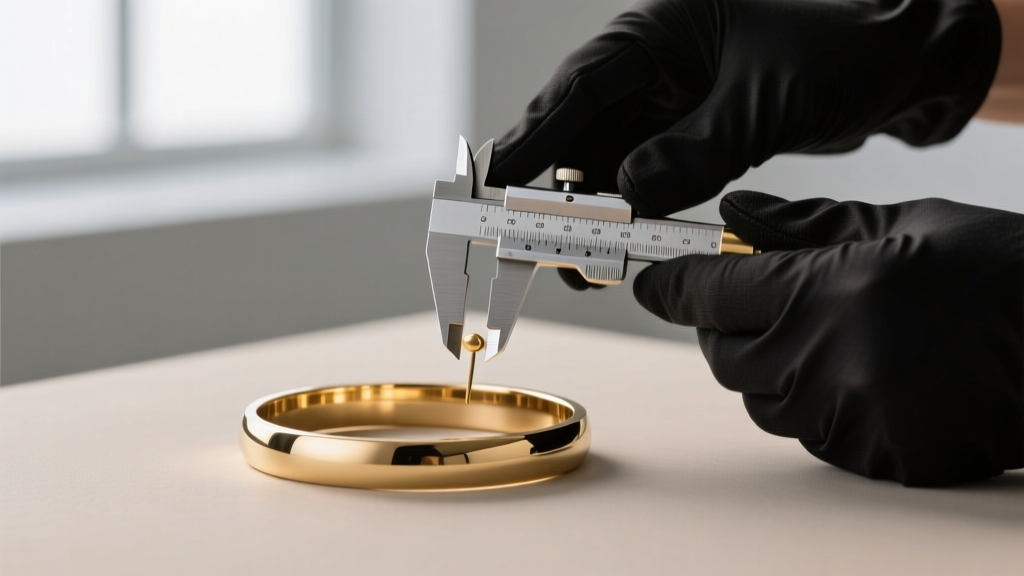
Budgeting for PVD: What Should You Actually Pay?
The market is currently flooded with dropshippers slapping the "PVD" label on cheap, thinly coated alloy jewelry. To ensure you are getting actual value, you must understand the pricing tiers of legitimate PVD gold jewelry.
Tier 1: The Danger Zone (Under $35)
At this price point, manufacturers are cutting corners. They likely skip the crucial Titanium Nitride undercoat, vaporizing a microscopic layer of 10k gold directly onto poorly graded 304 stainless steel. While it may look fine on day one, the lack of an adhesion layer means the gold will flake off within months. Avoid this tier entirely.
Tier 2: The Value Sweet Spot ($45 - $95)
This is where direct-to-consumer (DTC) brands operate. For $45 to $95, you can expect a solid 316L stainless steel base, a proper TiN undercoat, and a 0.3 to 0.5-micron top layer of 18k gold. Brands in this tier offer lifetime warranties against tarnishing, which is a reliable indicator that they trust their vacuum-chamber calibration. This is the optimal tier for budget-conscious buyers seeking maximum longevity.
Tier 3: The Designer Markup ($120 - $250+)
Once you cross the $100 threshold, you are no longer paying for metallurgy; you are paying for brand cachet, packaging, and intricate CNC-machined designs. While the quality is excellent, the value proposition drops significantly compared to Tier 2. Only enter this tier if the specific aesthetic design is unavailable elsewhere.
How to Verify Authentic PVD and Avoid Scams
Because PVD requires expensive vacuum chamber equipment, fraudulent sellers often pass off high-quality electroplating as PVD. Here is how you can protect your budget:
- Check the Base Metal: Authentic PVD is almost exclusively applied to stainless steel or titanium due to the high temperatures and electrical conductivity requirements of the vacuum chamber. If a seller claims a piece is "PVD coated brass" or "PVD silver," they are likely lying. Silver and brass outgas in vacuum chambers, ruining the PVD process.
- The Magnet Test: 316L stainless steel is largely non-magnetic or very weakly magnetic. If your "PVD" chain sticks firmly to a neodymium magnet, it is likely a cheap, magnetic ferrous alloy that will eventually rust from the inside out, pushing the gold layer off.
- Ask for the Micron Thickness: Reputable brands will gladly tell you their coating thickness. If customer service replies with "standard industry thickness" or cannot answer, walk away.
Final Verdict: Maximizing Your Jewelry ROI
When subjected to a rigorous budget and value assessment, PVD gold jewelry emerges as the undisputed champion of the accessible luxury market. By leveraging advanced vacuum deposition technology, it bridges the gap between the fleeting beauty of traditional plating and the prohibitive cost of solid gold.
For the smart consumer, the strategy is clear: build your everyday, waterproof, sweat-proof foundation with Tier 2 PVD stainless steel chains, hoops, and bracelets. Reserve your capital for solid 14k or 18k gold only for heirloom pieces, high-impact rings, and items you intend to pass down to the next generation. By understanding the metallurgy and respecting the failure modes of PVD, you can curate a stunning, resilient jewelry collection without ever compromising your financial bottom line.


