Egyptian Gold Jewelry: Ancient Motifs Shaping 2026 Trends
Discover how Egyptian gold jewelry and ancient motifs are shaping 2026 trends. Explore karats, styling tips, and pricing for scarab and lotus designs.

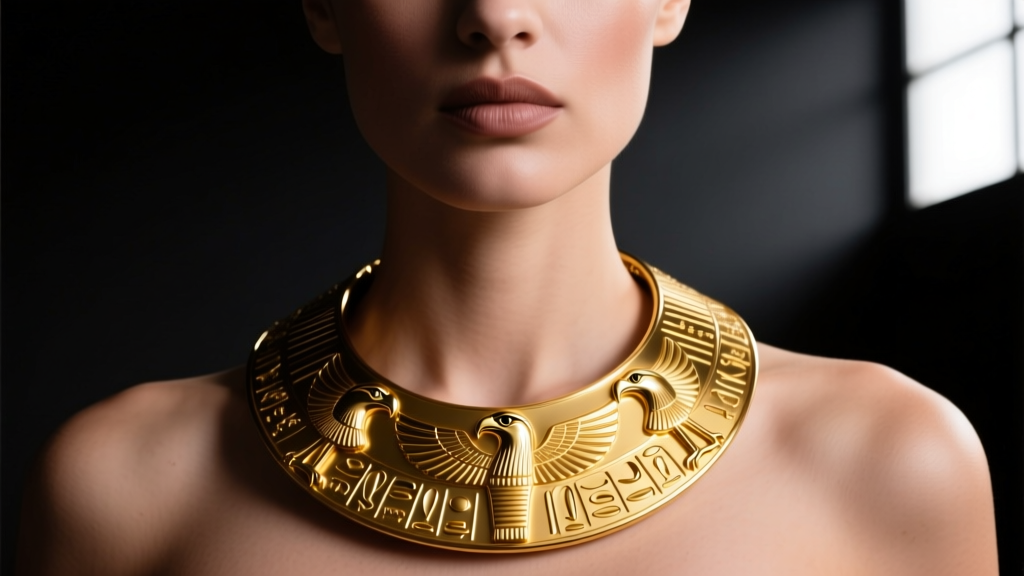
The Enduring Allure of Egyptian Gold Jewelry: Ancient Roots to Modern Runways
The fascination with Egyptian gold jewelry is far from a fleeting seasonal trend. As we navigate the style landscape of 2026, the maximalist revival and the growing consumer appetite for historical narrative in fine jewelry have pushed ancient Egyptian motifs back to the forefront of luxury design. When studying Egyptian gold jewelry, ancient artifacts provide the ultimate blueprint for modern artisans, offering a masterclass in symbolism, metallurgy, and bold proportions. Unlike the delicate, minimalist chains that dominated the previous decade, today's collectors are gravitating toward heavy, talismanic pieces that carry the weight of history. From the runways of Paris to the bespoke ateliers of Cairo and London, the visual language of the pharaohs is being reinterpreted with modern precision and high-karat luxury.
Decoding the Metallurgy: How Pharaohs Wore Their Gold
To truly appreciate the current trend, one must understand the historical metallurgy that inspires it. The ancient Egyptians did not have access to modern alloying techniques like 14k or 10k white gold. Instead, they worked primarily with high-purity gold (often 22k to 24k), which they masterfully alloyed with varying amounts of copper and silver to achieve specific hues. This practice, known as "color gold," was used to differentiate deities and signify different types of power. Today’s fine jewelry houses are replicating these historical alloys, moving away from standard 14k yellow gold in favor of richer, more authentic 18k and 22k formulations that mimic the warm, sun-drenched tones of antiquity.
| Alloy Type | Historical Composition | Modern Equivalent (Karat) | Best Application in 2026 |
|---|---|---|---|
| Pure Gold | ~24k (99.9%) | 24k or 22k | Investment pendants, soft bezel settings |
| Rose Gold | Gold + High Copper | 18k Rose | Scarab signet rings, durable daily wear |
| Electrum | Gold + Silver (70/30) | 18k Green/Yellow | Intricate filigree, lotus hair cuffs |
According to the Metropolitan Museum of Art's Heilbrunn Timeline of Art History, the Egyptians also heavily utilized electrum—a naturally occurring alloy of gold and silver—for temple obelisks and high-status jewelry. Modern jewelers are now sourcing specialized 18k green-gold alloys to replicate this exact historical patina, offering a distinct, slightly olive-toned alternative to traditional yellow gold that pairs exceptionally well with modern neutral wardrobes.
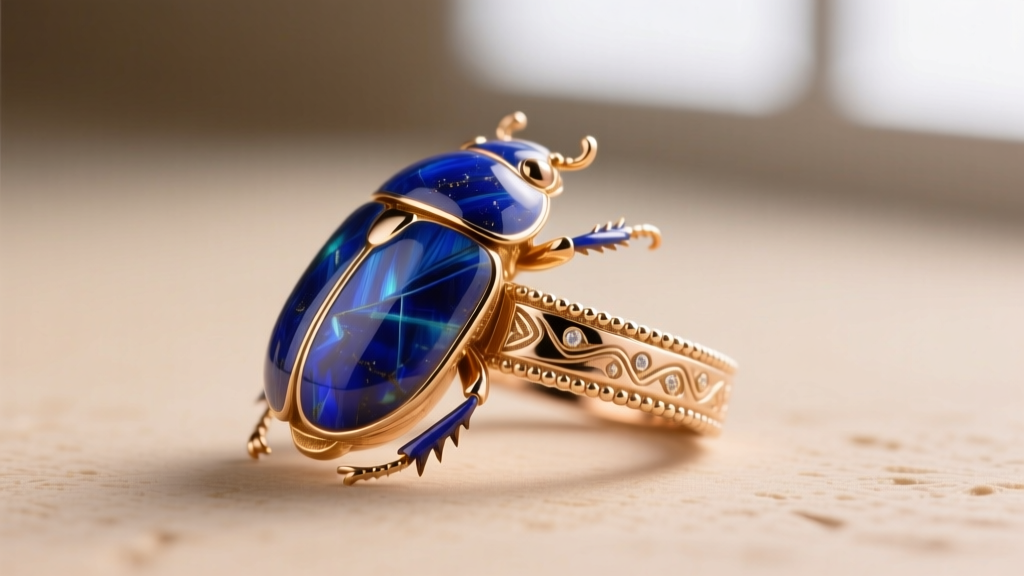
Core Motifs Dominating the Current Market
The current market is saturated with superficial "Egyptian" souvenirs, but true style connoisseurs are seeking out historically accurate motifs executed with fine jewelry craftsmanship. The following three symbols are driving the highest demand in the 2026 luxury sector.
The Scarab Beetle (Kheperer)
Representing the sun god Khepri and the concept of rebirth, the scarab is arguably the most recognizable motif in Egyptian jewelry. Historically, the base of the scarab was carved with intaglio hieroglyphs to serve as a seal. In 2026, high-end jewelers are reviving the scarab signet ring. Rather than using cheap stamped metal, artisans are hand-carving hardstones like lapis lazuli, carnelian, and turquoise, setting them in heavy 18k gold bezels with functional, wax-seal-ready intaglio bases. A well-crafted 18k gold scarab signet ring typically weighs between 12 and 18 grams, providing a substantial, luxurious feel on the hand.
The Wesekh Broad Collar
The Wesekh is the iconic, multi-strand broad collar worn by royalty and deities. While ancient versions were often made of faience beads, the elite wore articulated gold versions. Modern interpretations have translated the Wesekh into articulated gold link collars. These are engineering marvels; a solid 18k gold Wesekh-inspired collar can easily exceed 80 grams. To support this weight, modern pieces utilize reinforced box clasps with double figure-eight safety catches, ensuring the heavy gold lies flat against the clavicle without warping or breaking.
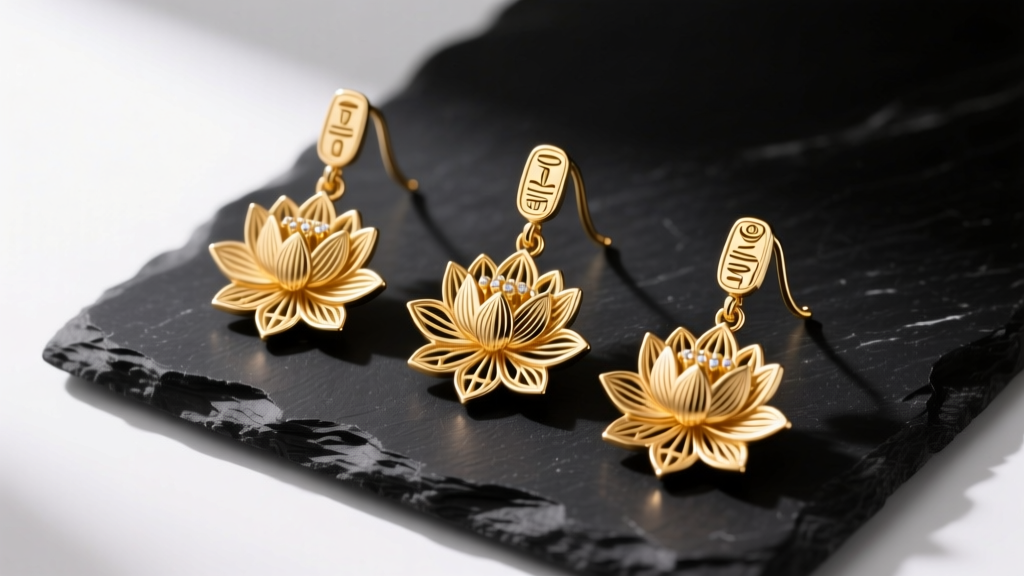
The Lotus Flower (Seshen)
Symbolizing creation and rebirth, the lotus was a staple in ancient hair ornaments and earrings. Today, the lotus motif is dominating the earring market. Designers are creating 3D, hollow-backed 18k gold lotus drops that provide maximum visual impact without exceeding the weight limits of the earlobe. For these pieces, structural integrity is key; the ear wires are typically forged at a thicker 18-gauge (1.0mm) or 16-gauge (1.2mm) to prevent bending under the weight of the gold flower.
Pricing and Authenticity: Navigating the Revival Market
As the trend accelerates, the market has become flooded with varying tiers of quality. Understanding the pricing structure and authenticity markers is crucial for collectors and style enthusiasts. The Gemological Institute of America (GIA) notes that proper hallmarking and alloy verification are essential when purchasing high-karat historical revival pieces, as the rich color of 22k gold is frequently faked using heavy copper plating over base metals.
- Souvenir Tier ($50 - $250): Typically 10k or 14k gold-plated brass or silver. Mass-cast in molds, these pieces often lack proper hallmarks and feature synthetic or dyed stone inlays. Best for temporary fashion styling, but holds no intrinsic gold value.
- Artisan Revival ($1,200 - $4,500): Solid 18k gold, often weighing 10-25 grams. These pieces feature hand-finished details, genuine hardstone inlays (natural carnelian, lapis, or turquoise), and proper karat stamps (e.g., "750" or "18k"). This is the sweet spot for serious jewelry collectors.
- Haute Couture & Antique ($10,000 - $50,000+): This tier includes original 1920s Art Deco Egyptian Revival pieces by houses like Cartier and Boucheron, as well as modern bespoke 22k-24k masterworks. These pieces feature exceptional provenance, museum-quality lapidary work, and complex mechanical articulation.
Styling Ancient Heavy Gold for the Modern Wardrobe
The primary challenge with Egyptian-inspired jewelry is avoiding a "costume" aesthetic. The key to styling these historically heavy pieces in 2026 is high-contrast minimalism. A heavy, 40-gram 18k gold Wesekh collar should not be paired with a busy, patterned bohemian dress. Instead, style it against a stark, structured black turtleneck or a crisp, oversized white poplin shirt. The sharp, modern tailoring of the clothing provides a necessary visual anchor, allowing the ancient gold motifs to act as the sole focal point of the outfit.
When layering, avoid mixing Egyptian motifs with other distinct historical periods (such as Celtic knotwork or Victorian mourning jewelry), as this dilutes the visual impact and creates stylistic dissonance. Instead, pair a bold scarab ring with simple, unadorned gold bands of the same karat and color. If you are wearing heavy lotus drop earrings, opt for an updo to expose the neck and jawline, ensuring the 18-gauge ear wires and intricate goldwork are fully visible and unobstructed by hair.
Conclusion
The resurgence of Egyptian gold jewelry is a testament to the timeless power of its design language. By understanding the historical metallurgy, recognizing the structural requirements of heavy gold motifs, and applying modern styling principles, collectors can confidently invest in pieces that bridge the gap between ancient antiquity and contemporary luxury. As the World Gold Council frequently highlights, gold's eternal nature makes it the perfect medium for preserving history, ensuring that the motifs of the pharaohs will continue to captivate the jewelry market for generations to come.


