Cardi B Turned Her Baby's Umbilical Cord Into Gold Jewelry: A Guide
After Cardi B turned her baby's umbilical cord into gold jewelry, demand for biological keepsakes surged. Here is your expert buying and care guide.

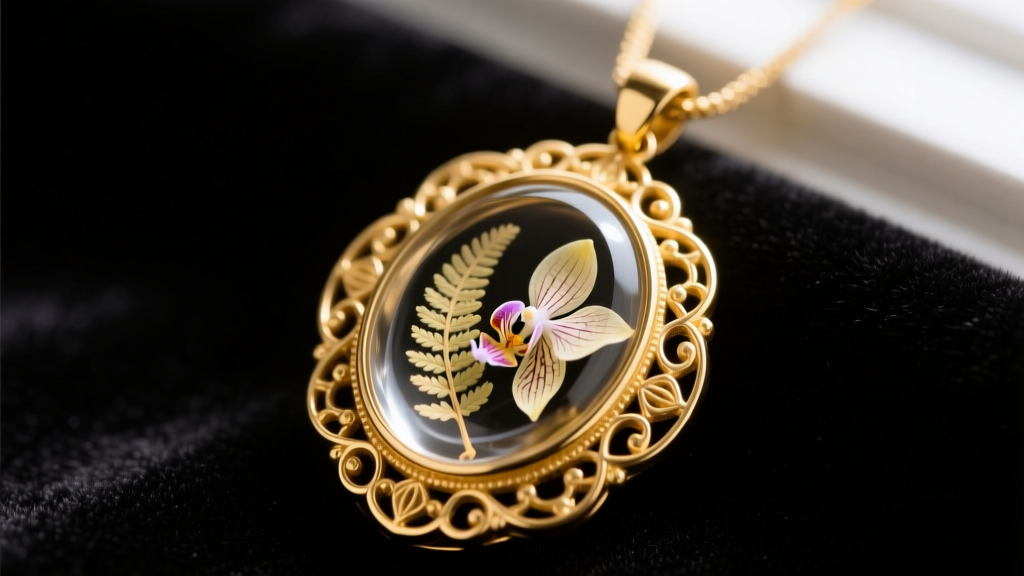
When headlines broke that Cardi B turned her baby's umbilical cord into gold jewelry, it ignited a massive cultural conversation around biological keepsakes. What was once considered a niche practice for mourning or deeply personal maternal mementos has now entered the mainstream luxury jewelry market. As we navigate the bespoke jewelry trends of 2026, incorporating organic materials—such as umbilical cords, breastmilk, ashes, and dried flowers—into fine gold settings requires a precise intersection of sentimentality and metallurgical science.
Commissioning a piece of biological keepsake jewelry is not as simple as handing organic matter to a goldsmith. It demands a deep understanding of material degradation, gold alloy hardness, and optical resins. This comprehensive buying guide will walk you through the exact specifications you need to look for when investing in organic gold keepsakes, ensuring your piece remains structurally sound and visually pristine for generations.
The Metallurgical Reality: Why Direct Casting Fails
A common misconception among first-time buyers is that organic material can be directly cast into gold using the traditional lost-wax method. From a metallurgical standpoint, this is physically impossible. Pure gold melts at 1,064°C (1,948°F), and standard 14k gold alloys require casting temperatures between 900°C and 1,050°C to ensure proper flow into the mold flask.
Organic tissue, including an umbilical cord, undergoes rapid thermal degradation and outright combustion at temperatures exceeding 300°C (572°F). If a jeweler attempts to pack raw or even dried organic matter into a casting investment, the intense heat of the molten gold will instantly incinerate the material, leaving behind nothing but carbon ash and a porous, ruined gold casting. Therefore, any legitimate jeweler creating these pieces must use a two-part construction method: creating a gold housing (bezel or void) and separately preparing the organic inclusion.
The Encapsulation Method: Resin Meets Gold
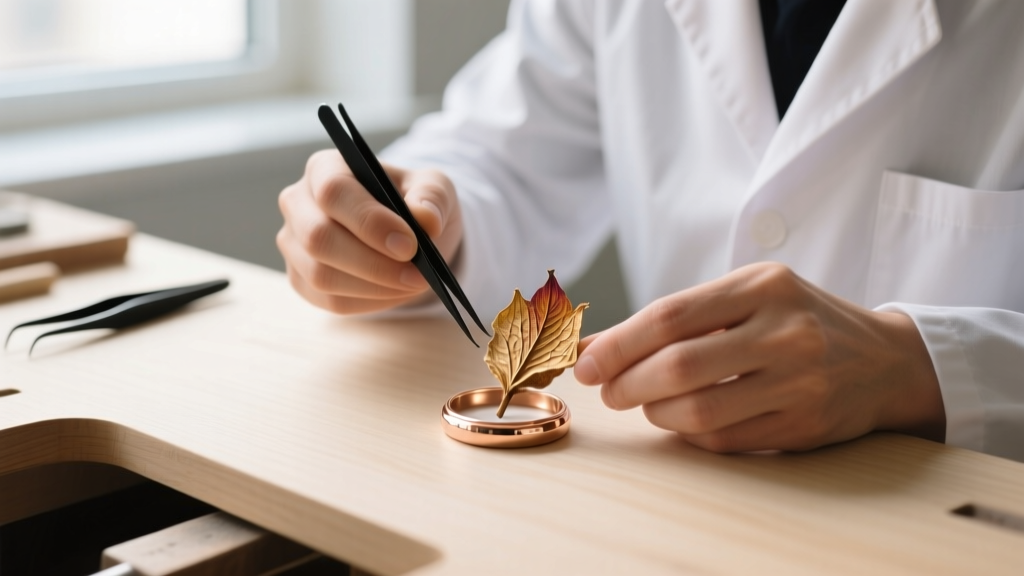
Because direct casting is off the table, the industry standard for preserving biological matter in gold jewelry is encapsulation via jeweler's grade epoxy resin. The process requires meticulous preparation:
- Desiccation: The organic material must be entirely stripped of moisture. Jewelers use molecular sieves or specialized silica gel chambers over 2 to 4 weeks to draw out water without collapsing the cellular structure of the tissue.
- Chemical Stabilization: Once dehydrated, the material is often treated with a bio-stabilizer to prevent future bacterial or fungal growth, which could cause discoloration inside the sealed piece.
- Optical Encapsulation: The preserved item is suspended in a high-grade, UV-resistant epoxy resin. The best resins have a refractive index (RI) of roughly 1.50 to 1.55, which mimics the optical clarity of fine quartz and allows light to bounce off the interior gold walls of the bezel.
Selecting the Ideal Gold Karat for Bezel Settings
The gold housing must securely hold the resin cabochon or window. According to the Gemological Institute of America (GIA), the karat weight of your gold dictates its tensile strength and malleability, which directly impacts how well it can be burnished over a resin stone without cracking it.
| Gold Karat | Purity | Vickers Hardness (Approx.) | Best Use in Keepsakes | 2026 Avg. Custom Price Range |
|---|---|---|---|---|
| 10k Gold | 41.7% | 135 - 150 HV | Highly durable bezels; resists scratching but lacks the rich color of higher karats. | $350 - $600 |
| 14k Gold | 58.3% | 120 - 140 HV | The Industry Standard. Offers the perfect balance of rich color and structural rigidity to hold resin securely. | $600 - $1,200 |
| 18k Gold | 75.0% | 100 - 125 HV | Excellent for pendants and earrings. Too soft for high-impact rings, as the bezel may warp and release the resin. | $1,200 - $2,500 |
| 24k Gold | 99.9% | 25 - 30 HV | Not recommended. Far too soft to burnish over a resin cabochon; the stone will easily pop out under minor pressure. | N/A |
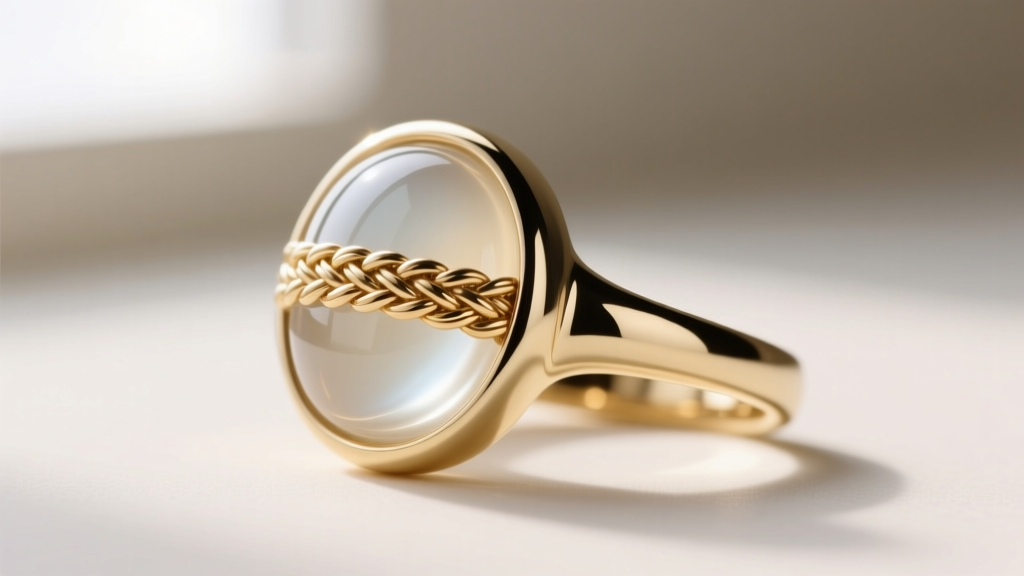
For rings and bracelets that endure daily friction, 14k gold is unequivocally the best choice. The alloy metals (usually copper, silver, and zinc) provide the necessary spring-back tension to keep the bezel wall tightly clamped against the resin. For necklaces, 18k gold is perfectly acceptable and offers a warmer, more luxurious hue that complements the slightly yellowish tint of aged biological resins.
Commissioning Your Piece: A Buyer’s Checklist
When vetting a custom jeweler or an artisan on platforms like Etsy, you must ask specific technical questions to separate true preservationists from hobbyists who will ruin your irreplaceable keepsake. Use this checklist during your consultation:
1. Ask About Their Resin Formulation
Standard hardware store epoxy will yellow and become brittle within 18 months due to UV exposure and oxidation. Ask the jeweler if they use HALS (Hindered Amine Light Stabilizer) infused resins. Brands like EpoxyTek or specialized jewelry-grade UV inhibitors are mandatory for pieces worn outdoors.
2. Inquire About the Backing Plate
A high-quality keepsake pendant will feature a solid gold backing plate behind the resin window. This serves two purposes: it reflects ambient light back through the organic material, making it visible, and it provides a structural floor so the resin cannot be pushed out of the back of the bezel if pressed against the skin.
3. Demand a 'Fail-Safe' Protocol
Biological materials are fragile. Ask the jeweler what happens if the tissue degrades or shatters during the dehydration process. Reputable studios, as noted by industry suppliers like Rio Grande, will require you to send 20% to 30% more material than is strictly necessary to ensure they have enough viable tissue to complete the piece if a failure occurs in the vacuum chamber.
Long-Term Care and Preservation Protocols
Once you receive your custom gold and organic keepsake, its longevity depends entirely on how you interact with it. While the gold itself is virtually indestructible, the resin and the organic matter inside are highly sensitive to environmental stressors.
- Thermal Shock: Never wear resin-set gold jewelry in hot tubs, saunas, or while washing dishes in scalding water. Heat causes the gold bezel to expand at a different rate than the epoxy resin. This differential expansion can cause the resin to crack internally or pop out of the setting entirely.
- Chemical Exposure: Chlorine (in pools and cleaning supplies) and sulfur (in hot springs) will aggressively tarnish the alloy metals in 14k and 18k gold, weakening the bezel prongs over time. Furthermore, harsh solvents like acetone or alcohol can degrade the surface polish of the resin, turning it cloudy.
- UV Degradation: Even with UV inhibitors, prolonged, direct sunlight over several years will eventually cause organic matter to fade. Store the piece in a dark, climate-controlled jewelry box when not being worn.
- Polishing Restrictions: Never use an ultrasonic cleaner on biological keepsake jewelry. The high-frequency vibrations will shatter the resin cabochon. Clean the gold bezel gently with a soft-bristled baby toothbrush and mild dish soap, avoiding the resin window as much as possible.
The Verdict on Biological Gold Keepsakes
The trend of transforming deeply personal biological milestones into fine jewelry is a beautiful fusion of modern sentimentality and ancient metalworking. However, it requires a buyer to be highly educated on the limitations of organic matter and the physical properties of gold alloys. By insisting on 14k or 18k gold settings, demanding UV-stabilized optical resins, and following strict care protocols, you can ensure that your bespoke keepsake remains a flawless, wearable heirloom for decades to come.


