How to Mix Silver and Gold Jewelry Together: Buyer Guide
Master the art of wearing silver and gold jewelry together. Our buying guide covers two-tone bridge pieces, metal hardness, and layering frameworks.

The End of the "Match Your Metals" Rule
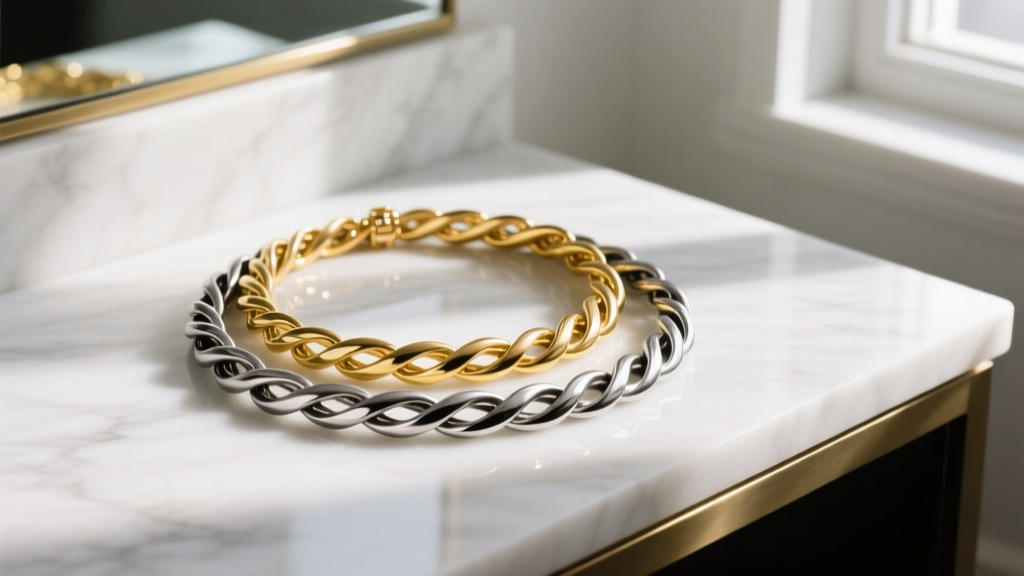
For decades, the traditional fashion mandate dictated that your metals must match perfectly. Wearing yellow gold earrings with a sterling silver necklace was considered a stylistic faux pas. Today, that rule is entirely obsolete. Mixing silver and gold jewelry together is no longer just a rebellious trend; it is a cornerstone of modern, curated personal style. However, successfully pulling off a mixed-metal aesthetic requires more than just throwing random pieces into a jewelry box. It demands an understanding of metallurgy, wear patterns, and intentional styling frameworks.
As a buyer, your goal is to curate pieces that look intentionally layered rather than accidentally mismatched. This guide will walk you through the exact material grades, structural considerations, and styling strategies you need to confidently buy and wear mixed metals.
The Science of Layering: Hardness and Wear Patterns
When you layer silver and gold jewelry together, you are combining two metals with vastly different physical properties. Understanding these differences is critical for preserving the longevity of your pieces. The Gemological Institute of America (GIA) notes that pure gold is incredibly soft, which is why it is alloyed with metals like copper and zinc for durability. Sterling silver, an alloy of 92.5% silver and 7.5% copper, has its own unique wear characteristics.
The primary concern when layering is friction wear. When a harder metal constantly rubs against a softer metal, the harder metal acts as a microscopic file, slowly wearing away the softer piece.
| Metal Type | Vickers Hardness (HV) | Mohs Scale | Layering Wearability Note |
|---|---|---|---|
| Sterling Silver (925) | ~75 HV | 2.5 - 3 | Highly prone to scratching and deformation when layered. |
| 18k Yellow Gold | ~125 HV | 2.5 - 3 | Softer than 14k, rich color, but scratches relatively easily. |
| 14k Yellow Gold | ~130 - 150 HV | 3.5 - 4 | Highly durable, ideal for daily wear and heavy layering. |
Expert Insight: If you layer a heavy 14k gold chain over a delicate sterling silver pendant, the gold will eventually wear through the silver's surface. To mitigate this, use chains of similar thickness, or separate the metals by wearing gold on the neck and silver on the wrists.
The "Bridge Piece" Strategy: What to Buy First
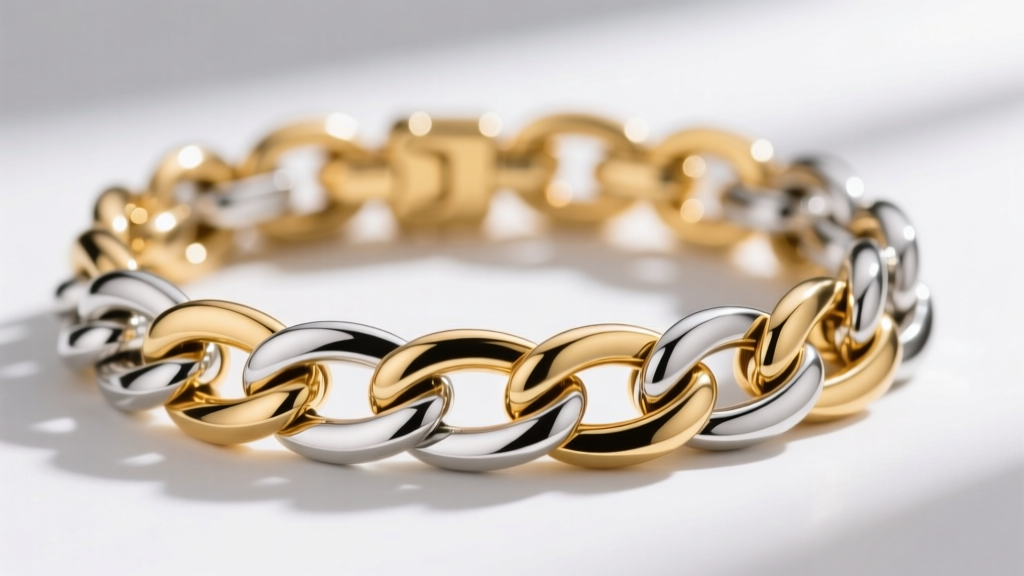
The most effective way to anchor a mixed-metal look is to invest in a "bridge piece." This is a single item of jewelry that intentionally incorporates both silver and gold. A bridge piece visually connects the two tones, making the rest of your layered stack look deliberate rather than chaotic.
Two-Tone Signet Rings and Chains
When buying two-tone jewelry, you must scrutinize the manufacturing method. There is a massive difference between solid two-tone and gold vermeil. Gold vermeil is sterling silver coated with a thin layer of gold (usually 2.5 microns). While vermeil is affordable ($80–$150), it is a poor choice for high-friction bridge pieces like rings or bracelets. The gold layer will quickly wear off at the friction points, exposing the silver beneath and ruining the two-tone illusion.
Instead, invest in solid two-tone pieces where the gold and silver are cast or soldered together. A solid 14k gold and sterling silver two-tone Cuban link chain or signet ring will typically cost between $400 and $900, but it will last a lifetime without the gold rubbing away.
The Mixed-Metal Herringbone
Herringbone chains are currently dominating the market. Look for a herringbone chain that alternates between yellow gold and white gold (or silver) links. This provides a fluid, liquid-metal effect that catches the light beautifully and serves as the ultimate foundational layer for any mixed-metal stack.
"The secret to mixing metals isn't about perfect matching; it's about intentional contrast and structural balance."
Buying Checklist: What to Look For in Mixed Metals
When shopping for pieces to add to your mixed-metal collection, use this rigorous checklist to ensure you are buying high-quality items that will withstand daily wear.
- Hallmark Verification: Always check for proper stamps. Sterling silver should be stamped "925". Gold should be stamped with its karat weight (e.g., "14k", "18k") or its millesimal fineness ("585" for 14k, "750" for 18k). If a piece claims to be two-tone but lacks dual hallmarks, be highly suspicious of its material integrity.
- Solder Joint Inspection: In two-tone chains, examine the links where the gold meets the silver. The solder joints should be clean, flush, and free of dark discoloration. Poor soldering is the most common failure point in mixed-metal chains.
- Clasp Compatibility: Ensure the clasp matches the durability of the chain. A delicate sterling silver spring-ring clasp attached to a heavy 14k gold chain is a structural liability. Look for solid lobster clasps that match the primary metal of the piece.
- Galvanic Awareness: According to The Silver Institute, silver is highly reactive. When gold and silver touch on sweaty skin, a mild galvanic reaction can occur, accelerating the tarnishing of the silver. If you live in a humid climate or sweat heavily, opt for pieces where the metals are separated by enamel or gemstone inlays.
Styling Frameworks: The Rule of Three
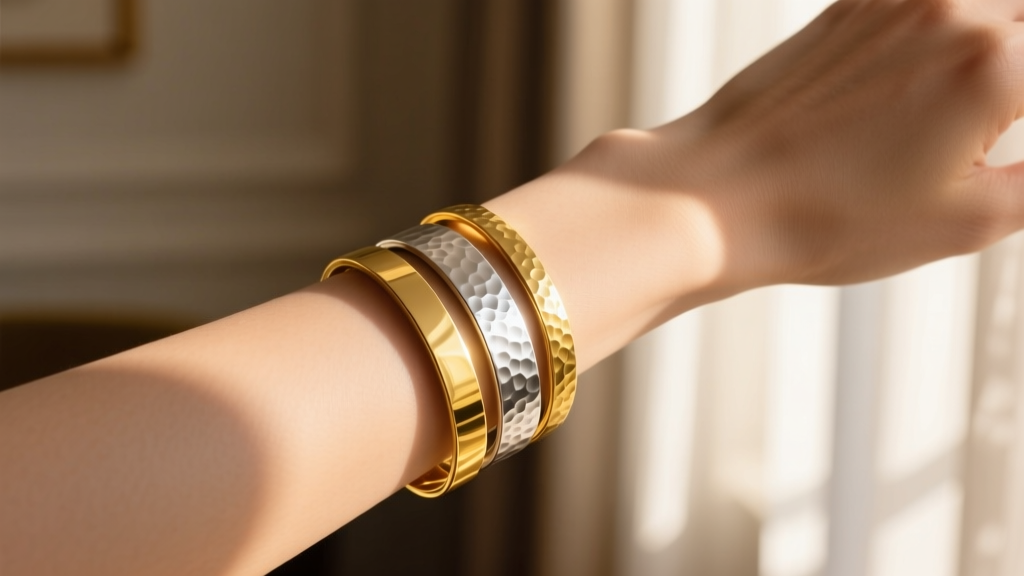
Once you have acquired your pieces, how do you style them without looking cluttered? The most reliable framework for wearing silver and gold jewelry together is the Rule of Three. This principle states that for every mixed-metal stack, you should have at least three pieces, and the metal ratio should be asymmetrical.
For example, if you are stacking rings, wear two 14k yellow gold rings and one sterling silver ring. The 2:1 ratio establishes a dominant metal tone while allowing the secondary metal to act as an intentional accent. A 1:1 ratio often looks accidental, whereas an asymmetrical ratio looks curated and deliberate.
Care and Storage: Preventing Friction and Tarnish
Mixed-metal jewelry requires specific storage protocols. Never throw your gold and silver pieces into a single communal jewelry box. Silver naturally oxidizes and forms silver sulfide (tarnish) when exposed to sulfur compounds in the air. If stored in direct contact with gold, the tarnish can transfer, and the friction from moving the box will cause the harder gold to micro-scratch the polished surface of the silver.
Store your pieces individually in anti-tarnish cloth pouches. If you own a two-tone bridge piece, wrap it in a soft, acid-free tissue paper before placing it in its pouch to protect the contrasting finishes from environmental moisture. With proper purchasing decisions and meticulous care, your mixed-metal collection will remain a timeless, versatile staple in your wardrobe for decades to come.


