Recycled Gold Jewelry Buying Guide: What to Look For
Discover how to buy authentic recycled gold jewelry. Learn to spot greenwashing, understand certifications, and verify post-consumer gold content.

The demand for sustainable luxury has fundamentally shifted the fine jewelry market. As we navigate the 2026 retail landscape, recycled gold jewelry is no longer a niche alternative; it is a primary expectation for conscious consumers. However, the term "recycled" is heavily exploited. Because gold is an infinitely recyclable element, nearly all gold on the market contains some percentage of re-melted material. This reality creates a fertile ground for greenwashing, where brands market standard manufacturing scrap as an ecological triumph.
This comprehensive buying guide cuts through the marketing noise. We will break down the metallurgical realities of recycled gold, expose the alloying loopholes, and provide you with a precise framework to verify the true sustainability of your next jewelry purchase.
The Reality of Recycled Gold: Supply Chain Transparency
According to the World Gold Council, recycled gold consistently accounts for roughly 25% to 30% of the annual global gold supply. From an atomic standpoint, gold melted down from a 19th-century pocket watch is identical to gold extracted from a modern mine. The environmental benefit does not come from the metal itself, but from the avoidance of new extraction.
Mining a single ounce of newly extracted gold can generate up to 20 tons of mine waste and requires massive water and energy inputs. Therefore, purchasing verified recycled gold jewelry directly reduces the demand for destructive open-pit and artisanal mining. The challenge for the buyer is that once gold enters a refinery, its origin is virtually impossible to trace without rigorous, third-party documented chain-of-custody protocols.
Pre-Consumer vs. Post-Consumer Scrap
To evaluate the genuine environmental impact of recycled gold jewelry, you must understand the critical distinction between pre-consumer and post-consumer scrap. Many brands blur these lines intentionally.
Pre-Consumer (Industrial) Scrap
Pre-consumer scrap consists of the byproducts of jewelry manufacturing: casting sprues, filing dust, and defective pieces. Historically, jewelers and refineries have always re-melted this scrap because it is economically unviable to throw away precious metal. When a brand claims their jewelry is made from "100% recycled gold" but relies solely on pre-consumer scrap, they are simply participating in standard industry practice. This does not reduce the global demand for newly mined gold.
Post-Consumer Scrap
Post-consumer scrap includes old, broken, or outdated jewelry, dental gold, and electronic waste (e-waste). Utilizing post-consumer gold is the true driver of the circular economy. It pulls existing material back into the luxury supply chain, actively displacing the need for virgin mining. When shopping for recycled gold jewelry, your primary goal is to seek out brands that explicitly certify their use of post-consumer sources.
The Certification Matrix: Verifying Authentic Claims
Self-reported sustainability claims are virtually meaningless without third-party auditing. When evaluating a brand, look for specific certifications that track the chain of custody from the refinery to the retail showcase. Below is a comparison of the most prominent standards in the 2026 market.
| Certification Body | Standard Name | What It Verifies | Consumer Trust Level |
|---|---|---|---|
| SCS Global Services | Recycled Content Standard | Strictly audits the exact percentage of post-consumer vs. pre-consumer material in the final alloy. | Highest (Gold Standard) |
| Responsible Jewellery Council (RJC) | Chain of Custody (CoC) | Tracks material through the supply chain, ensuring it is either responsibly mined or verified recycled. | High (Industry Standard) |
| Fairmined / Fairtrade | Ecological Gold Standard | Focuses on artisanal mining practices, chemical-free extraction, and fair labor (Not recycled, but ethical). | High (For Mined Gold) |
| Unverified / In-House | Brand-Specific Claims | Relies on the brand's internal sourcing policies without external auditing or public supply chain mapping. | Low (High Greenwash Risk) |
The Alloying Loophole: A Metallurgical Deep Dive
One of the most closely guarded secrets in sustainable jewelry marketing is the alloying loophole. Pure 24k gold is too soft for daily wear. To create durable 14k or 18k recycled gold jewelry, the pure gold must be mixed with master alloys—typically copper, silver, zinc, or palladium.
When a brand advertises "100% Recycled 14k Gold," they are almost always referring only to the 58.3% pure gold content. The remaining 41.7% of the alloy metals are frequently newly mined, untraceable commodities. True sustainability requires transparency regarding the entire alloy composition. Elite sustainable jewelers are now beginning to source recycled copper and recycled silver to mix with their post-consumer gold, creating a truly circular alloy. Always ask the retailer if their master alloys are also certified recycled.
Pricing Expectations and Market Value
A common misconception is that recycled gold jewelry carries a massive premium due to its ethical status. In reality, the economics are highly favorable for the consumer compared to other ethical alternatives.
- Standard Mined Gold: Baseline market price (Spot price + manufacturing markup).
- Certified Recycled Gold: Typically carries a negligible 0% to 5% premium over spot. The costs of refining and SCS certification are easily absorbed by large-scale refiners.
- Fairmined Gold: Carries a strict premium (often $4,000+ per kilo paid directly to mining cooperatives), which translates to a 10% to 20% higher retail price for the consumer.
Because certified recycled gold does not carry a heavy market premium, there is no financial barrier to demanding it. You should expect to pay the same price for a verified recycled 18k gold band as you would for a standard mined equivalent.

5 Critical Questions to Ask Before Buying
To protect yourself from sophisticated greenwashing, use this exact checklist when communicating with a jeweler or brand representative. A transparent brand will have immediate, documented answers to these queries.
- "Is your gold certified by SCS Global Services or the RJC Chain of Custody?" (If they say no, ask for their internal tracking methodology).
- "What is the exact ratio of post-consumer to pre-consumer scrap in your alloys?" (Look for a minimum of 50% post-consumer).
- "Are the secondary alloy metals (copper, silver) also recycled or responsibly sourced?"
- "Can you provide the refinery name where your gold is processed?" (Transparent brands proudly name their refining partners, such as Hoover & Strong or Precious Metals West).
- "Does the final piece bear a recycled hallmark or a specific maker's mark tied to your CoC certification?"
Care, Durability, and Hallmarking
From a metallurgical perspective, recycled gold jewelry is atomically indistinguishable from newly mined gold. Its durability, tarnish resistance, and tensile strength are dictated entirely by the karat purity and the specific alloy mix, not its origin. An 18k recycled rose gold ring will exhibit the exact same warmth, scratch-resistance, and copper-oxidation potential as an 18k mined ring.
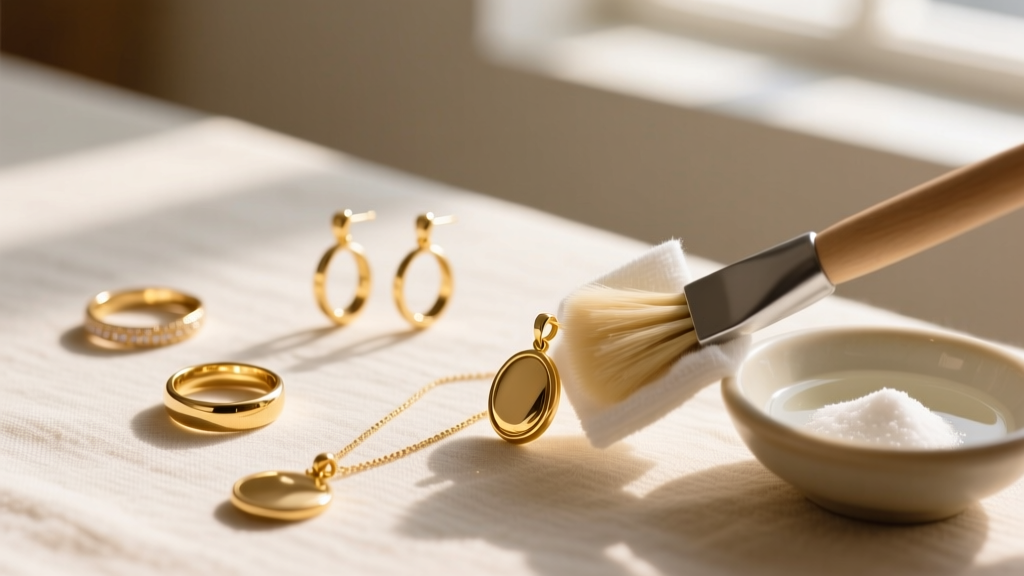
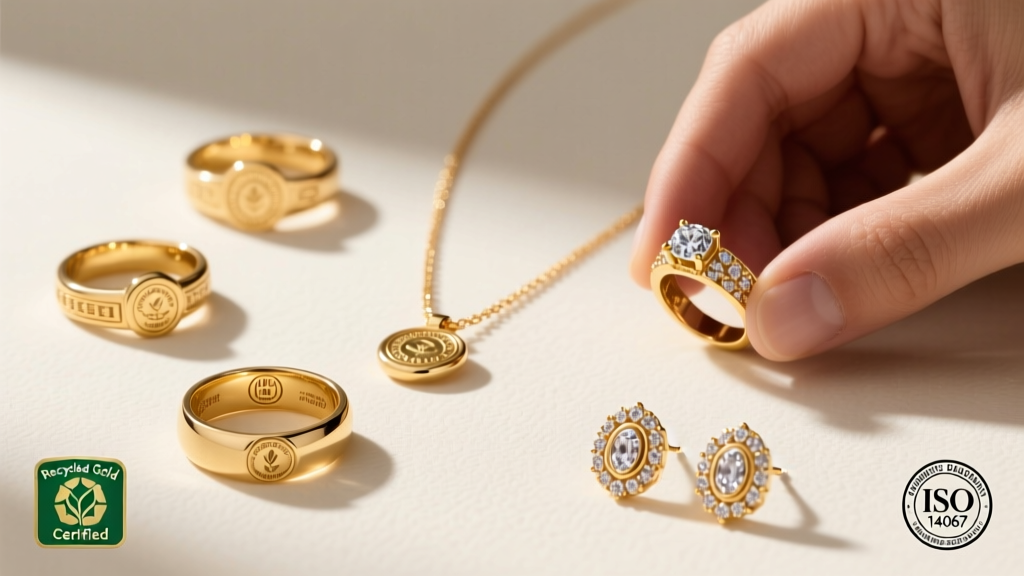
When inspecting your jewelry, look for standard international purity hallmarks: 585 (14k), 750 (18k), or 417 (10k). Additionally, brands certified under the RJC Chain of Custody will often stamp their pieces with a unique CoC identifier or a specific maker's mark that can be cross-referenced with the RJC public database. Proper care involves standard gold maintenance: avoiding harsh chlorine exposure, storing pieces separately to prevent micro-scratching, and cleaning with a mild dish soap and a soft-bristled brush.
Final Verdict: Building a Sustainable Collection
Investing in recycled gold jewelry is one of the most effective ways to reduce the environmental footprint of your personal style. However, the burden of verification falls on the buyer. By prioritizing post-consumer scrap, demanding third-party certifications like SCS or RJC, and questioning the origins of the alloying metals, you can build a fine jewelry collection that is as ethically unimpeachable as it is beautiful.