Troubleshooting Gold Filigree Jewelry: Cleaning & Repairs
Learn how to troubleshoot common issues with gold filigree jewelry. Expert tips on cleaning intricate wires, fixing snags, and preventing damage.

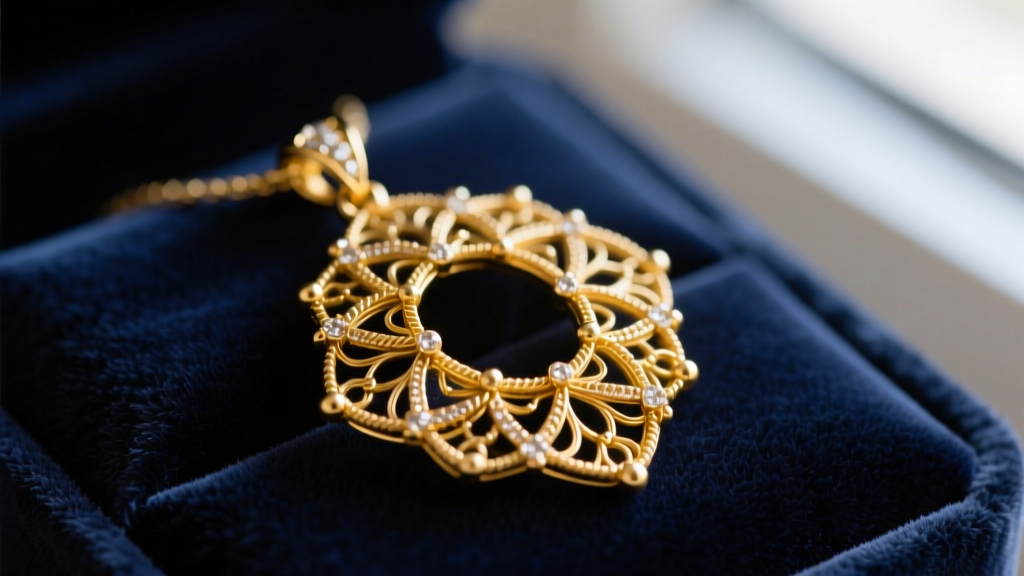
The Unique Vulnerabilities of Delicate Wirework
Gold filigree jewelry represents some of the most demanding metallurgical artistry in the world. Derived from the Latin words filum (thread) and granum (grain), this technique involves twisting, curling, and soldering microscopic wires into intricate, lace-like patterns. While visually breathtaking, the very nature of filigree makes it inherently vulnerable to structural and cosmetic issues.
The primary challenge lies in the wire gauge. Authentic filigree wires are typically drawn to 24 or 30 gauge (0.51mm to 0.25mm in diameter). At this microscopic thickness, gold alloys—even durable 14k formulations—are highly susceptible to crushing, bending, and snagging. Furthermore, the vast amount of negative space and hundreds of microscopic solder joints create a magnet for sebum, cosmetic residues, and environmental dust. Troubleshooting these issues requires a departure from standard jewelry care, demanding specialized tools and a deep understanding of gold metallurgy.
Troubleshooting Dirt, Sebum, and Tarnish
The most common issue with gold filigree jewelry is the accumulation of debris within the tight crevices of the wirework. Because the negative space is easily choked by lipids and dead skin cells, the metal quickly loses its natural luster, appearing dull and gray.
Many owners mistakenly turn to ultrasonic cleaners to solve this. This is a critical error. Ultrasonic machines operate at high frequencies (usually 40 kHz), creating cavitation bubbles that implode with immense localized force. While safe for solid cast gold, this violent vibration can easily shatter the brittle, low-karat solders used in vintage die-struck filigree, causing entire rosettes or wire segments to detach from the base plate.
The Safe Surfactant Soak Method
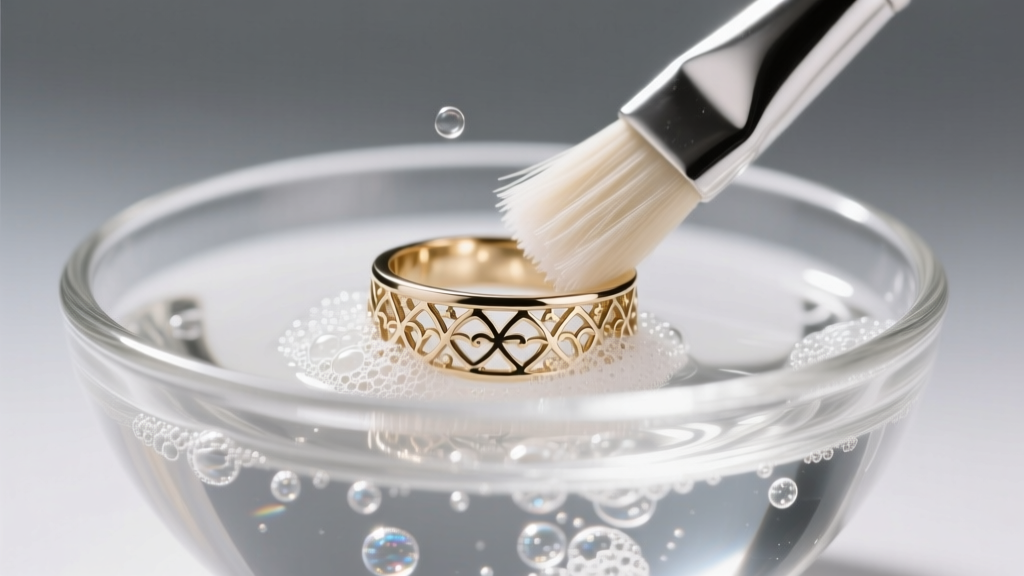
Instead of ultrasonics, utilize a gentle, manual surfactant soak to break down lipid bonds without mechanical stress.
- The Solution: Mix one cup of distilled water with two drops of phosphate-free, mild dish detergent (avoid harsh degreasers).
- The Soak: Submerge the piece for exactly 15 minutes. Do not exceed this, as prolonged exposure to water can weaken older adhesive settings if your filigree incorporates gemstones.
- The Agitation: Use a 0.05mm soft goat-hair brush to gently sweep the negative spaces. Never use stiff nylon bristles, which can micro-scratch high-polish 18k gold wires.
- The Rinse and Dry: Rinse thoroughly with distilled water. To prevent water spots in the tightest junctions, dry the piece using a low-pressure compressed air duster or a specialized jewelry blower, rather than rubbing it with a cloth that might snag.
According to the American Gem Society (AGS), gentle manual cleaning remains the absolute gold standard for intricate, multi-soldered antique pieces, preserving both the structural integrity and the historical patina.
Fixing Snags, Bent Wires, and Structural Weaknesses
Snags are the nemesis of filigree. A loose thread from a sweater can catch a 0.3mm wire, pulling it away from the base or warping the geometric symmetry. If your gold filigree jewelry snags, never pull the fabric. Stop immediately, secure the garment, and use a 10x jeweler's loupe to trace the tension point.
If a wire is merely bent but not fractured, it may be carefully manipulated back into place using smooth-jawed nylon pliers. However, gold work-hardens when bent. Repeated bending of a 14k or 18k gold wire will cause it to snap due to metal fatigue. If a wire has fractured or detached from the solder joint, professional intervention is mandatory.
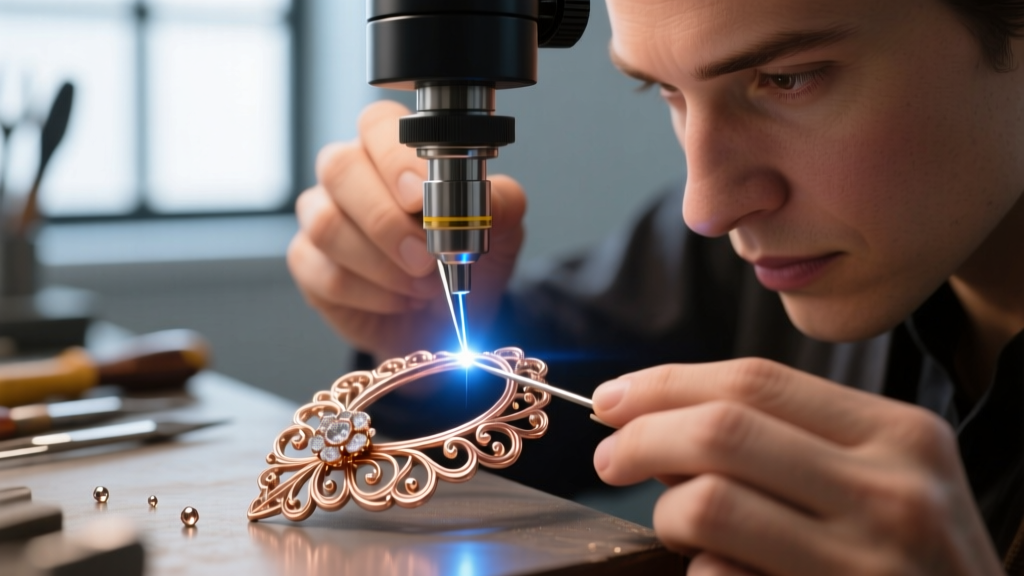
Laser Welding vs. Traditional Torch Soldering
Traditional torch soldering is incredibly risky for filigree repairs. The ambient heat required to flow a medium-grade gold solder (melting point around 1,450°F) will often melt adjacent, ultra-thin wires or cause the entire piece to warp. Modern master jewelers rely on laser welding. Laser welders focus a concentrated beam of light to melt a microscopic point of gold filler wire without transferring ambient heat to the surrounding filigree. This allows for repairs on wires as thin as 0.15mm with absolute precision. The Metropolitan Museum of Art Conservation Department frequently utilizes laser technology to stabilize historical wirework without compromising the artifact's delicate structural integrity.
Cast vs. Handmade: A Repairability Matrix
Understanding how your filigree was manufactured is crucial for troubleshooting repairs. Not all filigree is created equal, and the manufacturing method dictates the repair strategy.
| Filigree Type | Manufacturing Method | Common Failure Points | Repair Difficulty |
|---|---|---|---|
| Die-Struck Vintage | Stamped under immense pressure (1920s-1940s) | Brittle solder joints, metal fatigue at bends | High (Requires laser welding) |
| Handmade Artisan | Wires twisted and soldered by hand | Snags on raised granulation, loose tension wires | Medium (Standard micro-torch) |
| Modern CAD/Cast | 3D printed wax, cast in gold | Porosity, thick/clunky wires, brittle thin spots | Low (Can be recast or easily soldered) |
Preventative Maintenance and Storage Frameworks
Proper storage is not merely about keeping your jewelry organized; it is a critical structural defense mechanism for gold filigree jewelry. The open, negative-space design of filigree makes it highly susceptible to crushing when subjected to uneven pressure in a crowded jewelry box.
Never store filigree pieces in standard cotton-lined boxes or wrapped in cotton balls. Cotton fibers are notorious for snagging on microscopic wire burrs or raised granulation beads, leading to pulled wires and torn fabrics. Instead, utilize individual, sealable polyethylene bags. Polyethylene is an inert plastic that does not emit the sulfur gases found in some synthetic rubbers or PVC plastics, which can accelerate tarnishing in the copper alloys mixed with your gold.
For an added layer of protection, place a specialized anti-tarnish strip inside each polyethylene bag. These strips utilize proprietary zinc and copper carbonate compounds to absorb airborne sulfur and hydrogen sulfide before they can react with the alloyed metals in your 14k or 18k gold. When traveling, invest in a hard-shell, EVA-foam travel case with individual, velvet-lined slots that are deep enough to prevent the lid from pressing down on the three-dimensional domes of your filigree pendants or rings. By controlling the micro-environment and eliminating physical compression, you drastically reduce the need for future troubleshooting.
Authenticating Vintage Gold Filigree Pieces
The secondary market is flooded with modern cast pieces masquerading as vintage gold filigree jewelry. Troubleshooting authenticity requires a keen eye for metallurgical clues. True vintage filigree was die-struck. This process involved stamping sheet gold between two steel dies under hundreds of tons of pressure. The result is wirework with incredibly crisp, sharp edges and a dense, work-hardened molecular structure that feels surprisingly rigid despite its delicate appearance.
Conversely, modern reproductions are usually CAD-designed and cast via the lost-wax method. Cast filigree suffers from surface tension during the cooling process, resulting in wires with rounded, soft edges rather than sharp corners. Furthermore, cast pieces often exhibit microscopic porosity (tiny air bubbles trapped in the gold) along the underside of the wires. When inspecting a piece, look at the reverse side. Die-struck filigree will often show a slightly concave or perfectly flat back with sharp, clean cutouts. Cast filigree will look slightly 'melted' or puffy on the reverse. Understanding these clues is essential when assessing the long-term durability and value of your investment. The Gemological Institute of America (GIA) provides extensive resources on identifying historical manufacturing marks and alloy compositions to aid collectors in this vital authentication process.


