Gold Impressions Jewelry: Best Alloys for Crisp Keepsakes
Discover the metallurgy behind gold impressions jewelry. Compare 10k, 14k, and 18k alloys for custom fingerprint keepsakes and signet engravings.

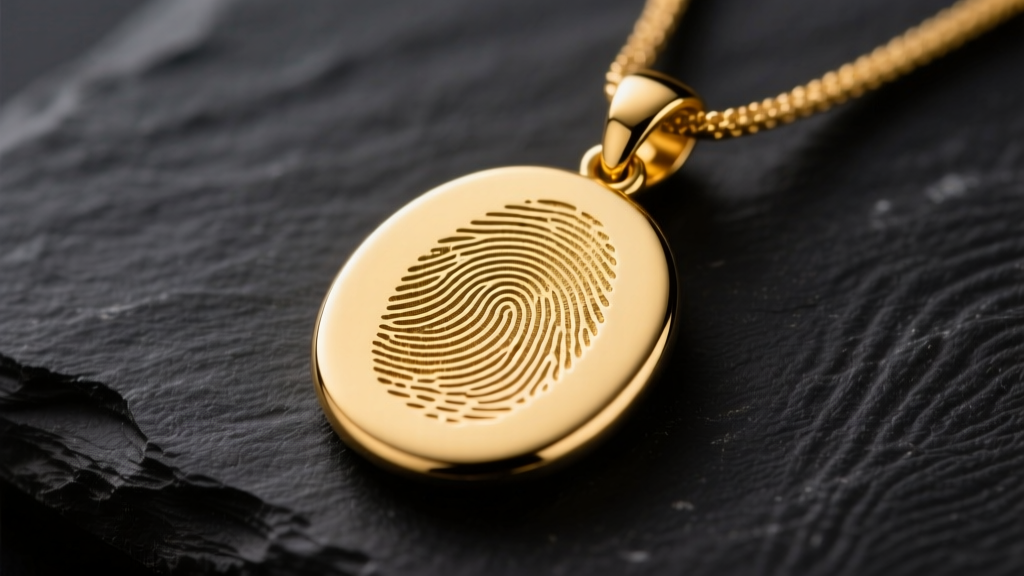
The Metallurgy of Memory: Why Alloy Matters for Impressions
The market for custom keepsakes has evolved dramatically, with gold impressions jewelry becoming a premier choice for capturing fingerprints, handwritten notes, and bespoke signet seals. However, translating a microscopic physical impression into a permanent metallic heirloom is not merely a matter of artistic skill; it is a strict metallurgical challenge. When a jeweler captures a fingerprint, the ridges and valleys often measure less than 0.2 millimeters in depth. To preserve these sub-millimeter details against decades of daily friction, the gold alloy must strike a precise balance between casting fluidity and structural hardness.
Pure gold is famously malleable, but this property makes it entirely unsuitable for impression jewelry. According to the Gemological Institute of America (GIA), 24k gold possesses a Vickers Hardness (HV) of roughly 25 to 30. While it would capture a mold's details beautifully in the casting phase, a 24k fingerprint pendant would lose its ridge definition within months of rubbing against clothing and skin. Therefore, alloying metals like copper, silver, and zinc are introduced not just to alter color, but to engineer the crystalline grain structure of the final piece, ensuring the impression remains crisp for generations.
Hardness vs. Detail Resolution: Comparing Karats
Choosing the right karat for gold impressions jewelry requires understanding how different alloy ratios affect both the casting process and the final wearability. The primary metric jewelers use is Vickers Hardness (HV), which measures a material's resistance to indentation and surface deformation.
| Gold Karat | Vickers Hardness (HV) | Casting Fluidity | Detail Retention | Best Application |
|---|---|---|---|---|
| 10k Gold (41.7%) | 200 - 230 | Moderate (Prone to brittleness) | High (but risks micro-fractures) | Sturdy signet rings, low-budget charms |
| 14k Gold (58.3%) | 160 - 180 | Excellent | Exceptional | Daily-wear fingerprint pendants, bracelets |
| 18k Gold (75.0%) | 130 - 150 | Superior (High density) | Very Good | Luxury keepsakes, occasional-wear rings |
| 24k Gold (99.9%) | 25 - 30 | Poor for fine detail (Shrinkage) | Poor (Smudges easily) | Not recommended for impressions |
As the data illustrates, 14k gold emerges as the metallurgical sweet spot for most gold impressions jewelry. Its copper and silver content provides enough tensile strength to resist the polishing wheels during manufacturing, ensuring the delicate fingerprint ridges are not accidentally buffed away. Furthermore, 14k alloys exhibit optimal fluidity when molten, allowing the liquid metal to flow into the deepest, narrowest valleys of a silicone mold before solidifying.
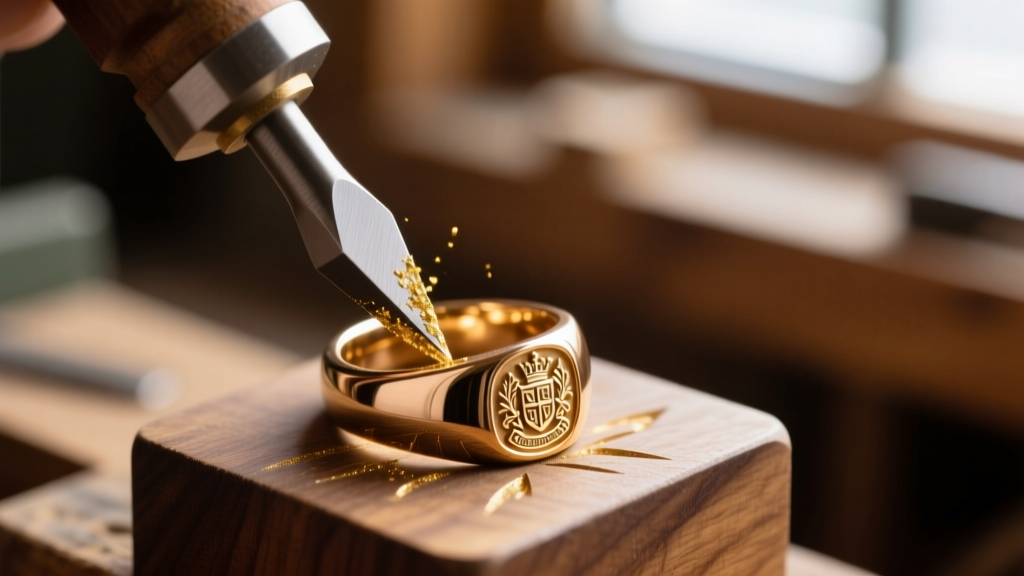
Manufacturing Methods: Casting vs. Direct Engraving
The method used to create the impression fundamentally dictates how the gold alloy will behave. Modern gold impressions jewelry is typically produced via one of two methods: lost-wax casting from a 3D-scanned master, or direct hand/CNC engraving into a forged gold blank.
Lost-Wax Casting and Shrinkage Rates
When creating fingerprint jewelry, the original impression is often scanned at a resolution of 10 to 20 microns and 3D printed in a castable resin. During the lost-wax casting process, the gold alloy shrinks as it cools. Research presented at the Santa Fe Symposium on Jewelry Manufacturing Technology highlights that standard gold alloys shrink between 1.25% and 1.5% from mold to final cast. While this shrinkage is uniform and accounted for in the digital scaling phase, the alloy's grain structure can cause issues. If the gold is not properly deoxidized (often using trace amounts of silicon or boron), microscopic porosity can form inside the narrow fingerprint valleys, resulting in a pitted, muddy impression rather than a sharp ridge.
Direct Engraving and Work Hardening
For signet rings and flat-faced pendants, jewelers may carve the impression directly into the metal. Here, 18k gold is often preferred by master engravers. The higher pure-gold content makes the metal more ductile, allowing the graver tool to slice through the crystalline lattice cleanly without tearing or galling. As the tool displaces the metal, the surrounding area work-hardens, creating a durable border around the engraved impression that resists future deformation.
Long-Term Wear: Friction, Patina, and Ridge Degradation
The unspoken enemy of gold impressions jewelry is friction. A fingerprint pendant worn daily against the chest will experience thousands of micro-abrasions. Over a decade, this friction acts like a slow polishing compound. In softer 18k yellow gold (which relies heavily on silver for its alloy mix), the peaks of the fingerprint ridges will gradually round off, softening the visual contrast of the print. Conversely, 14k rose gold, which utilizes a higher copper content, develops a natural patina that actually settles into the valleys of the impression, artificially enhancing the contrast and making the fingerprint appear deeper and more legible over time.
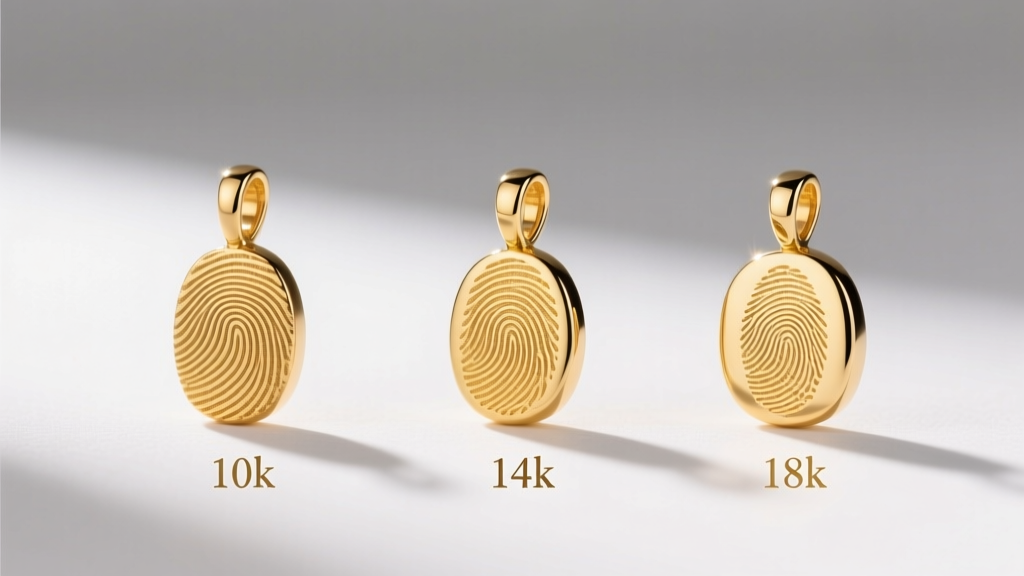
For items like impression bracelets or rings that are subjected to impact and abrasive environments, 10k gold might seem logical due to its high hardness. However, 10k gold's lower gold content makes it more susceptible to galvanic corrosion from sweat and lotions, which can accumulate in the microscopic grooves of the impression, leading to permanent discoloration that is nearly impossible to clean without ultrasonic damage to the surrounding finish.
Expert Verdict: Specifying Your Keepsake
When commissioning or designing gold impressions jewelry, the material specification must align with the item's intended lifecycle. For a daily-wear fingerprint necklace or a child's handprint charm, 14k yellow or white gold is the definitive choice, offering the necessary Vickers Hardness to preserve sub-millimeter ridges against decades of friction. For a luxury signet ring featuring a deeply carved family crest or a handwritten initial that will be worn occasionally and protected from heavy abrasion, 18k rose gold provides superior engraving clarity, a richer hue, and a beautiful aging patina that will only enhance the depth of the impression as the years pass.


