How to Sell Gold Jewelry for Cash & Maximize Payout
Learn how to sell gold jewelry for cash with our expert value assessment guide. Discover melt value calculations, buyer comparisons, and negotiation tips.

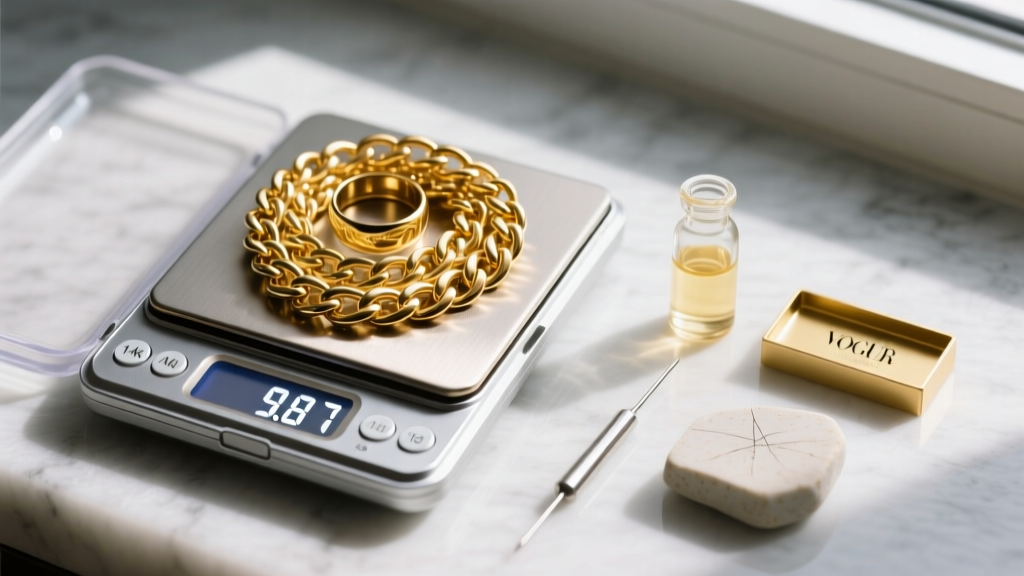
The Economics of Selling Gold: Melt Value vs. Retail Value
With gold spot prices hovering at historic highs in 2026, liquidating your precious metals can yield significant returns. However, understanding how to sell gold jewelry for cash requires more than just walking into a local pawn shop and accepting the first offer. To maximize your payout, you must first understand the fundamental difference between retail value and melt value.
Unless your piece is a signed, vintage, or highly sought-after designer item (e.g., Cartier, Van Cleef & Arpels), buyers will evaluate it strictly on its melt value—the raw worth of the gold content if it were melted down into a bullion bar. Retail markups, craftsmanship, and brand premiums are instantly lost the moment a piece is treated as scrap. Therefore, your primary goal as a seller is to capture the highest possible percentage of the spot melt value.
Step-by-Step: How to Sell Gold Jewelry for Cash
1. Sort, Separate, and Weigh Accurately
Never sell a mixed bag of gold to a buyer without pre-sorting it. Group your jewelry by karat purity (10k, 14k, 18k, 22k). Buyers will often weigh a mixed pile and calculate the entire lot at the lowest karat present (usually 10k) unless you separate them beforehand. Furthermore, remove any non-gold components. Heavy enamel, large gemstones, and steel spring-rings inside clasps add dead weight that will skew your gram measurements.
2. Calculate Your Baseline Melt Value
Before negotiating, you must know your baseline. Gold is measured in Troy ounces (31.1035 grams), not standard avoirdupois ounces (28.35 grams). To calculate your melt value, use the current spot price provided by authoritative markets like Kitco, and apply the following purity multipliers:
- 10k Gold: 41.7% pure (Multiplier: 0.417)
- 14k Gold: 58.5% pure (Multiplier: 0.585)
- 18k Gold: 75.0% pure (Multiplier: 0.750)
- 22k Gold: 91.6% pure (Multiplier: 0.916)
- 24k Gold: 99.9% pure (Multiplier: 0.999)
The Formula: (Weight in Grams ÷ 31.1035) × Current Spot Price × Purity Multiplier = Melt Value.
Example: If you have a 15-gram 14k gold chain and the spot price is $2,400 per Troy ounce, your calculation is: (15 ÷ 31.1035) × 2400 × 0.585 = $678.38. This is your absolute ceiling; no buyer will pay you more than this number.

Where to Sell: Comparing Cash Buyers in 2026
Choosing the right venue is the most critical variable in your budget assessment. Different buyers have vastly different overhead costs, which directly dictates the percentage of melt value they are willing to pay out. Below is a comparative breakdown of the most common cash buyers.
| Buyer Type | Expected Payout (% of Melt) | Pros | Cons |
|---|---|---|---|
| Pawn Shops | 40% - 60% | Immediate cash, local convenience, no shipping required. | Lowest payouts, high-pressure sales tactics, frequent scale inaccuracies. |
| Local Coin Dealers | 70% - 85% | Better testing equipment, transparent market knowledge, fairer appraisals. | May not accept heavily damaged or non-standard jewelry pieces. |
| Online Precious Metal Refiners | 85% - 95% | Highest cash yields, insured shipping kits, professional XRF testing. | Requires mailing valuables, payment can take 5-10 business days. |
| Private Buyers / Jewelers | 60% - 90% (Variable) | Potential for retail premium if the piece is vintage or highly desirable. | Time-consuming to find, high risk of scams, requires negotiation skills. |
Advanced Verification: XRF vs. Acid Testing
When you sit down with a buyer, pay close attention to how they test your gold. Traditional acid testing involves scratching the gold on a touchstone and applying nitric acid of varying strengths to observe the chemical reaction. While effective, it is subjective, damages the piece slightly, and only tests the surface layer.
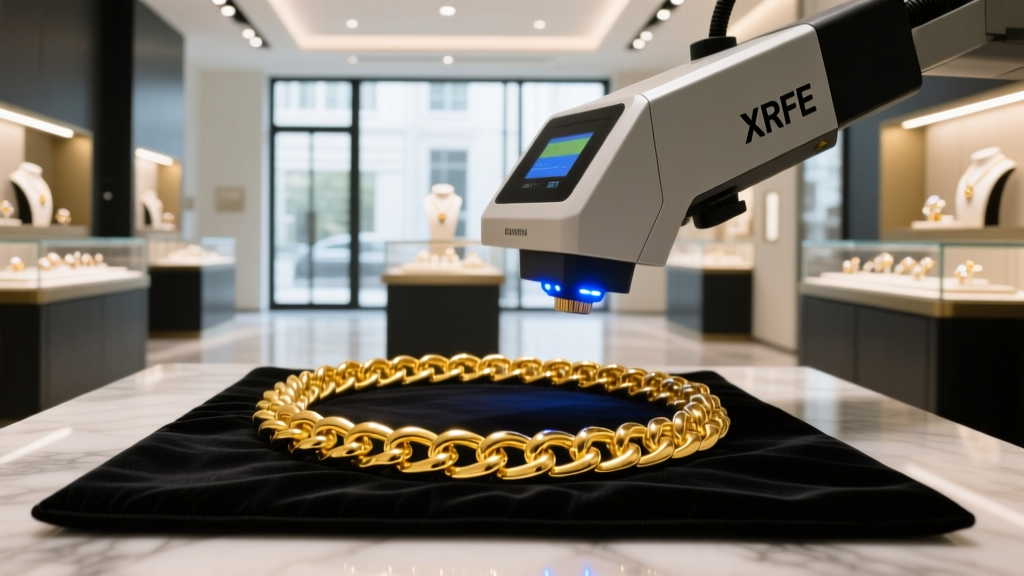
For high-value assessments, insist on a buyer who uses XRF (X-Ray Fluorescence) technology. According to metallurgical standards outlined by the Gemological Institute of America (GIA), XRF analyzers provide a non-destructive, highly precise elemental breakdown of the metal, detecting not just the gold content, but the exact alloys (like copper, silver, or zinc) mixed within. This prevents buyers from using surface-level acid tests to falsely claim your 14k chain is actually 10k gold-filled.
The Verdict on Gold-Filled, Vermeil, and Plated Jewelry
A common mistake sellers make is attempting to scrap gold-filled or gold-plated jewelry. From a budget and value assessment perspective, these items possess virtually zero melt value to a refiner. Gold-filled items consist of a brass core with a thin mechanical bond of gold (usually 1/20th of the total weight). The chemical and thermal processes required to separate the microscopic gold layer from the base metal cost far more than the recovered gold is worth. If a buyer offers you cash for a large bag of gold-plated fashion jewelry, they are likely using it as a loss-leader to build trust before lowballing your solid gold pieces.
Red Flags and Scams to Avoid
The Federal Trade Commission regularly issues warnings regarding predatory gold buying schemes. Protect your payout by watching for these specific red flags:
- The Rigged Scale: Always bring your own calibrated digital pocket scale (accurate to 0.01g). Weigh your items in front of the buyer before they take them behind the counter.
- The Bait-and-Switch: Unscrupulous buyers may swap your solid 18k gold ring for a gold-plated replica while pretending to clean or inspect it under a microscope.
- The "Melt" Pressure Tactic: A buyer may offer to melt your chain down into a bar to "verify the weight," but will only do so if you agree to a locked-in, below-market price beforehand. Never allow your jewelry to be destroyed before a price is agreed upon.
Expert Negotiation Tactics for Maximum Cash
To secure the highest payout, leverage the power of competition. Visit at least two local coin dealers or pawn shops to get written or verbal baseline offers. Then, contact a reputable online refiner and ask for their current buy-per-gram rate for your specific karat. Use the online refiner's rate as your anchor. When negotiating locally, state clearly: "My baseline calculation based on today's spot price puts this at $678. An online refiner is offering me 90% of melt, which is $610. If you can match $600 in cash today, I will leave it with you and save myself the shipping hassle." This demonstrates deep market literacy, instantly signaling to the buyer that you are an educated seller who cannot be easily exploited.


