Silver and Gold Jewelry Cleaner: Is It Safe for Your Karat Gold?
Discover if a standard silver and gold jewelry cleaner is safe for your pieces. Learn expert cleaning methods for 14k, 18k, and white gold.

Walk down the cleaning aisle of any big-box store, and you will inevitably spot bottles labeled as a universal 'silver and gold jewelry cleaner.' For beginners building their collection, a two-in-one solution seems like a cost-effective, no-brainer purchase. Why buy two separate bottles when one promises to restore the shine to your entire jewelry box? Unfortunately, this marketing shortcut is one of the most common reasons beginners accidentally ruin their favorite gold pieces.
While pure 24k gold is virtually indestructible to household chemicals, the gold jewelry you actually wear—whether it is 14k yellow, 18k rose, or rhodium-plated white gold—is a complex alloy. Using a chemical formulated to strip silver sulfide (tarnish) off sterling silver can wreak havoc on the alloy metals mixed into your gold. In this beginner-friendly explainer, we will break down the hidden chemistry of combination cleaners, show you exactly which gold types are at risk, and provide a foolproof, safe cleaning protocol to keep your karat gold gleaming.
The Hidden Danger of Universal Silver and Gold Jewelry Cleaners
To understand why a combined silver and gold jewelry cleaner can be dangerous, you first need to understand how silver tarnishes. Sterling silver reacts with sulfur in the air to create silver sulfide, a blackish layer on the surface. To remove this, commercial silver dips rely on strong reducing agents and mild acids. Gold, on the other hand, does not tarnish in this way. It gets dull from body oils, lotions, and environmental dust.
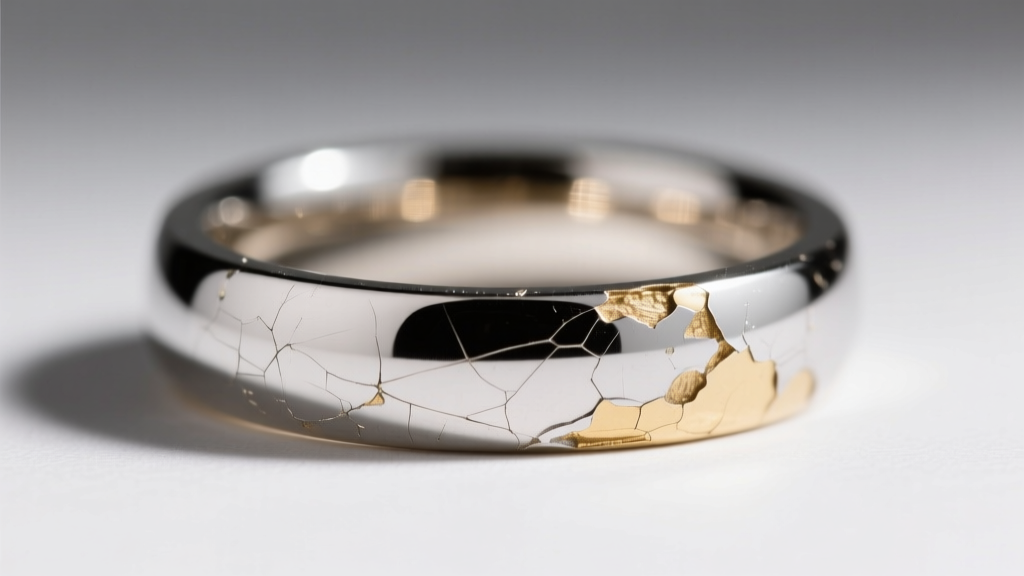
When you submerge a gold alloy into a silver-cleaning solution, the chemicals do not just clean the surface dirt; they actively seek out and react with the non-gold metals in your jewelry. According to metallurgical guidelines from jewelry manufacturing authorities like Rio Grande, prolonged exposure to silver dip chemicals can cause 'dezincification' or leaching of copper and silver alloys right out of the gold matrix. This leaves the surface of your gold porous, brittle, and prone to rapid oxidation, often resulting in a permanent dull, coppery, or pinkish tint that no amount of polishing can fix.
Breakdown of Gold Types and Cleaner Compatibility
Not all gold is created equal. The karat weight and the specific alloy mixture dictate how your jewelry will react to harsh combination cleaners. Below is a compatibility chart to help you identify your risk level.
| Gold Type | Composition & Alloys | Reaction to Silver/Gold Combo Cleaner | Verdict |
|---|---|---|---|
| 14k Yellow Gold | 58.5% Gold, 41.5% Silver/Copper/Zinc | Chemicals may leach surface silver/copper, causing micro-pitting and a dull, brassy finish over time. | Avoid. Use mild soap instead. |
| 18k Rose Gold | 75% Gold, 25% Copper | Acids in silver cleaners attack the high copper content, leading to dark, stubborn surface spotting. | Strictly Avoid. High risk of discoloration. |
| 14k/18k White Gold | Gold alloyed with nickel/palladium, plated with Rhodium | Harsh chemicals strip the 0.75-micron rhodium plating, exposing the yellowish underlying alloy. | Never Use. Will ruin the rhodium finish. |
| Gold Vermeil | Sterling Silver base with 2.5+ microns of Gold plating | Cleaner penetrates micro-pores, tarnishing the silver base from the inside out and blistering the gold. | Strictly Avoid. Will destroy the piece. |
| Gold Filled | Brass base mechanically bonded with a thick gold layer | Generally safe for quick dips, but prolonged exposure can degrade the mechanical bond at the edges. | Use with Caution. Soapy water is better. |
The Chemistry: Why Silver Tarnish Removers Attack Gold Alloys
The primary active ingredient in most heavy-duty silver dips is thiourea, often suspended in a mild sulfuric acid solution. Thiourea is a powerful complexing agent. Its molecular structure is designed to bind to silver ions and pull them away from the jewelry's surface.
Here is where the problem arises for gold jewelry: 14k and 18k gold contain significant amounts of silver and copper as alloy metals to provide hardness and color. When you soak a 14k gold chain in a thiourea-based silver and gold jewelry cleaner, the chemical cannot tell the difference between the silver in a sterling silver ring and the silver alloyed inside your gold chain. It begins to pull the silver atoms out of the gold alloy at the microscopic surface level.
Expert Insight: This leaching process creates microscopic voids on the surface of the gold. These voids trap dirt and oils much faster than a smooth surface, meaning your jewelry will actually get dirtier faster after using a harsh chemical dip, creating a vicious cycle of over-cleaning and degradation.
Furthermore, the Federal Trade Commission (FTC) strictly regulates gold plating and vermeil thickness. Gold vermeil must have a minimum of 2.5 microns of gold over sterling silver. If a silver dip penetrates a microscopic scratch in that 2.5-micron layer, it will aggressively tarnish the sterling silver core, causing the gold layer to flake or blister from the inside.
The Beginner’s Safe Cleaning Protocol for Gold
Forget the harsh chemicals. The Gemological Institute of America (GIA) consistently recommends the gentlest approach for cleaning precious metals. Here is the exact, step-by-step protocol used by professional jewelers for routine maintenance of solid gold, gold-filled, and gold vermeil pieces.
What You Need:
- Distilled Water: Tap water contains chlorine and hard minerals that can leave spots or react with copper alloys.
- Mild Dish Soap: A basic, phosphate-free liquid dish soap (like original blue Dawn). Avoid soaps with added moisturizers or citrus degreasers.
- Ultra-Soft Brush: A clean, unused baby toothbrush or a specialized jewelry brush with extra-soft bristles.
- Lint-Free Cloth: A microfiber or untreated jeweler's polishing cloth.
The 4-Step Method:
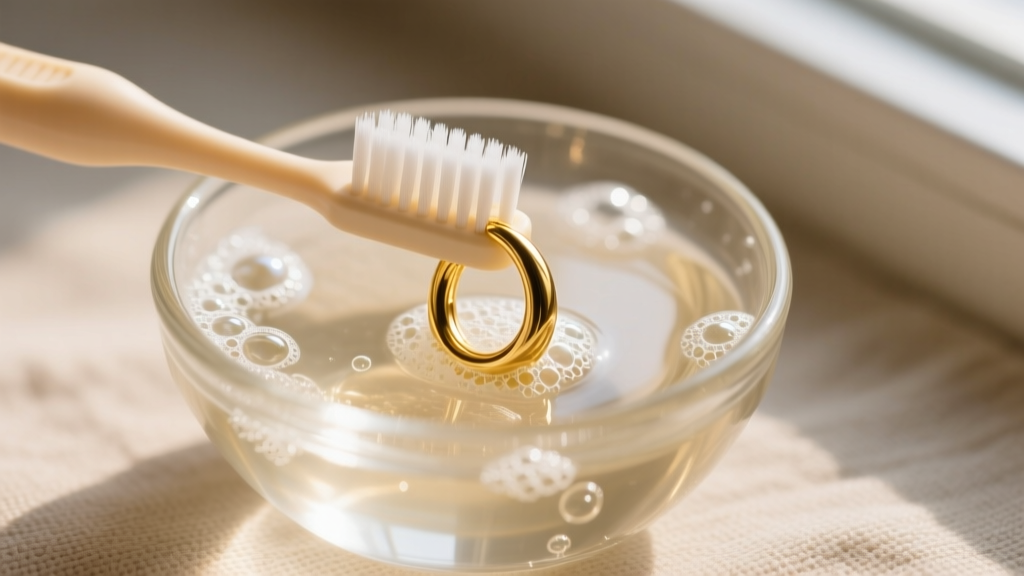
- Mix the Solution: In a small glass bowl, combine 1 cup of lukewarm distilled water (around 85°F) with 3 drops of dish soap. Do not use hot water, as extreme heat can expand micro-fractures in gemstones set in your gold.
- Soak Briefly: Drop your gold jewelry into the bowl. Let it sit for exactly 3 to 5 minutes. This loosens body oils and cosmetic residue without stressing the metal.
- Agitate Gently: Using the baby toothbrush, lightly sweep the bristles over the gold, paying special attention to the backs of settings and chain links where sebum accumulates. Never scrub aggressively.
- Rinse and Dry: Rinse the piece under a gentle stream of lukewarm distilled water. Pat it completely dry with the microfiber cloth. Air-drying leaves water spots.
Gemstone Interactions: When the Setting Matters More Than the Metal
If your gold jewelry features gemstones, the metal is only half the equation. Many beginners ruin their stones while trying to clean the gold setting. A silver and gold jewelry cleaner that might barely damage a solid 14k gold band will instantly destroy the stones set within it.
Porous and Organic Gems: Pearls, opals, turquoise, and emeralds are highly porous and often treated with oils or resins. Submerging an 18k gold ring featuring an emerald in any liquid cleaner will strip the cedar oil from the emerald, causing it to turn cloudy and fracture. For these pieces, you must use a barely damp cloth to wipe the gold setting, carefully avoiding the stone entirely.
Hard Stones: Diamonds, sapphires, and rubies (Mohs hardness 8-10) are generally safe for the soapy water soak method described above. However, you should never use ultrasonic cleaners on gold jewelry with fracture-filled diamonds or tension settings, as the high-frequency vibrations can shake the stones loose from their prongs.
Real-World Troubleshooting: What to Do If You Used the Wrong Cleaner
If you are reading this after already soaking your favorite gold chain in a harsh silver dip, do not panic. The damage is usually confined to the microscopic surface layer. Here is how to triage the situation:
- Neutralize and Rinse: Immediately rinse the jewelry under cool running water for a full 60 seconds to wash away any residual thiourea or acid trapped in the chain links or prongs.
- Assess the Color Shift: If your yellow gold looks slightly brassy or your white gold has turned yellow, the surface alloys have been altered or the rhodium has been stripped.
- Use a Jeweler's Polishing Cloth: For solid 14k or 18k yellow/rose gold, gently buff the piece with a treated jeweler's cloth (like a Sunshine cloth). This removes the oxidized, leached surface layer and reveals the fresh, untarnished gold underneath.
- Seek Professional Re-Plating: If your white gold has lost its bright white mirror finish, no amount of polishing will fix it. You will need to take it to a local jeweler for a 'rhodium flash.' This electroplating process costs between $35 and $65 and will restore the piece to its original, brilliant white luster.
Ultimately, the convenience of a combined silver and gold jewelry cleaner is simply not worth the risk to your valuable karat gold pieces. By sticking to gentle, pH-neutral soap and understanding the unique metallurgy of your jewelry, you can ensure your collection remains vibrant and structurally sound for a lifetime.


