24k Gold Jewelry Trends: Pure Gold Styling in 2026
Discover 2026 style trends for 24k gold jewelry. Learn how to wear pure gold, from cultural heritage pieces to modern resin-encased investment wear.


The 2026 Renaissance of Pure Gold
For decades, the Western jewelry market largely dismissed 24k gold jewelry as too soft for everyday wear, relegating it to investment vaults or traditional cultural dowries. However, as we navigate 2026, a massive paradigm shift has occurred. Driven by historic spot price surges and a growing consumer appetite for "investment-wear," pure gold has moved from the safe deposit box to the runway. Today’s collectors and fashion-forward individuals are no longer just buying adornments; they are acquiring liquid assets that double as high-fashion statements.
Unlike 14k or 18k alloys, 24k gold is 99.9% pure, boasting a distinct, unalloyed rich yellow hue that cannot be replicated. But styling it requires a deep understanding of its metallurgical limitations and the innovative techniques modern jewelers are using to overcome them. This guide breaks down the science, the style trends, and the practical realities of wearing pure gold in 2026.
The Metallurgy of Softness: Engineering 24k Gold
To understand how to style and care for 24k gold jewelry, you must first understand its physical properties. On the Vickers Hardness (HV) scale, pure 24k gold measures a mere 25 HV. By comparison, 18k gold sits around 125 HV, and 14k gold reaches roughly 140 HV. This means 24k gold is soft enough to be dented by a firm fingernail press and can easily bend out of shape under structural stress.
Because of this, traditional prong settings for gemstones are practically nonexistent in pure gold; the metal will simply pull away from the stone. Instead, 2026’s leading designers are utilizing advanced engineering techniques to make 24k gold wearable:
- Electroforming: This process builds up a lightweight but surprisingly rigid shell of pure gold over a wax core, allowing for massive, voluminous statement pieces that do not weigh down the wearer or collapse under their own mass.
- Internal Armatures: High-end artisans are wrapping 24k gold wire around structural cores of titanium or surgical steel, providing the tensile strength of a modern alloy with the visual purity of a 99.9% gold exterior.
- Optical Encapsulation: Suspending delicate 24k gold leaf or wire inside high-grade, UV-resistant cast resin, protecting the soft metal from physical impact while showcasing its brilliant color.
2026 Trend Forecast: Three Ways to Style Pure Gold
1. The "Vault" Aesthetic (Investment Wear)
With gold prices maintaining historic highs, the "Vault" aesthetic has dominated the luxury sector. This trend focuses on heavy-gram-weight, minimalist pieces—think thick, unadorned 24k gold bangles or heavy signet rings. The styling here is intentionally brutalist and raw. Consumers are tracking the daily spot price via apps, treating their jewelry as a wearable hedge against inflation. Styling tip: Pair a heavy, matte-finished 24k gold torque necklace with structured, monochromatic tailoring to let the intense yellow hue serve as the focal point of the outfit.
2. Neo-Heritage Minimalism
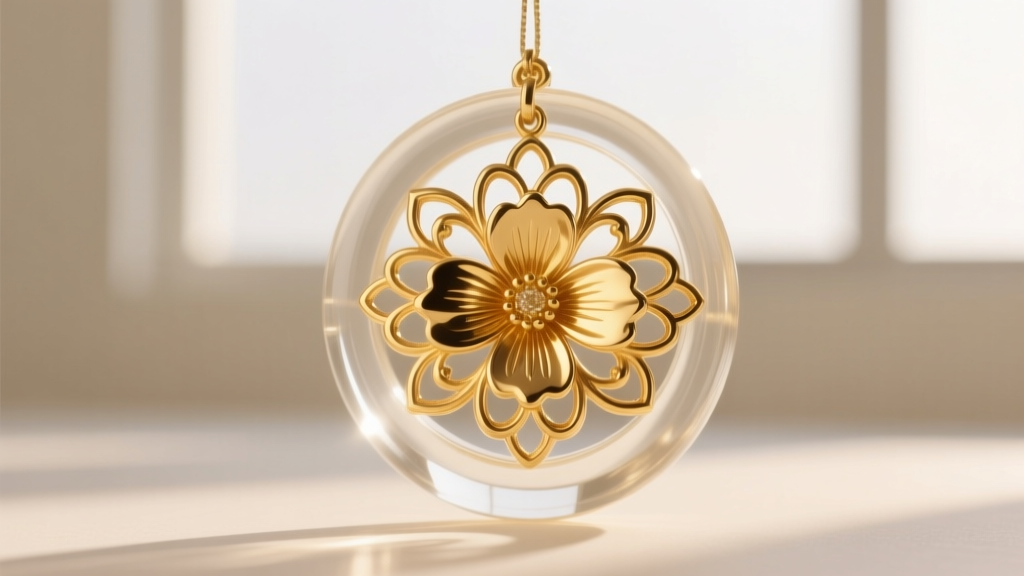
Cultural appreciation has evolved into sophisticated Neo-Heritage minimalism. Historically, Chinese and Indian bridal jewelry relied heavily on 22k and 24k gold. In 2026, contemporary designers are taking those traditional motifs—like the Chinese ruyi cloud or the Indian paisley—and stripping them down to sleek, laser-cut geometric silhouettes. Because laser cutting doesn't require the metal to be bent or stressed, it is perfectly suited for pure gold. These pieces are often finished with a brushed or matte texture to hide the micro-scratches that pure gold inevitably accumulates.
3. Resin and Gold Juxtaposition
Avant-garde jewelers are leaning heavily into material juxtaposition. By encasing fragile 24k gold filigree in crystal-clear, jeweler-grade epoxy resin, designers create structural rings and pendants that would be impossible in solid pure gold. The resin acts as a shock absorber and a protective barrier against oxidation and skin acids, while the 24k gold provides a striking, warm contrast against the cold, modern polymer. This trend is particularly popular in statement cocktail rings and oversized sculptural cuffs.
Material Breakdown: 24k vs. 22k vs. 18k
When shopping for high-karat pieces, it is vital to understand the trade-offs between purity and durability. The table below outlines the critical differences for buyers in the 2026 market.
| Karat | Purity % | Vickers Hardness (HV) | Color Profile | Best Application | 2026 Market Premium |
|---|---|---|---|---|---|
| 24k | 99.9% | ~25 HV | Deep, rich orange-yellow | Investment bangles, pendants, cultural wear | 5% - 15% over spot |
| 22k | 91.6% | ~55 HV | Warm, saturated yellow | Intricate heritage jewelry, heavy earrings | 8% - 20% over spot |
| 18k | 75.0% | ~125 HV | Bright, balanced yellow | Everyday rings, gemstone settings, chains | 20% - 60% over spot |
Data compiled from metallurgical standards and market analyses by the World Gold Council.
Sourcing and Authenticity: Avoiding the Trap
Because 24k gold jewelry commands a significant premium over its melt value, the market is unfortunately rife with counterfeit or misrepresented pieces. According to the Gemological Institute of America (GIA), the most reliable hallmark for pure gold is the "999" or "999.9" stamp, alongside the traditional "24k" mark.
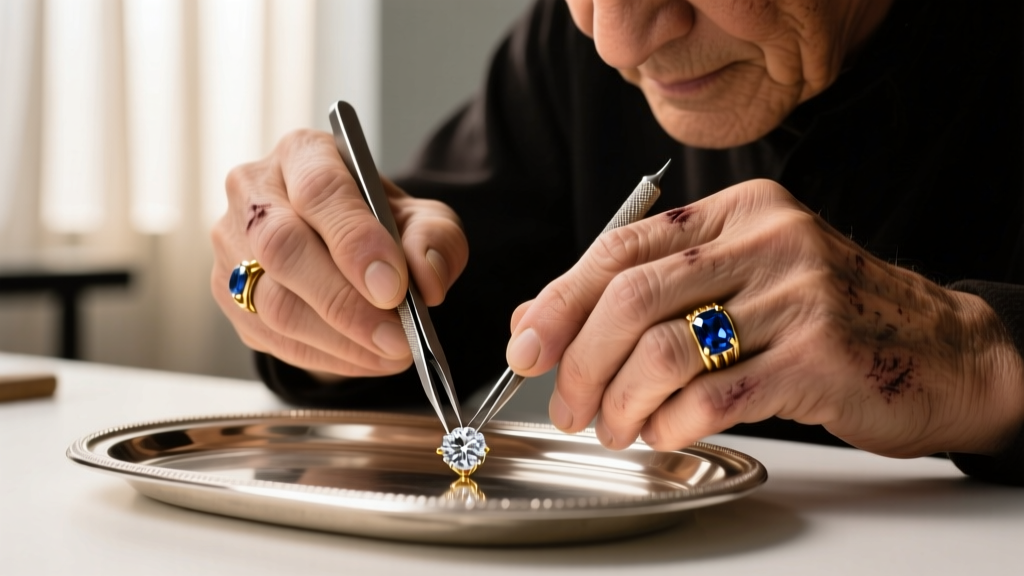
However, stamps can be faked. If you are investing in high-ticket 24k gold jewelry, always demand an XRF (X-ray Fluorescence) test from a certified jeweler. This non-destructive test penetrates the surface layer to verify the exact elemental composition, ensuring you haven't purchased a thick 24k gold-plated tungsten or brass core. Furthermore, pure gold has a specific gravity of 19.32 g/cm³, making it exceptionally dense. A genuine 24k gold bangle will feel surprisingly heavy for its size compared to lower-karat or plated alternatives.
"In 2026, we are seeing a massive influx of buyers treating jewelry as a tangible asset class. But buying 24k gold requires a shift in mindset: you are buying a soft, living metal that will patina and mark. Embracing those marks as part of the asset's history is key to enjoying pure gold." — Market Analyst, Forbes Advisor
Care and Maintenance for Ultra-Soft Pieces
Caring for 24k gold jewelry is counterintuitive. Because it is so soft, traditional jewelry cleaning methods can actually destroy the piece. Follow these strict protocols to maintain your pure gold assets:
- Never Use Ultrasonic Cleaners: The high-frequency vibrations can cause micro-fractures in electroformed 24k gold or dislodge delicate wirework.
- Avoid Polishing Cloths: Commercial polishing cloths contain mild abrasives designed to remove tarnish. Since 24k gold does not tarnish, using these cloths will simply strip away microscopic layers of your pure gold, reducing its weight and value over time.
- The Microfiber Method: To clean, soak the piece in lukewarm water with a drop of phosphate-free dish soap. Gently agitate, rinse with distilled water, and pat dry with a clean, lint-free microfiber cloth.
- Storage is Critical: Never store 24k gold in a communal jewelry box. It must be kept in a soft, individual flannel pouch to prevent harder metals or gemstones from scratching its surface.
Final Thoughts on the Pure Gold Movement
The resurgence of 24k gold jewelry in 2026 represents a fascinating intersection of finance, cultural heritage, and avant-garde fashion. By understanding the metallurgical realities of pure gold and embracing modern design innovations like resin encapsulation and electroforming, collectors can safely integrate these liquid assets into their daily wardrobes. Whether you are drawn to the brutalist investment-wear trend or the delicate beauty of Neo-Heritage minimalism, pure gold remains the ultimate expression of enduring value.