Soft Gold Jewelry: A Technical Guide to 22k and 24k Alloys
Explore the metallurgy of soft gold jewelry. We analyze Vickers hardness, structural engineering for 22k/24k pieces, and failure modes for daily wear.

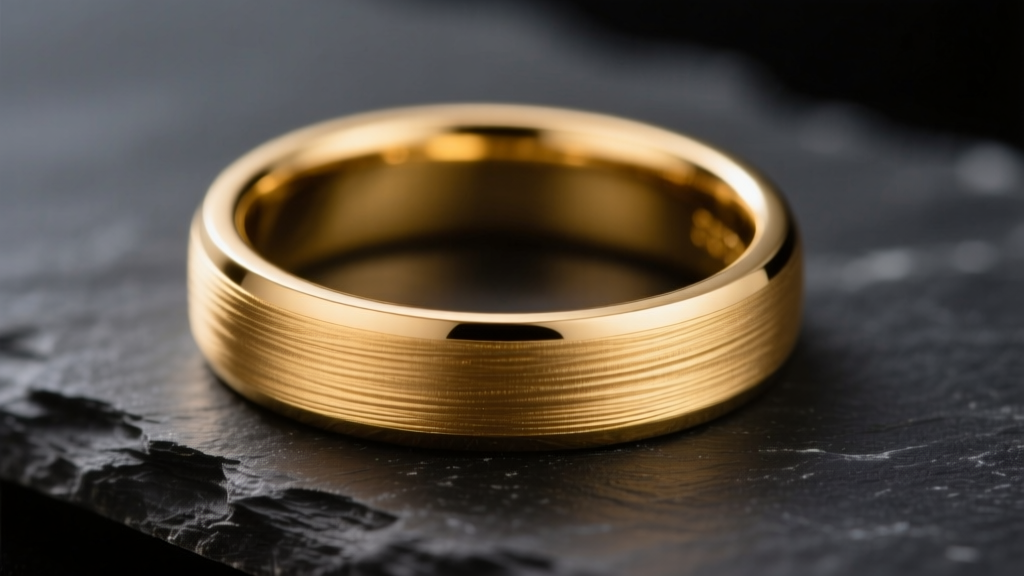
When collectors, metallurgists, and bench jewelers discuss soft gold jewelry, they are rarely referring to a tactile sensation or a specific visual finish. Instead, "soft" is a strict metallurgical classification denoting high-karat gold—specifically 22k and 24k alloys—that lacks the structural rigidity of lower-karat alternatives. Because pure gold is inherently malleable and ductile, crafting wearable pieces from these high-purity metals requires a deep understanding of crystallography, geometric engineering, and mechanical manipulation. This technical deep dive explores the material science behind soft gold jewelry, quantifying its physical properties and detailing the specialized techniques required to make it viable for daily wear.
The Crystallography of Pure Gold
To understand why 24k gold is classified as "soft," we must examine its atomic structure. Pure gold (Au) crystallizes in a face-centered cubic (FCC) lattice. In metallurgy, FCC structures possess multiple slip planes—directions along which planes of atoms can easily slide past one another when subjected to mechanical stress. This phenomenon, known as dislocation glide, is the fundamental reason for gold's extreme malleability and ductility.
Unlike 14k or 18k gold, where alloying metals like copper, nickel, or zinc introduce atomic "roadblocks" that impede dislocation movement and increase yield strength, 24k soft gold jewelry is 99.9% pure. Without these interstitial or substitutional alloying atoms to lock the crystal lattice in place, the metal deforms under minimal pressure. According to the Gemological Institute of America (GIA), this purity is highly prized for its rich, unadulterated yellow hue and hypoallergenic properties, but it presents severe structural challenges for jewelry meant to withstand the kinetic forces of daily life.
Quantifying Softness: Vickers Hardness and Tensile Data
In materials science, softness is not a subjective term; it is measured using standardized scales. The Vickers Hardness (HV) test and Yield Strength (measured in Megapascals, MPa) provide the most accurate comparison of how different gold karats respond to scratching, bending, and permanent deformation. The table below illustrates the drastic drop in structural integrity as gold purity increases.
| Karat | Purity (%) | Vickers Hardness (HV) | Yield Strength (MPa) | Primary Use Case |
|---|---|---|---|---|
| 14k | 58.3% | 135 - 160 HV | 350 - 450 MPa | Everyday rings, prong-set diamonds |
| 18k | 75.0% | 110 - 130 HV | 250 - 320 MPa | Fine jewelry, secure gemstone settings |
| 22k | 91.6% | 65 - 85 HV | 120 - 160 MPa | Heavy bangles, bezel-set cabochons |
| 24k | 99.9% | 25 - 40 HV | 30 - 60 MPa | Investment pieces, soft gold jewelry pendants |
As the data indicates, 24k gold possesses roughly one-fifth the Vickers hardness of 14k gold. A standard steel door key (approx. 200 HV) will effortlessly gouge a 24k gold band, whereas it may only leave a superficial mark on 14k gold. Furthermore, the low yield strength of 24k gold means that a ring can easily bend out-of-round simply from the wearer gripping a steering wheel or carrying heavy grocery bags.
Engineering Soft Gold Jewelry for Structural Integrity
Because bench jewelers cannot rely on chemical hardening (alloying) to strengthen 22k and 24k pieces, they must rely on geometric mass and mechanical manipulation. Designing soft gold jewelry requires a departure from traditional, delicate jewelry aesthetics in favor of structural redundancy.
The Euro-Shank and Mass Distribution
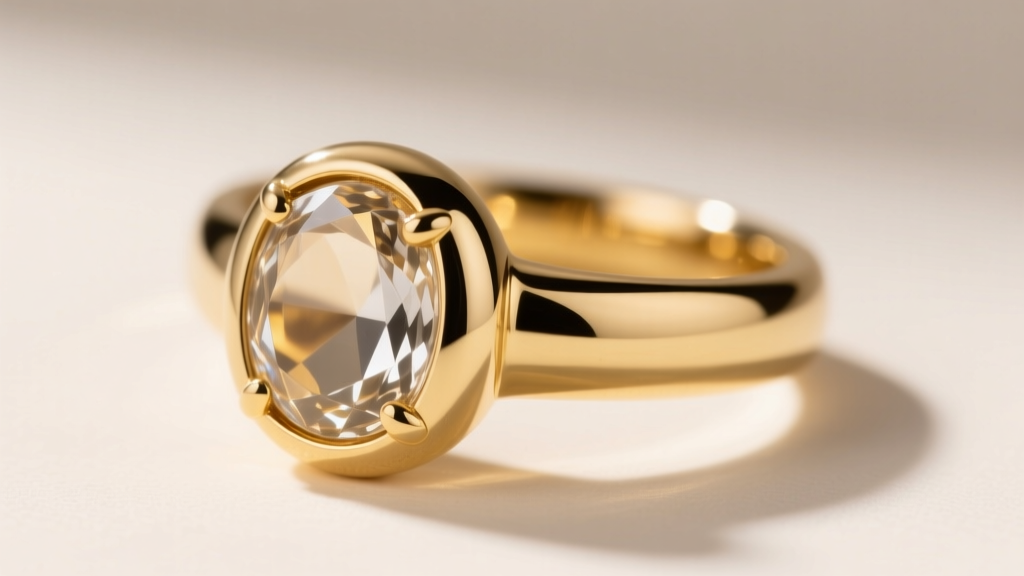
One of the most effective engineering solutions for high-karat rings is the Euro-shank. Unlike a traditional circular shank, a Euro-shank features a squared or flattened bottom. This design serves two critical functions for soft gold jewelry:
- Increased Cross-Sectional Mass: The corners of the square add significant metal volume exactly where the ring experiences the most compressive stress (the palm side of the finger), drastically increasing the moment of inertia and resisting bending.
- Anti-Spin Geometry: High-karat gold is dense. A heavy 24k ring with a large bezel-set stone will naturally spin on the finger. The flat bottom of a Euro-shank rests against the adjacent fingers, stabilizing the piece without requiring ring guards or sizing beads.
Work Hardening vs. Annealing
Work hardening (or strain hardening) is a mechanical process used to increase the yield strength of soft gold jewelry. By hammering, rolling, or drawing the metal, the jeweler intentionally introduces a high density of dislocations into the FCC crystal lattice. As these dislocations tangle and intersect, they lock the lattice in place, making the metal significantly harder and more spring-like.
However, work hardening has a strict limit. If pushed too far, the gold becomes brittle and will crack. To relieve internal stresses without completely softening the metal, jewelers use precise annealing—heating the gold to a specific temperature (typically around 400°C to 500°C for high-karat alloys) and quenching it. Mastering the balance between a work-hardened exterior and an annealed, ductile core is the hallmark of expert high-karat bench work.
Alloying 22k Gold: The "Crown Gold" Compromise
While 24k represents absolute purity, 22k gold (91.6% pure) is often considered the apex of soft gold jewelry, balancing rich color with a marginal increase in durability. Historically referred to as "Crown Gold" because it was used to mint British sovereigns, 22k alloys rely on a precise 8.4% trace mixture of silver and copper.
"The addition of copper to a 22k alloy not only increases the tensile strength by disrupting the gold lattice but also shifts the spectral reflectance, giving the soft gold jewelry a warmer, deeper orange-yellow patina that is highly sought after in Middle Eastern and South Asian markets." — World Gold Council Metallurgical Reports.
Even with this 8.4% alloying buffer, 22k gold remains fundamentally soft. Prong settings are almost entirely avoided in 22k manufacturing. Instead, jewelers utilize bezel settings, where a continuous wall of soft gold is burnished tightly over the girdle of a gemstone. This encapsulates the stone, protecting both the metal prongs from lifting and the gemstone from impact.
Failure Modes and the Burnishing Maintenance Framework
Owning soft gold jewelry requires a paradigm shift in maintenance. The standard care protocols recommended for 14k or 18k jewelry can actually destroy high-karat pieces. Understanding the specific failure modes is essential for long-term preservation.
Creep Deformation and Prong Lift
"Creep" is the tendency of a solid material to move slowly or deform permanently under the influence of persistent mechanical stresses. In soft gold jewelry, a ring that fits perfectly in January may slowly ovalize by August due to the continuous, low-level stress of daily wear. Furthermore, if a 22k ring features even minimal prong work, the prongs are highly susceptible to "lift." A lateral force as minor as catching the ring on a denim pocket seam can bend a 22k prong away from the diamond, leading to catastrophic stone loss.
The Burnishing Maintenance Protocol
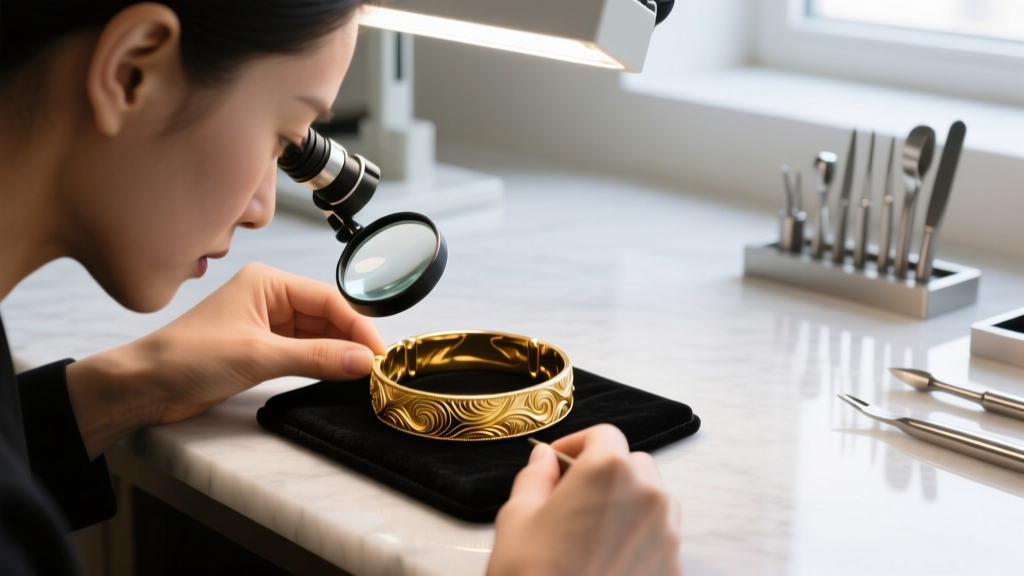
When soft gold jewelry accumulates micro-scratches and develops a dull patina, the instinct is to polish it. Never use abrasive polishing compounds or motorized buffing wheels on 24k or 22k gold. Because the metal is so soft, abrasive polishing will remove significant layers of gold, altering the architectural integrity of the piece and thinning the shank over time.
Instead, experts utilize a burnishing protocol:
- Ultrasonic Avoidance: Never place soft gold jewelry with porous stones (like turquoise or opals) in an ultrasonic cleaner; the vibrations can fracture the stones, and the chemical baths can tarnish the trace copper alloys in 22k pieces.
- Agate Burnishing: A jeweler will use a hardened agate or steel burnishing tool to manually rub the surface of the gold. This does not remove metal; rather, it compresses the surface layer, closing micro-scratches and pushing the dislocations back into a dense, highly reflective arrangement.
- Patina Acceptance: For many collectors, the soft, satiny patina that develops on 22k and 24k gold is a desired feature, proving the authenticity and purity of the metal. Embracing this natural oxidation and surface wear is often preferred over aggressive restoration.
Ultimately, soft gold jewelry is not designed for the rigors of manual labor or high-impact athletics. It is an exercise in material purity, requiring intelligent geometric design and specialized, non-abrasive maintenance to ensure these high-karat masterpieces survive for generations.


