What Is the Best Way to Care for Gold Jewelry? Expert Cleaning Tips
Discover what is the best way to care for gold jewelry. Learn expert cleaning methods for 14k, 18k, and 24k gold to restore shine and prevent damage.

The Science of Gold Tarnish and Wear
When enthusiasts and collectors ask, what is the best way to care for gold jewelry, the answer always begins with understanding the metallurgy of the piece. Pure gold (24k) is a noble metal, meaning it is highly resistant to corrosion, oxidation, and tarnish. However, because pure gold is exceptionally soft—measuring only 25 to 30 on the Vickers hardness scale—it is rarely used for everyday jewelry. To increase durability, gold is alloyed with metals like copper, silver, zinc, and nickel to create 18k, 14k, and 10k gold.
Tarnish on gold jewelry is not the gold itself degrading; it is the alloyed metals reacting to environmental factors. Copper and silver, common in 14k and 18k rose and yellow gold, react with sulfur compounds in the air, lotions, and human sweat to form copper sulfide and silver sulfide. This manifests as a dull, darkened film on the surface. Furthermore, exposure to chlorinated water can cause "stress corrosion cracking" in lower-karat gold alloys, a catastrophic failure mode where the microscopic alloy bonds break down, leading to prong failure and chain snapping. Understanding these chemical vulnerabilities is the first step in establishing a proper maintenance routine.
What Is the Best Way to Care for Gold Jewelry? The Core Routine
For routine maintenance of solid gold pieces without porous gemstones (like opals, pearls, or emeralds), the mild soap soak method remains the undisputed gold standard recommended by gemologists. This process safely lifts sebum, dead skin cells, and environmental dust without abrading the metal.
Step 1: The Mild Soap Soak
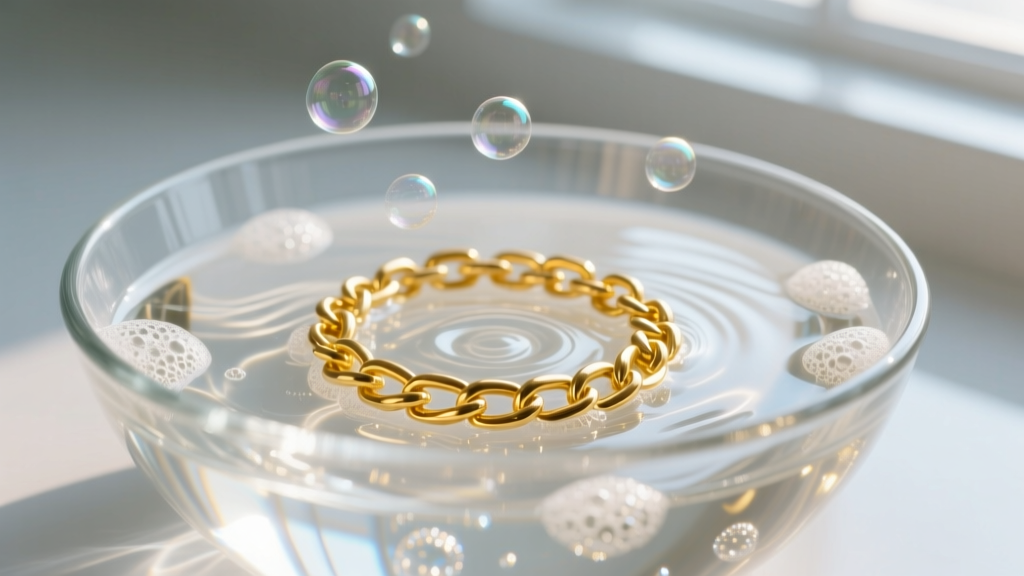
Fill a glass or ceramic bowl with lukewarm water—never hot, as extreme temperature shifts can stress gemstone settings. Add three to four drops of a pH-neutral, phosphate-free dish soap (such as original Dawn). Avoid soaps with heavy moisturizers or exfoliating beads, which can leave a filmy residue or cause micro-scratches. Submerge your gold jewelry and let it soak for 15 to 20 minutes. This dwell time is critical; it allows the surfactants to break down the molecular bonds of oils and grime trapped in intricate filigree or under bezel settings.
Step 2: Gentle Agitation
After soaking, use a dedicated, ultra-soft baby toothbrush (look for bristles rated 0.1mm or finer) to gently agitate the surface. Brush in small, circular motions, paying special attention to the backs of settings and chain links where debris accumulates. Never use a standard adult toothbrush, as the stiff nylon bristles can inflict micro-scratches on high-polish gold finishes, particularly on softer 18k and 22k pieces.
Step 3: Rinsing and Drying
Rinse the jewelry under a gentle stream of lukewarm tap water. To prevent losing pieces down the drain, always perform this step over a silicone sink strainer or a plugged basin. Pat the jewelry dry with a lint-free microfiber cloth. Avoid paper towels or tissue paper, as their wood-pulp fibers can leave microscopic scratches on highly polished gold surfaces.
Karat-Specific Care: 10k vs. 14k vs. 18k vs. 24k
The optimal care frequency and handling precautions shift depending on the karat weight of your jewelry. Higher karat gold requires less chemical intervention but more physical protection, while lower karat gold demands more frequent cleaning to stave off alloy tarnish.
| Karat | Gold Purity | Common Alloys | Tarnish Risk | Cleaning Frequency | Primary Care Focus |
|---|---|---|---|---|---|
| 24k | 99.9% | None | None | Monthly | Preventing physical dents and scratches |
| 22k | 91.6% | Copper, Silver | Very Low | Bi-Weekly | Gentle polishing, avoiding bending |
| 18k | 75.0% | Copper, Zinc, Silver | Low to Moderate | Weekly / Bi-Weekly | Removing skin oils, checking prongs |
| 14k | 58.3% | Copper, Nickel, Zinc | Moderate | Weekly | Tarnish removal, avoiding chlorine |
| 10k | 41.7% | High Alloy Mix | High | Weekly / As Needed | Aggressive tarnish management, moisture control |
Advanced Maintenance: Dealing with Scratches and Dullness
Over time, solid gold jewelry will inevitably accumulate a patina of micro-scratches from daily wear. While some collectors appreciate this satin-like finish as a record of the piece's history, others prefer a mirror-like high polish. According to the Gemological Institute of America (GIA), restoring a high polish requires abrasive action that removes a microscopic layer of gold.
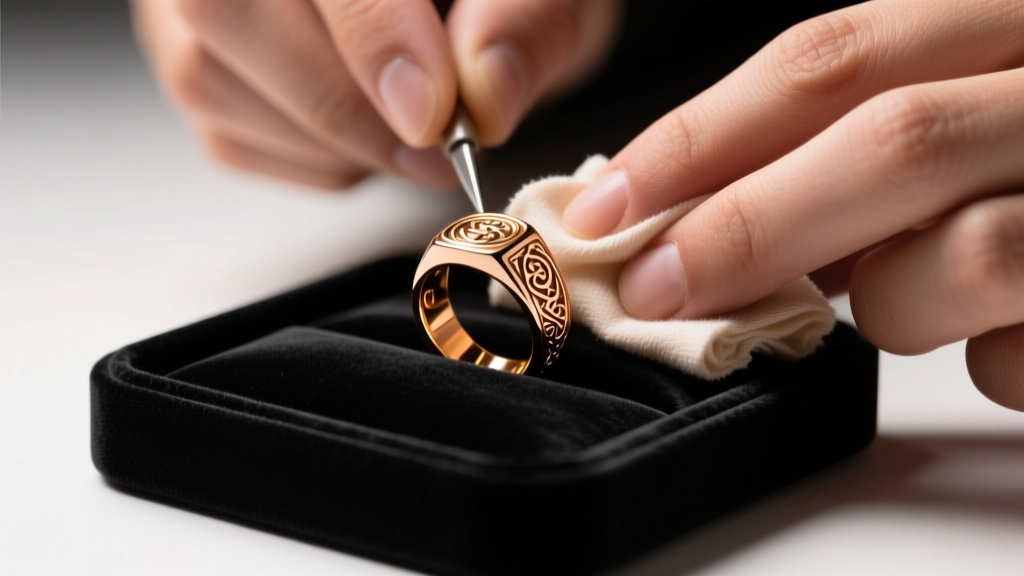
For light surface dullness, use a treated jeweler's polishing cloth (such as a Sunshine cloth). These cloths are impregnated with ultra-fine jeweler's rouge and mild anti-tarnish agents. Rub the cloth gently in one direction rather than in circles to avoid creating visible cross-hatch scratch patterns. Crucial Warning: Never use polishing cloths on gold-plated, gold-filled, or gold vermeil jewelry, as the abrasive action will strip the gold layer entirely, exposing the base metal beneath.
For deep scratches or structural dents, DIY fixes are insufficient and risky. Take the piece to a certified bench jeweler who can perform a professional "buff and polish" using a motorized polishing wheel with tripoli or rouge compounds, followed by an ultrasonic steam clean to remove the polishing compound residue.
What to Avoid: The Biggest Gold Cleaning Mistakes
Knowing what not to do is just as critical as knowing the proper cleaning techniques. Many common household hacks actively destroy gold jewelry. Avoid these catastrophic mistakes:
- Chlorine Exposure: Never wear gold jewelry in swimming pools or hot tubs. Chlorine reacts with the copper and zinc alloys in 14k and 18k gold, causing "stress corrosion cracking." This weakens the structural integrity of the metal, often resulting in the sudden snapping of chain links or the failure of gemstone prongs.
- Toothpaste and Baking Soda: Internet forums often suggest using toothpaste or baking soda pastes to clean gold. These substances are highly abrasive (ranking 3 to 4 on the Mohs hardness scale) and will severely scratch the gold surface, leaving a dull, matte finish that requires professional re-polishing to fix.
- Indiscriminate Ultrasonic Cleaners: While ultrasonic cleaners (operating at 40kHz frequencies) are excellent for shaking dirt out of plain gold chains and diamond settings, they can shatter fragile gemstones often set in gold, such as emeralds, opals, tanzanite, and fracture-filled diamonds. Furthermore, the high-frequency vibrations can loosen poorly set stones from their prongs.
- Harsh Chemical Dips: Commercial silver dips containing thiourea or cyanide-based compounds are formulated for silver sulfide removal and will chemically etch or discolor gold alloys.
Professional Servicing and Storage Best Practices
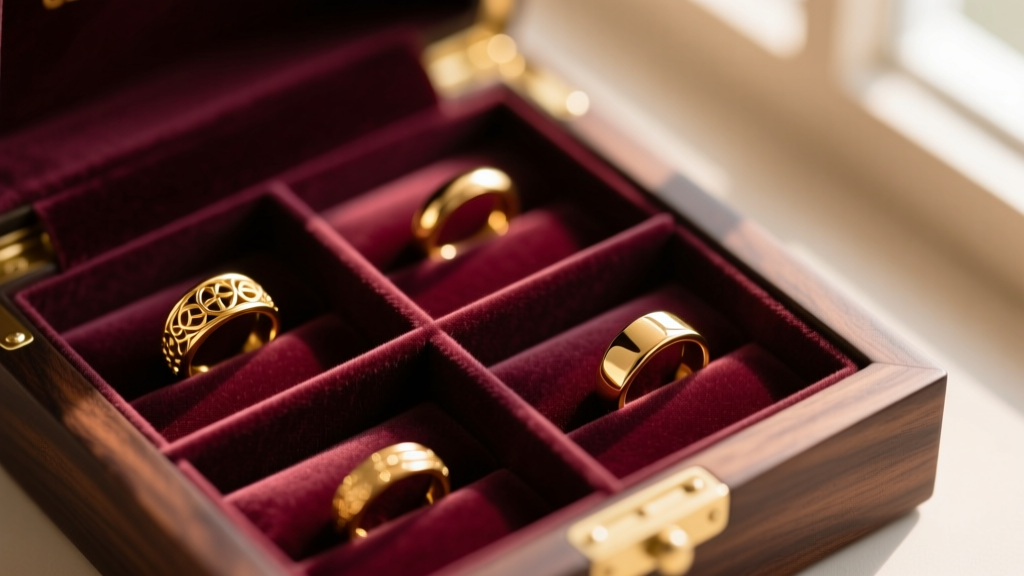
Proper storage is the final pillar of gold jewelry maintenance. When not being worn, gold pieces should never be tossed loosely into a communal jewelry box. Gold is easily scratched by harder gemstones like diamonds, sapphires, and rubies (which rank 9 and 10 on the Mohs scale). Store each piece individually in a soft, lint-free flannel pouch or a velvet-lined compartment.
To combat environmental tarnish, particularly for 10k and 14k gold, place activated charcoal packets or specialized anti-tarnish strips (which absorb hydrogen sulfide and sulfur dioxide from the air) inside your jewelry box or safe. Replace these strips every six months to maintain their efficacy.
Finally, adhere to an annual professional servicing schedule. As recommended by Jewelers of America, a professional jeweler should inspect your gold jewelry once a year. They will use a 10x loupe to check for prong wear, ring shank thinning, and microscopic stress fractures that are invisible to the naked eye, ensuring your investment remains secure and structurally sound for generations.


