Fixing & Verifying Brazilian Gold Jewelry: A Troubleshooting Guide
Discover how to troubleshoot Brazilian gold jewelry. Learn to verify 750 hallmarks, fix tarnish on 18k alloys, and repair traditional woven chains.

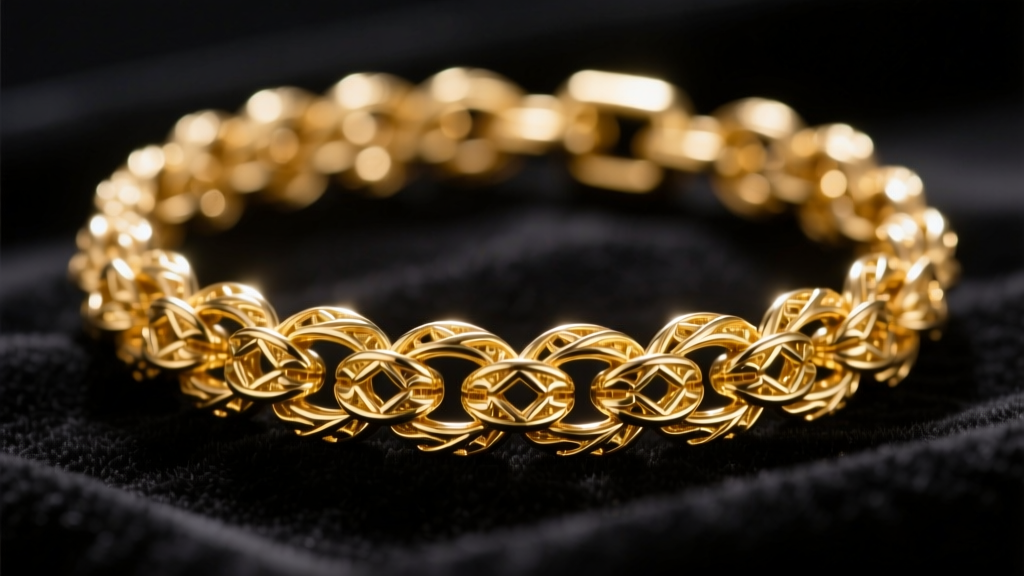
Brazilian gold jewelry is globally celebrated for its rich, warm hues, intricate woven designs, and substantial weight. However, the unique metallurgical standards and traditional crafting techniques used in Brazil present specific challenges for owners and jewelers outside the country. Whether you are trying to verify the authenticity of a vintage piece from São Paulo, troubleshoot unexpected tarnish on an 18k ring, or repair a snapped woven chain, standard US or European jewelry repair protocols often fall short.
This comprehensive troubleshooting guide dives deep into the material science and structural realities of Brazilian gold jewelry. We will cover hallmark verification, alloy-specific tarnish removal, and advanced repair strategies for traditional Brazilian chain styles, ensuring your pieces retain their structural integrity and iconic warmth.
The 750 Standard: Decoding Brazilian Hallmarks and Authenticity
In the United States, 14k gold is the market standard. In Brazil, the undisputed king is 18k gold, locally stamped and referred to as Ouro 750. Understanding this hallmark is the first step in troubleshooting authenticity issues. Unlike the strict assay office regulations in the UK, Brazilian hallmarking relies heavily on the manufacturer's maker's mark alongside the '750' purity stamp.
Troubleshooting Fake or Misleading Stamps
Counterfeiters often laser-etch '750' onto gold-plated brass or tungsten cores. To troubleshoot authenticity without immediately resorting to destructive testing, follow this diagnostic framework:
- Visual Stamp Inspection: Authentic Brazilian maker's marks are typically punched, resulting in a slight compression of the metal around the numbers. Laser-etched fakes will sit perfectly flush or show microscopic burn marks under a 10x jeweler's loupe.
- The Neodymium Magnet Test: While gold is non-magnetic, the internal clasps and spring mechanisms might be steel. However, if the chain links themselves exhibit any pull toward a strong neodymium magnet, the piece is heavily alloyed with ferrous metals or is entirely fake.
- 18k Acid Testing Protocol: Use a specialized 18k testing acid (a precise mixture of nitric and hydrochloric acids). Scratch the piece on a testing stone. If the mark holds its bright golden color, it is genuine 18k. If it turns milky, it is likely 14k or 10k. If it dissolves into a greenish puddle, it is gold-plated base metal.
According to the Gemological Institute of America (GIA), visual and magnetic tests are only preliminary. For high-value Brazilian gold pieces, X-ray fluorescence (XRF) spectrometry remains the only non-destructive way to confirm the exact 75% gold, 15% copper, and 10% silver alloy ratio typical of premium Brazilian jewelry.
Troubleshooting Discoloration and Tarnish in 18k Alloys
One of the most common complaints from new owners of Brazilian gold jewelry is unexpected tarnishing. Pure gold does not tarnish, but the 25% alloy mix in 18k gold certainly can. Brazilian jewelers traditionally favor a higher copper-to-silver ratio to achieve that signature deep, warm yellow glow. This higher copper content makes the metal more susceptible to oxidation and sulfur reactions.
The Chemistry of Brazilian Gold Tarnish
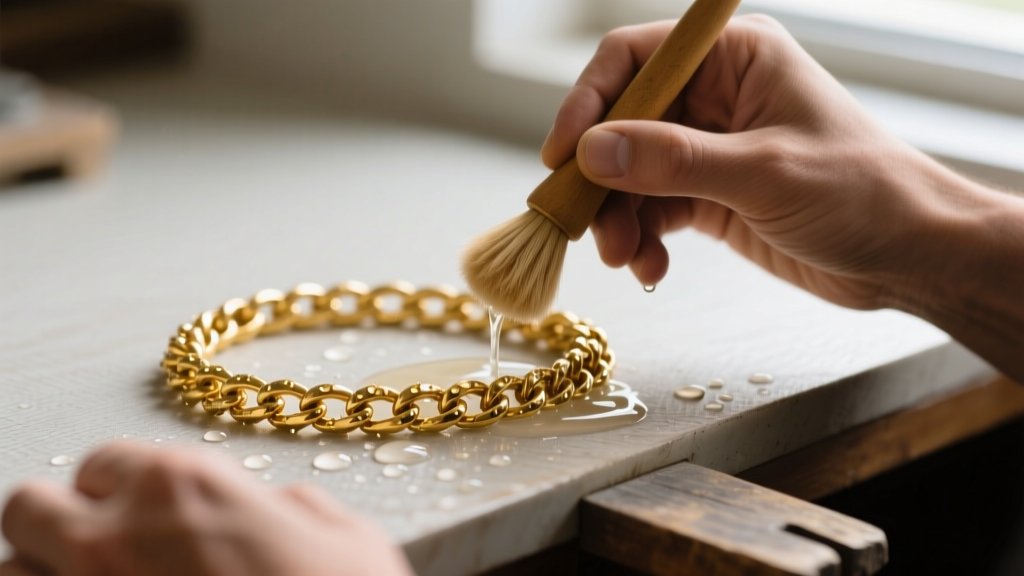
When the copper in the alloy reacts with sulfur compounds in the air, or with the chlorides and acids present in human sweat, it forms copper sulfide or copper chloride on the surface. This manifests as a dull, dark, or slightly reddish film over the jewelry. Furthermore, exposure to chlorinated pools or harsh household bleach can cause 'stress corrosion cracking' in high-copper 18k alloys, leading to catastrophic structural failure.
Actionable Cleaning and Restoration Steps
Do not use commercial silver dips or harsh ammonia-based cleaners, as these can strip the copper from the surface layer, leaving a pale, porous finish. Instead, use this gentle restoration method:
- Mix warm distilled water with a few drops of phosphate-free dish soap (like Dawn).
- Submerge the jewelry for 10 minutes to loosen surface oils.
- Gently agitate with an extra-soft baby toothbrush, paying special attention to the interlocking links.
- Rinse thoroughly in distilled water and dry immediately with a microfiber cloth.
Ultrasonic Warning: Avoid ultrasonic cleaners for traditional hollow woven chains. The high-frequency vibrations can trap moisture inside the hollow links, leading to internal corrosion that is impossible to dry out.
Structural Failures in Traditional Brazilian Chains
Brazilian chain-making is an art form, characterized by dense, intricate weaves. However, these specific architectures are prone to unique mechanical failures. Troubleshooting a broken chain requires identifying the specific weave and applying the correct metallurgical fix.
| Chain Style | Common Failure Mode | Troubleshooting & Repair Strategy |
|---|---|---|
| Cordão Baiano (Bahian Woven Mesh) | Snagging, pulling, and localized stretching due to the tight interlocking mesh catching on fabrics. | Cannot be simply soldered. Requires a master jeweler to carefully re-weave the displaced links using fine pliers, followed by laser welding to secure the tension points. |
| Elo Grumet (Brazilian Cuban Link) | Link deformation and thinning at the friction points where links rub against each other. | Reshape deformed links on a steel mandrel. If wear is >20% of the wire thickness, the link must be cut out and replaced with a custom-cast 750 alloy link. |
| Fio de Malha (Wire Mesh / Snake Chain) | Severe kinking. Once the continuous wire mesh bends past its yield point, it creates a permanent weak spot. | Un-kinking is impossible without breaking the wire structure. The damaged section must be excised, and the chain re-capped with new end-rings. |
Soldering and Resizing: Matching the Brazilian Alloy
When a Brazilian gold chain breaks, taking it to a standard local jeweler often results in a visible, pale seam at the repair site. This is a classic alloy mismatch problem. Standard US 18k yellow gold solder is formulated to match the paler, more silver-heavy US and European 18k alloys. When applied to a high-copper Brazilian 18k chain, the solder joint will look like a bright, unnatural scar.
The Custom Solder Solution
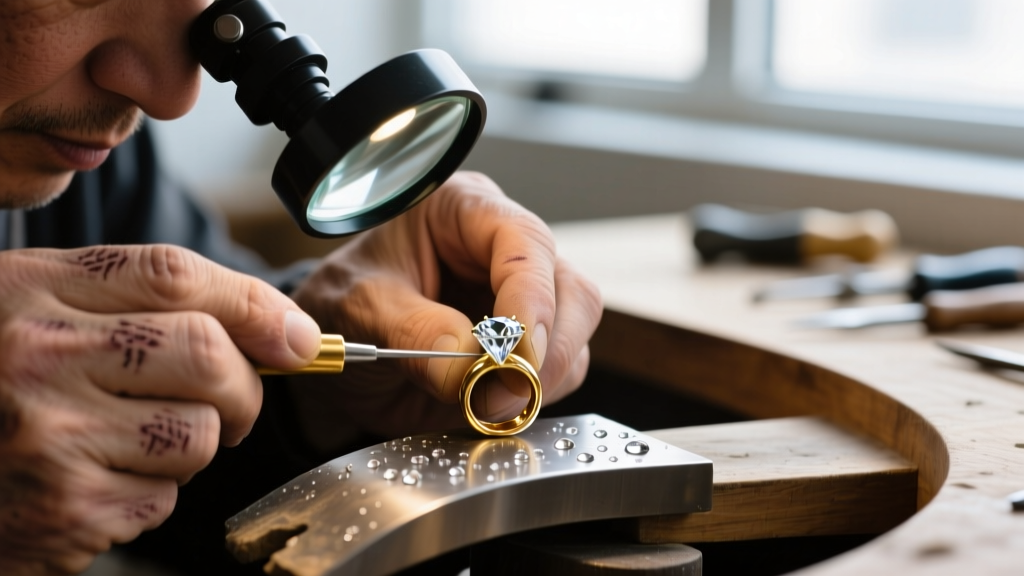
To achieve an invisible repair, the jeweler must match the copper content. According to metallurgical guidelines referenced by suppliers like Rio Grande, jewelers should utilize a high-copper 18k plumb solder. Alternatively, the most authentic troubleshooting method involves 'clip soldering': the jeweler cuts a tiny clipping from the chain itself, flattens it, and uses it as the solder material with a specialized fluoride-based flux. This guarantees a 100% color match, as the filler metal is identical to the base metal.
Laser Welding vs. Torch Soldering
For intricate weaves like the Cordão Baiano, traditional torch soldering is highly risky. The heat required to flow the solder can easily melt the adjacent, incredibly thin wire meshes. Laser welding is the mandatory troubleshooting protocol here. A laser welder uses a concentrated pulse of light to fuse the metal in a fraction of a second, leaving the surrounding links completely unaffected by heat.
Upgrading Failing Clasp Mechanisms
The final major point of failure in Brazilian gold jewelry is the clasp. Traditional Brazilian chains frequently utilize the Argola (O-ring) clasp paired with a figure-eight safety catch. While elegant, the O-ring relies entirely on the spring tension of the gold wire.
Troubleshooting Clasp Tension Loss
Gold is a malleable metal. Over time, the repeated pulling and wearing of the jewelry causes the O-ring to stretch and lose its temper (springiness). If the wire gauge of the O-ring is under 1.2mm, it will inevitably pull open, resulting in a lost chain.
The Fix: If you are troubleshooting a repeatedly failing O-ring clasp, do not simply bend it back into shape; the metal is already work-hardened and fatigued. The permanent solution is to have a jeweler fabricate a new O-ring using a heavier 1.5mm or 1.8mm wire gauge of 18k gold, or to upgrade the piece to a heavy-duty, spring-loaded 18k lobster clasp. For high-value pieces, always consult a professional affiliated with organizations like Jewelers of America to ensure the replacement hardware matches the original 750 purity standard.
By understanding the unique 750 alloy composition, respecting the structural limits of traditional weaves, and employing targeted repair techniques, you can effectively troubleshoot and preserve the legacy of your Brazilian gold jewelry for generations.