What Does an Ounce of Gold Look Like in Jewelry? Expert Weight Guide
Discover what does an ounce of gold look like in jewelry. We break down troy ounce weights, dimensions, and visual scales for chains, rings, and bangles.

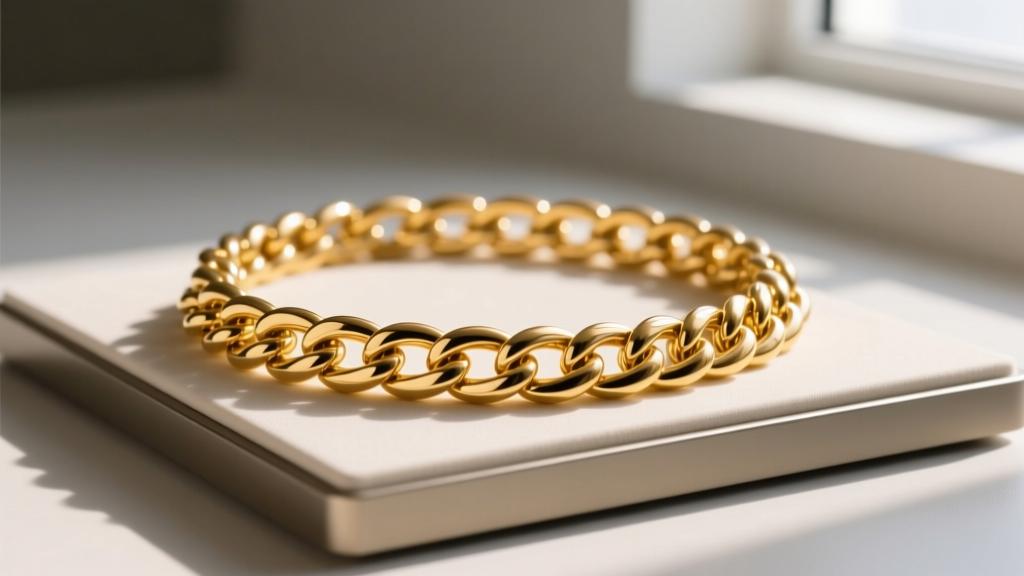
The Mathematics of Gold: Troy Ounces vs. Grams
When collectors, investors, and enthusiasts ask what does an ounce of gold look like in jewelry, the answer requires a fundamental understanding of precious metal metrology. In the jewelry industry, gold is exclusively measured using the troy ounce, not the standard avoirdupois ounce used in everyday kitchen measurements. One troy ounce equates to exactly 31.1035 grams, whereas a standard ounce is only 28.35 grams. This 10% difference is critical when calculating the physical dimensions and material costs of heavy jewelry pieces.
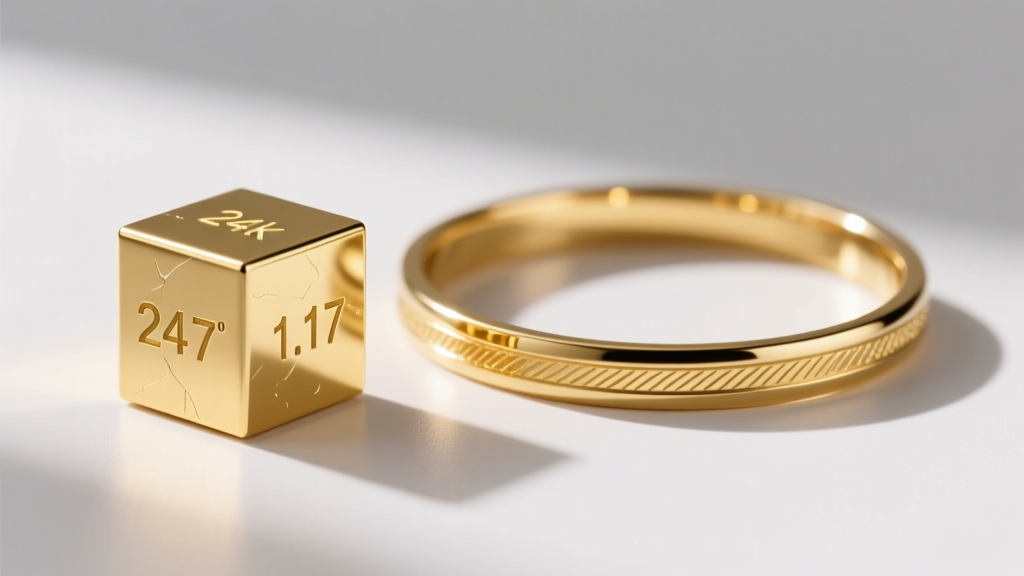
Pure gold is remarkably dense, with a specific gravity of 19.32 g/cm³. To visualize this, one troy ounce of pure 24k gold forms a cube measuring just 1.17 centimeters on each side. However, because pure gold is too malleable for daily wear, it is alloyed with metals like copper, silver, and zinc. These alloys alter both the color and the physical density of the metal, meaning a one-ounce 14k gold chain will occupy more physical volume than a one-ounce 24k gold coin. According to the Gemological Institute of America (GIA), understanding these alloy ratios is essential for predicting the final dimensions of any cast or extruded jewelry piece.
Visualizing One Troy Ounce Across Jewelry Categories
To truly grasp what does an ounce of gold look like in jewelry, we must translate 31.1 grams into specific, real-world jewelry silhouettes. The visual footprint varies drastically depending on the manufacturing technique (solid vs. hollow) and the structural requirements of the piece.
Heavy Chains and Necklaces
In the realm of chains, 31.1 grams represents a substantial, luxury-tier piece. For a classic solid 14k yellow gold Miami Cuban link chain, one troy ounce translates to a width of approximately 4.5mm to 5.0mm at a standard 22-inch length. If you prefer a more intricate pattern, such as a solid Figaro or a Rope chain, one ounce yields a thicker profile—roughly 5.5mm to 6.0mm—because these links trap more air and require complex interlocking geometries that distribute the metal differently. It is vital to ensure the chain is completely solid; hollow electroformed chains can mimic the 8mm width of a 2-ounce chain while weighing only 10 grams, but they dent easily and lack the structural integrity of solid links.

Rings and Signets
For rings, an ounce of gold is exceptionally heavy. A standard men's 6mm wedding band in 14k gold, sized at a US 10 with a comfort fit, typically weighs between 7 and 9 grams. Therefore, you would need to wear nearly four identical wedding bands on your hand to equal the weight of a single troy ounce. If you are looking at a single piece that weighs one ounce, you are entering the territory of oversized, heavy-duty signet rings or massive pinky rings with thick shanks (often 3mm to 4mm thick at the base) and large, solid faceplates measuring over 18mm across. These pieces make a bold, undeniable statement and sit heavily on the finger, requiring a precise fit to prevent them from sliding off due to their own momentum.
Bracelets and Bangles
A one-ounce gold bangle is a masterclass in structural engineering. For a standard 65mm (2.5-inch) diameter oval bangle, 31.1 grams of 14k gold allows for a solid, rounded profile approximately 3.5mm thick. This provides enough rigidity to resist bending when leaning on a desk or doorframe. For chain bracelets, such as a 7.5-inch Curb or Figaro bracelet, one ounce allows for a massive, chunky width of 8mm to 10mm, creating a piece that covers a significant portion of the wrist and catches the light from every angle.
How Karat Purity Alters Volume and Dimensions
A common misconception is that an ounce of gold always looks the same size. As highlighted by data from the World Gold Council, the karat purity directly dictates the alloy's overall density. Because alloying metals like copper (8.96 g/cm³) and silver (10.49 g/cm³) are significantly lighter than pure gold, lower-karat golds are less dense. Consequently, a 31.1-gram piece of 10k or 14k gold will physically look larger and thicker than a 31.1-gram piece of 22k or 24k gold.
| Karat | Gold Purity | Approx. Density (g/cm³) | Volume of 1 Troy Ounce (cm³) | Visual Footprint in Jewelry |
|---|---|---|---|---|
| 24k | 99.9% | 19.32 | 1.61 | Most compact, smallest visual size, highly malleable |
| 22k | 91.6% | 17.50 | 1.77 | Slightly larger, traditional for heavy Indian bangles |
| 18k | 75.0% | 15.60 | 1.99 | Noticeably thicker profiles, ideal balance of color and durability |
| 14k | 58.3% | 13.50 | 2.30 | Bulkiest, largest physical dimensions, highly scratch-resistant |
Expert Sizing and Wearability Framework
Designing or purchasing a piece of jewelry that weighs exactly one troy ounce introduces specific mechanical challenges that lightweight jewelry simply does not face. The most critical failure point in heavy chains and bracelets is the clasp assembly.
Expert Troubleshooting Tip: Never rely on a standard spring-ring clasp for a chain weighing over 20 grams. The dynamic load generated by the chain swinging can easily snap the internal spring mechanism. For a 31.1-gram chain, mandate a heavy-duty, solid-cast lobster clasp measuring at least 12mm, or preferably, a custom-milled box clasp with a dual figure-8 safety catch.
Furthermore, the jump rings connecting the clasp to the chain must be soldered shut. An unsoldered jump ring will slowly pull apart under the constant 31.1-gram gravitational load, eventually leading to the loss of the piece. When evaluating a one-ounce ring, pay close attention to the interior shank. A 'comfort fit' dome interior is highly recommended over a 'flat fit' or 'euro shank', as the rounded interior distributes the heavy weight more evenly across the finger, preventing the ring from acting as a fulcrum that digs into the knuckle.
The Economics of a One-Ounce Piece
When purchasing jewelry by weight, buyers must understand the premium structure. Tracking the daily spot price via resources like Kitco provides the baseline melt value of the metal. However, a finished one-ounce jewelry piece will always carry a fabrication premium. For a basic 14k gold chain, expect to pay the spot value of the gold content (roughly 0.583 oz of pure gold) plus a 15% to 30% markup for manufacturing, polishing, and retail overhead. Intricate designs, like hand-assembled Byzantine chains, can command premiums exceeding 100% of the melt value due to the intensive labor required to weave and solder hundreds of individual links. Ultimately, understanding what does an ounce of gold look like in jewelry bridges the gap between viewing gold as a mere financial asset and appreciating it as a masterfully engineered, wearable sculpture.


