US Tariffs Impact Indian Gold Jewelry: 2026 Care Guide
Discover how US tariffs impact Indian gold jewelry in 2026 and learn expert care, cleaning, and storage tips to protect high-karat heirlooms.

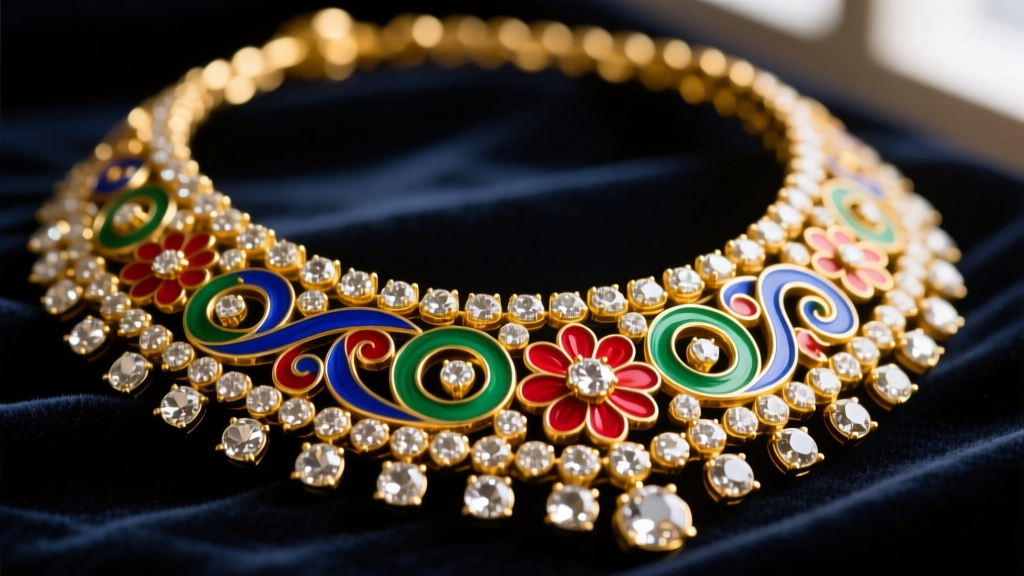
The 2026 Trade Shift: Why Preserving Indian Gold Matters Now
The global jewelry market has undergone a massive restructuring over the last twelve months. As new trade policies take effect, US tariffs impact Indian gold jewelry imports by inflating the landed cost of artisanal, high-karat pieces by an estimated 18% to 25%. According to the World Gold Council, the combination of rising raw gold prices and stringent 2026 luxury import valuations means that replacing a damaged or lost 22k Indian heirloom is now a significant financial burden.
For collectors, brides, and everyday wearers of traditional Indian jewelry, the economic reality is clear: preventive maintenance is no longer just about aesthetics; it is an essential strategy for asset preservation. Intricate techniques like Jadau, Meenakari, and Temple jewelry require highly specialized artisanal labor to repair—labor that is now heavily taxed at the border. This comprehensive guide provides actionable, expert-level care protocols to protect your Indian gold pieces from environmental degradation, chemical damage, and structural failure.
Understanding Traditional Indian Gold Alloys and Finishes
Unlike the 14k or 18k gold commonly used in Western jewelry, traditional Indian pieces are predominantly crafted in 22k gold (91.6% pure gold). The remaining 8.4% consists of alloy metals, typically copper and silver. While this high purity gives the jewelry its signature rich, buttery yellow hue, it also introduces unique vulnerabilities.
- Copper Oxidation: Copper provides structural integrity but is highly reactive to oxygen and moisture, leading to dark tarnish spots, especially in crevices.
- Softness and Malleability: 22k gold is exceptionally soft. Prongs can bend easily, and heavy pieces can warp under their own weight if stored improperly.
- Matte and Sandblasted Textures: Many contemporary and antique Indian designs feature matte finishes. These microscopic textures trap skin oils, lotions, and environmental dust, dulling the piece over time.
The Vulnerability of Kundan and Polki Settings
The most critical maintenance challenges arise in Kundan and Polki jewelry. Kundan setting involves using highly refined 24k gold foil strips to secure gemstones, backed by lac (a natural tree resin). Exposure to heat, ultrasonic vibrations, or harsh chemical solvents will melt or crack the lac, causing stones to dislodge. Similarly, Polki jewelry features uncut diamonds backed by delicate silver foil to enhance reflectivity. When exposed to sulfur in the air or sweat, this silver foil rapidly oxidizes, turning black and making the diamond appear cloudy and lifeless.
Specialized Cleaning Protocols for High-Karat Indian Pieces
Standard commercial jewelry dips and ultrasonic cleaners are strictly prohibited for Indian gold jewelry. The Gemological Institute of America (GIA) warns that high-frequency ultrasonic waves can shatter uncut Polki diamonds and fracture fragile Meenakari enamel. Instead, adopt a meticulous, manual cleaning regimen.
| Finish / Technique | Safe Cleaning Agent | Recommended Tools | Strictly Avoid |
|---|---|---|---|
| 22k High Polish | pH-neutral dish soap & distilled water | Microfiber cloth, soft baby toothbrush | Ammonia, bleach, abrasive pastes |
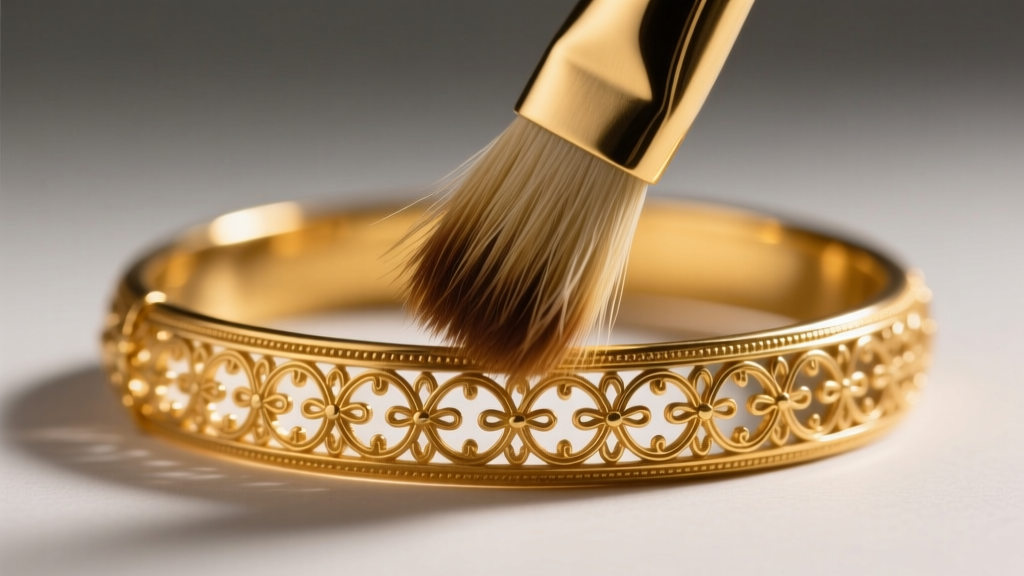
| 22k Matte / Filigree | Warm distilled water only | Natural horsehair brush, wooden picks | Liquid dips, ultrasonic cleaners |
| Kundan / Polki | Dry cleaning only | Soft, untreated jeweler's cloth | Water, steam, chemicals, heat |
| Meenakari (Enamel) | Damp microfiber cloth | Cotton swabs for crevices | Hard bristles, ultrasonic, acids |
Step-by-Step Maintenance for 22k Matte and Oxidized Gold
For solid 22k gold pieces without fragile gemstone settings (such as Temple jewelry bangles or matte-finish chains), follow this safe cleaning protocol:
- Prepare the Solution: Mix three drops of pH-neutral, phosphate-free dish soap into a bowl of lukewarm distilled water. (Tap water contains chlorine and minerals that can spot high-karat gold).
- Soak Briefly: Submerge the jewelry for no more than 3 to 5 minutes to loosen sebum and cosmetic buildup.
- Agitate Gently: Use a natural horsehair brush to gently sweep across matte textures and filigree. Never use nylon or synthetic bristles, which can leave micro-scratches on 22k gold.
- Rinse and Dry: Rinse under a gentle stream of distilled water. Pat dry with a lint-free microfiber cloth, then use a hairdryer on the 'cool' setting to evaporate moisture trapped in deep crevices.
Never use toothpaste or baking soda on Indian gold. These abrasives possess a Mohs hardness of 3 to 4, which is sufficient to permanently scratch and dull the soft 22k gold surface, stripping away intricate matte detailing.
Storage and Climate Control for Intricate Heirlooms
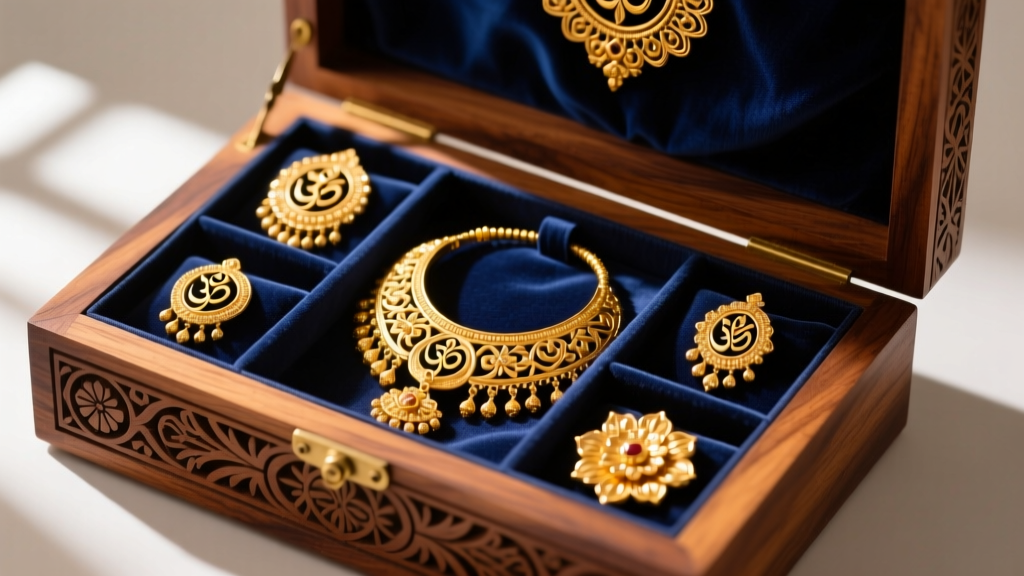
Proper storage is your first line of defense against the sulfur and humidity that cause alloy tarnishing and silver-foil oxidation. Because the US tariffs impact Indian gold jewelry replacement costs so heavily, investing in archival-quality storage is a fraction of the price of commissioning a new piece.
Anti-Tarnish Strategies for Silver-Backed Polki
To protect the silver foil backing in Polki and Kundan sets, you must control the micro-climate of your storage environment.
- Humidity Control: Maintain a relative humidity (RH) level between 40% and 50%. Store silica gel desiccant packets in your jewelry safe, replacing them every three months.
- Anti-Tarnish Strips: Place 3M anti-tarnish tabs inside individual storage pouches. These tabs absorb airborne sulfur compounds before they can reach the silver foil.
- Isolation: Never store Polki jewelry in standard plastic zip-lock bags, as PVC and certain plastics emit gases that accelerate tarnishing. Use treated, anti-tarnish flannel pouches or acid-free tissue paper.
When to Seek Professional Restoration (and Tariff-Related Cost Realities)
Despite meticulous care, structural issues like worn threads in pearl strands, bent prongs, or cracked lac resin will eventually require professional intervention. According to US Customs and Border Protection trade updates, importing specialized repair services or replacement artisanal components from India is now subject to the same rigorous tariff schedules as finished goods.
Expect professional restoration costs for high-karat Indian jewelry to range from $150 for simple re-stringing to over $800 for complex Kundan stone resetting and lac replacement. To mitigate these costs, establish a relationship with a local jeweler who specializes in South Asian or high-karat metallurgy. Inspect your heavy necklaces and bangles every six months, checking the back of the settings for any signs of lac crumbling or gold foil lifting. Catching a loose stone early prevents the loss of the gem and avoids the exorbitant expense of sourcing a matching, tariff-inflated replacement.


