How to Clean Gold Plated Jewelry Safely: Expert Guide
Learn how to clean gold plated jewelry safely without stripping the finish. Expert steps, safe solutions, and micron-thickness care tips inside.

Gold plating offers the luxurious, warm aesthetic of solid 18k or 24k gold at a fraction of the cost. However, the thin veneer of gold—often measuring less than a single micron—requires highly specific care. Many collectors and everyday wearers accidentally ruin their favorite pieces by treating them like solid gold. Many buyers ask how clean gold plated jewelry can safely get before the base metal shows. The secret lies in understanding the metallurgy beneath the surface and avoiding common household cleaning mistakes. This guide provides a meticulous, step-by-step framework to safely remove body oils, lotions, and environmental tarnish without compromising the delicate electroplated layer.
The Metallurgy of Plating: Why Standard Cleaning Fails
To properly care for these pieces, you must understand what gold plating actually is. According to the Federal Trade Commission (FTC), standard "gold electroplate" must have a minimum thickness of 0.175 microns (about 7 millionths of an inch). "Heavy gold electroplate" (HGE) requires at least 2.5 microns. By comparison, a human hair is roughly 70 microns thick. The Gemological Institute of America (GIA) notes that because this layer is microscopic, the base metal—usually brass, copper, or sometimes sterling silver—dictates the structural integrity of the piece.
When base metals are exposed to sulfur in the air or chlorine in water, they oxidize. If you use abrasive cleaners, you physically scrub away the 0.5-micron gold layer, exposing the reactive brass underneath. Once the base metal is exposed, galvanic corrosion accelerates, leading to rapid tarnishing and the dreaded "green skin" effect. Therefore, the goal of cleaning gold plated jewelry is not to polish it, but to gently lift surface debris without creating micro-abrasions.
The Safe Cleaning Toolkit
Before you begin, gather materials that are chemically inert and physically soft. Avoid any commercial "jewelry dips" or ultrasonic machines.
- Phosphate-Free Dish Soap: A mild, phosphate-free liquid soap (like Dawn Ultra or a pure Castile soap). Phosphates can leave a microscopic film that dulls the refractive index of the gold.
- Distilled Water: Never use tap water. Tap water contains chlorine, fluoride, and hard minerals (calcium and magnesium) that can cause micro-pitting and leave hard water spots that etch the plating over time.
- Soft-Bristle Baby Toothbrush: The bristles must be ultra-soft to avoid scratching the gold veneer.
- Microfiber Cloths: Lint-free and non-abrasive for patting dry.
- Glass or Ceramic Bowl: Avoid metal bowls which can cause galvanic reactions if the base metal is exposed.
Step-by-Step: How to Clean Gold Plated Jewelry Properly
Follow this exact protocol to safely clean your gold plated rings, necklaces, and earrings. This process should take no more than five minutes per piece.
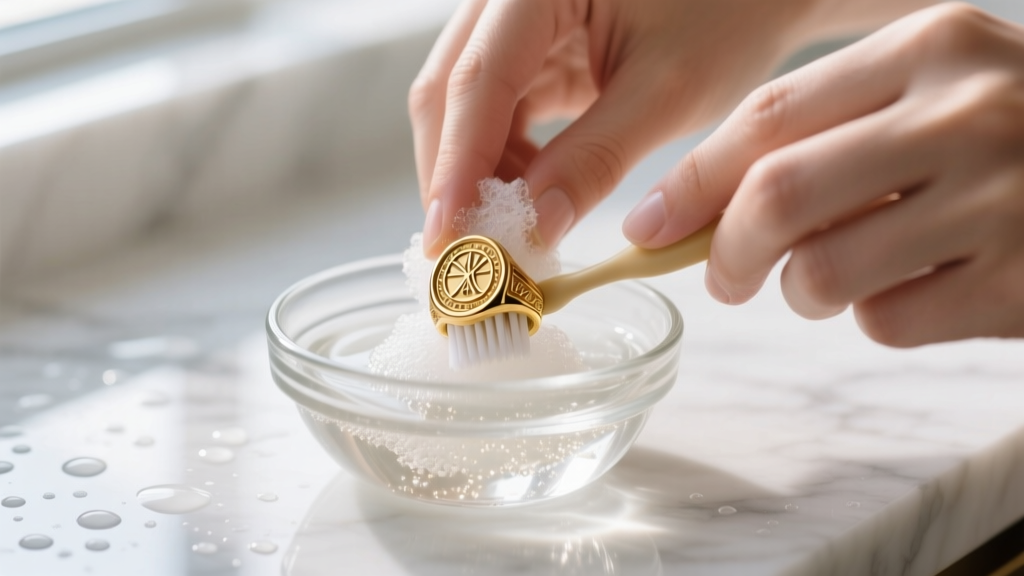
- Prepare the Solution: Fill your glass bowl with lukewarm (never hot) distilled water. Add exactly two drops of your phosphate-free dish soap. Swirl gently with your finger to create a mild lather. Hot water can expand the base metal slightly faster than the gold layer, causing micro-cracking in the plating.
- The Brief Soak: Submerge the jewelry in the solution for a maximum of 3 minutes. This brief window is enough to soften body oils, lotions, and environmental dust without allowing water to penetrate any microscopic fissures in the plating.
- Gentle Agitation: Using the soft-bristle baby toothbrush, gently sweep over the jewelry. Do not scrub in circles; instead, use light, linear strokes to dislodge dirt from crevices, prongs, and chain links. If the piece features porous gemstones (like turquoise, opal, or pearls), skip the brush entirely and use a damp cotton swab around the stone settings.
- The Distilled Rinse: Remove the piece and rinse it under a gentle stream of room-temperature distilled water. This ensures no soap residue or tap water minerals are left behind to cloud the finish.
- Pat and Air Dry: Place the jewelry on a clean microfiber cloth and gently pat it dry. Never rub or polish, as friction generates heat and physical wear. Allow it to air dry completely in a low-humidity room for 15 minutes before storing.
The "Never Use" List: Chemicals That Destroy Plating
The internet is full of DIY jewelry cleaning hacks that are highly destructive to gold plating. Below is a breakdown of common household items you must keep away from your plated pieces.
| Cleaning Agent / Method | Failure Mode & Chemical Reaction |
|---|---|
| Baking Soda Paste | Baking soda has a Mohs hardness of 2.5. Gold is 2.5-3. Scrubbing with baking soda creates micro-scratches in the gold, creating grooves where dirt accumulates and accelerating wear. |
| Whitening Toothpaste | Contains hydrated silica (Mohs hardness 7). This will instantly strip the 0.5-micron gold layer and expose the raw brass base metal. |
| Ultrasonic Cleaners | High-frequency sound waves create microscopic vacuum bubbles that implode (cavitation). This localized shockwave literally blasts the thin gold layer off the substrate. |
| Bleach / Ammonia | Chlorine and ammonia react with the copper and zinc in the brass base metal, causing rapid, irreversible blackening and structural brittleness. |
Dealing with Tarnish and Replating Options
If your gold plated jewelry has already begun to show silver or copper tones beneath the surface, no amount of cleaning will restore the gold color. Tarnish on the base metal means the gold layer has worn through. At this stage, you have two options:
- Embrace the Patina: Some vintage collectors appreciate the worn, antique look of exposed brass and copper beneath fading gold.
- Professional Replating: A local jeweler can polish the base metal and apply a fresh layer of gold. Replating typically costs between $45 and $120, depending on the surface area and whether you choose standard flash plating or a more durable 2.5-micron heavy gold electroplate. Note that if the base metal is deeply pitted, the jeweler may need to laser-weld or fill the divots before plating, which increases the cost.
Proactive Storage and Daily Wear Rules
Preventing the need for deep cleaning is the best strategy for preserving gold plating. The lifespan of a gold plated piece is directly correlated to how it is stored and when it is worn.
The Golden Rule of Jewelry: "Last On, First Off." Your gold plated jewelry should be the very last thing you put on after applying makeup, perfume, hairspray, and lotions, and the very first thing you take off when you return home.
Storage Specifics for Maximum Longevity
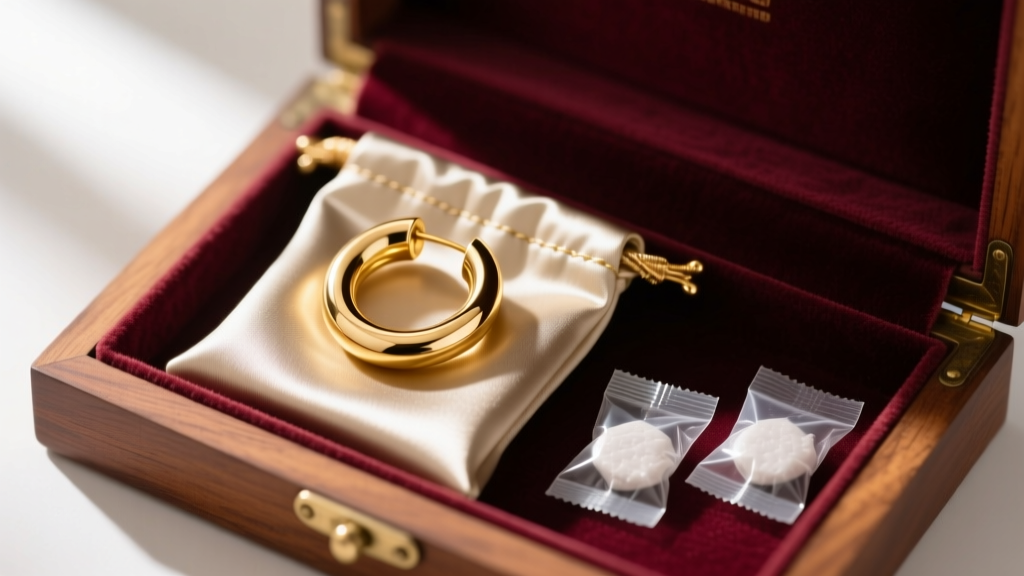
Never store gold plated jewelry in a communal jewelry box where pieces can rub against one another. The friction from a solid sterling silver ring rubbing against a gold plated brass pendant will wear through the plating in a matter of weeks. Instead, store each piece individually in an anti-tarnish ziplock bag. Drop a small silica gel packet into the bag to control ambient humidity, which slows down the oxidation of the base metal. Keep the bags in a dark, cool drawer away from direct sunlight and heating vents. By combining this meticulous storage routine with the gentle, distilled-water cleaning method outlined above, you can easily extend the life of your gold plated jewelry by several years.