Roman Gold Jewelry: Value Assessment & Buying Guide
Assess the true value of Roman gold jewelry. Compare ancient antiquities to modern replicas, analyze purity, and learn authentication frameworks.

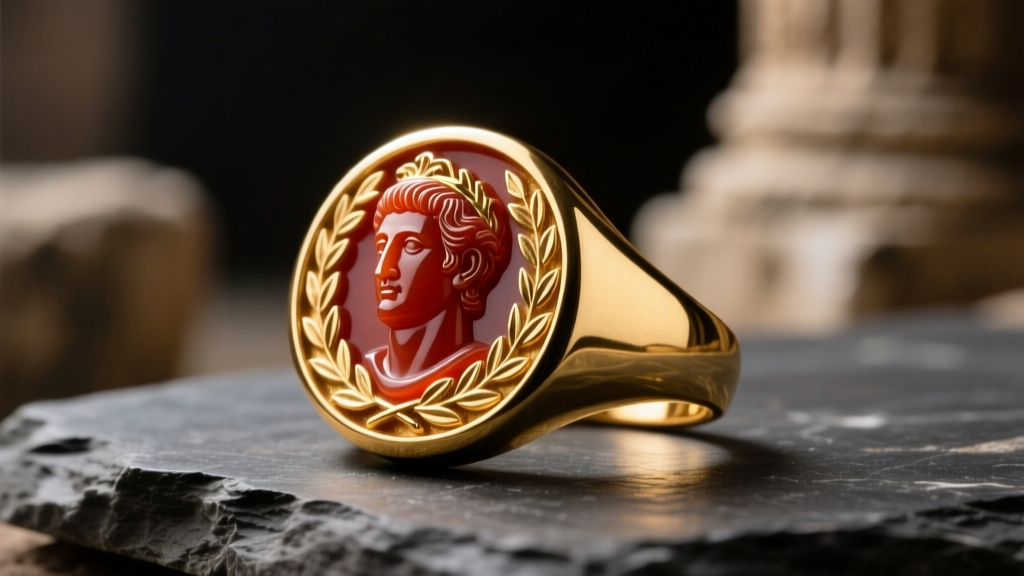
Decoding the Market: Antiquities vs. Historical Replicas
When collectors and enthusiasts search for Roman gold jewelry, they are typically navigating two vastly different markets. The first is the highly regulated, high-stakes antiquities market, featuring genuine artifacts excavated from sites across the former Roman Empire, dating roughly from the 1st century BC to the 4th century AD. The second is the market for historical replicas—modern pieces crafted by artisan jewelers using traditional metallurgical techniques and authentic motifs. Understanding the distinction between these two categories is the foundational step in any budget and value assessment.
Genuine antiquities carry a massive provenance premium. Their value is not merely intrinsic (based on gold weight) but historical, archaeological, and artistic. Conversely, high-end replicas offer the aesthetic and tactile experience of Roman craftsmanship—such as granulation or repoussé—without the legal complexities or the exorbitant price tags of authenticated artifacts. For buyers in 2026, establishing which market you are participating in dictates your budget, your authentication requirements, and your long-term care protocols.
The Metallurgy of Ancient Roman Gold
To accurately assess value, one must understand that ancient Roman gold was not the standardized, highly refined metal we see in modern 24k or 18k jewelry. The Romans utilized a refining process called cupellation, which separated gold from base metals using lead and high heat. However, this process was imperfect. Trace elements of silver and copper almost always remained.
According to metallurgical analyses of artifacts housed in The British Museum Collection, Roman gold jewelry typically ranges between 75% and 85% purity (roughly 18k to 20k). Pure 24k gold was rarely used for structural jewelry like rings or fibulae (brooches) because it is too soft to withstand daily wear, especially when securing heavy stone intaglios. Furthermore, the presence of copper gave many Roman pieces a slightly warmer, rosier hue than modern yellow gold, while higher silver content could result in an electrum-like pale yellow finish.
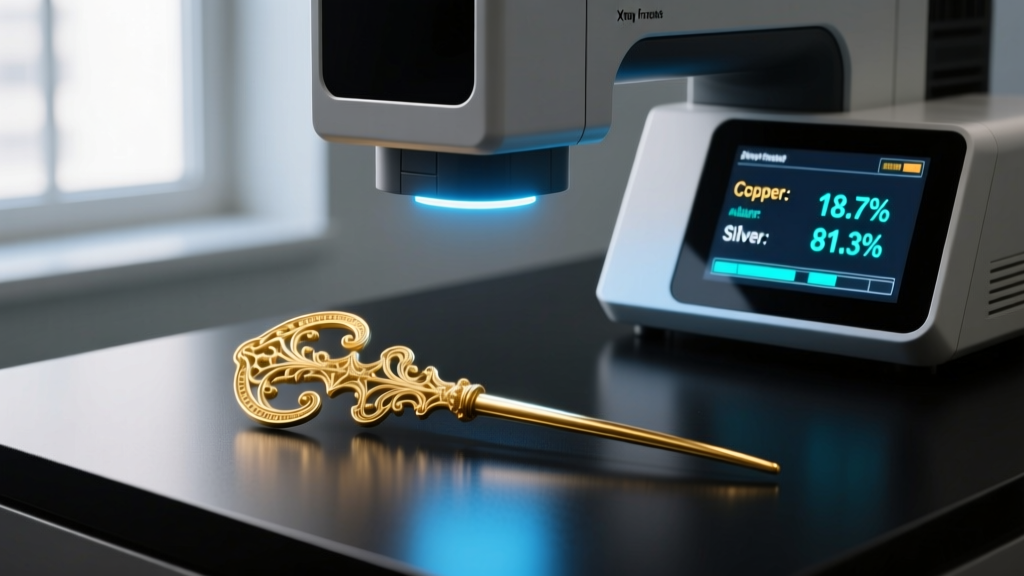
Authentication via XRF Testing
If you are evaluating a genuine antiquity, insist on an X-ray Fluorescence (XRF) spectrometer report. XRF is a non-destructive testing method that reveals the exact elemental breakdown of the metal. A genuine Roman piece will show a natural, uneven alloy distribution with trace elements consistent with ancient smelting (such as bismuth or lead inclusions). Modern forgeries, even those cast in 18k gold, will show a perfectly homogeneous alloy with modern trace elements like zinc or nickel, which the Romans did not use in their gold jewelry.
Identifying Modern Forgeries and 'Tourist Trap' Patina
The market is flooded with counterfeit Roman gold jewelry, particularly in tourist hubs around the Mediterranean. Forgers use several techniques to deceive buyers:
- Artificial Patina: Genuine gold does not tarnish or develop a patina in the way silver or bronze does. If a gold piece is caked in a dark, crusty 'dirt' that smells of sulfur or chemicals, it is likely a modern cast treated with liver of sulfur or acids to simulate centuries of burial.
- Casting Seams: Ancient Roman gold jewelry was primarily constructed through hammering, soldering, and granulation. If you spot a distinct casting seam along the edge of a ring or a hollow bulla amulet, it is a modern lost-wax cast replica.
- Tool Marks: Under 10x magnification, genuine Roman engraving and chasing will show the rhythmic, slightly irregular marks of hand-driven burins. Forgeries often display the smooth, continuous grooves of modern rotary tools (like Dremels) or the sharp, uniform edges of laser engraving.
Budget Breakdown: What to Expect in 2026
The financial commitment required to acquire Roman gold jewelry varies wildly based on authenticity, condition, and provenance. Below is a structured assessment of current market tiers.
| Category | Era / Style | Material / Purity | Estimated Price Range (USD) | Provenance Required |
|---|---|---|---|---|
| Museum-Grade Antiquity | Imperial Era (1st-3rd C. AD) | 18k-20k Ancient Gold | $15,000 - $75,000+ | Strict (Pre-1970 documentation) |
| Standard Antiquity | Republic / Late Empire | 18k Ancient Gold | $3,500 - $12,000 | Required (Export licenses) |
| Fragment / Bead | Various | Ancient Gold | $400 - $1,500 | Recommended |
| Artisan Replica | Historical Recreation | Modern 18k / 22k Gold | $1,200 - $4,000 | None |
| Mass-Market Replica | Inspired Designs | 10k / 14k Gold or Vermeil | $80 - $600 | None |
Authentication and the Provenance Premium
In the antiquities market, provenance is not just a certificate of authenticity; it is a legal shield. The cornerstone of international antiquities law is the UNESCO 1970 Convention, which established a global framework to prevent the illicit trafficking of cultural property. Any Roman gold jewelry excavated or exported from its country of origin after 1970 without explicit government permission is considered illicit.
Never purchase ancient Roman gold without a verifiable paper trail. A piece lacking pre-1970 provenance or documented legal export licenses is a massive financial and legal liability, regardless of its metallurgical authenticity.
Before finalizing a high-value acquisition, cross-reference the piece and its seller against The Art Loss Register, the world’s largest database of stolen art and antiquities. Reputable auction houses like Bonhams or Christie's will provide a dossier including previous exhibition history, old auction catalogs, and export licenses. If a dealer offers a 'guarantee of authenticity' but cannot provide a documented history of ownership prior to 1970, walk away.
Motif Valuation: What Drives the Price?
Not all Roman gold jewelry is valued equally. The specific motif, function, and structural integrity heavily influence the final appraisal.
Signet Rings with Intaglios
Roman signet rings were used to seal wax on official documents. The most valuable examples feature intact, undamaged semi-precious stone intaglios (carved gems) depicting deities like Mars, Jupiter, or Minerva. A gold ring with a pristine carnelian or onyx intaglio can command triple the price of a plain gold band, often exceeding $20,000 at specialized auctions.
Bullae and Amulets
The bulla was a hollow, locket-like amulet worn by freeborn Roman boys to protect against evil spirits. Because they are hollow and constructed from thin sheets of hammered gold, surviving bullae are incredibly fragile. Those that remain uncrushed and retain their original tubular suspension loops are exceptionally rare and highly prized by institutional collectors.
Coin Jewelry (Aurei and Denarii)
The Romans frequently set gold aurei or silver denarii into elaborate gold bezels to create pendants and rings. The value of these pieces is twofold: the numismatic value of the coin (based on the Emperor depicted and the mint) plus the craftsmanship of the gold setting. An intact pendant featuring an aureus of Emperor Augustus set in a granulated gold frame represents the pinnacle of Roman luxury jewelry.
Preservation: The 'Do Not Clean' Rule
If you acquire genuine Roman gold jewelry, your maintenance protocol must be radically different from modern jewelry care. Ancient gold has been buried in varying soil chemistries for two millennia. While gold itself does not corrode, the micro-structure of the metal can become brittle, and the solder joints used by ancient craftsmen are highly susceptible to stress.
Never use ultrasonic cleaners. The high-frequency vibrations can easily shatter ancient stone intaglios or cause microscopic fractures in the gold to propagate, snapping the ring shank. Furthermore, never attempt to 'polish' ancient gold. Polishing removes the microscopic surface topography that archaeologists and appraisers use to verify age and manufacturing techniques. If a piece requires stabilization or cleaning, it must be entrusted to a professional antiquities conservator who will use mechanical cleaning under a microscope, ensuring that historical integrity is preserved alongside the physical artifact.


