What Does 750 Mean on Gold Jewelry? Step-by-Step Guide
Discover exactly what a 750 stamp means on gold jewelry. Follow our step-by-step guide to authenticate, test, and care for your 18k gold pieces.


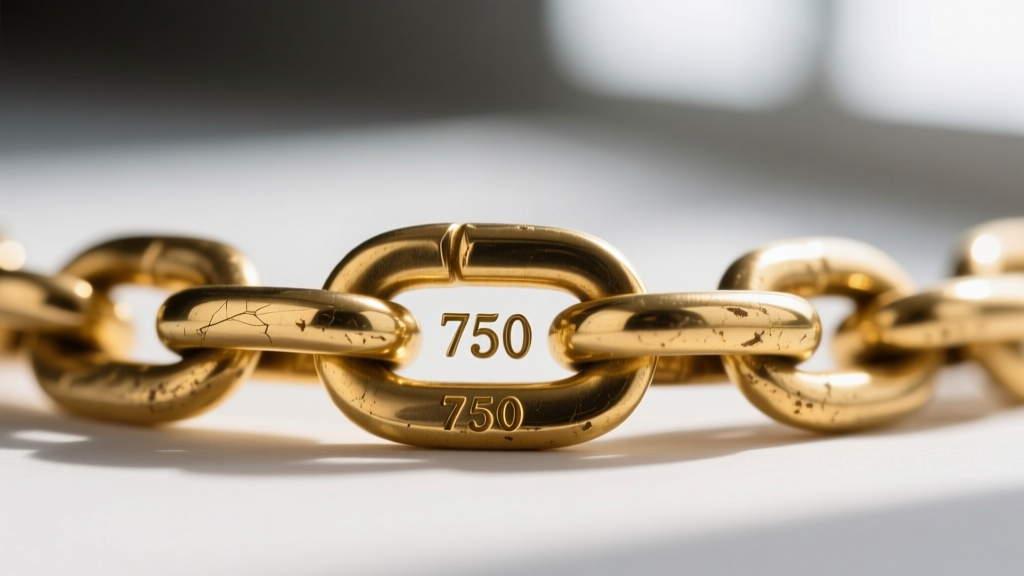
If you have ever examined a high-end ring, necklace, or bracelet, you have likely noticed tiny stamps hidden on the inside of the band or near the clasp. Among the most common of these markings is the number 750. But what does 750 mean on gold jewelry, and how can you verify that the stamp is legitimate? As of 2026, counterfeit hallmarks have become increasingly sophisticated, making it essential for collectors and everyday wearers to understand millesimal fineness and proper authentication techniques.
In this comprehensive, step-by-step guide, we will decode the 750 hallmark, break down the exact metallurgy of 18-karat gold, and provide a professional-grade framework for testing and maintaining your fine jewelry.
The Math Behind the 750 Hallmark (Millesimal Fineness)
In the United States, gold purity is traditionally measured in karats (k), with 24k representing pure gold. However, much of the world—particularly Europe and international luxury markets—uses the millesimal fineness system. This system denotes the purity of the precious metal in parts per thousand.
Therefore, a 750 stamp means the jewelry consists of 750 parts pure gold out of 1,000 total parts. In percentage terms, this is exactly 75% pure gold. The remaining 25% (or 250 parts) is composed of alloy metals like copper, silver, zinc, or palladium, which are added to increase durability and alter the color. In the karat system, 750 gold is exactly equivalent to 18-karat (18k) gold.
| Karat System | Millesimal Stamp | Pure Gold Percentage | Common Usage |
|---|---|---|---|
| 24k | 999 | 99.9% | Investment bullion, soft ceremonial jewelry |
| 22k | 916 | 91.6% | Traditional Indian and Middle Eastern jewelry |
| 18k | 750 | 75.0% | High-end engagement rings, luxury watches |
| 14k | 585 | 58.5% | Everyday wear, durable chains and clasps |
| 10k | 417 | 41.7% | Budget-friendly, highly scratch-resistant pieces |
Step-by-Step Guide to Authenticating a 750 Stamp
A legitimate 750 stamp is a strong indicator of quality, but bad actors frequently laser-engrave fake hallmarks onto gold-plated base metals. Follow these three professional steps to verify your jewelry.
Step 1: Visual Inspection with a 10x Triplet Loupe
Do not rely on the naked eye. Purchase a 10x triplet jeweler's loupe (a triplet lens corrects edge distortion and color fringing). Examine the stamp under bright, direct LED light. A genuine 750 stamp applied by a reputable manufacturer will feature crisp, evenly spaced font edges. Look for a secondary maker's mark or a country-specific assay mark (like an eagle's head for France or a leopard's head for London) adjacent to the 750. If the 750 looks sloppy, melted, or stamped over a different number, the piece is likely altered or counterfeit.
Step 2: The N52 Neodymium Magnet Test
Pure gold and its standard 18k alloys (copper, silver, zinc) are strictly diamagnetic, meaning they are not attracted to magnets. To perform this test, use an N52-grade neodymium magnet. Hold the magnet near the jewelry. If the piece snaps to the magnet or exhibits a noticeable pull, the core is made of a ferromagnetic metal like iron, nickel, or steel, and the 750 stamp is fake. Note: This test will not detect non-magnetic base metals like brass or copper, which is why Step 3 is mandatory.
Step 3: Acid Testing on a Black Testing Stone
For definitive proof, use a jeweler's acid test kit. According to the Gemological Institute of America (GIA), acid testing remains a reliable field method for determining surface and core purity.
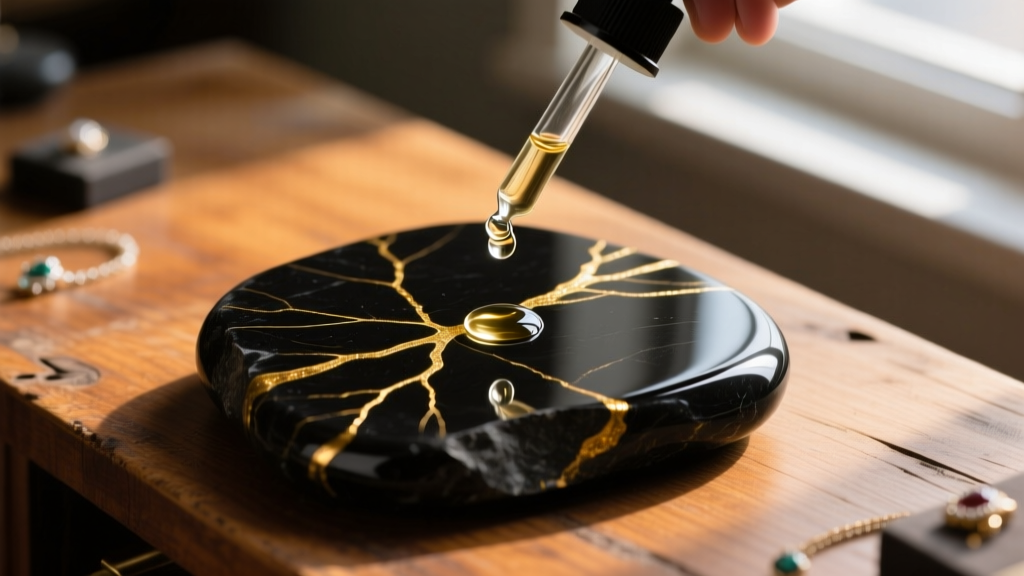
- Rub the item firmly against a black siliceous testing stone to leave a visible metallic streak.
- Apply one drop of 18k test acid (typically a specific concentration of nitric acid) directly onto the streak.
- Observe the reaction. If the streak remains bright and unchanged for at least 30 seconds, the gold is genuinely 18k (750). If the streak dissolves, turns milky, or fades to green, the item is either lower karat, gold-plated, or base metal.
Understanding 18k Gold Alloys: Yellow, White, and Rose
Because 750 gold is 25% alloy, the specific metals mixed into that remaining quarter dictate the final color of the jewelry. Understanding these metallurgical recipes helps you identify authentic pieces and anticipate how they will wear over time.
- 18k Yellow Gold: Typically alloyed with roughly 15% copper and 10% silver. This maintains the rich, warm hue of pure gold while providing enough tensile strength for prong settings.
- 18k White Gold: Alloyed with white metals like palladium, nickel, or manganese. As noted by the Federal Trade Commission (FTC) Jewelry Guidelines, white gold is almost always plated with rhodium to achieve a stark, reflective white finish. If your 750 white gold ring starts looking yellowish over time, it simply needs a rhodium re-plate.
- 18k Rose Gold: Achieves its pinkish-red tint through a higher copper content, often around 20% copper and 5% silver. The high copper content makes 750 rose gold slightly more durable and scratch-resistant than its yellow or white counterparts.
Spotting Fake 750 Stamps and Common Scams
Warning: A 750 stamp only guarantees the purity of the gold layer if the piece is not solid. Always check for secondary markings that indicate plating.
Scammers often use legitimate hallmarks on deceptive constructions. Watch out for these variations:
- Gold Plated (GP or HGE): If you see "750 GP" or "18k HGE" (Heavy Gold Electroplate), the item is made of brass or copper with a microscopic layer of 18k gold on the surface. It holds virtually no melt value.
- Gold Filled (GF): Marked as "1/20 18k GF". This means 5% of the item's total weight is 18k gold, mechanically bonded to a base metal core. While durable, it is not solid 750 gold.
- Vermeil: This is 750 gold plated over sterling silver (925). It is a high-quality alternative to solid gold but will eventually wear down to the silver base.
How to Properly Clean and Maintain 750 Gold
Because 18k gold contains 25% reactive alloy metals, it requires specific care to prevent tarnishing and chemical damage. The copper and silver in 750 gold can oxidize when exposed to harsh chemicals, chlorine, or sulfur.
- The Soak: Mix a few drops of phosphate-free dish soap into a bowl of lukewarm distilled water. Avoid tap water, as heavy minerals and chlorine can leave micro-deposits on the alloy metals.
- The Agitation: Let the jewelry soak for 15 minutes. Gently agitate the water. For intricate settings or chain links, use an extra-soft baby toothbrush to dislodge sebum and lotion buildup.
- The Rinse and Dry: Rinse thoroughly under distilled water. Pat dry with a lint-free microfiber cloth. Never use paper towels, as the wood pulp fibers can cause micro-scratches on highly polished 18k surfaces.
By understanding the millesimal fineness system and utilizing professional verification steps, you can confidently buy, sell, and wear 750 gold jewelry. Whether it is a vintage European estate piece or a modern luxury timepiece, the 750 hallmark remains the global benchmark for the perfect balance of pure gold luxury and everyday durability.


