Where to Buy Gold Jewelry: A Purity & Type Guide
Discover exactly where to buy gold jewelry based on material properties. Compare solid, filled, and vermeil gold to find the right retailer.

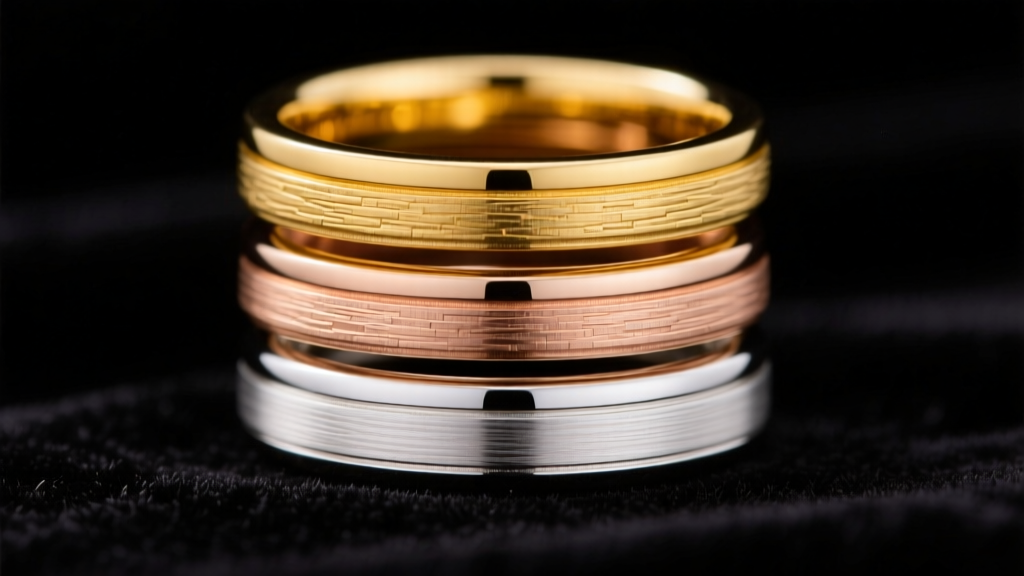
When consumers search for where to buy gold jewelry, they are often met with a dizzying array of retailers, from legacy mall brands to direct-to-consumer Instagram boutiques. However, asking where to buy is the wrong starting point. The correct question is: which metallurgical grade of gold suits my wear habits, and which retailers specialize in that specific material?
In 2026, the jewelry market is more fragmented than ever. Supply chain innovations have allowed independent CAD/CAM casters to offer solid 14k gold at prices that undercut traditional brick-and-mortar stores, while the mid-tier market is flooded with misleading terminology regarding gold vermeil and gold-filled pieces. To make an informed purchase, you must understand the material properties of gold alloys and match them to the right retail environment.
The Metallurgical Matrix: Matching Material to Market
Gold in its pure state (24k) is highly malleable, possessing a Vickers Hardness (HV) of roughly 25. This makes it entirely unsuitable for everyday structural jewelry. To achieve durability, gold is alloyed with metals like copper, silver, zinc, and nickel. The ratio of pure gold to alloy dictates not only the color and karat but also the tensile strength and corrosion resistance of the piece. Retailers generally segment themselves into three distinct tiers based on these material properties: solid gold specialists, mid-tier bonded metal vendors, and fashion-plating manufacturers.
Solid Gold: Karats, Hardness, and Sourcing
Solid gold jewelry is homogeneous; the karat purity extends entirely through the piece. It will never flake, tarnish, or reveal a base metal core. According to the Gemological Institute of America (GIA), the most common solid gold standards for fine jewelry are 14k and 18k.
14k (58.5%) and 18k (75%): The Everyday Standards
14k gold offers an optimal balance of richness and durability, boasting a Vickers Hardness of approximately 140-160 HV depending on the specific alloy mix. It is highly resistant to scratching and bending, making it the premier choice for prong-set diamond rings and everyday chain links. 18k gold (approx. 125 HV) offers a deeper, warmer yellow hue but is slightly more prone to surface marring.
- Where to buy 14k: Seek out direct-to-consumer bench jewelers and independent CAD/CAM casting studios. These makers source raw 14k casting grain directly from refineries, bypassing the 300% markup of traditional mall retailers.
- Where to buy 18k: Look for heritage European brands or specialized high-end artisans. 18k is the standard in Italian and French fine jewelry, and sourcing from these markets ensures you receive pieces alloyed for maximum color saturation rather than just hardness.
22k and 24k: High-Purity Investment Pieces
Pieces containing 91.6% (22k) or 99.9% (24k) gold are incredibly soft. They are primarily purchased for their intrinsic bullion value or cultural significance, particularly in South Asian and Middle Eastern markets. Because these pieces dent and scratch easily, they are rarely used for stone settings. You should buy high-karat gold from accredited bullion dealers or specialized cultural jewelers who provide exact weight certificates and use traditional, high-mass structural designs to compensate for the metal's softness.
The Mid-Tier: Gold Filled vs. Gold Vermeil
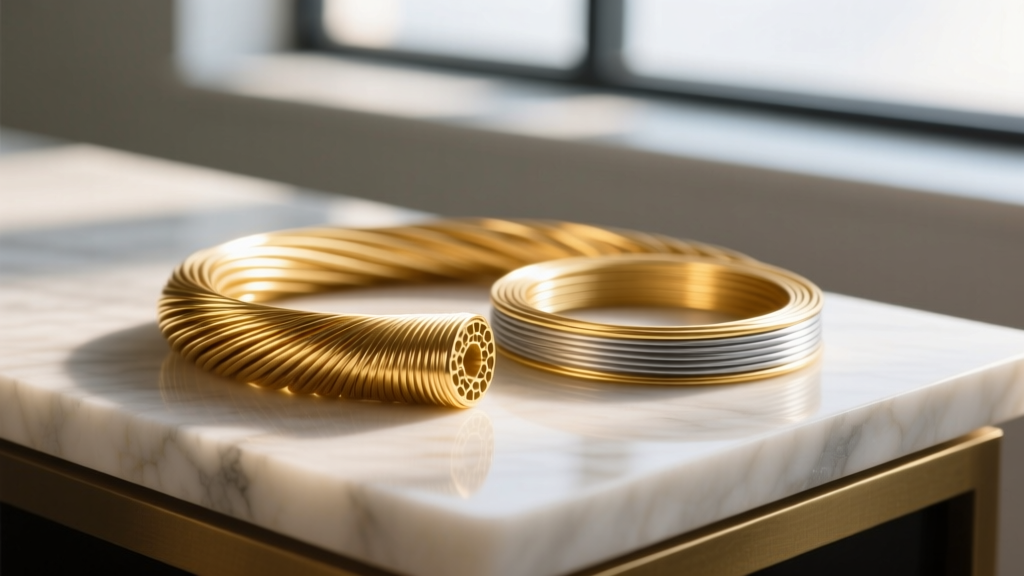
The mid-tier market bridges the gap between solid gold and cheap costume jewelry. However, the material properties of gold-filled and vermeil pieces differ drastically, and knowing the difference dictates where you should spend your money.
Gold Filled (GF): The Mechanical Bond
Gold filled jewelry is created through a mechanical bonding process where a thick sheet of solid gold (usually 14k) is heat- and pressure-bonded to a brass or copper core. By Federal Trade Commission (FTC) guidelines, the gold layer must constitute at least 1/20th (5%) of the total weight of the metal. This results in a gold layer that is often 10 to 20 times thicker than standard plating, meaning it can last decades without wearing through to the brass core.
Where to buy: Gold filled wire and components are heavily utilized by independent wire-wrappers and small-batch Etsy artisans. Look for makers who explicitly stamp their pieces with "1/20 14k GF" and avoid mass-market importers who frequently misuse the term.
Gold Vermeil: The Sterling Standard
Vermeil (pronounced ver-may) requires a sterling silver (925) base that has been electrolytically plated with a minimum of 2.5 microns of 10k, 14k, or 18k gold. Because the core is precious silver, vermeil is hypoallergenic and holds a higher baseline melt value than gold-filled brass.
Where to buy: High-end fashion brands and luxury bridge jewelers utilize vermeil. However, be wary of fast-fashion brands claiming "vermeil" status while delivering pieces with only 0.5 microns of gold, which will wear off in months, exposing the silver to rapid sulfide tarnishing.
| Material Type | Core Metal | Gold Thickness / Ratio | Average Wear Lifespan | Ideal Retailer Category |
|---|---|---|---|---|
| Solid 14k | None (Homogeneous) | 58.5% Pure Gold | Lifetime (Generational) | Independent CAD Casters, Bench Jewelers |
| Solid 18k | None (Homogeneous) | 75.0% Pure Gold | Lifetime (Generational) | Heritage Brands, High-End Artisans |
| Gold Filled (1/20) | Brass / Copper | 5% Total Weight | 10 - 30 Years | Small-Batch Artisans, Wire-Wrappers |
| Gold Vermeil | Sterling Silver (925) | ≥ 2.5 Microns | 2 - 5 Years (with care) | Luxury Bridge Brands, DTC Fashion |
| Gold Plated | Brass / Stainless | < 0.5 Microns | 6 - 12 Months | Fast Fashion (Proceed with Caution) |
Gold Plated: The Fast Fashion Trap
Standard gold plating (often referred to as flash plating) involves depositing a microscopic layer of gold—usually less than 0.5 microns—over a base metal like brass or stainless steel. The material failure mode here is galvanic corrosion and rapid friction wear. When the base metal is exposed to sweat and oxygen, it oxidizes and creates a green or black residue on the skin. According to the World Gold Council, true gold jewelry investment should focus on materials where the gold content is structural, not merely cosmetic. If you are buying gold-plated jewelry, you are paying for a temporary aesthetic. Buy plated pieces only from transparent fashion brands that offer low-cost replating services once the base metal inevitably bleeds through.
Point-of-Sale Authentication and Red Flags
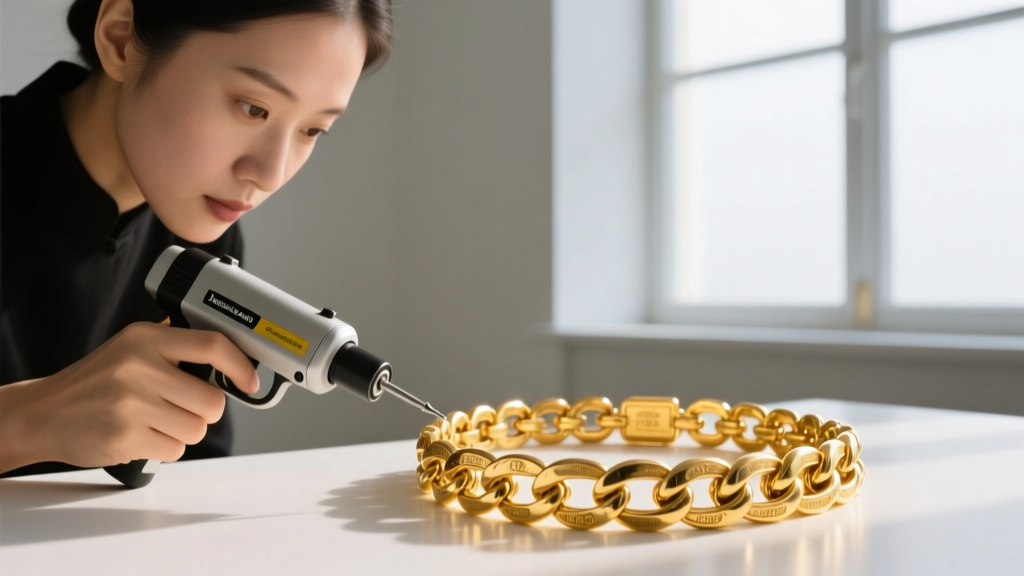
Regardless of where you choose to buy gold jewelry, verifying the material properties at the point of sale is critical, especially in the secondary or estate market. Here is how to protect your investment:
1. X-Ray Fluorescence (XRF) Testing
Reputable estate dealers and high-end pawn brokers utilize XRF spectrometers. This non-destructive test fires X-rays into the metal and reads the fluorescent bounce-back to determine the exact elemental breakdown (e.g., 75% gold, 15% copper, 10% silver). If a seller of high-value solid gold refuses XRF verification, walk away.
2. Hallmark Verification
Understand international purity stamps. In the US, you will see "14k" or "585". In Europe, you will see "750" for 18k or "585" for 14k. However, a stamp is only as trustworthy as the seller. Counterfeiters frequently stamp brass cores with "14k" before applying a heavy flash plate. Always pair hallmark inspection with a specific gravity test or an electronic gold tester if you are buying outside of a certified retail environment.
3. The Magnet Test (A Partial Solution)
Gold is diamagnetic, meaning it will not stick to a strong neodymium magnet. While a magnetic pull instantly reveals a steel or iron core, it will not detect a copper or brass core, which are also non-magnetic. Use the magnet test only as a first-line elimination tool, not as proof of authenticity.
Summary Checklist for Buyers
Deciding where to buy gold jewelry ultimately comes down to aligning your budget with material reality. If you require generational durability and zero skin reactivity, source solid 14k or 18k gold from independent casters or heritage brands. If you want the look of gold with a lower entry price but high longevity, seek out 1/20 14k gold-filled pieces from specialized artisans. Avoid vague terms like "gold dipped" or "gold tone," and always demand transparency regarding micron thickness and base metal composition before completing your purchase.


