Revive Dull Pieces: Cleaning Gold Jewelry at Home Safely
Discover expert troubleshooting for cleaning gold jewelry at home. Learn safe DIY methods for 10k, 14k, 18k, and plated gold to restore shine.

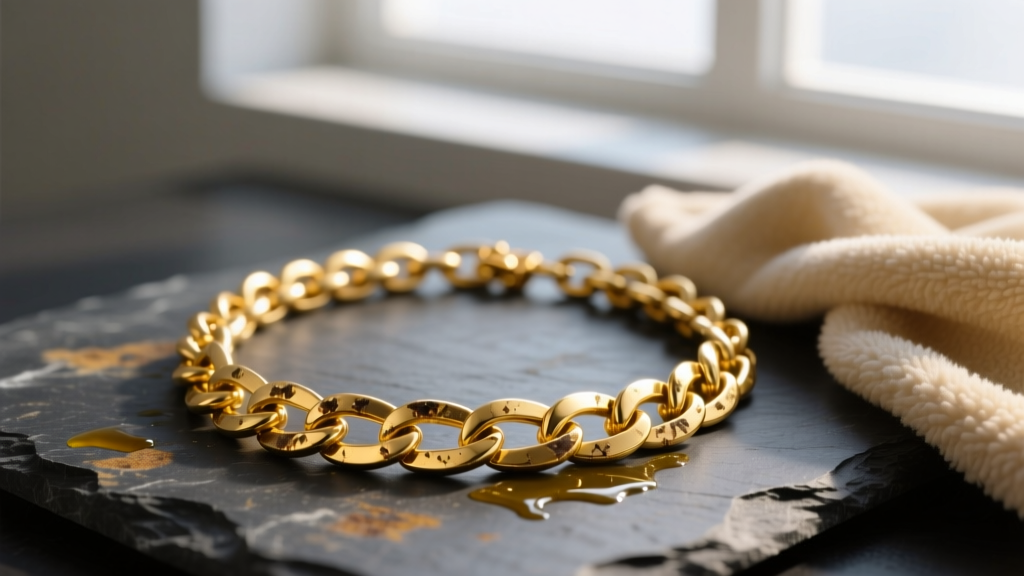
Gold is renowned for its eternal luster, but if your favorite pieces are looking cloudy, darkened, or lifeless, you are likely dealing with surface debris or alloy oxidation rather than a flaw in the metal itself. When it comes to cleaning gold jewelry at home, the internet is flooded with conflicting advice, viral hacks, and outright dangerous chemical recommendations. As of 2026, with the rising cost of precious metals, preserving the structural integrity and finish of your jewelry is more critical than ever. This troubleshooting guide will help you diagnose the exact cause of your jewelry's dullness and provide metallurgically sound, safe solutions to restore its original brilliance.
The Science of Gold Discoloration: Why Your Jewelry Looks Bad
Pure 24-karat gold is completely inert and will never tarnish. However, 24k gold is too soft for daily wear jewelry. To create durable pieces, gold is alloyed with metals like copper, silver, zinc, and nickel to create 10k, 14k, and 18k gold. It is these alloy metals that react to their environment.
- Copper and Silver Oxidation: When exposed to sulfur compounds in the air, or sulfur-rich foods (like onions and eggs), the copper and silver in your 14k or 18k gold form microscopic layers of silver sulfide or copper oxide, appearing as dark tarnish.
- Sebum and Cosmetic Buildup: Lotions, sunscreens, and natural skin oils create a sticky film that traps dead skin cells and dust in the crevices of chains and behind gemstone settings, blocking light refraction and making the gold look dull.
- Chemical Stripping: Exposure to chlorinated pool water or harsh household cleaners can cause microscopic pitting on the surface of the gold alloy, scattering light and creating a matte, frosted appearance.
The Safe DIY Cleaning Protocol for Solid Gold (10k, 14k, 18k)
For solid gold pieces without porous gemstones (like opals, pearls, or turquoise), the most effective and universally safe method relies on gentle surfactants and mechanical agitation.
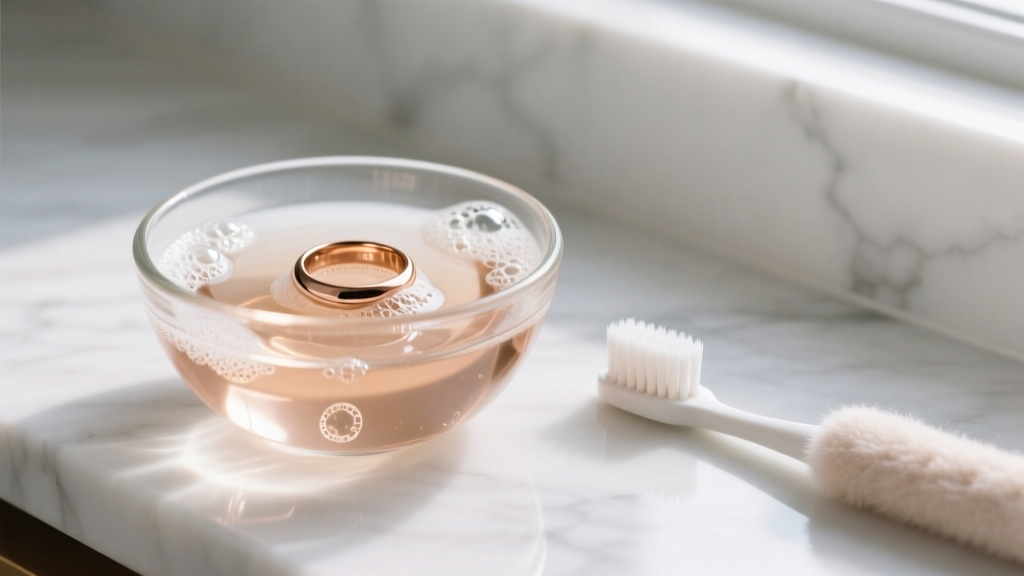
Step-by-Step Restoration
- The Solution: Mix 3 drops of a mild, phosphate-free dish soap (like original Dawn) into a bowl of warm—not hot—distilled water. Hot water can shock certain gemstone inclusions, while tap water contains minerals that can leave hard water spots.
- The Soak: Submerge the jewelry for 15 to 20 minutes. This allows the surfactants to break the surface tension of the oils and lift debris away from the metal.
- The Agitation: Using a brand-new, ultra-soft baby toothbrush, gently brush the jewelry. Focus heavily on the back of the settings and the interior links of chains, where friction and skin contact are highest.
- The Rinse and Dry: Rinse thoroughly under lukewarm distilled water. Pat dry with a lint-free microfiber cloth. Avoid air-drying, as evaporation will leave water spots on the high-polish finish.
Troubleshooting Specific Gold Problems
Not all gold jewelry is created equal. The construction and karat weight dictate how you must approach maintenance.
Problem: White Gold is Turning Yellow
Diagnosis: White gold is naturally a pale, yellowish-gray alloy. To achieve a bright, mirror-like white finish, it is plated with rhodium, a platinum-group metal. If your white gold ring or necklace is turning yellow at the high-friction edges, the rhodium plating has worn off.
Solution: Cleaning will not fix this. No amount of scrubbing will restore the white color. You must take the piece to a jeweler for a professional rhodium re-plating, which typically costs between $40 and $80 depending on the piece's surface area.
Problem: Gold Plated or Vermeil is Flaking or Dull
Diagnosis: According to the Federal Trade Commission (FTC) Jewelry Guides, gold vermeil must be a minimum of 2.5 microns of 10k+ gold over sterling silver, while standard gold plate can be a microscopic 0.5 microns over brass. If your plated jewelry looks cloudy or is flaking, the ultra-thin gold layer is degrading.
Solution: Never soak plated jewelry or use a brush. Simply wipe it gently with a damp microfiber cloth and immediately dry it. If the base metal (brass or copper) is showing through, the piece requires professional re-plating.
Problem: Stubborn Dark Tarnish on 10k Gold
Diagnosis: 10k gold contains only 41.7% pure gold, meaning the majority of the metal is reactive alloys like copper and zinc. It is highly prone to heavy, dark oxidation.
Solution: For severe tarnish that dish soap won't lift, you can use a highly diluted ammonia solution (1 part clear household ammonia to 6 parts water). Soak for no more than 60 seconds, brush gently, and rinse immediately. Warning: Never use ammonia on jewelry containing pearls, opals, emeralds, or turquoise, as it will permanently destroy their chemical structure.
Dangerous Cleaning Methods to Avoid Immediately
Many viral "hacks" for cleaning gold jewelry at home will cause irreversible metallurgical damage. Avoid these at all costs:
The Toothpaste Myth: Toothpaste contains hydrated silica, which has a Mohs hardness of roughly 3.5 to 4.0. Pure gold sits at 2.5 on the Mohs scale, and 14k gold is around 3.5. Scrubbing gold with toothpaste acts like sandpaper, creating thousands of micro-scratches that permanently dull the high-polish finish.
- Chlorine Bleach: Sodium hypochlorite causes stress corrosion cracking in gold alloys. It attacks the zinc and copper at a molecular level, leading to microscopic fractures. Over time, prongs will become brittle and snap, causing you to lose your gemstones.
- Baking Soda and Aluminum Foil: This creates a galvanic electrochemical reaction. While it strips tarnish from silver, applying this to gold alloys can cause the copper and silver within the gold to leach out of the surface, leaving a porous, weakened, and discolored outer layer.
- Boiling Water: While gold itself can withstand high heat, the sudden thermal shock can fracture diamonds with internal inclusions and shatter emeralds, which are typically treated with temperature-sensitive oils and resins.
Quick Reference: Cleaning Agents by Gold Type
Use this troubleshooting matrix to ensure you are matching the correct cleaning protocol to your specific jewelry composition.
| Gold Type | Safe Cleaners | Dangerous Cleaners | Recommended Frequency |
|---|---|---|---|
| 18k Solid Gold | Mild dish soap, warm distilled water, microfiber cloth | Bleach, ultrasonic cleaners (if heavily included gems) | Every 2-4 weeks |
| 14k Solid Gold | Mild dish soap, diluted ammonia (for heavy tarnish only) | Toothpaste, baking soda, chlorine | Every 2-4 weeks |
| 10k Solid Gold | Mild dish soap, commercial non-ammonia jewelry dip | Abrasive pastes, hard-bristled brushes | Weekly (highly reactive) |
| Gold Vermeil | Damp microfiber cloth, mild soap lather (no soaking) | Ultrasonic cleaners, ammonia, soaking in water | As needed (wipe after wear) |
| Gold Plated | Dry polishing cloth only | Any liquid cleaner, ultrasonic, toothpaste | As needed (gentle wipe) |
When to Abandon DIY and See a Professional
While cleaning gold jewelry at home is highly effective for surface oils and mild oxidation, some issues require professional intervention. If your gold jewelry features deep, visible scratches, DIY polishing compounds will only remove more gold and worsen the problem. A jeweler can perform a professional laser weld to rebuild lost metal and use a motorized buffing wheel with specialized jeweler's rouge to restore a mirror finish.
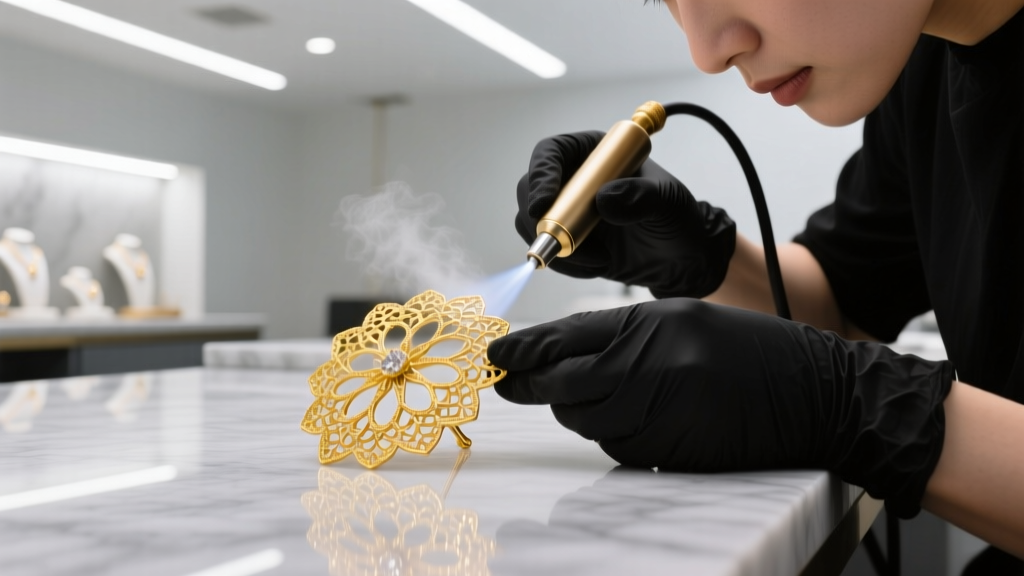
Furthermore, if you notice any movement in your gemstones, or if the prongs holding your diamonds feel snagged on your clothing, stop wearing the piece immediately. Cleaning a piece with loose prongs can dislodge the stone entirely. According to the Gemological Institute of America (GIA), regular professional inspections combined with safe at-home maintenance is the best way to ensure your gold jewelry survives for generations. By understanding the metallurgy of your specific pieces, you can safely troubleshoot dullness and keep your collection shining brilliantly.


