Akoya Pearl Jewelry Buying Guide: What to Look For in 2026
Discover what to look for when buying akoya pearl jewelry in 2026. Expert grading tips, nacre thickness rules, and pricing data for mirror-luster strands.

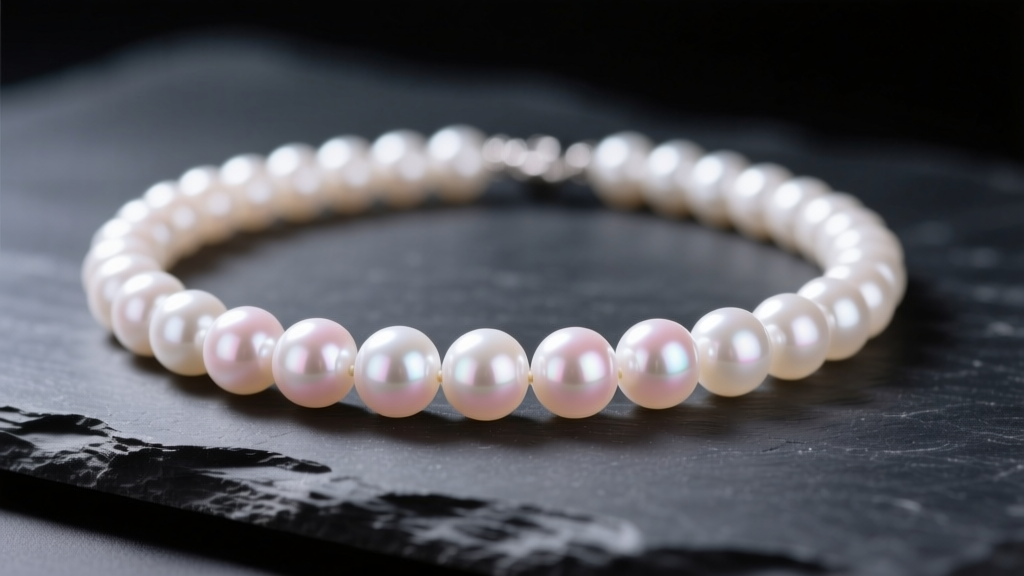
The Benchmark of Brilliance: Understanding Akoya Luster
When collectors and jewelers discuss the pinnacle of mirror-like luster, they are inevitably talking about the Pinctada fucata martensii oyster. Akoya pearls, cultivated primarily in the cooler coastal waters of Japan and China, possess a tight, overlapping aragonite crystal structure that creates a sharp, almost metallic reflection. Unlike the soft, satiny glow of freshwater pearls or the deep, dark orient of Tahitians, high-quality akoya pearl jewelry offers a crisp, high-contrast brilliance that remains unmatched in the gemological world.
According to the Gemological Institute of America (GIA), luster is the single most critical value factor for any pearl. In the Akoya market, luster dictates price more aggressively than size or surface perfection. A 7mm strand with exceptional, mirror-sharp luster will consistently command a higher premium than a 9mm strand with a dull, chalky surface. When evaluating pieces in person or via high-resolution macro photography, look for the 'readability' of the reflection. If you can clearly see the outline of a window frame or a light bulb reflected on the pearl's surface, you are looking at gem-grade luster.
Decoding the Grading Matrix: AAA vs. Hanadama
The pearl industry lacks a single, universally mandated grading system, which often leads to consumer confusion. However, reputable dealers generally rely on a standardized A-AAA scale, alongside the prestigious Japanese 'Hanadama' designation. Below is a breakdown of what these grades actually mean for your jewelry.
| Grade | Luster Quality | Surface Perfection | Matching & Drilling | Best Use Case |
|---|---|---|---|---|
| Hanadama (PSL Cert) | Exceptional, mirror-like with deep orient | 95%+ blemish-free | Flawless strand matching, precision drilled | Heirloom investments, bridal strands |
| AAA | Very high, sharp reflections | 90-95% blemish-free | Excellent matching, clean drill holes | High-end everyday luxury, anniversary gifts |
| AA+ | High, slightly softer reflections | 80-90% blemish-free | Very good matching | Entry-level fine jewelry, stud earrings |
| AA | Medium, somewhat chalky | 70-80% blemish-free | Noticeable variations in strand | Budget fashion jewelry (Avoid for fine gems) |
The Hanadama Certificate Trap
The term 'Hanadama' translates roughly to 'spherical flower' and represents the absolute top tier of Japanese Akoya production. True Hanadama pearls must be certified by a recognized Japanese laboratory, such as the Pearl Science Laboratory (PSL) or the Pearl Export Company of Japan. These certificates include specific metrics on nacre thickness and luster interference patterns.
Unfortunately, many Western retailers use 'Hanadama' as a proprietary marketing buzzword rather than a verified laboratory grade. If a vendor advertises Hanadama akoya pearl jewelry but cannot provide a physical, verifiable certificate from a Japanese lab with a unique serial number, you are likely paying a premium for standard AAA-grade pearls. Always demand the original lab report.
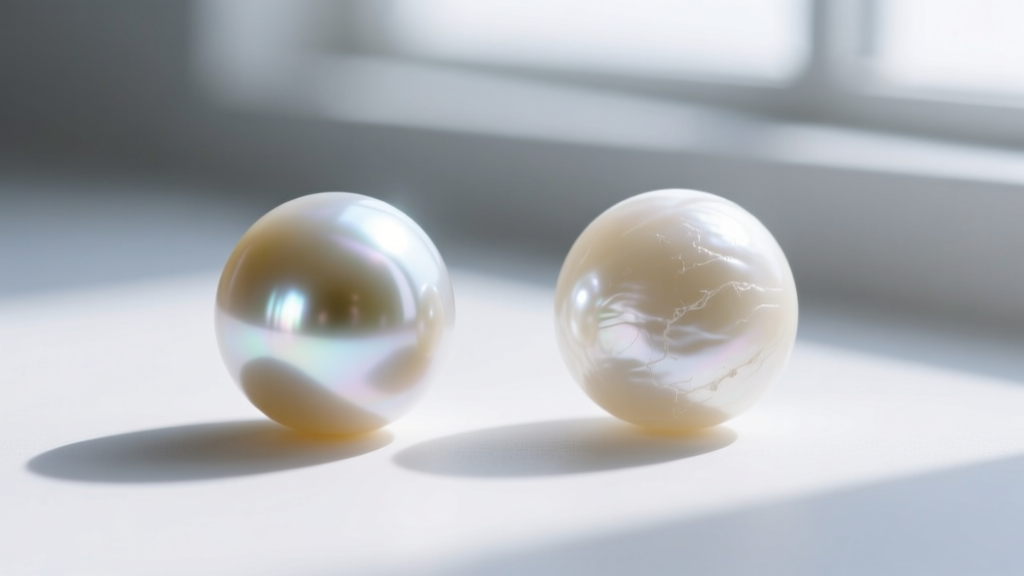
Nacre Thickness: The Hidden Durability Metric
Akoya pearls are bead-nucleated. A technician inserts a perfectly round shell bead nucleus along with a tiny piece of mantle tissue into the oyster. The oyster then secretes nacre over this bead. Because the cultivation period for Akoyas is relatively short (typically 10 to 18 months), nacre thickness is a critical vulnerability.
According to GIA's pearl description guidelines, a high-quality saltwater pearl should possess a nacre layer that completely obscures the nucleus. For Akoyas, you want a minimum nacre thickness of 0.4mm, though premium gems will boast 0.6mm to 0.8mm. If the nacre is too thin, the pearl will exhibit 'blinking'—a dull, flat spot that appears when the pearl rotates and the underlying shell bead catches the light. Thin-nacre pearls are prone to peeling, cracking, and rapid degradation. When buying online, look for vendors who explicitly state their minimum nacre thickness guarantees or utilize X-ray fluorescence (XRF) testing to verify their stock.
Sizing and Proportions: Choosing Your Millimeter
The Akoya oyster is the smallest of the commercial pearl-producing oysters, which strictly limits the maximum size of the pearls it can produce. While marketing materials might occasionally boast of 11mm Akoyas, these are statistical anomalies that command astronomical, collector-level prices. The commercial sweet spots are well-defined:
- 6.0 - 7.0mm: Considered petite and delicate. Ideal for younger wearers, minimalist stacking, or subtle everyday stud earrings. Highly affordable.
- 7.0 - 8.0mm: The classic, traditional size. This is the most versatile dimension for a first pearl strand, offering a noticeable presence without feeling heavy or ostentatious.
- 8.0 - 9.0mm: The premium tier. Oysters that produce 8mm+ pearls are older and more susceptible to disease, making these sizes significantly rarer and more expensive. Perfect for statement bridal jewelry.
- 9.0 - 10.0mm: The apex of Akoya production. Strands in this size range with high luster are exceptionally rare and represent the pinnacle of a dealer's inventory.

2026 Market Pricing: What You Should Actually Pay
Understanding current market valuations protects you from both inflated luxury markups and suspiciously cheap 'bargains' that indicate heavy treatments or thin nacre. Based on 2026 wholesale and direct-to-consumer retail data, here is what you should expect to pay for genuine, untreated or lightly treated, AAA-grade Akoya jewelry:
- 7.0-8.0mm AAA Strand (18 inches): $900 to $1,600
- 8.0-9.0mm AAA Strand (18 inches): $1,800 to $3,200
- 8.0mm AAA Stud Earrings (14k Gold): $350 to $600
- Certified Hanadama Strand (7.5-8.0mm): $2,500 to $4,500+
If you encounter an 8mm 'AAA' strand selling for $150, you are almost certainly looking at heavily processed, thin-nacre Chinese Akoyas (often marketed under misleading trade names) or high-grade bead-nucleated freshwater pearls masquerading as Japanese Akoyas.
Spotting Treatments: Maeshori, Bleaching, and Pinking
Virtually all commercial Akoya pearls undergo some level of post-harvest processing. The most common is Maeshori, a Japanese pre-treatment process that involves soaking the pearls in a mild hydrogen peroxide solution and applying gentle heat. This removes organic impurities, stabilizes the nacre, and enhances the natural luster. Maeshori is an accepted industry standard and does not negatively impact the pearl's value.
However, you must be wary of aggressive bleaching and 'pinking'. Lower-grade Akoyas are often heavily bleached to hide yellowish or brownish organic spots, which leaves the nacre brittle and chalky. Furthermore, because the American and European markets historically prefer a 'rose' overtone, many manufacturers artificially dye or irradiate pearls to induce a pink hue. Natural rose overtones occur due to the specific polyene pigments in the oyster's mantle tissue; artificial pinking often looks uniform, overly red, and lacks the subtle depth of a natural overtone. Always ask the jeweler for a disclosure of post-harvest treatments before purchasing.
Final Verdict: Building Your Akoya Collection
Investing in akoya pearl jewelry is an exercise in prioritizing optical performance over sheer size. When building your collection, always allocate your budget toward luster and nacre thickness first, and size second. A brilliantly lustrous 7.5mm strand will outshine a massive but dull 9.5mm strand every time. Demand transparency regarding grading certificates, verify nacre depths, and purchase from specialists who understand the intricate biology and processing methods of the Pinctada fucata martensii oyster. By focusing on these technical metrics, you will secure a timeless, mirror-bright heirloom capable of lasting generations.


