Troubleshooting Carved Mother of Pearl Jewelry: Clean & Restore
Learn how to clean, restore, and troubleshoot common issues in carved mother of pearl jewelry. Expert tips on hydration, chip repair, and authenticity.

The Unique Vulnerabilities of Carved Mother of Pearl
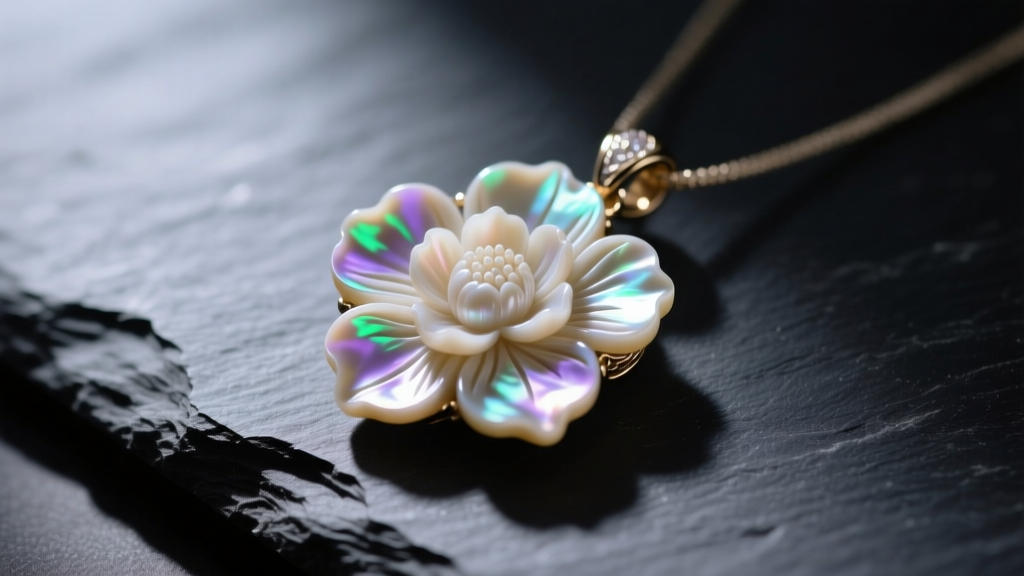
Carved mother of pearl (MOP) jewelry—ranging from Victorian cameos and intricate intaglios to modern floral pendants—presents a unique set of conservation challenges. Unlike smooth, spherical cultured pearls, carved MOP exposes the inner structural layers of the nacre. According to the Mindat.org Aragonite Database, nacre is a composite material consisting of brittle aragonite (calcium carbonate) platelets bound together by conchiolin, an organic protein matrix.
When an artisan carves MOP, they strip away the protective outer periosteum of the shell. This leaves the porous, layered nacre directly exposed to environmental stressors. With a Mohs hardness rating of just 2.5 to 4.5, carved MOP is highly susceptible to micro-scratching, acidic degradation from human sweat, and catastrophic dehydration. Troubleshooting damage in these pieces requires a deep understanding of both the mineral and organic components of the shell.
Diagnostic Checklist: Identifying Your MOP Damage
Before applying any cleaning or restoration method, you must accurately diagnose the issue. Misidentifying a chemical burn as simple dirt can lead to irreversible damage. Use the following diagnostic framework to assess your carved mother of pearl jewelry.
| Visual Symptom | Root Cause | Immediate Action Required |
|---|---|---|
| Chalky, opaque white patches | Conchiolin dehydration or acid erosion | Isolate from heat; begin slow rehydration protocol |
| Yellow/brown buildup in deep grooves | Oxidized skin oils, soap scum, or environmental grime | Mechanical extraction with distilled water and soft tools |
| Flaking or peeling surface layers | Nacre delamination due to ultrasonic vibration or extreme dryness | Stop wearing immediately; consult a lapidary for stabilization |
| Dull, matte finish across high-relief areas | Micro-abrasion from contact with harder gemstones or metals | Professional polishing with cerium oxide (do not attempt at home) |
Step-by-Step Cleaning Protocols for Deep Crevices
The most common issue with carved MOP is the accumulation of debris in the deep recesses of the carving. Standard jewelry dips and ultrasonic cleaners are strictly forbidden. The Gemological Institute of America (GIA) explicitly warns that ultrasonic waves can cause the aragonite platelets in nacre to separate, leading to instant delamination.
The Safe Mechanical Extraction Method
- Prepare the Solution: Mix 1 cup of distilled water (never tap water, as chlorine and fluoride can etch calcium carbonate) with two drops of pH-neutral liquid castile soap.
- Initial Softening: Dampen a lint-free microfiber cloth with the solution and lay it over the carved MOP piece for exactly 60 seconds. This softens oxidized sebum trapped in the grooves without submerging the stone.
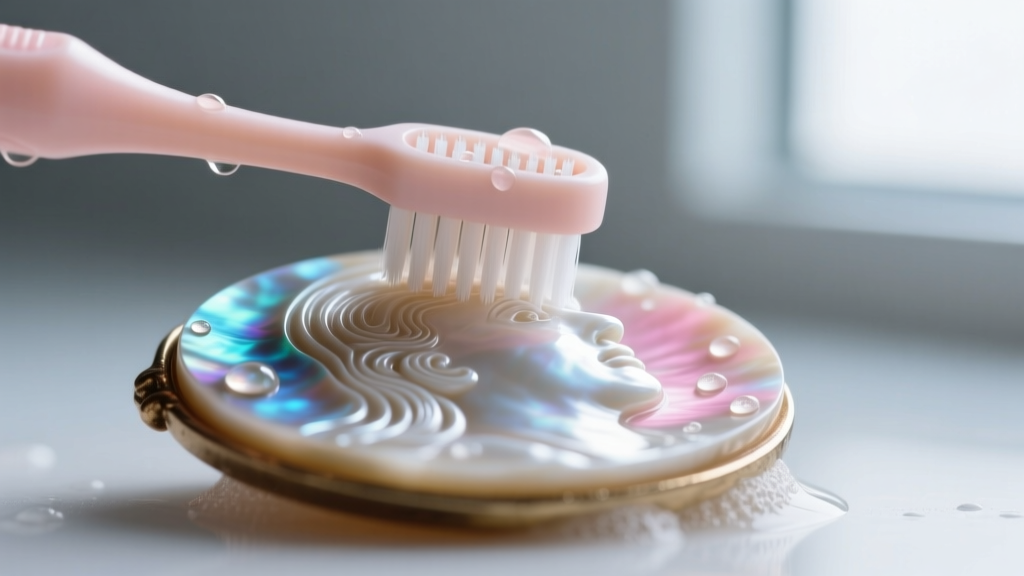
- Bristle Agitation: Using an extra-soft infant toothbrush (adult soft bristles are too stiff and will cause micro-scratches), gently sweep the bristles across the grooves in a single direction. Do not scrub in circles.
- Targeted Groove Cleaning: For stubborn, hardened debris in the deepest parts of the carving, use a wooden toothpick. Wood is softer than nacre and will dislodge grime without scoring the surface. Never use metal needles or pins.
- Rinsing and Drying: Wipe away the suds with a cloth dampened only with pure distilled water. Pat dry immediately and allow it to air-dry in a shaded, room-temperature area for 12 hours.
Troubleshooting Common MOP Issues
Problem 1: Chalky or Dull Luster (Dehydration)
When the conchiolin protein matrix dries out, the MOP loses its optical interference properties, resulting in a dead, chalky appearance. This is common in vintage pieces stored in low-humidity environments or near heating vents. To restore the luster, you must reintroduce moisture to the organic matrix. Apply a microscopic amount of 100% pure, cold-pressed jojoba oil to a cotton swab. Jojoba oil closely mimics human sebum and will not go rancid like olive or mineral oil. Gently dab the oil into the chalky areas, let it sit for four hours, and then buff it away with a clean microfiber cloth. Repeat this process once a month for severely dehydrated pieces.
Problem 2: Yellowing or Brown Stains in Carved Grooves
If mechanical cleaning fails to remove yellowing, the conchiolin itself may have oxidized. While harsh bleaches will dissolve the calcium carbonate, you can use a highly localized, mild enzymatic approach. Apply a tiny drop of saliva (which contains natural amylase enzymes) or a specialized enzymatic jewelry cleaner to the stained groove using a fine-tipped brush. Let it sit for three minutes to break down the organic proteins, then extract with a wooden toothpick and a damp cloth. Never use hydrogen peroxide, as it will permanently bleach and weaken the aragonite structure.
Problem 3: Micro-Chips and Surface Scratches
Because MOP is a natural, layered composite, chips cannot simply be 'filled' like resin or glass. If a high-relief area (such as the nose on a cameo or the petal on a floral carving) suffers a micro-chip, the structural integrity of that specific nacre layer is compromised. For museum-grade stabilization, conservators use Paraloid B-72, an ethyl methacrylate copolymer dissolved in acetone. It dries optically clear, does not yellow over time, and is fully reversible. Avoid cyanoacrylate (Super Glue) at all costs; it contains acids that will etch the surrounding nacre and create a permanent, cloudy white halo around the chip.
Authenticity Check: Is Your Carved MOP Real or Resin?
Troubleshooting is impossible if you are working with a synthetic imitation. Many vintage 'carved cameos' are actually molded from celluloid, Bakelite, or modern epoxy resins dusted with pearl powder. Use these non-destructive tests to verify your material:
- Thermal Conductivity Test: Hold the piece against your cheek or inner wrist. Genuine mother of pearl is a dense mineral and will feel distinctly cool to the touch, taking several seconds to warm up to your body temperature. Resin and plastic will feel room-temperature or warm almost instantly.
- Magnification Striations: Examine the edges of the carving under a 10x jeweler's loupe. Real MOP will show faint, parallel growth lines (striations) and a layered, shimmering depth. Molded resin will appear perfectly uniform, and you may spot tiny spherical air bubbles or mold seams along the edges.
- UV Fluorescence: Under a long-wave (365nm) ultraviolet light, genuine nacre typically fluoresces a pale, icy blue or white due to the organic conchiolin. Many synthetic resins will fluoresce a bright, unnatural yellow-green, or remain completely inert.
Long-Term Storage Framework to Prevent Future Damage
Preventing damage is vastly superior to attempting restoration. Carved mother of pearl jewelry must be stored in a micro-climate that balances humidity and prevents physical abrasion.
Expert Storage Rule: Never store carved MOP in an airtight plastic bag or a safety deposit box without a humidity buffer. The lack of ambient moisture will slowly desiccate the conchiolin, leading to irreversible cracking and chalkiness.
Store your pieces in a breathable, untreated cotton pouch or an acid-free archival jewelry box. Include a small, dampened (not wet) sponge or a commercial silica gel packet conditioned to maintain exactly 45-55% relative humidity. Keep the jewelry strictly separated from diamonds, sapphires, or metal chains, as the 2.5 Mohs hardness of MOP means it will be easily gouged by almost any other material in your jewelry box. By following these precise diagnostic and maintenance protocols, your carved mother of pearl jewelry will retain its iridescent depth and structural integrity for generations.


