Korean Mother of Pearl Jewelry Box: 2026 Trend Analysis
Explore the 2026 style trends of the Korean mother of pearl jewelry box. Discover Najeonchilgi craftsmanship, material grades, and modern vanity styling.

The Renaissance of Najeonchilgi in Modern Vanity Styling
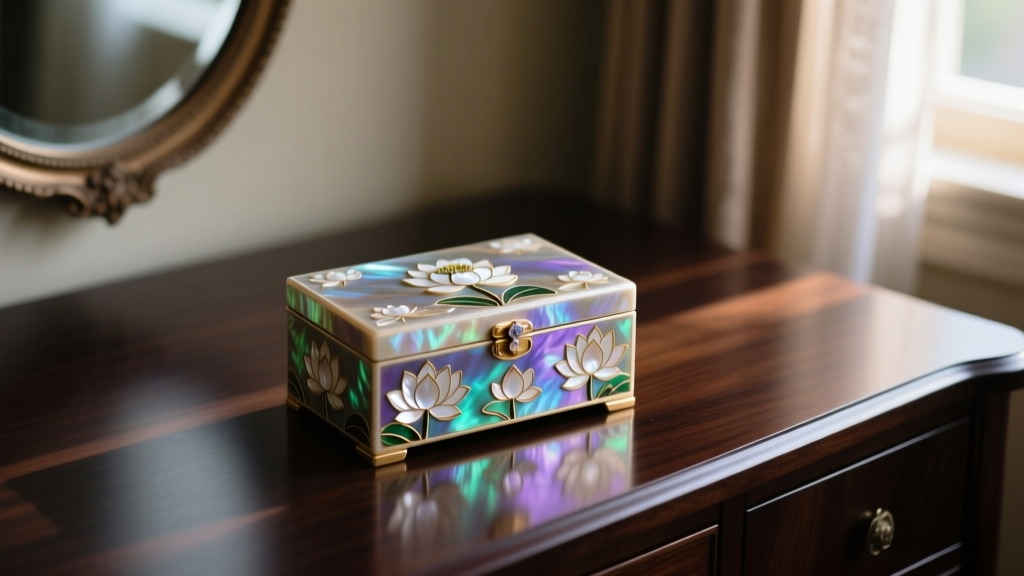
In the landscape of 2026 luxury jewelry storage, the Korean mother of pearl jewelry box has transcended its status as a mere souvenir to become a cornerstone of "quiet luxury" vanity organization. Rooted in Najeonchilgi—the traditional Korean craft of inlaying mother of pearl into lacquered wood—these pieces are experiencing a massive resurgence among serious jewelry collectors and interior designers alike. Unlike mass-produced velvet or acrylic organizers, an authentic Korean lacquerware box offers a unique synthesis of historical artistry, structural longevity, and optimal micro-climates for delicate gemstones.
According to the National Museum of Korea, the technique dates back to the Goryeo Dynasty (918–1392), where it was reserved for royalty. Today, contemporary artisans are adapting these 12th-century methods to suit modern minimalist aesthetics, replacing ornate dragons and phoenixes with abstract topographical lines and geometric gujage (tortoiseshell) patterns that seamlessly integrate into Japandi and contemporary Korean minimalist interiors.
Material Anatomy: What Defines an Authentic Korean Box?
To evaluate a Korean mother of pearl jewelry box from an expert perspective, one must look beyond the iridescent surface and examine the foundational materials. The market is currently bifurcated into two distinct tiers: traditional artisan-crafted pieces and modern commercial adaptations.
Shell Selection and Millimeter Precision
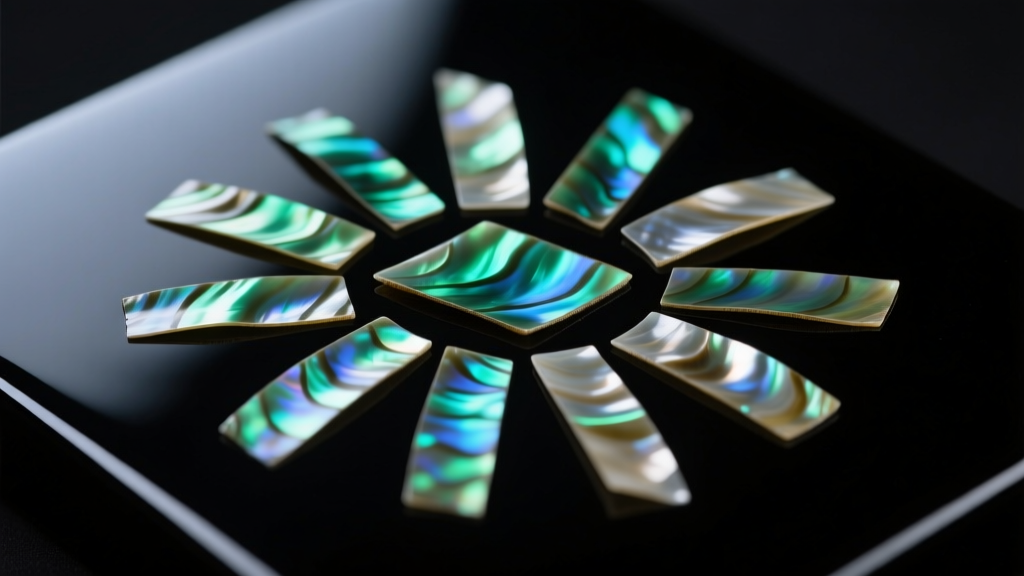
The iridescence of a high-grade box comes primarily from the inner shell of the abalone (Haliotis discus hannai) or the pearl oyster (Pinctada fucata). Artisans utilize two primary inlay techniques:
- Jureumjil (Wire-Cutting): Shells are sliced into ribbons as thin as 0.1mm to 0.3mm. These strips are meticulously bent and inlaid to form continuous, flowing lines. This technique requires immense skill and is the hallmark of investment-grade boxes.
- Kkumeumjil (Crushed Inlay): Shells are crushed into small flakes and scattered into the lacquer, creating a textured, starry-night effect. This is more common in mid-tier commercial pieces.
The Lacquer Debate: Ottchil vs. Modern Alternatives
The true soul of the box lies in its lacquer. Traditional ottchil is derived from the sap of the lacquer tree (Toxicodendron vernicifluum). It contains urushiol, which is highly toxic in its liquid state but cures into an incredibly durable, water-resistant, and antibacterial polymer. Crucially, ottchil does not dry by evaporation; it polymerizes by absorbing moisture, requiring a specialized curing room with 75% to 85% relative humidity. Modern mass-produced boxes often substitute this with cashew lacquer or synthetic polyurethane, which lacks the deep, multi-dimensional black hue and the century-long durability of true ottchil.
2026 Trend Forecast: Form, Function, and Interior Integration
The 2026 trend cycle heavily favors functional art. Jewelry collectors are moving away from sterile, acrylic stackers toward organic, heritage-rich storage that doubles as sculptural decor. The Korea Craft & Design Foundation (KCDF) notes a 40% increase in demand for "hybrid heritage" pieces—boxes that utilize traditional Najeonchilgi exteriors but feature modular, silk-lined interiors designed specifically for modern high jewelry.
| Feature | Traditional Goryeo-Style (Artisan) | 2026 Contemporary Minimalist (Modern) |
|---|---|---|
| Base Wood | Aged Paulownia or Korean Pine | Sustainable MDF or Bamboo Composite |
| Lacquer Type | 100% Natural Ottchil (Urushiol) | Cashew Lacquer or Eco-Resin |
| Shell Material | Wild Korean Abalone (0.1mm strips) | Cultured Pearl Oyster (Flake inlay) |
| Interior Lining | Untreated Mulberry Silk | Microfiber or Recycled PET Velvet |
| Price Range (USD) | $800 – $5,000+ | $50 – $250 |
The Storage Science: Why Pearl Boxes are Best for Pearls
Ironically, a mother of pearl jewelry box is one of the most scientifically sound environments for storing actual pearl jewelry. According to the Gemological Institute of America (GIA), pearls are organic gems that require a specific level of ambient moisture to prevent their nacre from cracking or dulling. Storing pearls in airtight plastic boxes or safety deposit boxes over long periods can cause severe dehydration.
Authentic Korean lacquerware boxes, lined with untreated silk and constructed from breathable wood bases coated in natural ottchil, create a micro-breathable environment. The natural lacquer acts as a humidity buffer, while the silk prevents the 2.5 Mohs hardness pearls from being scratched by harder gemstones. For collectors of high-value South Sea or Hanadama Akoya pearls, investing in a traditional Jureumjil inlaid box is not just an aesthetic choice; it is a vital preservation protocol.
Sourcing and Pricing: Navigating the Market
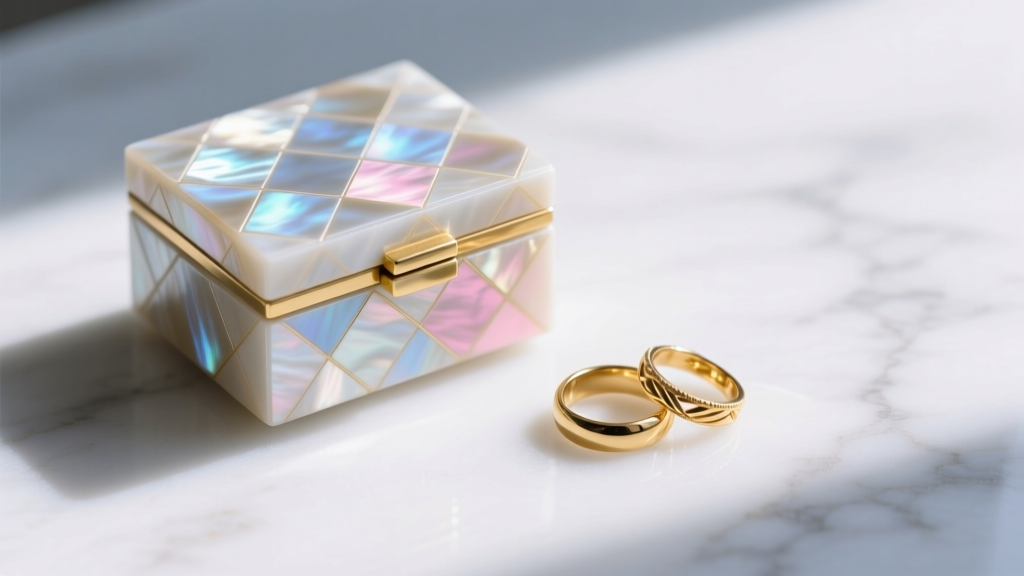
When sourcing a Korean mother of pearl jewelry box in 2026, provenance and material transparency are paramount. High-end artisans in Tongyeong, South Korea—the historical hub of lacquerware—produce bespoke pieces that command premium prices due to the months-long curing process of the lacquer. When evaluating a potential purchase, inspect the interior hinges. Traditional pieces utilize hand-forged brass or bronze hinges that are flush with the wood, whereas cheaper commercial variants use protruding steel hinges that can scratch adjacent jewelry.
Stylist's Note: When integrating these boxes into a modern vanity, avoid placing them in direct, prolonged sunlight. While the abalone shell is lightfast, the underlying natural lacquer can experience micro-crazing (fine surface cracking) if subjected to rapid thermal expansion from UV exposure.
Care and Preservation Protocols for Inlaid Lacquerware
Maintaining the structural integrity and visual brilliance of a Najeonchilgi box requires specific care routines that differ vastly from standard jewelry box maintenance:
- Dusting: Never use chemical aerosol cleaners or alcohol-based wipes, as they will strip the lipid layers of the natural lacquer. Use a dry, ultra-fine microfiber cloth.
- Hydration: If the box is kept in a heavily air-conditioned or heated room (below 30% humidity), place a small, hidden silica gel packet hydrated to 50% RH inside the lower drawer to prevent the wooden core from warping and popping the shell inlay.
- Polishing the Nacre: If the mother of pearl inlay loses its luster due to skin oils, gently buff it with a drop of pure mineral oil on a cotton swab, immediately wiping away any excess to avoid staining the surrounding black lacquer.
Final Verdict: A Timeless Anchor for Your Jewelry Collection
The Korean mother of pearl jewelry box represents a rare intersection where ancient material science meets contemporary luxury styling. In 2026, as the jewelry community becomes increasingly educated on the preservation requirements of organic gems, the shift toward heritage-crafted, breathable storage solutions is a logical and stylish evolution. Whether you opt for a museum-grade abalone masterpiece or a sleek, geometrically inlaid modern interpretation, these boxes offer a dignified, protective, and breathtakingly beautiful home for your most cherished adornments.


