A Step-by-Step Routine for Caring for Pearl Jewelry
Learn the exact step-by-step process for caring for pearl jewelry. Discover safe cleaning solutions, storage hacks, and nacre preservation tips.

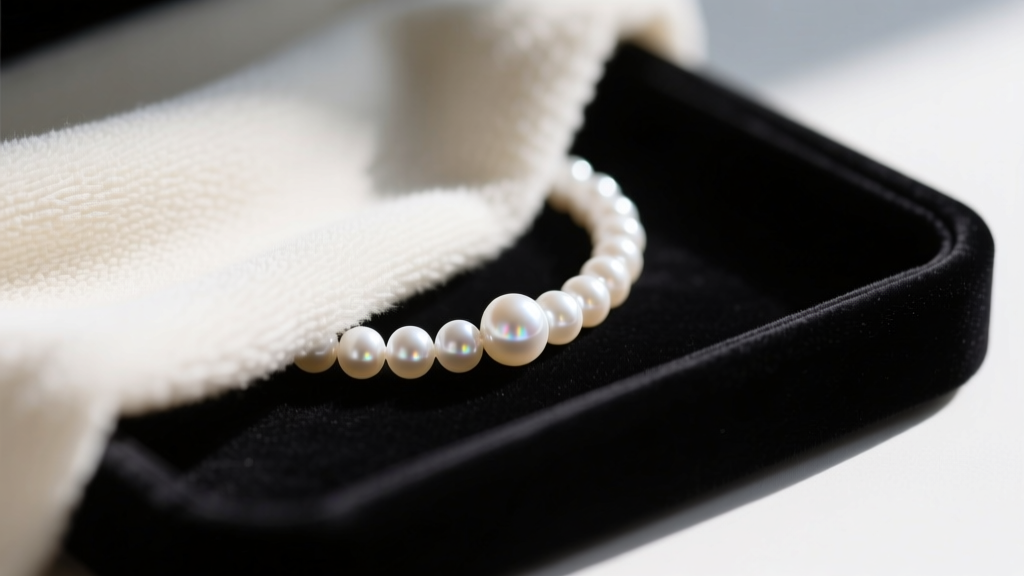
The Gemological Science of Nacre Vulnerability
Unlike faceted gemstones such as diamonds or sapphires, pearls are organic gems born from living mollusks. To master the art of caring for pearl jewelry, you must first understand the delicate chemistry of nacre. Nacre is composed of microscopic aragonite (calcium carbonate) platelets bound together by conchiolin, an organic protein. On the Mohs scale of hardness, pearls rank a mere 2.5 to 3.0, making them highly susceptible to scratching from everyday dust, which often contains microscopic quartz particles (Mohs 7.0).
Furthermore, calcium carbonate is highly reactive to acids. Human sweat typically has a pH between 4.5 and 7.0. When acidic sweat sits on the surface of a pearl, it slowly dissolves the aragonite crystals, leading to a permanent loss of luster and structural pitting. According to the Gemological Institute of America (GIA), preventing this chemical etching is the cornerstone of pearl longevity. As we navigate 2026, with environmental pollutants and modern cosmetic formulations becoming increasingly complex, a rigorous, science-backed care routine is more critical than ever.
The 4-Step Daily Wear and Care Protocol
Proper maintenance begins the moment you put your jewelry on and ends when you take it off. Follow this strict daily protocol to protect the nacre from chemical and physical degradation.
- The 'Last On, First Off' Rule: Always apply your pearls after your perfume, hairspray, lotions, and cosmetics have fully dried. The alcohols and volatile organic compounds (VOCs) in these products can strip the pearl's natural moisture and dull the orient (the iridescent play of color on the surface).
- The Post-Wear Wipe Down: Immediately after removing your pearls, gently wipe each bead with a soft, untreated, lint-free cotton cloth or a specialized pearl chamois. This removes microscopic layers of skin oils and acidic sweat before they can etch the surface.
- The Resting Period: Do not immediately place wiped pearls into an airtight container. Allow them to rest on a breathable cotton surface for 15 to 20 minutes to ensure any residual moisture from the air or your skin fully evaporates.
- Visual Inspection: While wiping, run your fingers along the silk thread. If you feel any stiffness, fraying, or notice gaps between the knots and the pearls, the structural integrity is compromised and requires immediate professional attention.
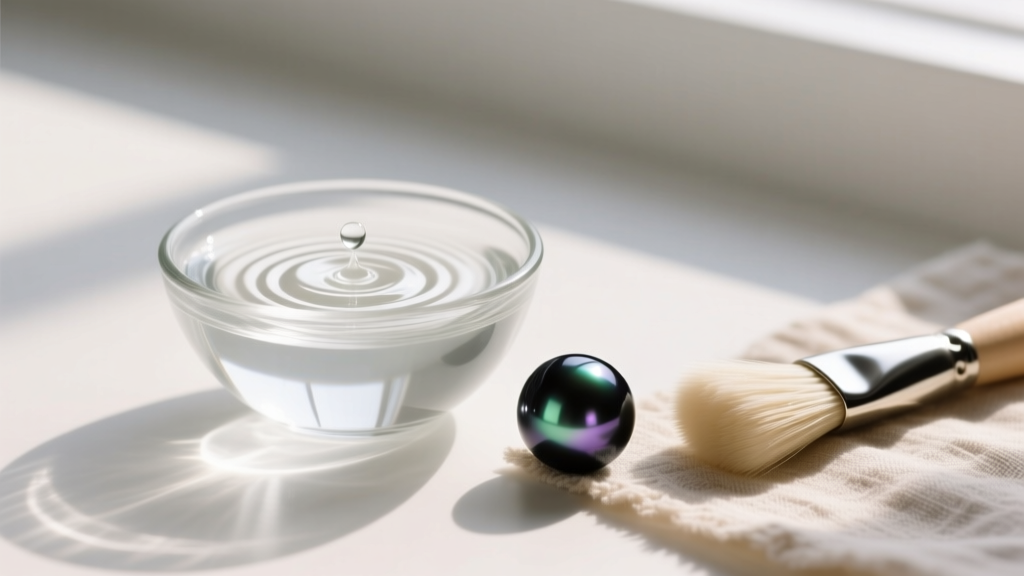
Deep Cleaning: Approved Agents vs. Destructive Chemicals
While daily wiping handles surface oils, pearls worn frequently will eventually require a deeper clean. However, the margin for error is razor-thin. Using the wrong cleaning agent will irreversibly destroy the nacre layers. Below is a definitive guide to what you can and cannot use when deep cleaning your collection.
| Cleaning Agent / Method | Safety Status | Gemological Impact |
|---|---|---|
| Distilled Water & Mild Castile Soap | ✅ Safe | Gently lifts oils without altering the pH or stripping conchiolin. |
| Ultrasonic Cleaners | ❌ Destructive | High-frequency cavitation bubbles violently shatter the delicate nacre layers. |
| Steam Cleaners | ❌ Destructive | Extreme heat dehydrates the conchiolin protein, causing internal cracking. |
| Baking Soda / Toothpaste | ❌ Destructive | Highly abrasive; scratches the surface and leaves alkaline residue. |
| Ammonia or Bleach | ❌ Destructive | Causes immediate chemical dissolution and permanent yellowing. |
How to deep clean: Mix a few drops of pH-neutral, unscented liquid castile soap into a bowl of distilled water. Dampen a soft cotton cloth in the solution (never submerge the pearls, as water will stretch the silk thread and weaken the knots). Gently wipe each pearl individually, then follow up with a cloth dampened only with pure distilled water to remove soap residue. Lay flat on a dry towel to air dry completely.
Structural Maintenance: Silk, Knots, and Restringing
Caring for pearl jewelry extends beyond the nacre; the stringing material is equally vital. High-quality pearl necklaces are strung on 100% silk thread (typically Griffin Size 2 or 3, depending on the drill hole diameter) with individual knots between each bead. These knots serve two purposes: they prevent the pearls from rubbing against one another, and they ensure that if the strand breaks, you only lose a single pearl.
Silk is a natural protein fiber that stretches over time when exposed to the weight of the pearls, ambient humidity, and the oils from your neck. According to Jewelers of America, a necklace worn weekly should be professionally restrung every 12 to 24 months.
When taking your piece to a jeweler for restringing, ensure they use French wire (a fine coiled metal wire) at the clasp to protect the silk from fraying against the metal jump rings. Never allow a jeweler to use nylon or synthetic wire for fine cultured pearls, as these materials are too rigid and can act like a saw, slowly cutting through the delicate drill holes of the nacre over time.
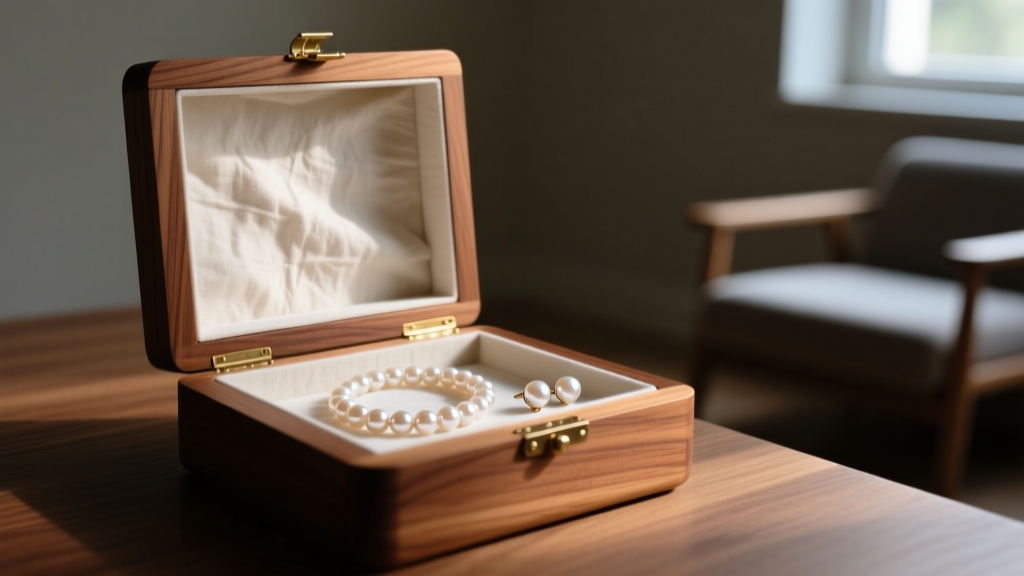
Climate-Controlled Storage Environments
How you store your pearls when they are not being worn dictates their lifespan. Pearls require a specific microclimate to maintain their structural integrity. The conchiolin protein requires a baseline level of ambient moisture to remain flexible. If the environment is too dry, the pearls will dehydrate, leading to 'crazing'—a network of fine, irreversible cracks on the surface.
- Avoid Plastic Bags: Never store pearls in plastic ziplock bags. Some plastics emit trace chemicals as they degrade, and plastic traps moisture, creating a breeding ground for mildew which can permanently stain the nacre.
- Beware the Safe Deposit Box: While bank vaults are secure, they are climate-controlled to be extremely dry (often below 20% humidity). Storing pearls in a safe deposit box for years will guarantee they dehydrate and crack. If you must use a vault, place a small, damp sponge in a perforated container inside the box to maintain a 40-55% humidity level.
- The Ideal Storage: Store pearls flat in a jewelry box lined with unbleached cotton, acid-free tissue paper, or soft velvet. Never hang a pearl necklace, as the constant gravitational pull will permanently stretch the silk thread and warp the drape of the necklace.
Troubleshooting Irreversible vs. Reversible Damage
Even with meticulous care, accidents happen. Knowing the difference between reversible surface issues and irreversible structural damage will save you from falling for fraudulent 'miracle cure' products.
Reversible: Surface Dullness from Oils
If your pearls look chalky or dull, they are likely coated in a microscopic layer of sebum and dead skin cells. This is entirely reversible. Follow the deep cleaning protocol outlined above using distilled water and castile soap to restore the natural luster.
Irreversible: Acid Etching and Peeling
If a pearl has been exposed to vinegar, citrus, or heavy acidic sweat for prolonged periods, the aragonite crystals are physically dissolved. This leaves a dull, chalky spot that cannot be washed off. Similarly, if a pearl is 'peeling' (where layers of nacre flake off to reveal the shell bead nucleus underneath), this is usually the result of severe dehydration or physical trauma. There is no DIY fix for etching or peeling; a master lapidary may be able to lightly polish the bead to remove the damaged layer, but this removes valuable nacre thickness and should only be attempted on high-grade South Sea or Tahitian pearls with thick nacre deposits.


