The Ultimate Guide to Choosing the Perfect Pearl Jewelry Box
Discover how to protect your organic gems with the right pearl jewelry box. Learn about humidity control, anti-tarnish linings, and proper storage.

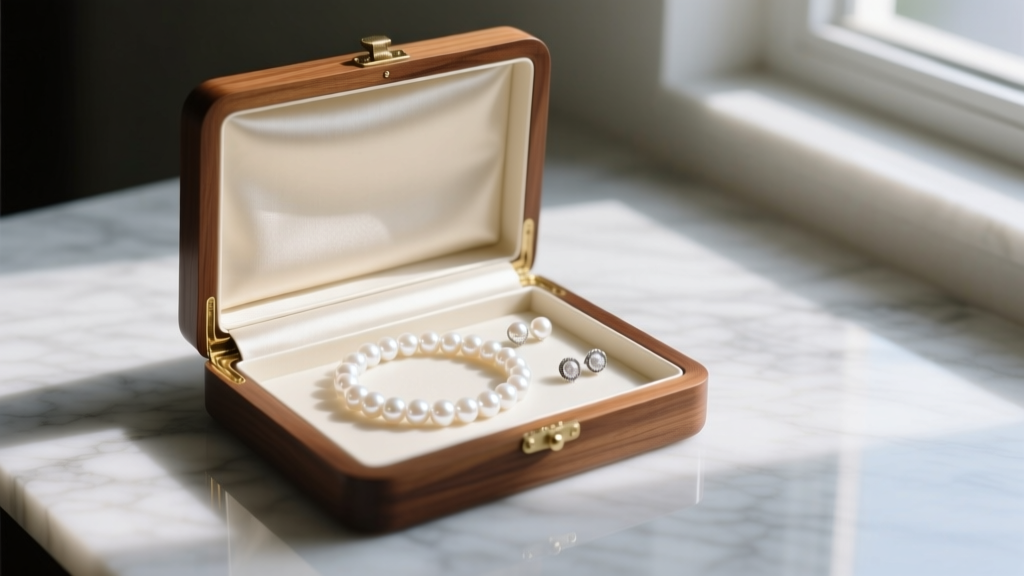
Unlike diamonds or sapphires, pearls are organic gemstones born from living creatures. This biological origin makes them breathtakingly beautiful but also uniquely vulnerable to their environment. Storing your nacre treasures in a generic, unlined compartment or a plastic bag is a fast track to irreversible damage. To preserve their luster, prevent surface scratching, and maintain their structural integrity, investing in a specialized pearl jewelry box is not just a luxury—it is an absolute necessity for any serious collector or casual wearer.
In this comprehensive guide, we will explore the exact science behind pearl degradation, the specific materials your storage solution must feature, and the common household items that are secretly destroying your organic gems. Whether you own a classic strand of Japanese Akoya pearls, a dark Tahitian necklace, or delicate freshwater studs, proper storage is the key to passing them down through generations.
The Science of Pearl Degradation
To understand why a dedicated pearl jewelry box is required, you must first understand what a pearl actually is. A pearl is composed primarily of aragonite (a crystalline form of calcium carbonate) held together by an organic protein called conchiolin. While the calcium carbonate provides the gem's hardness, the conchiolin provides its flexibility and moisture.
On the Mohs scale of mineral hardness, pearls rank between 2.5 and 4.5. For context, a copper coin is roughly 3.5, and common household dust contains microscopic quartz particles that rank at a 7. This means that simply tossing your pearls into a drawer where they can rub against metal clasps or accumulate dust will result in permanent micro-scratches that dull the nacre's natural orient and luster.
Furthermore, if the conchiolin protein dries out due to low humidity, the pearl will suffer from 'crazing'—a network of fine surface cracks that cannot be polished out. According to the Gemological Institute of America (GIA), extreme dehydration is one of the leading causes of pearl destruction, making the micro-climate inside your storage box just as important as the physical padding.
Anatomy of the Ideal Pearl Jewelry Box
When shopping for the perfect storage solution, you must look past the exterior aesthetic and scrutinize the interior architecture. A high-quality pearl jewelry box must meet three critical criteria: chemical neutrality, physical isolation, and breathability.
1. Lining Materials and Acidity
The interior lining of your box will be in constant, direct contact with the pearl's surface. Many mass-produced jewelry boxes use synthetic velvets, treated polyesters, or cardboard bases that off-gas volatile organic compounds (VOCs) and acidic fumes. Over time, these acidic environments will slowly eat away at the calcium carbonate, causing the pearls to lose their luster and develop a chalky, yellowed appearance.
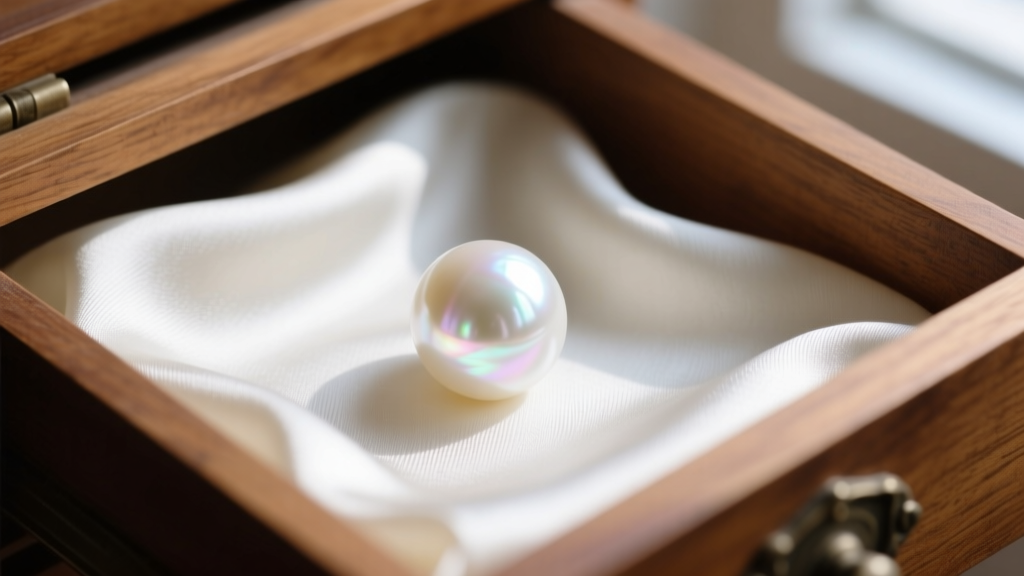
The gold standard for pearl storage is untreated, natural silk or acid-free, unbleached cotton. Silk provides a frictionless surface that prevents micro-abrasions while allowing the pearls to 'breathe' and maintain equilibrium with the ambient room humidity. If you prefer a suede-like texture, ensure it is a natural, untreated chamois or specialized anti-tarnish flannel that is explicitly certified as acid-free.
2. Compartmentalization and Layout
Pearls must never touch other gemstones, metal chains, or even other pearls if they have rough, unpolished drill holes. Your pearl jewelry box should feature individual, soft-sided slots or dedicated roll-up pouches. For heavy, multi-strand South Sea pearl necklaces, flat-lay storage is vastly superior to hanging storage. Hanging a heavy pearl necklace on a hook inside a box will cause gravity to slowly stretch the silk thread over time, leading to gaps between the pearls and eventual thread failure.
Materials to Strictly Avoid
Many well-intentioned jewelry owners accidentally destroy their pearls by using the wrong storage methods. The American Gem Society (AGS) frequently warns against airtight storage for organic gems. Below is a breakdown of common storage materials and why they fail the pearl test.
| Storage Material | Acidity / Off-Gassing | Moisture Retention | Verdict for Pearls |
|---|---|---|---|
| Plastic Ziplock Bags (PVC) | High (traps chemicals) | Traps moisture (causes mildew) | Avoid Completely |
| Bank Safety Deposit Box | Neutral | Extremely Low (causes crazing) | Avoid Completely |
| Cardboard Jewelry Inserts | High (acidic paper pulp) | Draws moisture away from nacre | Avoid Completely |
| Untreated Solid Wood (Cedar) | Moderate (natural wood oils) | Fluctuates with environment | Use with Caution |
| Acid-Free Cotton / Silk | Neutral / Safe | Breathable, maintains equilibrium | Highly Recommended |
One of the most persistent myths in jewelry care is that pearls should be locked away in a bank vault for safekeeping. Bank vaults are climate-controlled to protect paper documents and metal bullion, meaning the humidity is kept artificially low. Storing pearls in a safety deposit box for years will almost guarantee that the conchiolin dries out, resulting in cracked, ruined pearls.
The Pre-Storage Protocol
Even the most expensive, custom-built pearl jewelry box cannot protect your gems if they are put away dirty. Human sweat, body oils, cosmetics, and perfumes contain acids and chemicals that actively degrade nacre. Before placing your pearls into their storage compartments, you must follow a strict pre-storage protocol.
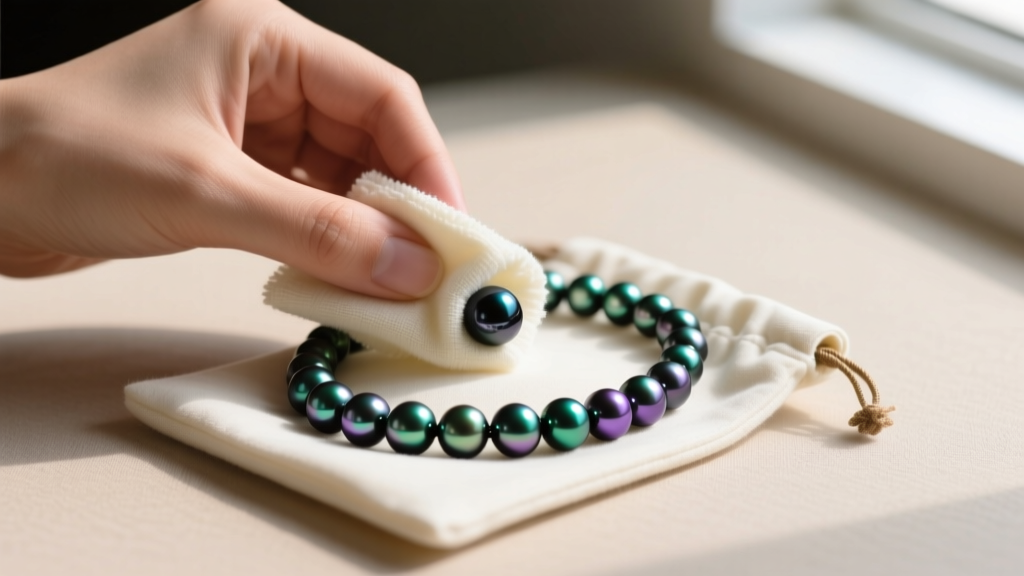
- The Wipe Down: After wearing your pearls, gently wipe each individual bead with a soft, slightly damp microfiber or cotton cloth. This removes the invisible layer of acidic sweat and skin oils.
- The Drying Phase: Never put damp pearls into a closed box. Moisture trapped in the drill holes can weaken the silk threading and cause the internal bead (if bead-nucleated) to expand and crack the nacre from the inside out. Let them air dry on a soft towel for 15 to 20 minutes.
- The Inspection: While wiping them down, check the silk knots. If you notice stretching, fraying, or dirt accumulation between the pearls, it is time to have them professionally restrung before storing them long-term.
Long-Term Maintenance and Wear
There is an old gemological adage: 'Pearls need to be worn.' This is not just a romantic sentiment; it is a scientific fact. The natural oils from your skin, combined with the ambient humidity of your daily environment, help keep the conchiolin protein hydrated and supple. A pearl jewelry box is meant for resting your gems between wears, not for banishing them to a dark closet for a decade.
"If you must store your pearls for an extended period, place a small, damp (not wet) cotton ball in a separate, open glass vial inside the jewelry box to maintain a localized humidity level of around 40-50%. Never let water touch the pearls directly."
By selecting a pearl jewelry box lined with acid-free silk or cotton, avoiding airtight plastics, and committing to a gentle cleaning routine before storage, you ensure that your organic gems retain their breathtaking orient and structural integrity. Treat your pearls with the specialized care they demand, and they will remain a luminous part of your collection for a lifetime.


