Sourcing Round Pearl Components for Jewelry Making: A Technical Guide
Master the technical specs of round pearl components for jewelry making. Explore drill sizes, luster grading, and nucleation for flawless fabrication.

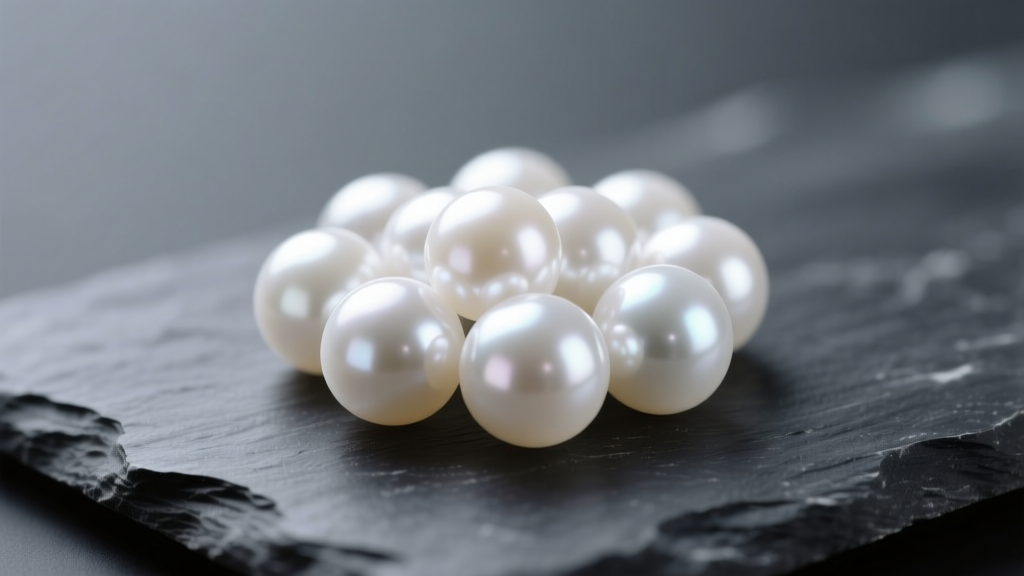
The Anatomy of Round Pearl Components
When sourcing round pearl components for jewelry making, the distinction between bead-nucleated and tissue-nucleated specimens dictates both the structural integrity and the optical performance of the final piece. Historically, perfectly round pearls were exclusively the domain of saltwater bead-nucleated varieties like Akoya and South Sea. In these components, a perfectly spherical mother-of-pearl bead is implanted into the gonad of the oyster, and the mollusk secretes nacre over this rigid template. According to the Gemological Institute of America (GIA), high-quality Akoya round components typically feature a nacre thickness between 0.3mm and 0.5mm. While this yields exceptional luster, the thin nacre requires careful handling during setting to prevent peeling or chipping.
In contrast, the modern market for round pearl components has been revolutionized by bead-nucleated freshwater pearls, often marketed as Edison pearls. These components offer large, perfectly round profiles (typically 11mm to 14mm) with remarkably thick nacre layers, sometimes exceeding 2.0mm. For jewelry makers, this thick nacre provides a much larger margin of error when drilling or setting, making them highly desirable for structural applications like tension settings or heavy bead-weaving projects.
Drill Specifications: Full vs. Half-Drilled Components
The drill hole is the most critical structural modification on any pearl component. Selecting the correct drill specification prevents blowout, nacre fracturing, and alignment issues in multi-strand designs.
Full-Drilled Components for Threading and Wirework
Full-drilled round pearls are pierced entirely through the central axis. For traditional silk knotting, a drill hole of 0.4mm to 0.5mm is standard, accommodating size E or F silk thread with a French beading needle. However, if your jewelry making involves wire-wrapping or using metallic headpins, you must source components with a 0.7mm to 0.8mm drill channel. A major technical failure mode in mass-drilled pearls is "tapering," where the drill bit wanders, creating an hourglass-shaped channel. This causes severe friction on wire, leading to work-hardening and eventual wire snap. Always inspect the channel with a loupe to ensure a consistent cylindrical bore.
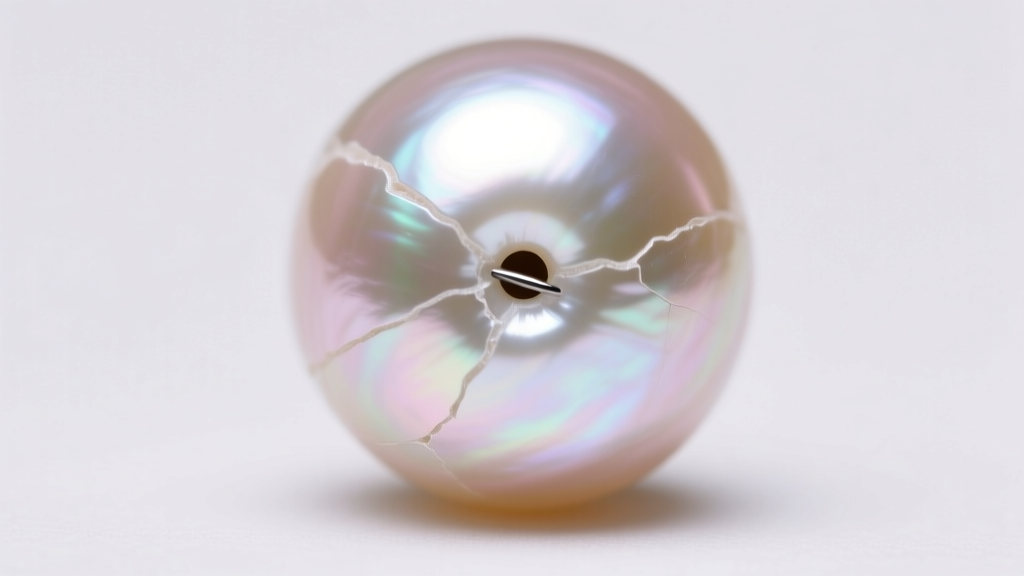
Half-Drilled Components for Post Settings
Half-drilled pearls are engineered to be mounted on metal posts (peg settings). The industry standard for half-drilled round components is a 0.7mm or 0.8mm diameter hole, drilled to a depth of roughly 50% to 60% of the pearl's total diameter. Crucially, the entry point of the drill must be free of "blowout"—a chipping of the nacre that occurs when the drill bit exits or enters too aggressively. Premium suppliers use specialized brad-point drill bits or ultrasonic drilling to ensure the nacre edges remain razor-sharp, allowing the pearl to sit flush against the metal cup without visible gaps.
Grading Metrics for Jewelry Makers
Evaluating loose round pearl components requires a departure from finished-strand grading. When buying loose components, you must assess each bead individually based on three technical vectors: luster sharpness, surface tolerance, and spherical deviation.
| Grade | Luster (Reflection Sharpness) | Surface Tolerance (Blemish Free) | Spherical Deviation | Best Application |
|---|---|---|---|---|
| AAA (Gem) | Excellent: Crisp, distinct light source reflection | 95% - 100% clean to the naked eye | < 1% variance in diameter | Solitaire pendants, high-end stud earrings |
| AA+ | Good: Clear but slightly soft reflection edges | 85% - 95% clean, minor blemishes | < 3% variance in diameter | Multi-strand necklaces, cluster rings |
| AA | Fair: Hazy or milky reflection | 70% - 85% clean, visible spots/pits | < 5% variance, near-round | Bead weaving, leather-wrap bracelets |
As noted by experts on the Pearl-Guide Forum, surface blemishes on loose components can be strategically managed. A single pit or score mark on an otherwise AAA-grade pearl drops its wholesale price significantly. Expert jewelry makers purchase these "blemished" rounds and orient the flaw downward into a bezel cup or cover it with a prong, achieving a high-end look at a fraction of the material cost.
Material Pairings and Adhesive Selection
When working with half-drilled round pearl components, the choice of adhesive dictates the lifespan of the jewelry. A common and catastrophic mistake among novice makers is using cyanoacrylate (super glue). Cyanoacrylate cures brittle, lacks shear strength, and its acidic vapors can permanently etch and cloud the nacre of the pearl.

The Epoxy Protocol
For structural metal-to-pearl bonding, a two-part jeweler's epoxy is mandatory. Epoxy 330 or Devcon 5-Minute Clear Epoxy are industry standards. These adhesives provide a slight flexibility that absorbs the differential thermal expansion between the metal post and the organic pearl, preventing the bond from snapping in cold weather.
- Surface Preparation: Degrease the silver or gold post and cup with acetone. Never apply acetone to the pearl, as it can strip natural oils and damage the nacre.
- Mechanical Lock: The metal post should feature a textured surface, a groove, or a burr created by a file. This gives the epoxy a physical structure to grip, supplementing the chemical bond.
- Curing Environment: Use a beeswax or pearl-setting block to hold the component perfectly plumb while the epoxy cures for a minimum of 12 hours at room temperature (70°F/21°C).
Sourcing and Verification Protocols
"Never rely solely on supplier nomenclature. A 'perfect round white bead' could be a dyed shell pearl, a glass imitation, or a heavily bleached low-grade freshwater pearl. Always verify the drill hole for the concentric layers of nacre and the tell-tale glow under UV light."
When procuring round pearl components for jewelry making in bulk, always request a pre-production sample lot. Use a 10x triplet loupe to examine the drill hole. Cultured pearls will show a distinct boundary line between the mother-of-pearl nucleus and the secreted nacre layers. Imitation shell pearls will show a uniform, painted coating that often flakes at the drill site. By mastering these technical specifications—from drill tolerances to epoxy chemistry—you elevate your jewelry making from simple assembly to master-level fabrication.


