Restore & Clean a Godinger Silver Rose Jewelry Box: Step-by-Step
Learn how to safely clean, polish, and maintain your Godinger silver rose jewelry box while protecting the sterling silver pieces stored inside.

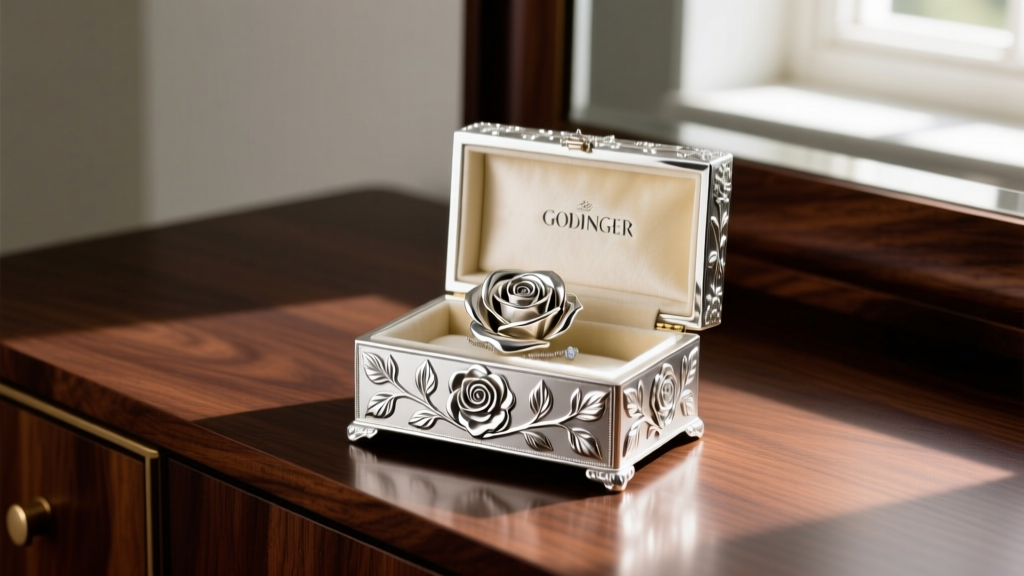
The Dual Challenge: Exterior Elegance and Interior Protection
The Godinger silver rose jewelry box is a staple of elegant vanity decor, beloved for its intricate floral engravings and classic silhouette. However, maintaining this piece requires a nuanced understanding of metallurgy and textile care. Unlike solid 925 sterling silver chains or rings, decorative silver boxes often feature complex layered materials. As we move through 2026, collectors and jewelry enthusiasts are increasingly aware that the methods used to clean solid silver can catastrophically damage silver-plated or lacquered decorative items.
This comprehensive guide will walk you through the exact, step-by-step process of restoring the exterior silver finish of your Godinger box without stripping its protective coatings, while simultaneously upgrading the interior to create a safe, anti-tarnish haven for your fine 925 sterling silver collection.
Understanding the Metallurgy of Your Godinger Box
Before applying any polish, you must identify the exact material composition of your box. According to the London Assay Office, true sterling silver must contain 92.5% pure silver and 7.5% alloy (usually copper). However, most decorative Godinger silver rose jewelry boxes are crafted from a base metal—such as brass, pewter, or a zinc alloy—that has been electroplated with a microscopically thin layer of silver (typically 10 to 30 microns thick).
Furthermore, many of these boxes are coated with a clear, cellulose-based or polyurethane lacquer to prevent tarnish. If your box is heavily tarnished, it means this lacquer layer has micro-fractures or has worn away entirely, allowing airborne sulfur compounds to react with the silver layer, forming silver sulfide (the black tarnish we see).
Critical Warning: Never use the popular "aluminum foil and baking soda" electrolysis bath on a Godinger silver rose jewelry box. This chemical reaction can strip the remaining factory lacquer, cause galvanic corrosion where the silver plate meets the base metal, and permanently ruin the velvet interior lining if submerged.
Step-by-Step Exterior Cleaning Guide
To safely restore the luster to the intricate rose petals and crevices of your box, follow this meticulous, non-abrasive cleaning protocol.
Step 1: Dry Dusting and Debris Removal
Tarnish acts as an abrasive when rubbed against soft silver plating. Before introducing any moisture, use a soft-bristled horsehair detailing brush to gently sweep out dust, skin cells, and cosmetic powders trapped within the deep crevices of the rose engravings. Follow this by wiping the flat surfaces with a dry, lint-free microfiber cloth.
Step 2: The pH-Neutral Surfactant Wash
If the box has sticky residues from lotions or perfumes, a mild wash is necessary. Mix three drops of a pH-neutral dish soap (free of citrus extracts or harsh degreasers) into a bowl of distilled water. Dip a cotton swab into the solution, wring it out until it is merely damp, and gently roll it over the engraved rose motifs. Immediately dry the area with a separate, dry cotton swab to prevent water spots and base-metal oxidation.
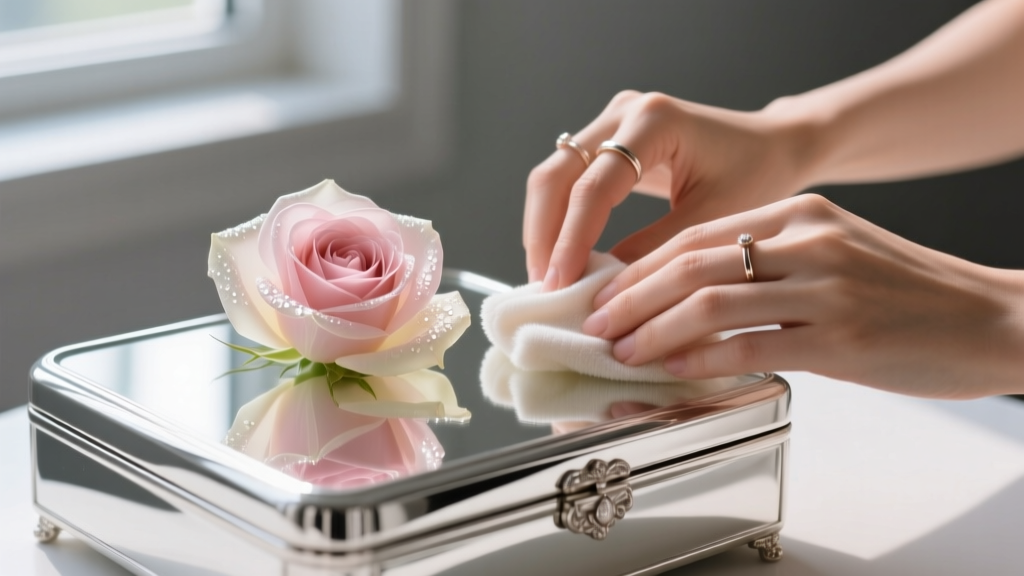
Step 3: Targeted Polishing with Non-Abrasive Compounds
For active silver sulfide tarnish, you must use a polish specifically formulated for silver plate. Hagerty's official silver care guidelines recommend using liquid polishes or specialized creams that contain mild chemical tarnish removers rather than harsh physical abrasives like baking soda or silica. Apply a pea-sized amount of silver polish to a microfiber cloth—never directly onto the box. Gently buff the tarnished areas in small, circular motions. For the deep grooves of the rose design, use a cotton swab lightly coated in polish, turning the swab frequently to lift the black tarnish away from the metal.
Step 4: Final Buffing and Sealing
Once the tarnish is removed, use a clean section of your microfiber cloth to buff the surface to a high shine. If your box is entirely stripped of its original lacquer, consider applying a museum-grade microcrystalline wax (such as Renaissance Wax) using a soft cloth. This creates a breathable, invisible barrier against airborne sulfur and humidity, delaying future tarnish for up to two years.
Optimizing the Interior for 925 Sterling Storage
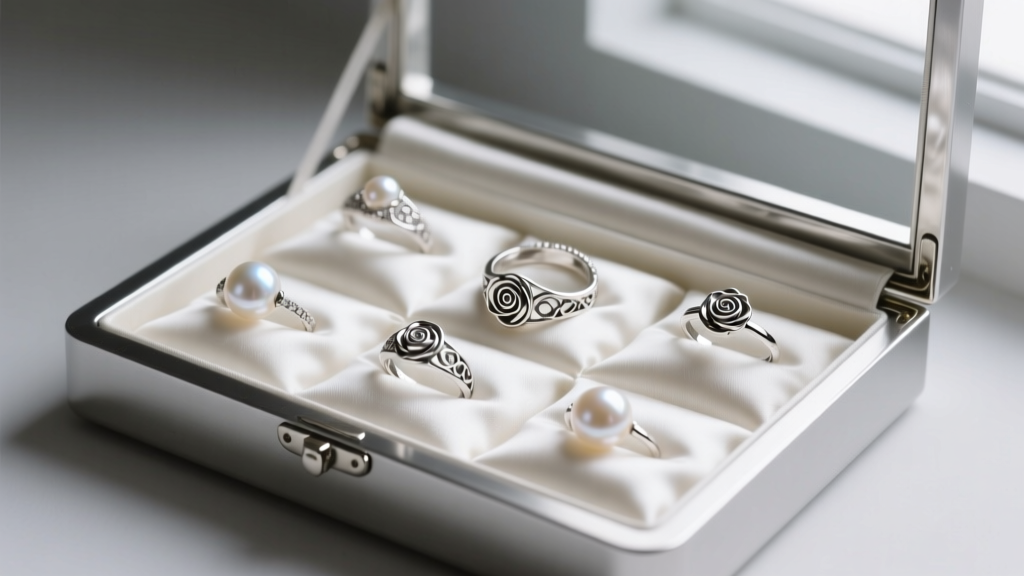
The exterior of your Godinger silver rose jewelry box may look pristine, but the interior poses a hidden threat to your fine jewelry. Traditional velvet linings, especially those manufactured in the late 20th and early 21st centuries, often utilize synthetic adhesives and dye fixatives that off-gas sulfur and acidic vapors. When you store your 925 sterling silver rings and necklaces inside, these vapors accelerate the tarnishing process, turning your bright silver yellow or black within weeks.
To transform your Godinger box into a true preservation vault, you must neutralize the interior environment.
Upgrading the Lining and Atmosphere
Do not attempt to rip out the original velvet, as this can warp the structural integrity of the box's base metal. Instead, line the bottom and sides of the interior compartments with Pacific Silvercloth. This specialized flannel is embedded with microscopic silver particles that intercept and absorb sulfur gases before they can reach your jewelry. Additionally, introduce modern desiccants to control ambient moisture, which acts as a catalyst for tarnish.
| Anti-Tarnish Interior Solution | How It Works | Longevity (2026 Standards) | Best For |
|---|---|---|---|
| Pacific Silvercloth Mats | Absorbs sulfur gases via embedded silver particles | 5-7 Years (until brown/black) | Long-term ring and earring storage |
| 3M Anti-Tarnish Strips | Chemically binds to airborne sulfur and chlorides | 6-12 Months | Sealed compartments and drawers |
| Nano-Ceramic Silica Gel | Adsorbs ambient moisture to halt tarnish catalysis | Reusable (bake to recharge) | Humid climates and bathrooms |
| Activated Charcoal Sachets | Traps volatile organic compounds (VOCs) and odors | 2-3 Months | Boxes stored near perfumes/cosmetics |
Troubleshooting Common Silver Box Issues
Even with meticulous care, vintage or heavily used Godinger boxes may develop specific issues that require specialized troubleshooting.
Black Spots That Won't Polish Out
If you encounter dark, pitted spots on the silver surface that do not lift with polish, you are likely looking at "bleed-through" or plate wear. This occurs when the silver plating has worn entirely away, exposing the copper or brass base metal beneath. The base metal has oxidized, creating a dark spot. Do not scrub harder. Aggressive polishing will only remove more of the surrounding silver plate. The only permanent fix for this is professional re-plating by a silversmith, or carefully touching up the area with a silver-toned metallic wax to mask the contrast.
Sticky or Squeaky Hinges
The hinges on decorative jewelry boxes are notoriously delicate and can become stiff due to polish buildup or oxidation. Avoid using standard WD-40, which contains petroleum distillates that will stain the interior velvet and degrade any remaining lacquer. Instead, apply a microscopic drop of synthetic PTFE (Teflon) lubricant to a toothpick, and carefully run it along the hinge pin. Open and close the box gently to work the lubricant into the joint, then wipe away any excess immediately.
Velvet Lining Stains and Odors
If the interior velvet has absorbed perfume odors or developed water stains, do not use liquid cleaners. Sprinkle a thin layer of baking soda over the dry velvet, close the box, and leave it in a cool, dry room for 48 hours. The baking soda will absorb the odors and moisture. Afterward, use a handheld vacuum with a brush attachment on the lowest suction setting to remove the powder.
Long-Term Maintenance Schedule
To keep your Godinger silver rose jewelry box in pristine condition for generations, establish a simple maintenance rhythm. Dust the exterior with a horsehair brush monthly. Re-apply a microcrystalline wax coating every 18 to 24 months to maintain the moisture barrier. Finally, replace your interior 3M anti-tarnish strips or silica gel packets every January and July to ensure your 925 sterling silver collection remains as brilliant as the day it was forged.


