What Is 925 on Jewelry? The Hallmark Trend Reshaping Silver Style
Discover what 925 on jewelry means and how the sterling silver hallmark has evolved into a major design trend for modern collectors and stylists.

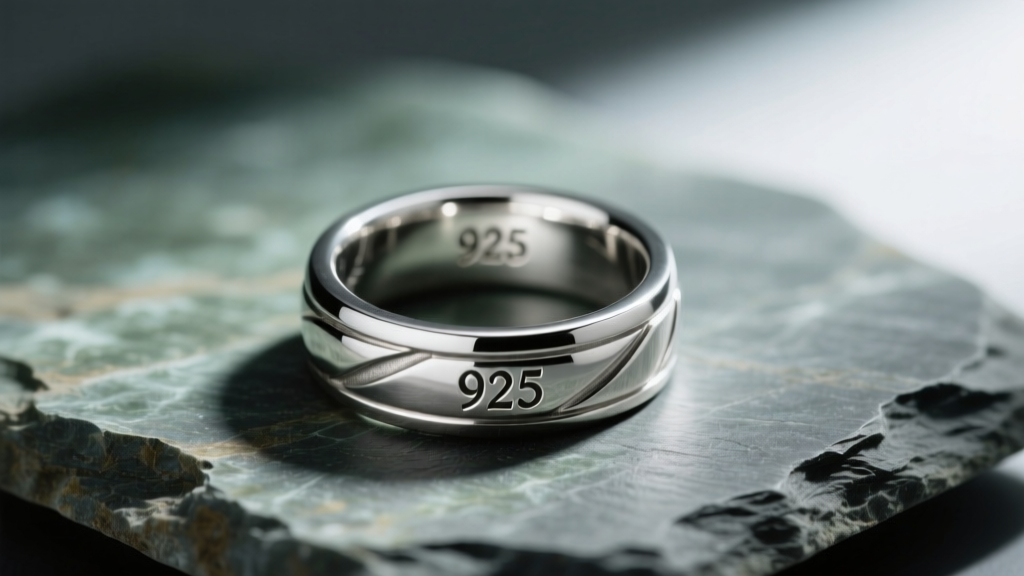
For decades, the tiny '925' stamp hidden inside a ring band or clasped near a necklace hook was purely functional—a quiet assurance of metallurgical purity. But as we navigate the 2026 jewelry landscape, the answer to 'what is 925 on jewelry' has transcended basic chemistry. Today, the hallmark is a bold aesthetic statement, a marker of artisanal authenticity, and a central motif in the brutalist and industrial-chic silver trends dominating contemporary style. Understanding this stamp is no longer just about avoiding fakes; it is about appreciating the intersection of material science and modern design.
The Evolution of the 925 Stamp: From Quality Control to Design Motif
Historically, the 925 hallmark served as a legal and commercial guarantee. According to the Federal Trade Commission (FTC), jewelry stamped with 925 must contain exactly 92.5% pure silver, with the remaining 7.5% composed of alloying metals. In the past, manufacturers hid this stamp to preserve the sleek, uninterrupted lines of high-polish finishes.
However, current trend forecasting reveals a massive shift. Contemporary silversmiths and avant-garde fashion houses are now magnifying the 925 stamp, turning it into an oversized, deeply engraved focal point. This 'visible hallmark' aesthetic speaks to a consumer base that values transparency, raw materiality, and industrial heritage. The stamp is no longer a secret; it is the centerpiece.
Decoding the Alloys: Why 925 Sterling Silver Dominates 2026 Trends
To understand the style, you must understand the science. Pure silver (999 fine silver) is too soft for everyday structural jewelry—it bends, warps, and loses detail. The 7.5% alloy in 925 sterling silver provides the necessary tensile strength for intricate casting and durable daily wear. While copper is the traditional alloying metal, it introduces a vulnerability: tarnish. Copper reacts with sulfur and moisture in the air, creating silver sulfide (the black patina we associate with tarnished silver).
To combat this, modern metallurgists have developed advanced 925 alloys, replacing some or all of the copper with zinc, platinum, or germanium. The Gemological Institute of America (GIA) notes that these proprietary blends maintain the legal 92.5% silver requirement while drastically altering the metal's behavior.
| Alloy Type | Silver Content | Secondary Metals | Tarnish Resistance | Best Style Application |
|---|---|---|---|---|
| Traditional Sterling | 92.5% | 7.5% Copper | Low (Patina develops quickly) | Vintage, Oxidized, and Heritage styles |
| Deoxidized Sterling | 92.5% | Copper + Zinc/Silicon | Medium | High-polish minimalist and everyday chains |
| Argentium Silver | 93.5% or 96.0% | Copper + Germanium | High (Highly tarnish-resistant) | Avant-garde, seamless welding, high-end modern |
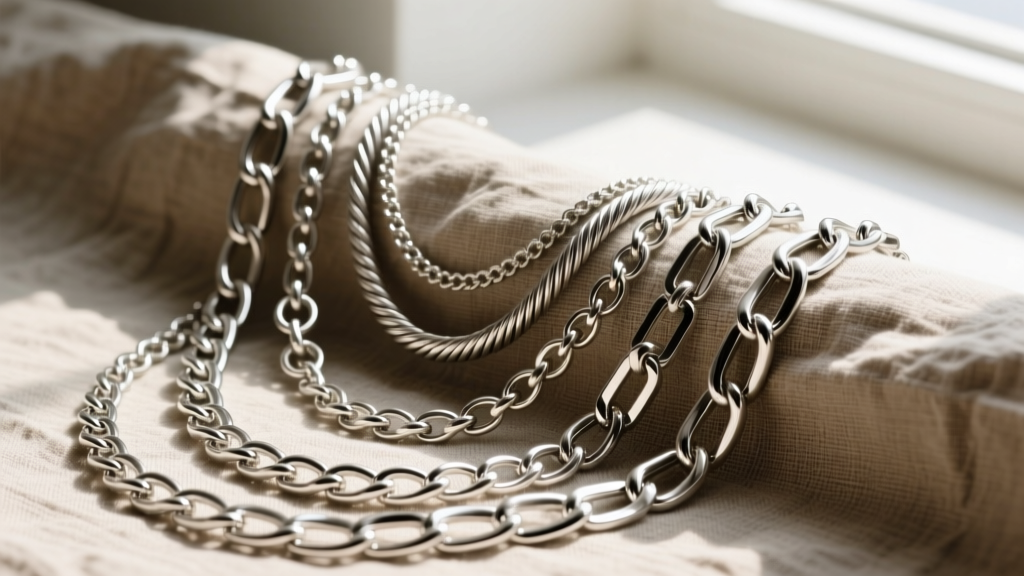
The 'Visible Hallmark' Aesthetic in Contemporary Silver Jewelry
If you are curating a modern silver wardrobe, recognizing how designers manipulate the 925 stamp is crucial. The current market is divided into three distinct stylistic approaches regarding the hallmark:
1. The Brutalist Stamp
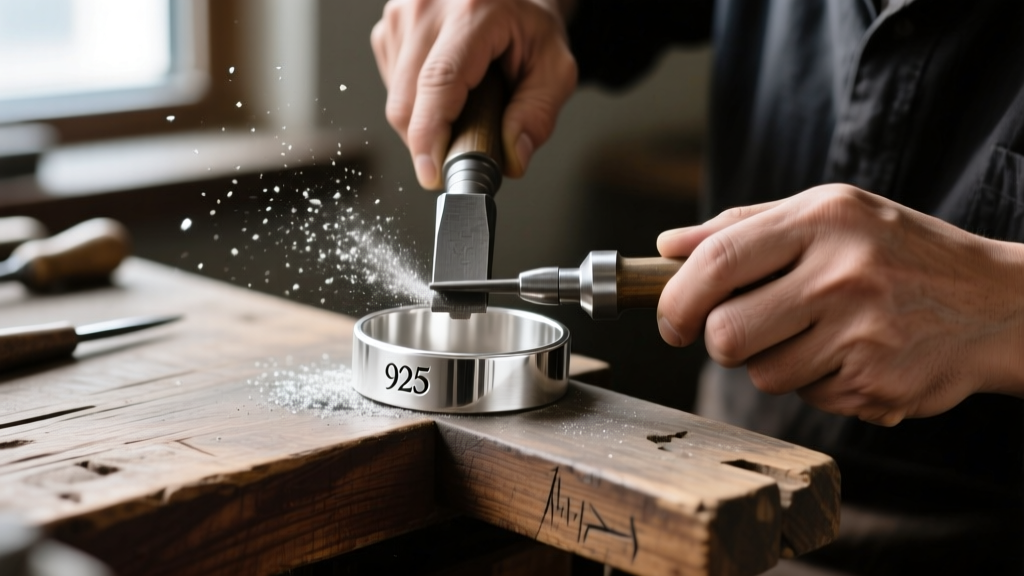
Indie designers and brutalist jewelers are using heavy steel die-stamps to strike the '925' into thick, raw, unpolished silver cuffs and signet rings. The strike is often intentionally imperfect, surrounded by hammer marks and torch-fire scale. This appeals to the 'anti-luxury' luxury consumer who wants jewelry that looks excavated or forged in real-time, rather than mass-produced in a sterile factory.
2. The Engraved Typography Trend
High-end contemporary brands are incorporating the numbers 9, 2, and 5 into the actual geometric architecture of the piece. You will find 925 laser-engraved in massive, sans-serif fonts across the flat faces of cubist pendants or wrapping around the exterior of heavy tube-hoop earrings. It acts as a graphic design element, akin to a streetwear brand's logo.
3. Pricing the Provenance
The presence and execution of the 925 stamp heavily influence market pricing in the current landscape:
- Mass-Market / Cast Commercial ($30 - $90): The stamp is usually micro-lasered or shallowly struck inside a ring band or on a tiny soldered tag near a lobster clasp. It is an afterthought.
- Mid-Tier Artisan ($150 - $450): The stamp is deeply hand-struck with a steel punch, often placed on the exterior edge of a band or the backplate of a pendant, serving as a signature of hand-fabrication.
- Avant-Garde / Designer ($600 - $2,500+): The 925 is integrated into the conceptual design, sometimes cast in high relief or paired with a secondary maker's mark that acts as a collector's seal.
Spotting the Fakes: Trend-Proof Authentication for Silver Collectors
As the 925 stamp becomes a trendy visual motif, counterfeiters have caught on, stamping '925' onto brass, copper, and nickel-silver (which contains zero actual silver). Relying solely on the visual presence of the stamp is no longer sufficient for serious collectors. Here are the professional-grade authentication methods you need to know:
- The Specific Gravity Test: Pure silver has a specific gravity of 10.49 g/cm³. Sterling silver sits around 10.36 g/cm³. By weighing the piece in air and then suspended in distilled water, you can calculate its density. Brass (around 8.4 g/cm³) will immediately fail this test, regardless of the 925 stamp.
- XRF Spectrometry: For high-value acquisitions, X-ray Fluorescence (XRF) testing is the gold standard. Many local jewelers and pawn shops have handheld XRF guns that bounce X-rays off the metal to read its exact elemental composition in seconds without damaging the patina.
- The Neodymium Magnet Test: Silver is diamagnetic. If you slide a strong neodymium magnet down a 925 silver coin or thick bar at a 45-degree angle, it should slide slowly, as if moving through syrup, due to the eddy currents generated. If it snaps or falls instantly, the core is likely a ferromagnetic base metal.
Styling 925 Sterling Silver: Curating a Modern Heirloom Wardrobe
Understanding what is 925 on jewelry ultimately empowers you to style it with intention. The 2026 approach to sterling silver rejects the old rule of keeping it perfectly polished. Instead, stylists are embracing the 'living metal' concept.
When you wear traditional copper-alloyed 925 sterling silver, the sulfur in your skin and the environment will naturally oxidize the recesses of the jewelry. Rather than constantly scrubbing this away with harsh chemical dips, use a polishing cloth only on the high-contact raised areas. This leaves the 925 stamp and the intricate engravings dark and oxidized, creating a high-contrast, three-dimensional effect that highlights the craftsmanship.
Mixing your 925 silver with other metals is also highly encouraged. Layering a heavily oxidized, brutalist 925 silver chain with a bright, high-karat yellow gold pendant creates a striking visual tension that feels deeply personal and thoroughly modern. The 925 stamp is your guarantee of quality, but how you wear the metal is where your personal style truly shines.


