Care Guide: Cleaning a Silver Heart Shaped Jewelry Box
Learn how to safely clean, polish, and maintain your silver heart shaped jewelry box while protecting the sterling pieces stored inside from tarnish.

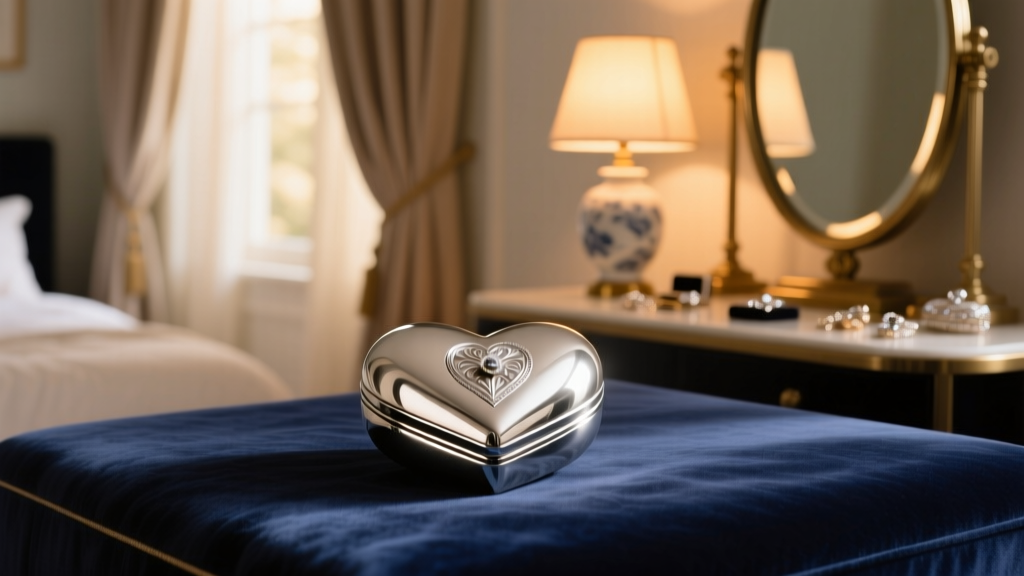
The Anatomy of a Silver Heart Shaped Jewelry Box
A silver heart shaped jewelry box is more than just a romantic keepsake; it is a functional vault designed to protect your most precious sterling silver and gemstone pieces. However, to maintain its luster and protective qualities, you must understand its metallurgical composition. Most vintage and modern silver boxes are not solid sterling silver (92.5% pure silver). Due to the weight and cost, they are typically crafted from a brass, copper, or nickel-silver base and finished with a layer of silver plating. This plating, often measured in microns (usually between 2 to 10 microns thick), is delicate. Aggressive polishing can easily burn through this microscopic layer, exposing the base metal beneath and causing irreversible damage.
According to the Victoria and Albert Museum, understanding the difference between solid sterling and electroplated nickel silver (EPNS) is the first step in proper conservation. Solid sterling boxes will have hallmarks stamped into the base or interior rim, while plated boxes may bear stamps like 'EPNS', 'Silver on Copper', or 'Quadruple Plate'. Identifying your box's material grade dictates the abrasiveness of the cleaning compounds you can safely use.
Step-by-Step Cleaning Guide for the Silver Exterior
Cleaning the exterior of your silver heart shaped jewelry box requires a gentle, methodical approach to lift silver sulfide (tarnish) without stripping the plating. Tarnish occurs when silver reacts with hydrogen sulfide in the ambient air, creating a dark, dull layer on the surface.
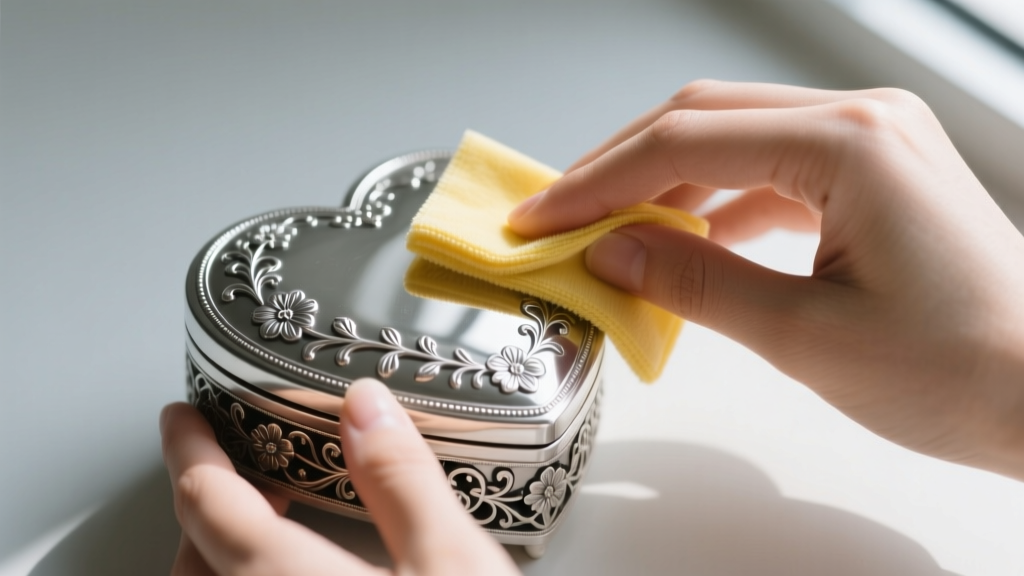
Step 1: Dry Dusting and Debris Removal
Before applying any moisture or polish, use a clean, soft-bristled makeup brush or a canned air duster to remove dust from the intricate crevices, hinges, and clasps of the heart-shaped lid. Dust particles often contain microscopic silica, which can act like sandpaper if rubbed into the silver during the polishing phase.
Step 2: The Gentle Wash (For Heavy Grime Only)
If the box has accumulated skin oils or cosmetic residue, wash it using a solution of lukewarm distilled water and a few drops of pH-neutral dish soap (like Dawn or Ivory). Never submerge the box. Instead, dampen a soft microfiber cloth, wring it out until it is barely moist, and gently wipe the surface. Dry immediately with a separate, lint-free cotton towel to prevent water spots, which can etch into the silver plating over time.
Step 3: Chemical Polishing and Tarnish Removal
For active tarnish, use a high-quality, non-abrasive silver polish such as Goddard's Silver Polish or Wright's Silver Cream. Apply a dime-sized amount to a 100% cotton ball or a dedicated silver polishing cloth. Rub the silver in straight, back-and-forth motions rather than circles. Circular rubbing can create microscopic swirl marks that catch the light and make the finish look dull. Pay special attention to the hinges, but avoid forcing polish deep into the mechanical joints, as dried paste can stiffen the hinge over time.
Maintaining the Anti-Tarnish Interior Lining
The interior of a high-quality silver heart shaped jewelry box is just as important as the exterior. Most premium boxes are lined with anti-tarnish flannel, Pacific Silvercloth, or treated felt. These fabrics are impregnated with microscopic particles of zinc or silver that act as 'sacrificial metals.' They intercept and absorb hydrogen sulfide and other corrosive gases before these pollutants can reach your jewelry.
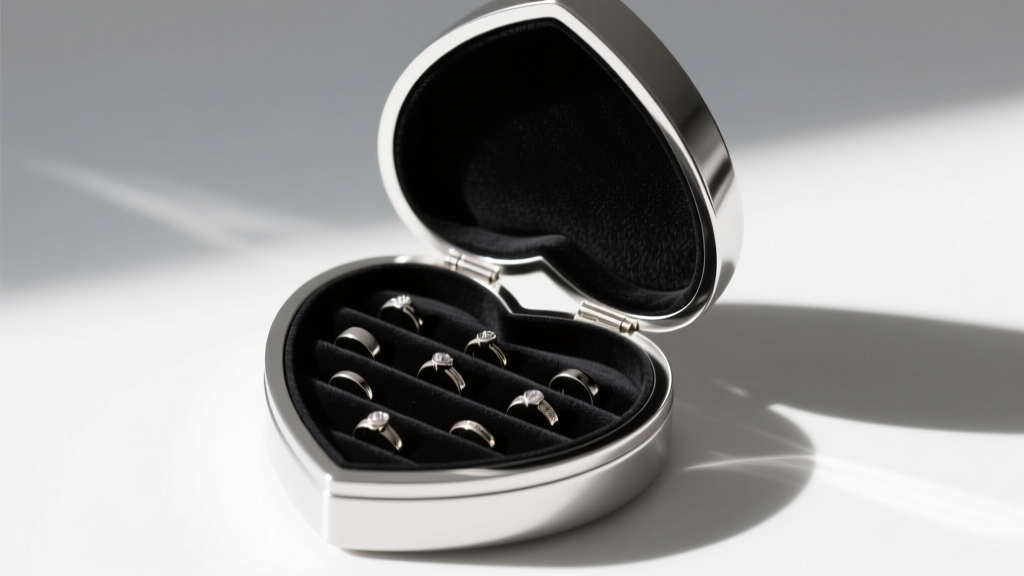
Critical Rule: Never wash, vacuum, or apply liquid cleaners to the anti-tarnish interior lining. Moisture and detergents will strip the fabric of its active tarnish-inhibiting compounds, rendering it useless. If the interior becomes dusty, use a soft, dry brush to gently sweep the compartments. To recharge the environment inside the box, place a small, breathable sachet of activated charcoal or a dedicated anti-tarnish silica gel packet in the main compartment. Replace these desiccants every six months to ensure optimal humidity control.
Best Practices for Storing Sterling Silver Inside
How you load your silver heart shaped jewelry box directly impacts the longevity of both the jewelry and the box's interior lining. Overcrowding restricts airflow and can cause mechanical scratching, while storing incompatible materials can trigger rapid chemical tarnishing.
| Material / Item | Storage Compatibility | Reasoning & Expert Advice |
|---|---|---|
| Sterling Silver (925) | Highly Compatible | The treated lining is specifically designed to protect sterling silver from sulfur exposure. |
| Fine Silver (999) | Highly Compatible | Pure silver is highly resistant to tarnish but soft; store in individual soft slots to prevent dents. |
| Gold & Platinum | Compatible | Safe to store, but keep separated from silver to prevent friction scratches on the softer gold. |
| Pearls & Opals | Store with Caution | Organic gems require slight moisture. Airtight silver boxes can dry them out. Store in a breathable silk pouch inside the box. |
| Rubber / Latex | Never Store | Rubber emits high levels of sulfur, which will instantly tarnish silver and stain the interior lining. |
Common Mistakes That Ruin Silver Keepsake Boxes
Even well-meaning collectors can inadvertently destroy the finish and structural integrity of a silver heart shaped jewelry box. Avoid these catastrophic errors:
- Using Dip Cleaners (Thiourea): Products like Tarn-X use thiourea to instantly strip tarnish. While visually satisfying, this chemical process removes a microscopic layer of silver. On a plated box, just two or three dips will strip the silver entirely, exposing the copper or brass underneath.
- Ultrasonic Cleaners: Never place a jewelry box in an ultrasonic bath. The high-frequency vibrations will shatter the glue holding the interior felt lining, detach the hinges, and potentially crack any enamel or guilloché detailing on the lid.
- Storing in Oak Drawers: Never store your silver box inside an oak wood dresser drawer. Oak naturally emits acetic acid vapors as it ages, which aggressively accelerates the tarnishing process and can cause permanent pitting on silver-plated surfaces. If you must use a wooden drawer, seal the wood with polyurethane first or keep the box inside an acid-free archival storage bag.
- Using Paper Towels: Paper towels and tissues are made from wood pulp and contain microscopic wood fibers that will leave fine, permanent scratches on high-polish silver.
Expert Tip: If your silver heart shaped jewelry box features intricate guilloché enamel (the translucent, colorful geometric patterns often found on vintage lids), never apply silver polish directly to the surface. The mild abrasives in the polish will cloud the enamel's glass-like finish. Clean enamel only with a damp microfiber cloth and a drop of mild dish soap.
Long-Term Preservation and Display
For heirloom pieces that are displayed on vanities rather than tucked away in drawers, environmental control is paramount. Keep the box out of direct sunlight, as UV rays can fade the silk or velvet interior lining over time. Furthermore, avoid displaying the box in bathrooms or near humidifiers; high humidity acts as a catalyst for the chemical reactions that cause silver sulfide to form. By combining gentle, non-abrasive cleaning techniques with strict environmental controls, your silver heart shaped jewelry box will remain a brilliant, tarnish-free sanctuary for your most cherished jewelry for generations to come. For further reading on preserving precious metals, consult the conservation guidelines provided by the Smithsonian Institution.


