How Do You Clean Silver Jewelry Without Ruining the Patina?
Discover the chemistry behind silver tarnish. Learn exactly how do you clean silver jewelry using electrochemical, ultrasonic, and abrasive methods.

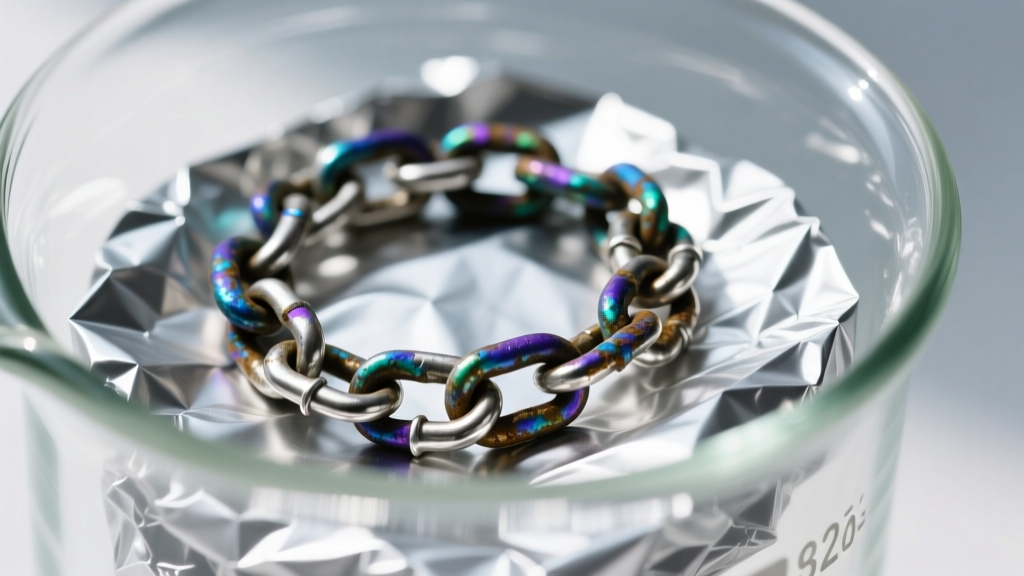
The Chemistry of Silver Tarnish: It Is Not Dirt
Before addressing how do you clean silver jewelry, it is critical to understand that tarnish is not a surface contaminant like dust or skin oils; it is a fundamental chemical conversion of the metal's surface. Pure silver is relatively inert, but the copper alloyed into 925 sterling silver (7.5% copper) creates a galvanic micro-cell on the surface. When exposed to atmospheric hydrogen sulfide (H2S) and moisture, the silver and copper react to form a layer of silver sulfide (Ag2S) and copper oxide.
This sulfide layer begins as a faint yellowish hue, progressing to brown, and finally to a deep, matte black. According to the Gemological Institute of America (GIA), the rate of this reaction is heavily accelerated by high humidity, sulfur-rich environments (such as urban pollution or proximity to wool and rubber), and the natural pH and sulfur content of the wearer's skin. Because tarnish is a chemical alteration of the top atomic layers, cleaning it requires either reversing the chemical bond or mechanically removing the altered metal.
The Electrochemical Reduction Method (Ionic Transfer)
The most scientifically sound method for removing heavy tarnish from solid 925 sterling silver—without removing microscopic layers of the precious metal—is electrochemical reduction. This process uses a galvanic cell to convert silver sulfide back into elemental silver.
Step-by-Step Ionic Transfer Protocol
- The Anode: Line a glass or ceramic bowl with heavy-duty aluminum foil, shiny side up. Aluminum is highly electropositive and will act as the sacrificial anode.
- The Electrolyte: Add 1 tablespoon of sodium bicarbonate (baking soda) and 1 teaspoon of non-iodized salt per liter of water. The salt increases the ionic conductivity of the solution.
- The Catalyst: Pour near-boiling water (approx. 90°C / 194°F) into the bowl. Heat drastically increases ion mobility and reaction speed.
- The Reaction: Submerge the silver jewelry, ensuring it physically touches the aluminum foil. You will immediately smell a rotten-egg odor (hydrogen sulfide gas releasing) and see yellow flakes (aluminum sulfide) forming in the water.
- Neutralization: After 3 to 5 minutes, remove the piece, rinse thoroughly in distilled water, and dry with a microfiber cloth.
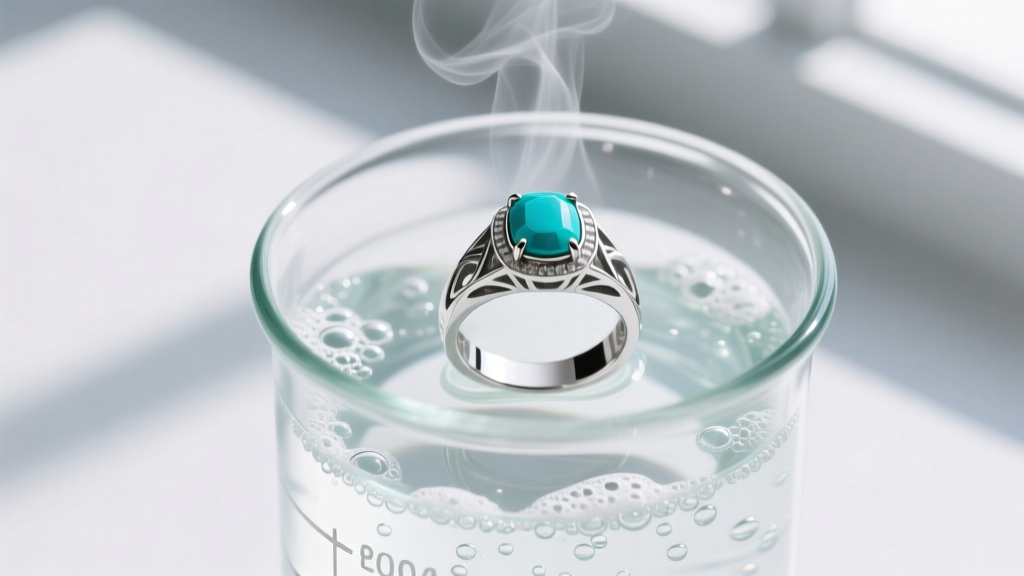
Critical Contraindications for Electrochemistry
While this method is miraculous for plain silver chains and heavily tarnished solid pieces, it is highly destructive to specific finishes. Never use this method on intentionally oxidized silver (pieces treated with liver of sulfur to create black crevices), as the electrochemical bath will strip the intentional patina in seconds. Furthermore, avoid this method for silver jewelry set with porous organic gems like turquoise, pearls, opals, or amber, as the hot alkaline solution will degrade their structural integrity and strip their natural waxes.
Ultrasonic Cavitation and Mechanical Alternatives
When the electrochemical method is contraindicated, professional jewelers rely on targeted mechanical or ultrasonic cleaning. Understanding the frequencies and abrasion levels is vital for preserving the jewelry's structural integrity.
Ultrasonic Cleaning Frequencies
Ultrasonic cleaners use high-frequency sound waves to create microscopic cavitation bubbles in a liquid solvent. When these bubbles collapse against the silver surface, they generate localized shockwaves that blast away tarnish and grime.
- 40 kHz (Standard): Aggressive cavitation. Suitable for heavy, solid silver chains and durable gemstone settings (like diamonds or sapphires). It can loosen damaged prongs.
- 80 kHz to 120 kHz (Sweep Frequency): Gentler, more uniform cavitation. Ideal for delicate silver filigree, micro-pave settings, and pieces with minor surface porosity.
Expert Warning: Never use ultrasonic cleaners on rhodium-plated sterling silver if the plating is already micro-fractured, as the cavitation will peel the remaining plating off the copper-alloy base.
Micro-Abrasive Polishing
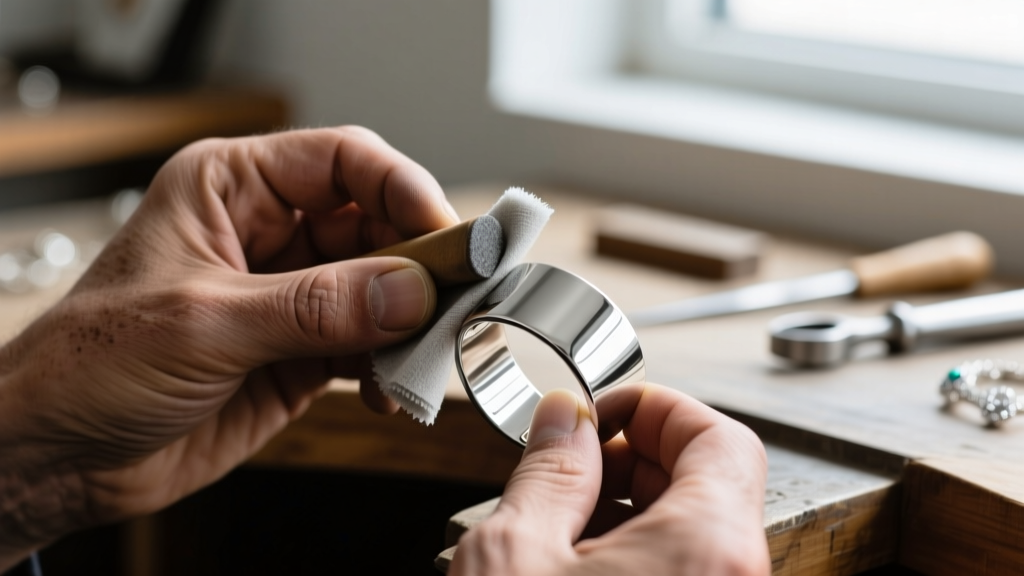
For localized tarnish or pieces with intentional oxidation, mechanical removal is the only safe option. Treated jeweler's cloths (impregnated with micro-abrasives like jeweler's rouge or silica) physically shear off the Ag2S layer. While effective, every polishing session removes approximately 0.001 to 0.005 millimeters of silver. Over a lifetime, aggressive polishing will round off sharp edges, blur engraved details, and wear through rhodium plating (which is typically only 0.05 to 0.5 microns thick).
Material-Specific Cleaning Matrix
To prevent catastrophic damage to your collection, cross-reference your jewelry's specific material grade and finish against this decision matrix before selecting a cleaning protocol.
| Silver Type / Finish | Primary Cleaning Method | Electrochemical Bath? | Ultrasonic Safe? | Chemical Dip Safe? |
|---|---|---|---|---|
| 925 Sterling (High Polish) | Electrochemical / Polishing Cloth | Yes | Yes (40kHz) | No (Causes pitting) |
| 925 Sterling (Oxidized) | Mild Soap / Q-tip / Polishing Cloth | No (Strips patina) | No (Blasts patina) | No (Strips patina) |
| Rhodium-Plated Silver | Warm Water / Mild Surfactant | No (Causes peeling) | Yes (80kHz only) | No (Destroys plating) |
| Silver with Porous Gems | Dry Microfiber / Soft Brush | No (Alkaline damage) | No (Fractures gems) | No (Stains gems) |
Critical Failure Modes: The Danger of Liquid Dips
Commercial liquid silver dips (often marketed as "instant tarnish removers") rely on thiourea or similar complexing agents. According to The Silver Institute, while these chemicals rapidly dissolve silver sulfide, they do so by aggressively stripping the top layer of the metal. This leaves behind a micro-porous, matte-white surface. Because the surface area is vastly increased at a microscopic level, silver cleaned with thiourea dips will actually re-tarnish up to three times faster than untreated silver. Furthermore, if the dip is not neutralized and rinsed with distilled water, residual sulfur compounds will continue to eat into the metal, causing irreversible black pitting over time.
Long-Term Tarnish Inhibition Strategies
Because you now understand how do you clean silver jewelry on a molecular level, the ultimate goal is to prevent the Ag2S reaction from occurring in the first place. Proper storage is infinitely superior to reactive cleaning.
The 50% Rule: Silver sulfide formation requires moisture as a catalyst. Storing your sterling silver in an environment where Relative Humidity (RH) is kept below 50% will reduce the tarnishing rate by over 80%.
- Anti-Tarnish Strips: Utilize 3M or equivalent copper-based scavenger strips inside your jewelry boxes. These strips contain copper particles that are more reactive to sulfur than silver, effectively sacrificing themselves to protect your jewelry. Replace them every 6 months.
- Pacific Silvercloth: For high-value pieces, wrap them in Pacific Silvercloth. This specialized flannel is embedded with microscopic silver and zinc particles that intercept and absorb H2S gases before they reach your jewelry.
- Silica Gel Desiccants: Include non-indicating silica gel packets in your airtight storage bags to aggressively scavenge ambient moisture, depriving the galvanic tarnish cell of its necessary electrolyte.
By respecting the electrochemistry of sterling silver and avoiding destructive commercial shortcuts, you can preserve the structural integrity, sharp detailing, and original metallurgical finish of your jewelry for generations.


