Expert Methods for Cleaning Silver Jewelry Without Damage
Discover the science behind cleaning silver jewelry safely. Learn electrochemical baths, gemstone care, and tarnish prevention for 925 sterling.

The Chemistry of Tarnish: Why Silver Darkens
When it comes to cleaning silver jewelry, the internet is flooded with contradictory advice that can easily ruin heirloom pieces. To effectively maintain your collection, you must first understand the chemistry of tarnish. Unlike rust on iron, silver tarnish is primarily composed of silver sulfide (Ag2S), not silver oxide. This compound forms when elemental silver reacts with trace amounts of hydrogen sulfide (H2S) present in the atmosphere, which originates from industrial pollution, natural gas, and even certain foods like eggs and onions.
The alloy composition of your jewelry dictates its tarnish rate. Fine silver (999 purity) is highly resistant to tarnishing. However, 925 sterling silver contains 7.5% copper to increase tensile strength. This copper creates microscopic galvanic cells when exposed to ambient humidity, accelerating the corrosion matrix. According to the Victoria and Albert Museum's conservation guidelines, understanding this copper-silver coupling is critical, as improper cleaning methods can strip the copper, leading to localized pitting and a permanently blotchy surface finish.
The Electrochemical Bath: Heavy Tarnish Removal for Plain 925 Sterling
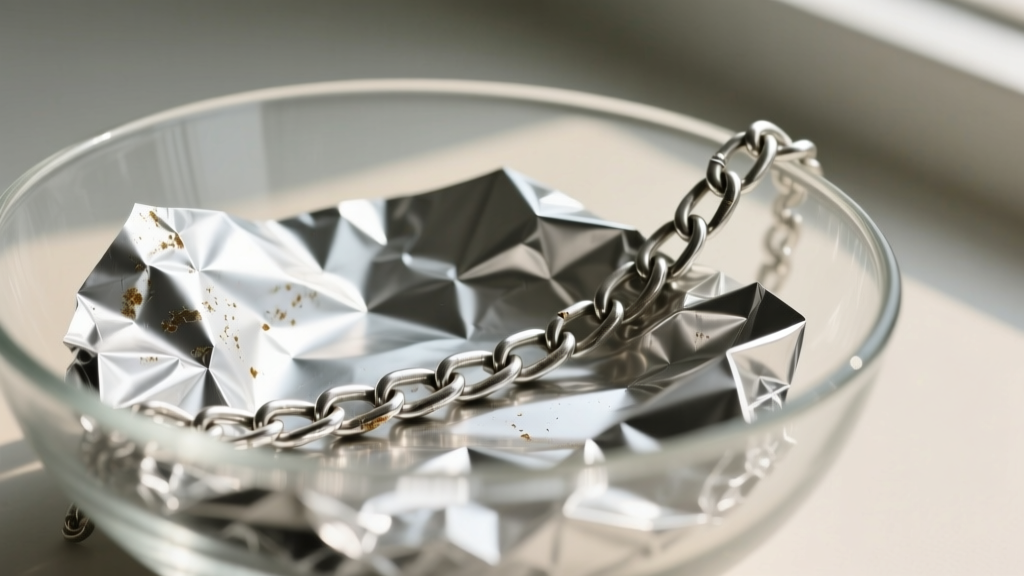
For heavily tarnished plain sterling silver chains, bangles, or bands without gemstones, the aluminum foil and baking soda method is not just a DIY hack—it is a scientifically proven electrochemical reduction process. Aluminum has a standard electrode potential of -1.66V, while silver sits at +0.80V. When submerged in a hot electrolyte solution (sodium bicarbonate), the aluminum acts as a sacrificial anode, oxidizing and releasing electrons. These electrons travel to the silver (the cathode), reducing the silver sulfide back into elemental silver and releasing sulfide ions into the water.
Step-by-Step Ion Exchange Protocol
- Preparation: Line a heat-safe glass or ceramic bowl with aluminum foil, ensuring the shiny side faces up. Avoid using metal bowls to prevent unintended galvanic reactions.
- The Electrolyte: Add 1 tablespoon of baking soda and 1 tablespoon of kosher salt per cup of water. The salt increases the ionic conductivity of the solution.
- Thermal Catalysis: Pour boiling water over the mixture. The thermal energy is required to catalyze the ion exchange.
- Submersion: Using wooden tongs, submerge the plain silver jewelry. Ensure the silver makes direct physical contact with the aluminum foil to complete the electrical circuit.
- Rinsing and Polishing: After 3 to 5 minutes, remove the piece. You will likely smell sulfur (a distinct rotten egg odor). Rinse thoroughly in distilled water and buff with a microfiber cloth. Note: This process removes tarnish but leaves a matte white finish; mechanical polishing is still required to restore a mirror shine.
Gentle Surfactants: Cleaning Silver Jewelry with Porous Gemstones
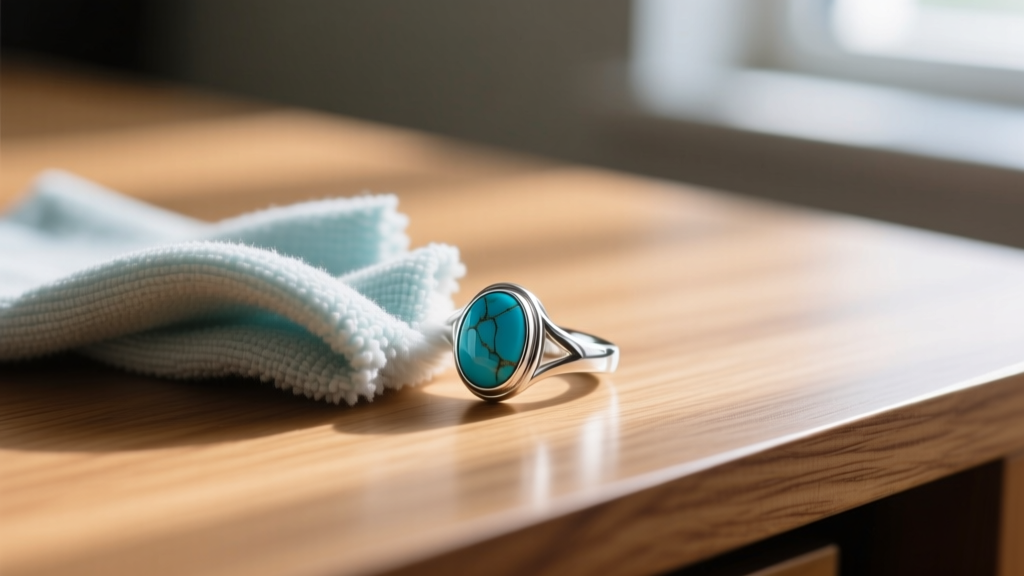
The electrochemical bath described above is strictly for plain metal. If your sterling silver is set with porous or hydrated gemstones, chemical baths and ultrasonic cleaners (which operate at 40kHz frequencies causing destructive cavitation) will cause catastrophic, irreversible damage. The Gemological Institute of America (GIA) explicitly warns against using harsh chemicals on organic and porous gems.
Turquoise: Ranking 5 to 6 on the Mohs scale, turquoise is a hydrous copper aluminum phosphate that is highly porous. Ammonia-based cleaners or acidic dips will strip its natural oils and permanently alter its color matrix, often turning vibrant blue stones into a chalky green or white. Opals: Containing up to 20% water, opals are incredibly sensitive to thermal shock. Submerging an opal ring in the boiling water required for an electrochemical bath will cause 'crazing'—a network of micro-fractures that ruins the stone's structural integrity and play-of-color. Pearls: Composed of calcium carbonate, pearls will literally dissolve and lose their nacreous luster if exposed to the highly alkaline environment of a baking soda bath.
The Safe Surfactant Method: Mix a pH-neutral dish soap (like Dawn) with distilled water at a strict 1:10 dilution ratio. Dip a soft horsehair detailing brush into the solution and gently agitate the silver settings, deliberately avoiding the gemstone faces. Rinse with room-temperature distilled water and dry immediately with a lint-free cloth to prevent water spots.
Comparative Analysis: Polishing Compounds vs. Chemical Dips
Choosing the right mechanical or chemical intervention depends on the severity of the tarnish and the desired finish. Below is a comparative framework for standard market solutions:
| Method | Mechanism | Abrasiveness | Best Use Case | Risk Level |
|---|---|---|---|---|
| Silver Polishing Cloths | Micro-abrasives & chemical impregnates (jeweler's rouge) | Low | Light tarnish, routine maintenance, high-polish finishes | Low | Silver Dips (Thiourea-based) | Chemical dissolution of silver sulfide | None (Chemical) | Severe tarnish on intricate filigree where cloths cannot reach | High (Toxic, strips patina) | Silver Cream/Paste | Mild abrasive suspension in a surfactant base | Medium | Heavy tarnish on large flat surfaces (cuff bracelets, trays) | Medium (Removes microscopic silver layers) |
| Ultrasonic Cleaners | Acoustic cavitation in a solvent bath | None (Mechanical shock) | Diamond or sapphire set in sterling silver | High (Shakes loose pave settings, fractures included gems) |
Special Protocols for Oxidized and Matte-Finish Silver
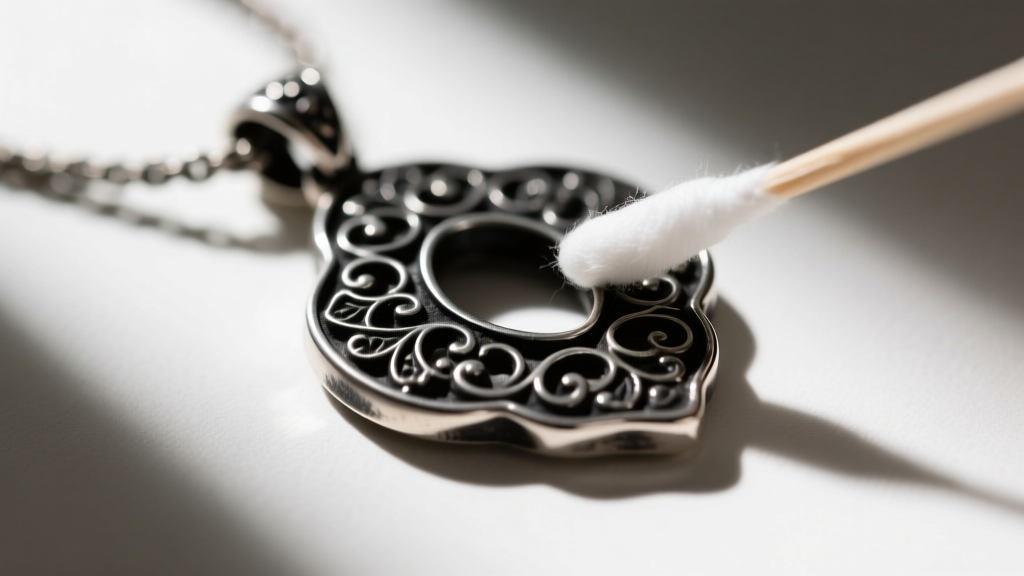
Oxidized silver is not a different alloy; it is 925 sterling silver that has been intentionally exposed to liver of sulfur (potassium polysulfide) to force a rapid, controlled layer of black silver sulfide. This technique is used to highlight textures, engravings, and filigree by leaving the black tarnish in the recesses while polishing the raised areas to a high shine.
If you use chemical dips, electrochemical baths, or abrasive polishing cloths on oxidized jewelry, you will strip the intentional patina, leaving the piece looking flat and washed out. To clean oxidized silver, use a cotton swab lightly dampened with isopropyl alcohol to carefully lift sebum and dirt from the raised, high-polish areas only. Never scrub the recessed black areas. For matte or sandblasted finishes, avoid polishing cloths entirely, as the friction will inadvertently burnish the surface and create shiny, uneven patches.
Preventative Storage: Halting the Tarnish Cycle
The most effective approach to cleaning silver jewelry is minimizing the need to clean it in the first place by controlling the storage environment. Tarnish requires hydrogen sulfide and moisture to form. By eliminating these variables, you can keep 925 sterling silver pristine for years.
- Pacific Silvercloth: This specialized storage material is 100% cotton flannel embedded with microscopic silver particles. These particles act as a sacrificial sulfur trap, reacting with H2S before it can reach your jewelry. It is highly effective but must never be washed, as laundering destroys the embedded silver.
- Anti-Tarnish Strips: Products like 3M Anti-Tarnish strips utilize a copper-based polymer that absorbs sulfur gases. Place one strip inside your storage container and replace it every 6 months.
- Airtight Barriers: Store pieces in zip-lock bags made of polyethylene. Never use PVC (polyvinyl chloride) plastic bags, as PVC off-gasses sulfur and chlorine compounds that will aggressively accelerate tarnishing and cause irreversible pitting.
- Humidity Control: Maintain the relative humidity in your storage area below 50%. Include silica gel desiccant packets in your jewelry boxes to absorb ambient moisture, effectively starving the galvanic corrosion cells that drive the tarnishing process.


