What Does 925 Stamped On Jewelry Mean? Value Assessment
Discover what does 925 stamped on jewelry mean for your budget. Learn to assess sterling silver value, spot fakes, and calculate scrap vs. retail worth.

The Metallurgy of 925: Why Pure Silver Isn't Used
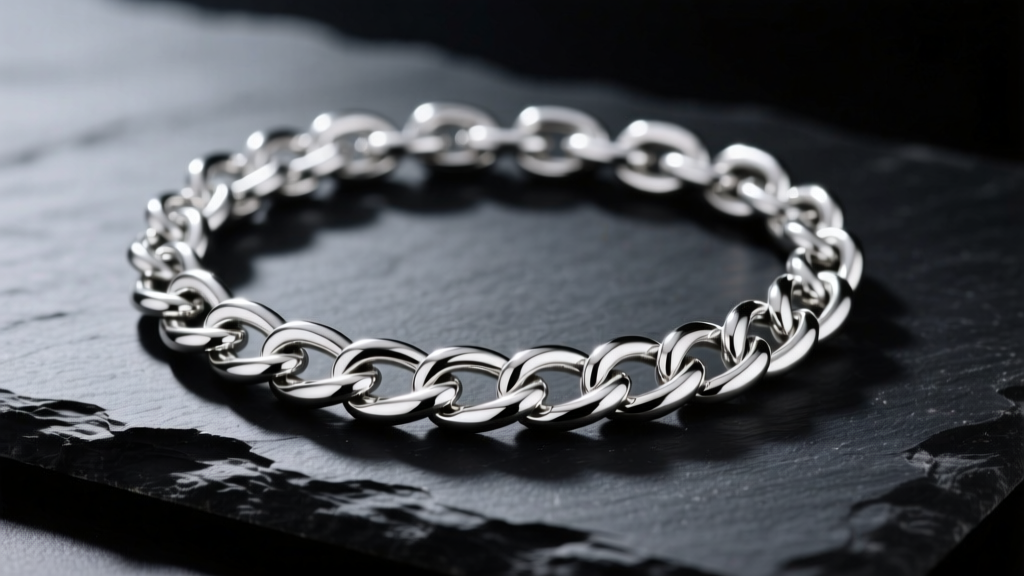
When shopping for vintage, estate, or contemporary pieces, a common question arises among budget-conscious buyers: what does 925 stamped on jewelry mean for its actual market value? To understand the financial and practical worth of this hallmark, we first have to look at the metallurgy. Pure silver, often stamped as 999 or fine silver, is exceptionally soft. On the Mohs scale of mineral hardness, fine silver sits at a mere 2.5 to 3.0, making it roughly as hard as a copper penny. While excellent for investment bullion, it is entirely unsuitable for daily-wear jewelry because it will bend, scratch, and lose its shape under minimal stress.
To solve this, jewelers alloy pure silver with other metals to increase its tensile strength and durability. The 925 stamp indicates that the piece is composed of exactly 92.5% pure silver and 7.5% secondary metals—most commonly copper. This specific ratio creates sterling silver, bumping the Mohs hardness up to a much more wearable 3.5 to 4.0. The copper adds structural integrity, allowing the metal to be cast, drawn into fine wires, and set with gemstones without compromising the piece's structural integrity. However, this copper content is also the reason sterling silver tarnishes when exposed to sulfur and moisture in the air, a factor that slightly impacts long-term maintenance costs.
Decoding the Stamp: 925 vs. Other Silver Hallmarks
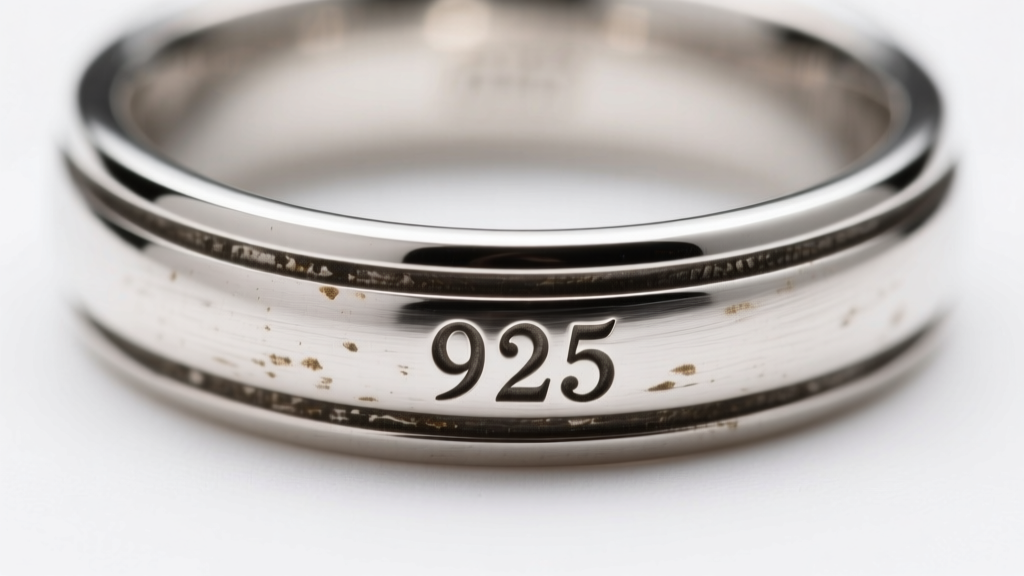
Not all silver jewelry is created equal, and the stamp inside the band or on the clasp is your first indicator of baseline intrinsic value. According to the Federal Trade Commission (FTC) guidelines for the jewelry industry, quality marks must accurately reflect the precious metal content. Here is how 925 sterling silver stacks up against other common silver hallmarks you will encounter in the secondary market.
| Purity Grade | Common Stamp | Silver Content | Mohs Hardness | Tarnish Resistance | Market Value Profile |
|---|---|---|---|---|---|
| Fine Silver | 999 | 99.9% | 2.5 - 3.0 | Excellent | Highest melt value; rarely used in rings/bracelets. |
| Britannia Silver | 958 | 95.8% | 3.0 - 3.5 | Very Good | Mostly antique British pieces; high collector premium. |
| Sterling Silver | 925 | 92.5% | 3.5 - 4.0 | Moderate | The global standard; balances high melt value with durability. |
| Coin Silver | 900 | 90.0% | 4.0 - 4.5 | Moderate | Historical US pieces; valued for antiquity over silver content. |
| Continental Silver | 800 | 80.0% | 4.5+ | Low | Common in vintage European flatware; lower intrinsic melt value. |
Budget Assessment: Retail Price vs. Melt Value in 2026
Understanding what does 925 stamped on jewelry mean requires separating the intrinsic melt value from the retail artisan premium. If you are buying 925 sterling silver strictly as a precious metal investment, you must calculate the scrap value based on the current spot price of silver. As of early 2026, with silver spot prices fluctuating around the $30 to $34 per troy ounce mark, the raw material cost of sterling silver is surprisingly accessible.
Calculating the True Melt Value
To assess if a vendor is overcharging, use this precise formula to find the melt value of any 925 piece:
- Weigh the jewelry in grams.
- Divide the weight by 31.1035 (the number of grams in one troy ounce).
- Multiply that number by 0.925 (to account for the 7.5% base metal alloy).
- Multiply the result by the current daily spot price of pure silver.
Real-World Example: Let's evaluate a heavy, 45-gram 925 sterling silver Cuban link chain. Dividing 45 by 31.1035 gives us 1.446 troy ounces. Multiplying by 0.925 yields 1.338 troy ounces of pure silver. At a $32/oz spot price, the absolute maximum melt value of that chain is roughly $42.81.
The Retail Premium Matrix
Knowing the melt value is only half the battle. When you buy finished jewelry, you are paying for labor, design, and brand equity. Here is what you should expect to pay over melt value depending on the seller tier:
- Mass-Market Importers (e.g., Amazon, fast fashion): Expect a 30% to 80% markup over melt value. The $42 chain might retail for $60 to $85. This is the best tier for budget buyers seeking basic designs.
- Independent Artisans & Silversmiths: Expect a 150% to 300% markup. You are paying for hand-forged links, custom clasps, and superior finishing. That same 45-gram chain could cost $150 to $250.
- Luxury Heritage Brands (e.g., Tiffany & Co., David Yurman): Expect a 500% to 1,500%+ markup. The brand name, retail experience, and iconic design patents drive the price. A comparable weight chain from a luxury house will easily exceed $600 to $1,200, despite having the exact same $42.81 melt value.
How to Verify the 925 Stamp (And Avoid Fakes)
A 925 stamp is easily forged. Unscrupulous manufacturers frequently stamp 925 onto silver-plated brass or copper items to deceive buyers. If you are assessing value at an estate sale or flea market, you must verify the hallmark using practical, non-destructive (or minimally destructive) testing methods.
The N52 Neodymium Magnet Test
Silver is paramagnetic, meaning it exhibits only a very weak, almost imperceptible reaction to magnetic fields. Take a strong N52 neodymium magnet and hold it near the jewelry. If the piece snaps to the magnet or shows strong attraction, it is not solid 925 silver; it likely has a steel or iron core beneath a thin silver plating. Note that some genuine sterling silver clasps contain tiny steel springs, so test the main body of the chain or ring, not just the clasp.
The Acid Scratch Test
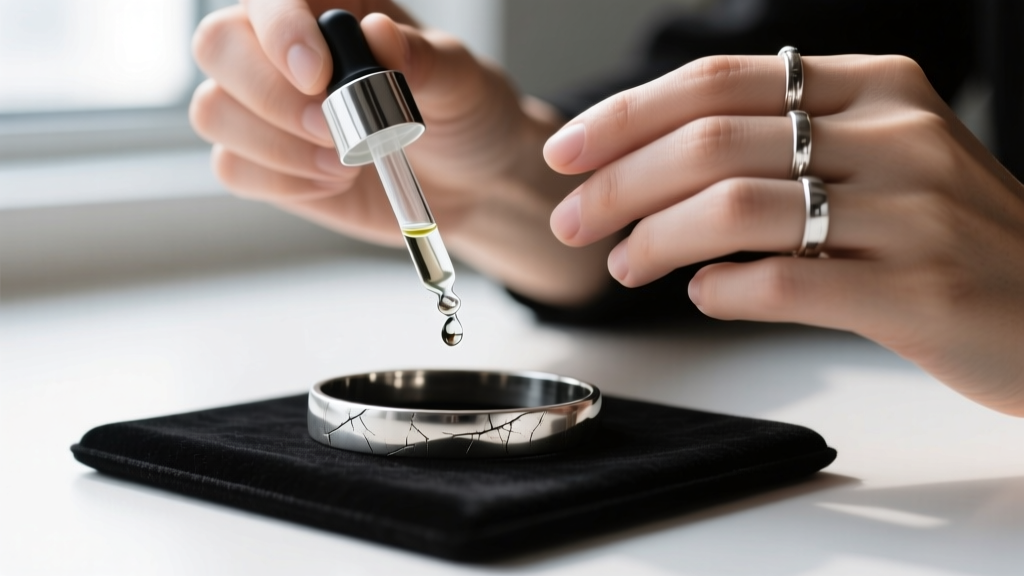
For absolute certainty, jewelers use an acid testing kit, which you can purchase for under $15. Using a jeweler's file, make a tiny, inconspicuous scratch on the piece to penetrate any surface plating. Apply a drop of 18k gold testing acid (nitric acid) to the scratch on a black testing stone. Observe the color reaction:
- Bright Red: Confirms 925 sterling silver.
- Dark Red: Indicates 999 fine silver.
- Brown/Green: Indicates 800 silver or lower purity.
- Green/Yellow Fizz: The item is brass, copper, or nickel with silver plating.
The Ice Thermal Conductivity Test
Silver possesses the highest thermal conductivity of any common metal. If you place an ice cube on a genuine 925 silver coin or thick pendant at room temperature, the ice will begin to melt almost instantly, much faster than it would on a wooden table or a piece of plastic. The silver will also become ice-cold to the touch within seconds as it rapidly pulls heat from the surrounding environment to melt the ice.
Final Verdict: Is 925 Sterling Silver a Good Investment?
Ultimately, what does 925 stamped on jewelry mean for your wallet? It means you are looking at the global benchmark for wearable precious metals. From a strict financial perspective, 925 sterling silver is a poor speculative investment compared to pure 999 silver bullion, due to the refining costs required to separate the copper alloy from the silver when melting it down. Dealers will typically only pay 70% to 80% of the actual melt value for scrap sterling.
However, as a value-driven style investment, 925 sterling silver is unmatched. It offers the brilliant luster and hypoallergenic properties of precious metals at a fraction of the cost of gold or platinum. By understanding how to calculate melt value, recognizing the retail premium matrix, and knowing how to verify authenticity with acid and magnets, you can confidently navigate the 2026 jewelry market, ensuring you never overpay for a stamped hallmark again. For ongoing spot prices and market trends, resources like Kitco remain essential tools for the savvy silver buyer.


