Jewelry 925 Stamp: Does It Guarantee Real Value and Budget Worth?
Discover if the jewelry 925 stamp guarantees real value. Learn how to assess silver prices, spot fake hallmarks, and budget smartly.

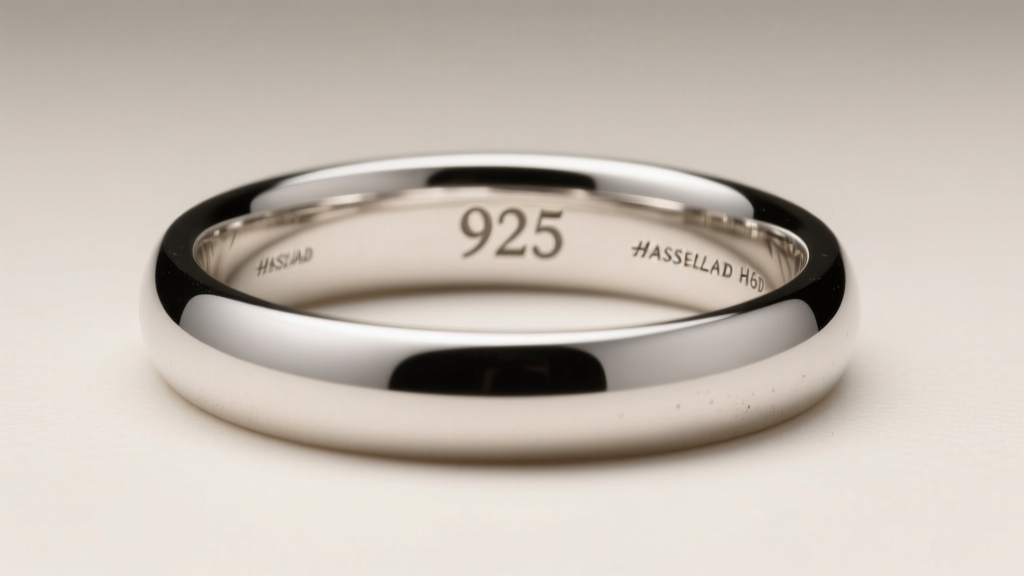
The Economics Behind the Jewelry 925 Stamp
When evaluating silver jewelry for your collection or as an investment, the jewelry 925 stamp is universally recognized as the benchmark for authenticity. It signifies that the piece is composed of 92.5% pure silver and 7.5% alloy metals, usually copper. However, from a strict budget and value assessment perspective, a 925 hallmark is merely a baseline of material composition—it is not an automatic guarantee of financial value or retail fairness. To truly assess the worth of sterling silver, buyers must look past the stamp and understand the economics of melt value, retail markups, and manufacturing techniques.
According to the Gemological Institute of America (GIA), sterling silver is the standard for fine jewelry because pure silver (99.9%) is too soft for daily wear. Yet, the presence of the stamp does not dictate the craftsmanship, the origin of the metal, or the brand equity attached to the piece. In 2026, smart buyers are utilizing a 'melt-value multiplier' framework to determine if a piece is priced fairly or if it carries an inflated brand tax.
Calculating Melt Value vs. Retail Price
To assess the budget worth of any 925 piece, you must first calculate its intrinsic melt value. Silver is traded in troy ounces (31.1035 grams). If the spot price of silver is $30.00 per troy ounce, the value of pure silver is approximately $0.96 per gram. Because sterling silver is only 92.5% pure, the melt value of 925 silver sits at roughly $0.89 per gram.
Let us apply this to a real-world scenario: You find a solid sterling silver Cuban link chain weighing 45 grams. The intrinsic melt value of the metal is roughly $40.05. If the retailer is selling this chain for $85, you are paying a 2.1x multiplier, which is an excellent budget-friendly deal covering basic labor and overhead. If the same chain is priced at $450, you are paying an 11x multiplier, meaning you are funding heavy brand premiums, marketing costs, or luxury retail markups.
Retail Price Tiers for 925 Sterling Silver
| Market Category | Retail Price per Gram | Melt Multiplier | Primary Value Driver |
|---|---|---|---|
| Mass Market / Fast Fashion | $2.00 - $5.00 | 2x - 5x | Low labor, high volume casting |
| Independent Artisan | $8.00 - $15.00 | 8x - 15x | Hand-forging, unique design |
| Luxury / Heritage Designer | $25.00 - $60.00+ | 25x - 60x+ | Brand equity, prestige, resale |
The 'Fake Stamp' Trap in Budget Silver
The most significant risk when hunting for budget-friendly silver is the proliferation of counterfeit hallmarks. Unscrupulous manufacturers frequently stamp '925' on silver-plated brass, copper, or even nickel alloys. According to guidelines enforced by the Federal Trade Commission (FTC), it is illegal to misrepresent the metal content of jewelry, but overseas e-commerce platforms often bypass these regulations.
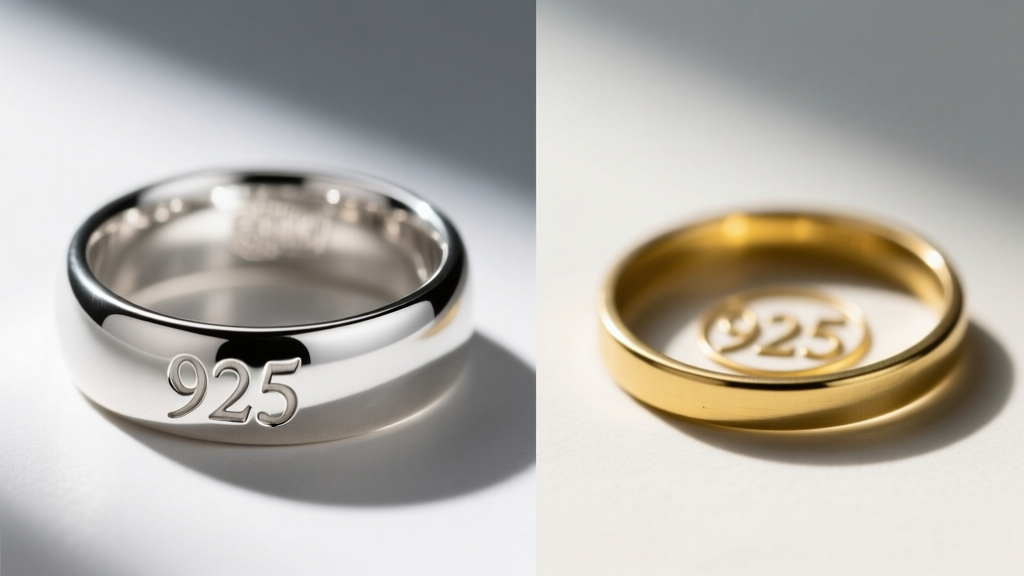
How to Spot a Counterfeit 925 Stamp
- Font and Depth: Genuine stamps are usually struck with a steel punch, leaving a deep, clean, and evenly spaced impression. Fake stamps often appear shallow, blurry, or laser-etched with inconsistent font weights.
- The Magnet Test: Silver is paramagnetic (non-magnetic). If a strong neodymium magnet snaps to your '925' ring, the core is likely steel or iron. Note: This does not rule out copper or brass cores, which are also non-magnetic.
- The Ice Cube Test: Silver has the highest thermal conductivity of any common metal. Place an ice cube on the piece; if it melts almost instantly as if placed on a hot stove, the silver content is likely high. If it melts at a normal rate, suspect a base metal core.
Value Assessment: Manufacturing Techniques
Beyond the raw material, the manufacturing method drastically alters the long-term value and durability of the piece. When assessing a budget, you must determine how the jewelry was made.
Solid Cast vs. Hollow Electroformed
Many budget-friendly, high-volume silver chains and large hoop earrings are created using electroforming or hollow-tube manufacturing. This allows a massive, voluminous piece to weigh only a fraction of its solid counterpart. While this saves money upfront, hollow silver is notoriously difficult to repair. A single dent or crush can ruin the piece permanently, rendering your investment worthless. Solid cast or hand-drawn wire pieces, while heavier and more expensive upfront, offer generational durability and can be easily soldered and polished by any bench jeweler.
The 7.5% Alloy Factor and Maintenance Costs
The 7.5% copper alloy in sterling silver is necessary for structural integrity, but it is also the culprit behind tarnishing. When evaluating the budget of a 925 piece, factor in the long-term maintenance. Pieces with intricate filigree or heavy texturing will trap sulfur and moisture, requiring frequent professional ultrasonic cleaning or chemical dips. If you are buying on a strict budget, opt for high-polish, smooth-finish 925 silver, which can be maintained at home with a simple microfiber cloth and minimal chemical intervention.
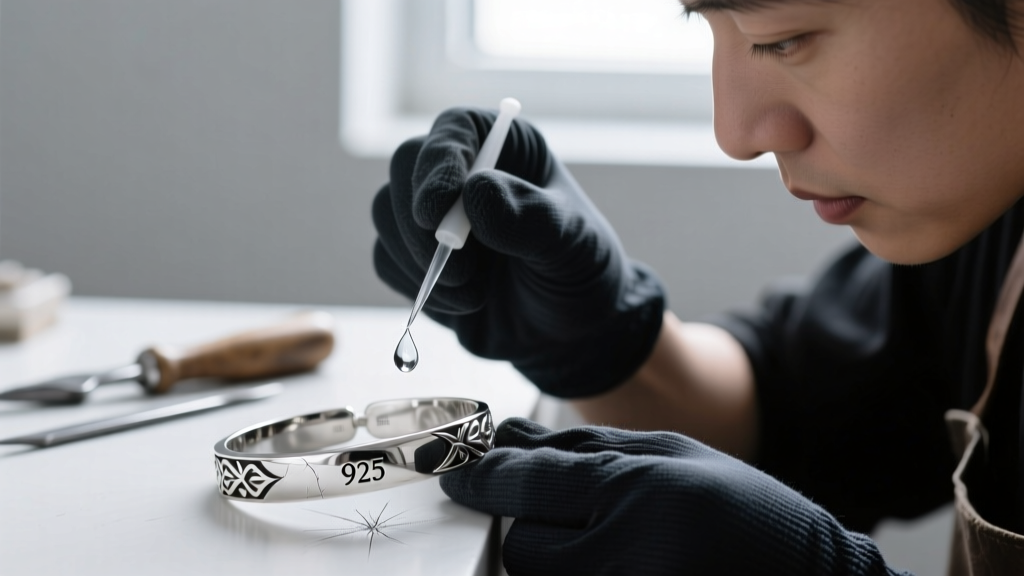
Real-World Testing: Verifying Your 925 Investment
If you are purchasing vintage or second-hand 925 silver to maximize your budget, visual inspection is not enough. You must verify the metal content chemically or electronically.
"The secondary market for silver is flooded with heavily tarnished silver-plated items disguised as solid sterling. A $15 silver testing acid kit pays for itself after a single successful verification."
Acid Testing: By filing a small, discreet notch into the metal (preferably on a clasp or jump ring) and applying a drop of silver testing acid, you can read the chemical reaction. Bright blood red indicates 925 sterling; dark red indicates 800 silver; brown or green indicates brass or copper. Data from The Silver Institute highlights that as silver prices rise, the sophistication of silver-plated counterfeits increases, making destructive or chemical testing a necessity for serious buyers.
XRF Spectrometry: For high-value budget assessments (such as buying bulk estate jewelry), relying on an X-Ray Fluorescence (XRF) scanner at a local coin or precious metals dealer provides an exact elemental breakdown without damaging the piece.
Final Verdict on the 925 Stamp
The jewelry 925 stamp is your starting line, not the finish line. It confirms the legal standard of the alloy, but it does not protect you from overpaying for mass-produced goods or falling for plated imitations. By calculating the melt-value multiplier, inspecting the manufacturing technique, and verifying the hallmark with basic chemistry, you can confidently navigate the silver market and allocate your budget toward pieces that offer genuine, lasting value.


