How to Verify 925 in Jewelry: Step-by-Step Authenticity Testing
Learn what 925 in jewelry means and follow our step-by-step guide to test sterling silver authenticity at home using magnets, acid, and hallmarks.

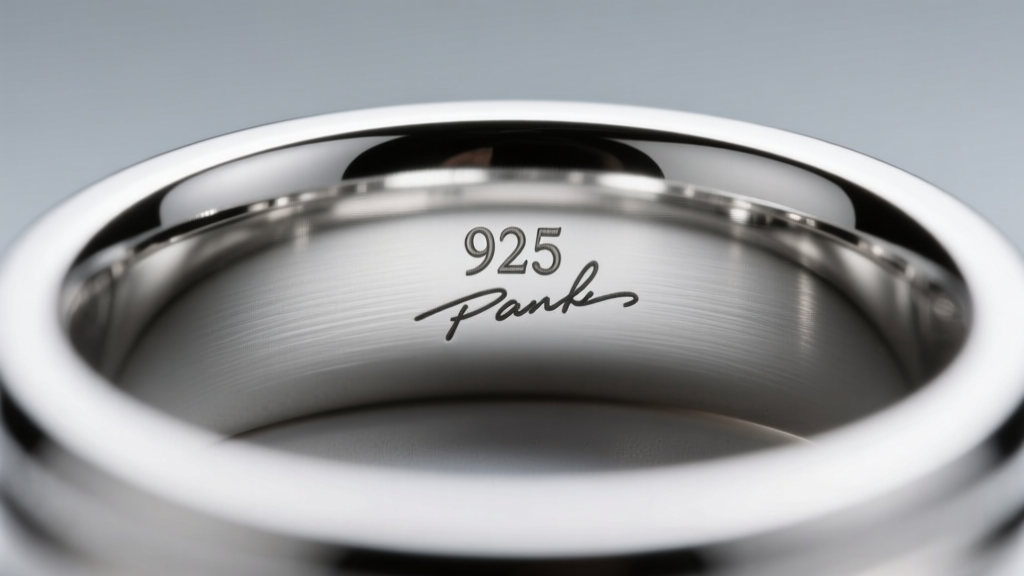
When shopping for precious metals, the phrase 925 in jewelry is the ultimate indicator of quality and authenticity. But as counterfeit manufacturing techniques become increasingly sophisticated in 2026, a simple stamp is no longer a guarantee of solid sterling silver. Many base metals are now heavily plated and deceptively stamped to mimic the real thing. Whether you are evaluating a vintage estate find, an online marketplace purchase, or a family heirloom, knowing how to scientifically and visually verify your silver is an essential skill for any collector or everyday wearer.
In this comprehensive guide, we break down the exact metallurgical meaning of 925 silver and provide a rigorous, step-by-step testing protocol. By combining visual inspection with physical and chemical tests, you can confidently separate genuine sterling silver from silver-plated imitations.
The Metallurgy of 925: What the Numbers Actually Mean
To understand how to test for it, you must first understand what 925 in jewelry represents. Pure silver (999 fine silver) is exceptionally soft, with a Vickers hardness of roughly 25 HV. While beautiful, it is entirely unsuitable for daily wear; a pure silver ring would bend out of shape within days.
To solve this, metallurgists alloy pure silver with other metals—most commonly copper—to increase its durability. The "925" designation means the piece is composed of exactly 92.5% pure silver and 7.5% alloy metals. This specific ratio raises the Vickers hardness to approximately 65 HV, providing the perfect balance of malleability for jewelers and structural integrity for the wearer. According to the Gemological Institute of America (GIA), this 92.5% threshold is the globally recognized standard for sterling silver, though the specific alloying metals can vary to prevent firescale or tarnish (such as in Argentium silver, which uses germanium).
Step 1: Visual Hallmark Inspection and Decoding
Your first line of defense is a thorough visual inspection using a 10x or 20x jeweler's loupe. A genuine hallmark is typically stamped in an inconspicuous area: the inner band of a ring, the clasp of a necklace, or the post of an earring. However, you must know what to look for, as international standards vary.
| Region | Common Hallmarks | Additional Assay Marks |
|---|---|---|
| United States | 925, Sterling, 925/1000 | Maker's mark (brand logo or initials) |
| United Kingdom | 925 | Lion Passant, Assay Office mark, Date letter |
| Europe | 925, 800, 835, 935 | Maker's mark, regional assayer symbols |
| Mexico | 925, 980, 950 | Eagle assay mark, Taxco city marks, TC-12 |

Be highly suspicious of pieces that lack a maker's mark alongside the 925 stamp, especially on heavier items. The London Assay Office notes that a full traditional hallmark includes the sponsor's mark, the fineness mark, and the assay office mark. Furthermore, look closely at the font and depth of the stamp. Counterfeit stamps often appear shallow, blurred, or slightly tilted compared to the crisp, machine-pressed or deeply laser-engraved marks found on authentic designer pieces.
Step 2: The Neodymium Magnet Slide Test
Silver is paramagnetic, meaning it exhibits only a very weak, almost imperceptible attraction to magnetic fields. It is definitively not ferromagnetic. If you hold a strong magnet to your jewelry and it snaps to the metal or exhibits a noticeable pull, the core material is likely steel, iron, or a nickel alloy.
However, simply seeing if a magnet "sticks" is an amateur test. To perform the advanced magnet test, you need a high-grade Neodymium magnet (N42 to N52 grade).
- Hold the silver piece (ideally a thick chain, coin, or solid bangle) at a 45-degree angle.
- Place the Neodymium magnet at the top of the piece and let it go.
- Observe the descent. Because silver is a highly conductive metal, the moving magnetic field induces eddy currents within the silver. According to Lenz's Law, these currents create an opposing magnetic field that acts as a brake.
- The Result: On genuine 925 sterling silver, the magnet will slide down slowly, as if moving through syrup. On a silver-plated brass or copper piece, the magnet will drop at normal gravitational speed.
Step 3: The Ice Cube Thermal Conductivity Test
Silver possesses the highest thermal conductivity of any common metal, measuring approximately 429 W/m·K at room temperature. This physical property allows for a highly effective, non-destructive home test that requires no specialized equipment.
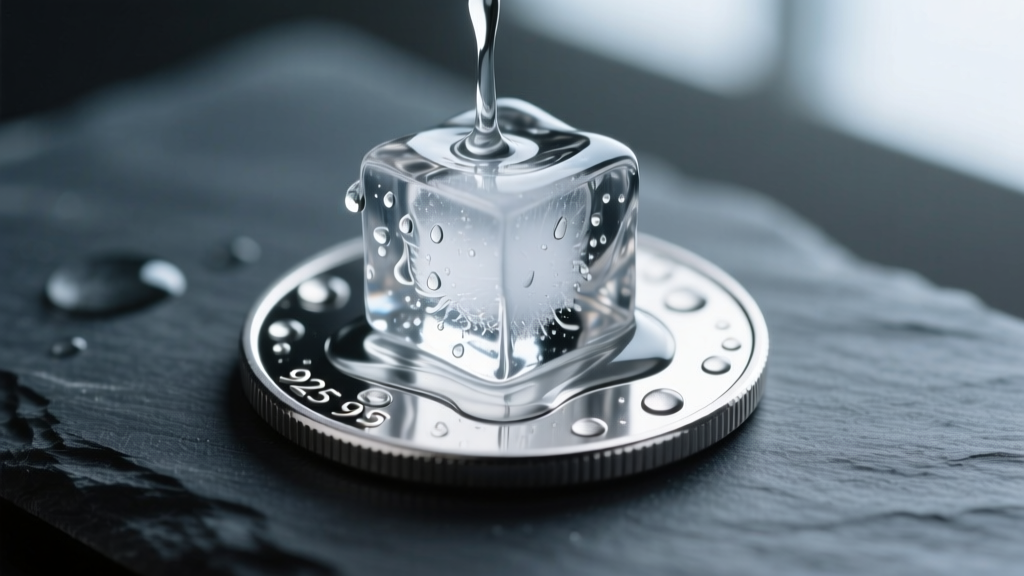
Place a standard ice cube directly onto the surface of the silver item, and simultaneously place another ice cube on a piece of room-temperature stainless steel or glass for comparison. The ice resting on the genuine 925 silver will begin to melt almost instantaneously, and the silver itself will become painfully cold to the touch within seconds as it rapidly pulls ambient heat from the air and transfers it into the ice. If the ice melts at a normal, gradual pace, the item is likely stainless steel, alpaca, or heavily plated base metal.
Step 4: Advanced Acid Testing with Schwerter's Solution
When visual and physical tests are inconclusive, chemical testing provides definitive proof of the metal's subsurface composition. This is especially crucial for detecting thick silver-plated items that easily pass the magnet and ice tests. For this, jewelers use Schwerter's solution (a mixture of potassium dichromate and nitric acid).
Warning: Acid testing is destructive and involves handling corrosive chemicals. Always wear nitrile gloves and safety goggles, and perform this test in a well-ventilated area. Apply the acid to an inconspicuous area or a testing stone, never directly onto a finished piece of jewelry.
The Execution:
- Prep the Surface: Use a small jeweler's file to gently file away the top layer of metal in a hidden spot. This bypasses any potential silver plating to reveal the core metal.
- Apply the Acid: Place a single drop of silver testing acid onto the filed notch or onto a black testing stone rubbed with the metal.
- Read the Reaction:
- Bright Blood Red: Genuine 925 Sterling Silver.
- Dark Red / Brown: 800 Silver (common in vintage European pieces).
- Green: Base metal (copper, brass, or nickel). The piece is silver-plated or entirely fake.
- No Color Change / Blue: Stainless steel or titanium.
Always neutralize the acid immediately after reading the result using a baking soda and water solution to prevent ongoing chemical damage to the metal.
Troubleshooting: Spotting Deceptive Silver-Plated Fakes
The Federal Trade Commission (FTC) Jewelry Guides strictly regulate how metals can be marketed, yet the secondary market is flooded with misleading terminology. When evaluating pieces, be on high alert for these deceptive materials:
- EPNS (Electroplated Nickel Silver): Despite the word "silver" in the name, nickel silver contains exactly 0% actual silver. It is an alloy of copper, nickel, and zinc. If you see EPNS stamped on a piece, it is purely base metal.
- Alpaca / German Silver: Similar to nickel silver, this is a bright, silvery-looking base metal alloy frequently used in cheap tourist jewelry or vintage flatware. It will fail the acid test immediately, turning green.
- Tibetan Silver: A modern marketing term for a pot-metal alloy (often containing zinc, copper, and sometimes dangerous levels of lead or arsenic). It is usually cast, heavily antiqued, and contains no precious metals whatsoever.
- Silver-Filled: This consists of a base metal core with a thick outer layer of sterling silver (usually 5% or 10% silver by weight). While higher quality than standard plating, it is not solid 925 and should be priced and valued accordingly.
Summary Checklist for Buyers
Verifying 925 in jewelry requires a multi-tiered approach. Never rely on a single test. Start with a loupe to check the crispness and legality of the hallmark. Follow up with the Neodymium magnet slide test to check for ferromagnetic cores and eddy current braking. Use the ice cube test to verify extreme thermal conductivity. Finally, if you are making a high-value purchase and doubts remain, perform a localized acid test on a testing stone or consult a certified gemologist. By mastering these steps, you ensure that your jewelry box contains only genuine, enduring precious metals.


