Silver Sea Jewelry Review 2026: Value & Pricing Guide
Is Silver Sea Jewelry worth the investment? Our 2026 value assessment breaks down sterling silver grades, sea glass authenticity, and pricing tiers.

The Allure of Oceanic Silver: Defining the Silver Sea Niche
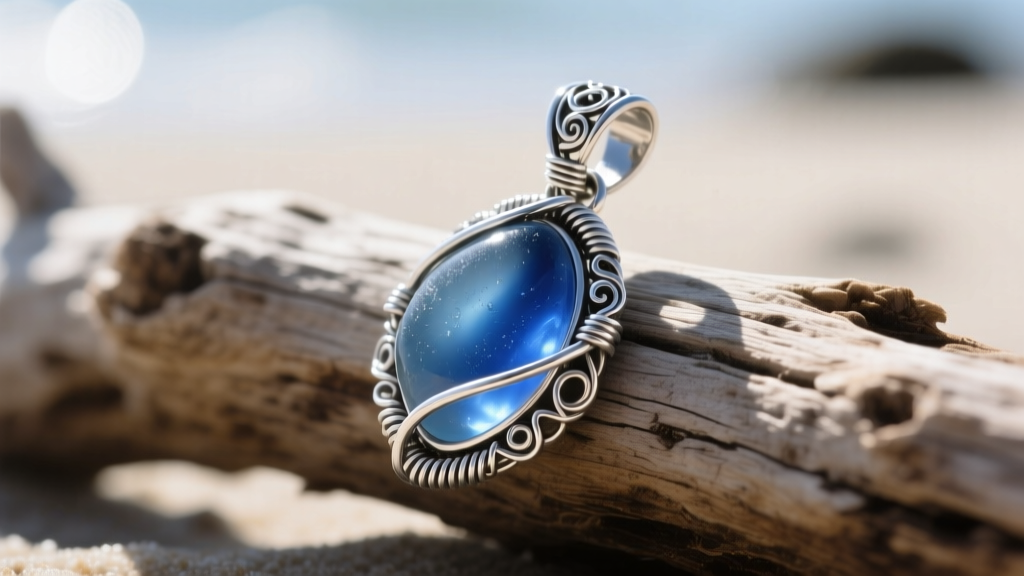
The intersection of coastal aesthetics and precious metals has given rise to a highly specific market segment: Silver Sea Jewelry. This niche primarily focuses on the marriage of genuine, ocean-tumbled sea glass with sterling silver settings, ranging from intricate artisan wire-wrapping to high-end cast prong settings. But as the popularity of coastal-inspired jewelry surges in 2026, so does the influx of mass-produced, factory-tumbled glass set in low-grade silver alloys. For collectors and casual buyers alike, conducting a rigorous budget and value assessment is no longer optional; it is essential to ensure you are paying for genuine craftsmanship and authentic materials rather than a manufactured seaside narrative.
In this comprehensive guide, we deconstruct the material science, pricing structures, and long-term durability of silver sea jewelry. Whether you are evaluating a $40 wire-wrapped pendant or a $450 cast platinum-silver hybrid piece, understanding the underlying value metrics will protect your investment and elevate your collection.
Material Science: 925 Sterling Silver Meets Ocean Glass
To accurately assess value, we must first understand the metallurgical and gemological properties of the materials involved. Standard 925 sterling silver is an alloy composed of 92.5% pure silver and 7.5% copper. The copper is necessary to provide the tensile strength required for jewelry making, as pure 999 fine silver is too malleable to securely hold a piece of glass in a prong or wire-wrapped setting.
However, the GIA Gem Encyclopedia notes that glass typically sits at a 5.5 on the Mohs hardness scale, while sterling silver ranges between 2.5 and 3. This disparity means the glass will never be scratched by the silver setting. Conversely, if the setting is poorly engineered and allows the glass to shift, the glass can act as a mild abrasive against the silver over years of wear, slowly wearing down the interior of the wire or prongs.
Wire Gauge, Tensile Strength, and Work Hardening
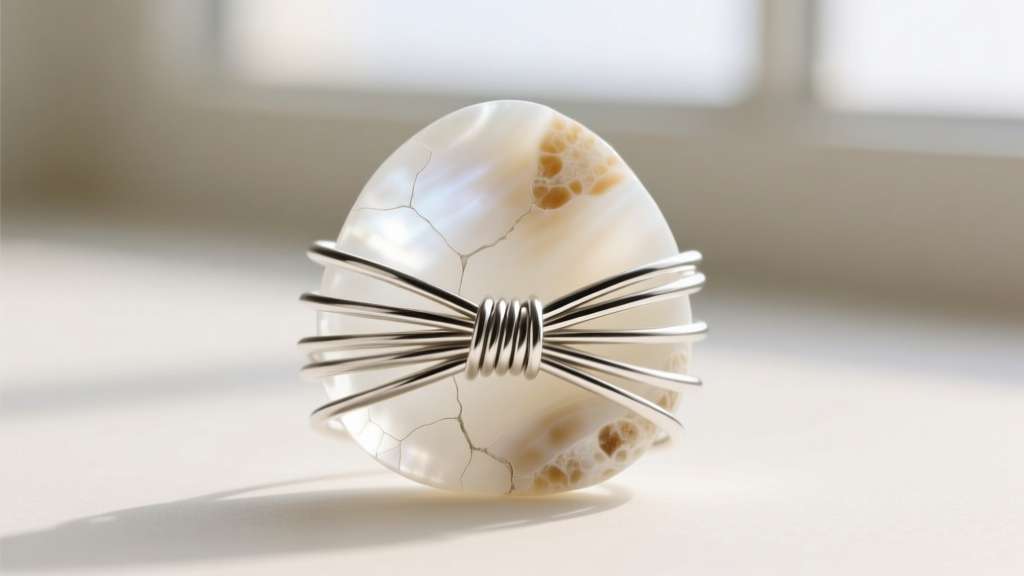
In artisan silver sea jewelry, wire wrapping is the dominant setting technique. The value of a piece is heavily dictated by the wire gauge and the artisan's understanding of work hardening. Most high-quality pieces utilize 20-gauge or 22-gauge dead-soft sterling silver wire for the structural frame, and 24-gauge or 26-gauge wire for the decorative weaves. Dead-soft wire is highly malleable, allowing the artisan to weave intricate patterns around the irregular, asymmetrical edges of natural sea glass. However, dead-soft wire must be work-hardened—either through mechanical manipulation (hammering and bending) or chemical tumbling—to ensure the setting does not bend out of shape during daily wear. If a 2026 piece feels overly soft or the wires shift when you apply light pressure with your fingernail, the artisan skipped the hardening phase, drastically reducing the piece's structural value.
Budget Breakdown: Are You Paying for Brand or Craftsmanship?
Evaluating the financial fairness of silver sea jewelry requires separating raw material costs from labor and rarity premiums. As of early 2026, Kitco Silver Pricing data shows silver spot prices fluctuating between $28 and $32 per troy ounce. With one troy ounce equaling approximately 31.1 grams, the raw melt value of 925 sterling silver is roughly $0.85 to $0.95 per gram.
If you purchase a 6-gram wire-wrapped sea glass pendant for $85, you are paying roughly $5.50 for the raw silver. The remaining $79.50 covers the artisan's labor (typically 1 to 3 hours of meticulous weaving and finishing), the sourcing of the sea glass, and business overhead. This is a standard and fair retail markup for handcrafted artisan jewelry. However, if you see a simple, single-loop wire wrap on a piece of common white or brown sea glass selling for $150, you are likely paying an inflated brand premium rather than a craftsmanship premium.
| Tier | Construction Method | Glass Type | Price Range | Value Assessment |
|---|---|---|---|---|
| Entry | Cast 925 Silver, Glued/Bezel | Factory-Tumbled (Fake) | $25 - $45 | Low value. Mass-produced with no artisan labor or material rarity. |
| Artisan | Hand Wire-Wrapped 925 | Genuine Ocean-Tumbled | $65 - $150 | High value. Fair compensation for skilled labor and authentic materials. |
| Premium | Cast/Wrought Argentium 925 | Rare Colors (Red/Cobalt) | $250 - $600+ | Investment grade. Driven by the extreme rarity of the glass and advanced alloys. |
The Authenticity Premium: Natural vs. Factory-Tumbled Glass
The single greatest factor in the value assessment of silver sea jewelry is the authenticity of the glass. Genuine sea glass takes 20 to 50 years to form in the ocean, tumbled by sand, salt, and waves until it achieves a distinct, velvety frost. Factory-tumbled glass, often sold deceptively in tourist shops and online marketplaces, is created in rock tumblers with abrasive grit over a few days. It lacks the micro-texture and historical value of genuine sea glass.
According to the North American Sea Glass Association, buyers should look for specific identifiers to ensure they are not overpaying for fake glass:
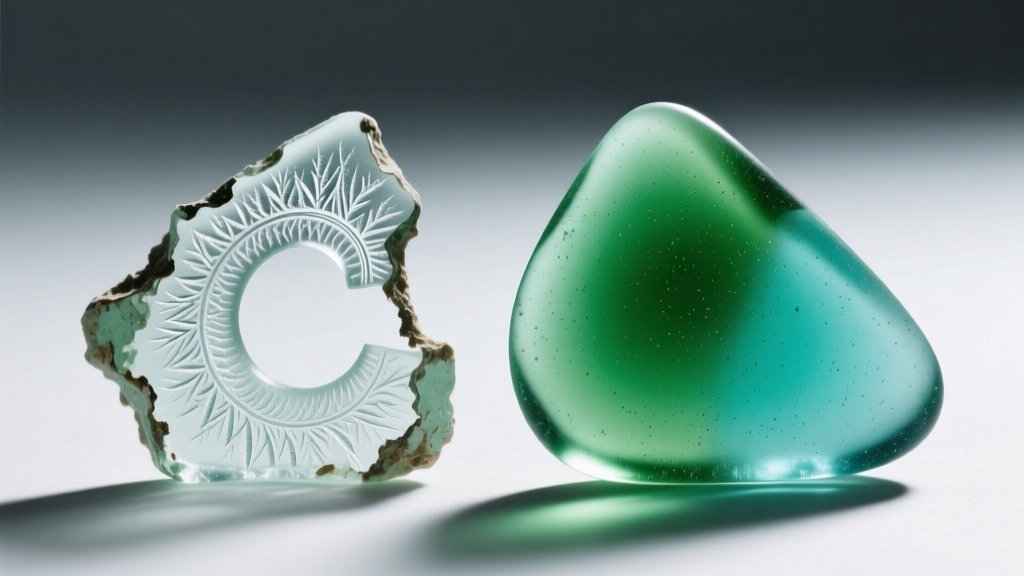
- C-Shaped Frost Marks: Genuine sea glass features tiny, C-shaped pitting and frost marks caused by the impact of sand and rocks over decades. Factory glass usually has a uniform, powdery frost without these distinct micro-craters.
- Irregular Edges: Ocean-tumbled glass has softly rounded, asymmetrical edges. Machine-tumbled glass often retains harsh, uniform angles or exhibits a perfectly smooth, almost waxy surface.
- Color Rarity: If you are paying a premium (over $100) for a silver setting, ensure the glass color justifies it. White, brown, and kelly green are common and should command lower prices. Cobalt blue, soft pink, and red are exceptionally rare and justify the highest tier of artisan pricing.
Environmental Failure Modes: Salt, Sulfur, and Tarnish
A critical aspect of budget assessment is factoring in long-term maintenance and failure modes. The ocean environment that creates sea glass is inherently hostile to the copper alloy in standard 925 sterling silver. Salt air, high humidity, and sulfur compounds accelerate the oxidation process, leading to rapid silver sulfide tarnish. If you live in a coastal area or plan to wear your silver sea jewelry at the beach, standard 925 silver will require frequent polishing.
For buyers willing to stretch their budget by 15% to 20%, seeking out artisans who use Argentium 925 Silver is a highly recommended value upgrade. Argentium replaces a portion of the copper alloy with germanium. When exposed to oxygen, the germanium forms a transparent, self-healing layer of germanium dioxide on the surface of the metal, which drastically slows down tarnishing. For ocean-inspired jewelry, Argentium is a superior material choice that preserves the bright white luster of the silver without the need for rhodium plating, which eventually wears off and requires expensive reapplication.
Cleaning Protocols and Ultrasonic Dangers
When your silver sea jewelry inevitably tarnishes, avoid commercial silver dips, which contain harsh thiourea chemicals that can strip the natural frost from the sea glass, leaving it looking like ordinary, shiny bottle glass. Instead, use a mild electrochemical bath: line a bowl with aluminum foil, add hot water, a tablespoon of baking soda, and a pinch of salt. Submerge the jewelry for 3 to 5 minutes. The aluminum will attract the sulfur away from the silver, restoring its shine without damaging the glass. Furthermore, never place sea glass jewelry in an ultrasonic cleaner; high-frequency vibrations can exploit micro-fractures in the glass, causing it to shatter inside the setting.
Final Verdict: How to Budget for Your Next Piece
Silver sea jewelry offers a unique blend of natural history and metallurgical artistry, but its value is entirely dependent on transparency and execution. For a budget between $60 and $120, you should expect genuine, ocean-tumbled sea glass set in 925 sterling silver with secure, work-hardened wire wrapping or sturdy cast bezels. If a seller cannot verify the origin of their glass or the gauge of their silver, walk away. By prioritizing Argentium silver upgrades, verifying C-shaped frost marks, and understanding the raw material costs versus artisan labor, you can confidently invest in coastal jewelry that holds both sentimental and material value for decades to come.


