How Do You Clean Silver Plated Jewelry Without Ruining It?
Learn how do you clean silver plated jewelry safely. Expert technical guide on micron thickness, chemical reactions, and safe restoration methods.

The Metallurgy of Silver Plating: Why Standard Cleaners Fail
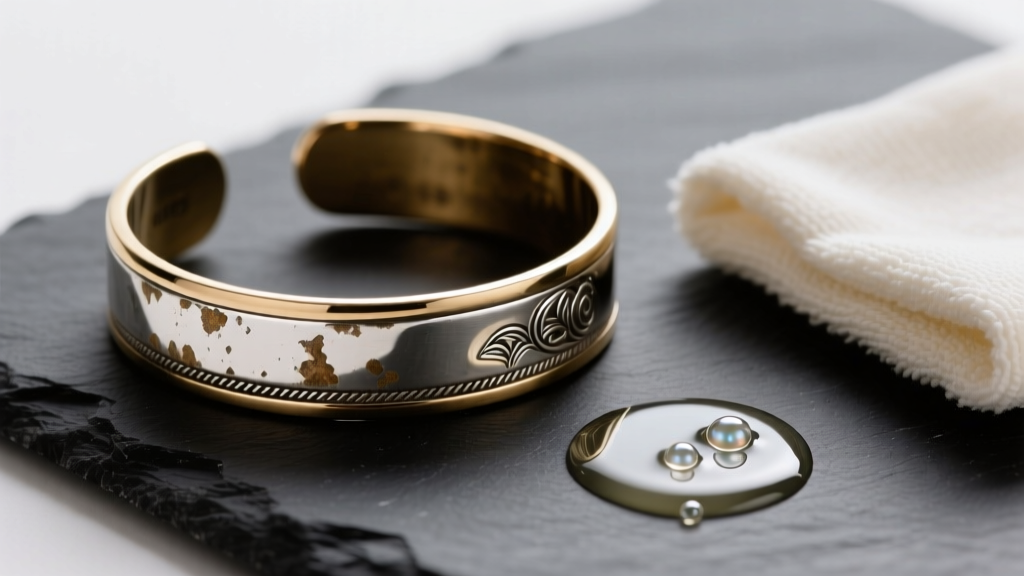
When jewelry owners ask, 'how do you clean silver plated jewelry,' the answer requires an understanding of metallurgy, not just household cleaning hacks. Unlike solid sterling silver (which is 92.5% silver and 7.5% copper alloy throughout), silver-plated jewelry consists of a base metal core—typically brass, copper, or nickel—coated with a microscopically thin layer of pure silver. According to The Silver Institute, pure silver is highly malleable and relatively soft, registering just 2.5 on the Mohs hardness scale. This softness makes it brilliant for luster but incredibly vulnerable to abrasion.
The thickness of this silver layer dictates your cleaning protocol. 'Flash plating' involves a layer less than 0.5 microns thick, often found in fast-fashion accessories. Standard electroplating ranges from 1 to 3 microns, while heavy silver plate (sometimes called 'museum quality' or 'vermeil' if over gold) can reach 5 microns or more. Because the silver layer is so thin, using commercial silver dips, abrasive polishing pastes, or harsh bristle brushes will literally strip the silver away, exposing the base metal beneath and permanently ruining the piece. Understanding this structural vulnerability is the first step in safe maintenance.
The Electrochemical Trap: Debunking the Aluminum Foil Myth
If you search for DIY cleaning methods, you will inevitably encounter the aluminum foil, baking soda, and boiling water bath. While this electrolytic reduction process is highly effective for solid sterling silver, it is catastrophic for silver-plated items. The chemical reaction relies on a galvanic cell where aluminum acts as a sacrificial anode, transferring sulfur atoms away from the silver sulfide (tarnish) and back into the solution.
However, on plated jewelry, this galvanic shock can cause the microscopic silver layer to delaminate from its substrate. Furthermore, the high alkalinity of baking soda (pH ~9) can penetrate micro-fissures in the plating. Once the alkaline solution reaches the copper or brass strike layer beneath the silver, it causes rapid oxidation and galvanic corrosion, resulting in permanent blistering or flaking of the silver surface. When figuring out how do you clean silver plated jewelry, you must entirely avoid electrolytic baths, chemical dips containing thiourea or hydrochloric acid, and ultrasonic cleaners, which use high-frequency cavitation that can shake loose poorly adhered plating.
Step-by-Step Protocol: The Safe Cleaning Method
To safely remove tarnish and oils without compromising the micron-thin silver layer, you must rely on gentle mechanical action and pH-neutral chemistry. The Gemological Institute of America (GIA) recommends mild, non-detergent soaps for delicate jewelry surfaces. Follow this precise protocol:
1. The Preparation Phase
- Mix a solution of lukewarm distilled water and a few drops of pH-neutral, phosphate-free dish soap (pH between 6.5 and 7.5).
- Avoid tap water if you live in a hard water area, as dissolved calcium and magnesium can leave micro-scratches and mineral deposits on the soft silver.
2. The Wash
- Submerge the jewelry for no more than 3 to 5 minutes. Prolonged water exposure can weaken the adhesive bond of the strike layer.
- Using a pristine, ultra-soft baby hairbrush or a lint-free cotton swab, gently agitate the surface. Do not scrub. Let the surfactants in the soap lift the sebum and environmental dirt.
3. The Rinse and Dry
- Rinse briefly under a gentle stream of distilled water.
- Immediately pat dry with a clean, untreated microfiber cloth. Never air-dry silver-plated jewelry, as water spots will form and require polishing to remove.
4. The Polishing Restriction
Never use treated 'jeweler's rouge' cloths on silver plate. These cloths are impregnated with mild abrasives like silica or calcium carbonate designed to remove tarnish from solid metals. On a 2-micron silver plate, these abrasives will act like sandpaper. Use only an untreated, high-pile microfiber cloth to gently buff the surface to a shine using broad, linear strokes rather than tight circular motions.
Troubleshooting Common Plating Failures
Even with meticulous care, silver-plated jewelry interacts with its environment. Below is a diagnostic table for common issues and their technical solutions.
| Symptom | Metallurgical Cause | Expert Solution |
|---|---|---|
| Green/Black skin discoloration | The silver layer has worn through, exposing the copper or brass substrate to skin acids and sweat. | Clean the piece, dry thoroughly, and apply a micro-thin coat of clear, jewelry-safe polyurethane or Renaissance Wax to seal the base metal. |
| Yellowish or brassy tint | The silver layer is thinning, allowing the underlying brass strike layer to show through via optical interference. | Stop polishing immediately. Polishing will not restore the silver; it will only remove the remaining atoms. The piece requires replating. |
| Flaking or peeling patches | Galvanic corrosion or mechanical trauma has broken the adhesion between the silver and the substrate. | Do not attempt to smooth the edges with abrasives. Store in an anti-tarnish pouch to prevent further oxidation of the exposed core. |
| Stubborn, dark black spots | Localized heavy sulfur exposure (e.g., contact with rubber bands or latex gloves). | Apply a tiny drop of pH-neutral soap directly to the spot, let sit for 60 seconds, and gently roll a cotton swab over it. Do not scrub. |
Long-Term Preservation and Anti-Tarnish Storage
Silver tarnishes primarily due to a reaction with hydrogen sulfide (H2S) in the atmosphere, forming silver sulfide. Because you cannot aggressively polish silver plate without risking the substrate, prevention is vastly superior to cure. To preserve the micron layer, you must control the micro-climate of your jewelry storage.
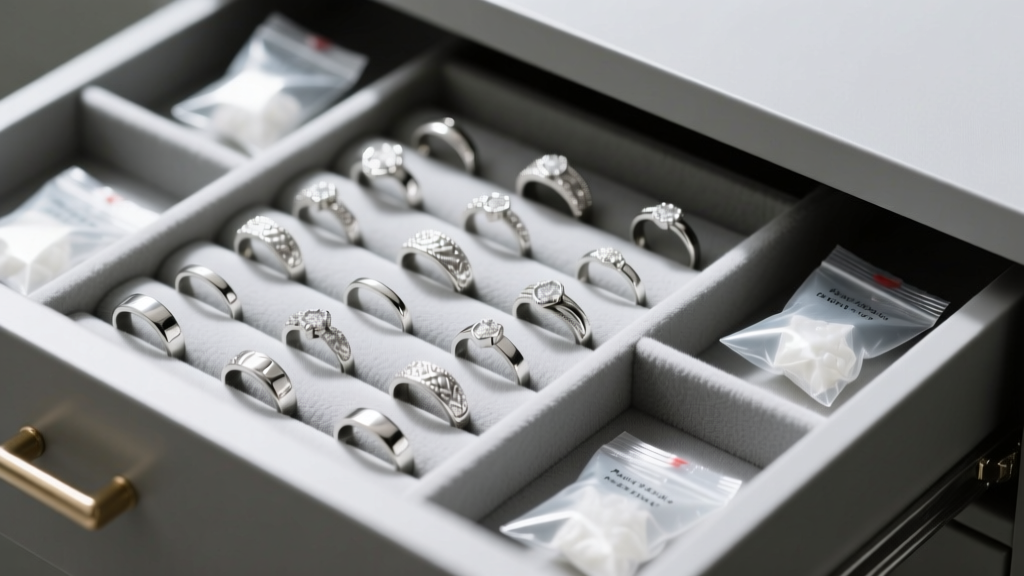
Invest in Pacific Silvercloth, a specialized cotton fabric embedded with microscopic silver particles. These embedded particles act as a sacrificial anode, intercepting and reacting with atmospheric sulfur gases before they can reach your jewelry. Additionally, store your pieces in airtight polyethylene zip-lock bags alongside activated charcoal packets or silica gel to control both volatile sulfur compounds and ambient humidity. Keep silver-plated items away from direct sunlight, which can accelerate photochemical tarnishing, and never store them in contact with corrugated cardboard or rubber bands, both of which off-gas high levels of sulfur.
When to Replate: Recognizing the Point of No Return
There comes a point in the lifecycle of silver-plated jewelry where cleaning is no longer viable. If the piece exhibits widespread brass show-through, deep pitting, or structural flaking, the plating has failed. At this stage, attempting to clean the item will only accelerate the degradation of the exposed base metals.
The only technical remedy is electroplating. A professional jeweler will first strip the remaining silver and tarnish using a mild chemical or electrolytic reverse-current bath, polish the bare brass or copper core, apply a fresh nickel or copper strike layer for adhesion, and finally electroplate a new layer of silver. For heavy-duty replating (3 to 5 microns), expect to pay between $60 and $150 depending on the surface area and complexity of the piece. While this exceeds the original cost of many fashion jewelry items, it is a highly effective way to restore sentimental or vintage pieces to their original metallurgical glory.


