How Can You Tell If Jewelry Is Real Silver? 6 Expert Tests
Discover how can you tell if jewelry is real silver with 6 expert troubleshooting tests. Learn to spot fakes, read hallmarks, and verify 925 sterling.

The Rise of Counterfeit Silver: Why Visual Inspection Fails
When navigating estate sales, online marketplaces, or vintage boutiques, the question of authenticity is paramount. The market is currently saturated with high-quality silver-plated items masquerading as solid sterling. Modern electroplating techniques can deposit a micron-thin layer of .999 fine silver over a brass or copper core, creating a visual and tactile illusion that easily fools the naked eye. To accurately determine authenticity, you must move beyond superficial shine and rely on metallurgical properties. If you are wondering how can you tell if jewelry is real silver, you need a systematic troubleshooting approach that tests thermal conductivity, magnetic resonance, and chemical reactivity.
Decoding Hallmarks: The First Line of Defense
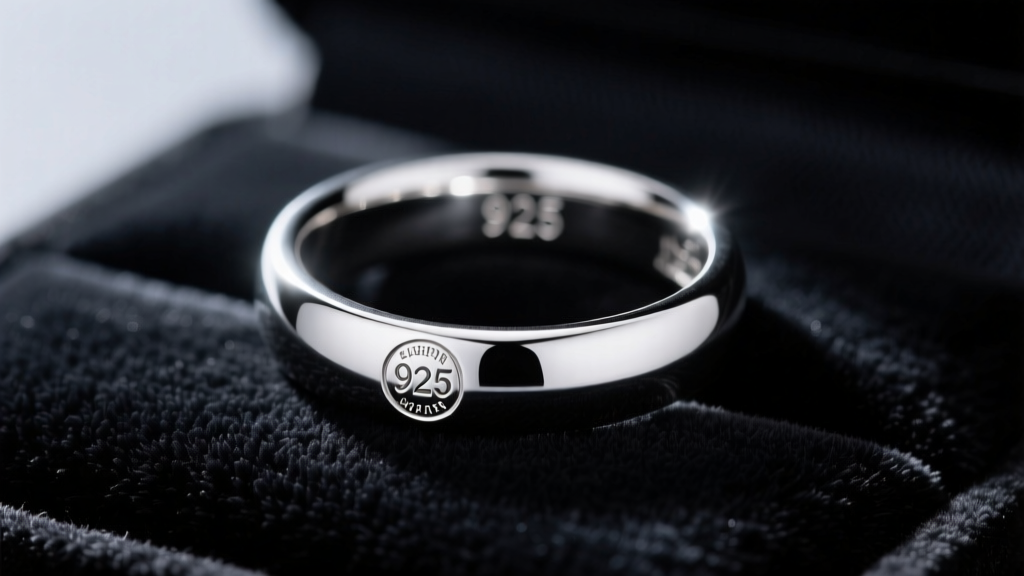
Hallmarks are the most common starting point for verification, but they are also the most frequently forged. According to the Federal Trade Commission (FTC), jewelry stamped with "925", "Ster", or "Sterling" must contain at least 92.5% pure silver. However, counterfeiters routinely stamp these marks on base metals.
- Authentic Marks: 925, .925, STERLING, 958 (Britannia Silver), 800 (European Continental Silver).
- Deceptive Marks (Zero Silver): "Tibetan Silver", "Nickel Silver", "Alpaca", "German Silver". These are copper-nickel-zinc alloys containing absolutely no elemental silver.
- Red Flags: Stamps that are blurred, stamped over a high-friction wear point (where the stamp should have worn away first), or accompanied by a "925" stamp on a piece with magnetic clasp components.
Non-Destructive Troubleshooting Tests
Before resorting to chemical acids that can damage a piece's patina, utilize these three non-destructive physical tests to evaluate the metal's core properties.
1. The Neodymium Magnet Test (Magnetic Resonance)
Silver is paramagnetic, meaning it exhibits a very weak repulsion to magnetic fields and will never stick to a magnet. However, a standard refrigerator magnet is too weak to demonstrate this. You need an N52-grade neodymium magnet. Slide the magnet down a silver coin or a flat silver bangle. Real silver will create a subtle "braking" effect due to the eddy currents generated by the moving magnetic field. If the piece snaps to the magnet or shows no resistance at all, it is likely stainless steel or heavily plated brass.
2. The Ice Cube Test (Thermal Conductivity)
Silver possesses the highest thermal conductivity of any common metal, measuring approximately 429 W/(m·K). This means it transfers heat away from its surface faster than copper, gold, or brass.
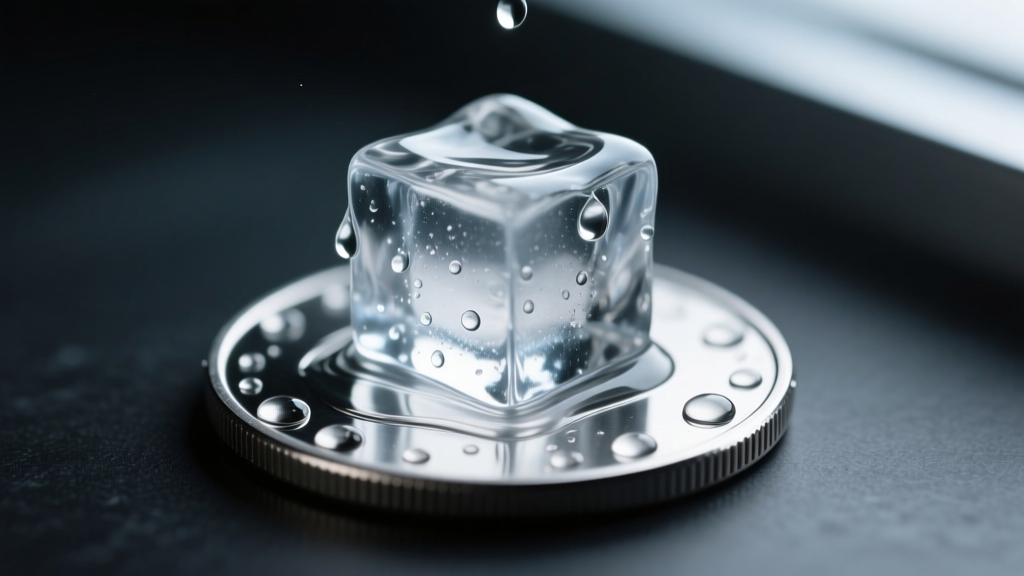
Place an ice cube directly onto the suspected silver item at room temperature. On genuine 925 sterling or fine silver, the ice will begin to melt almost instantaneously, as if placed on a hot stove, and the metal itself will become freezing cold to the touch within seconds. Base metals like stainless steel or brass will melt the ice at a standard, sluggish room-temperature rate.
3. The Odor Test (Detecting Base Metal Cores)
Pure silver and sterling silver are completely odorless. Brass and copper, however, react with the natural oils and sweat on your skin to produce a distinct, sharp metallic or sulfuric smell. Vigorously rub the jewelry between your palms for 15 seconds to generate friction and heat, then immediately smell your hands and the metal. If you detect a "penny-like" or metallic odor, the piece is either silver-plated over a copper core or entirely composed of a base alloy.
Advanced Troubleshooting: Chemical Acid Testing
When non-destructive tests yield ambiguous results—common with heavily oxidized vintage pieces or thick silver-plated items over copper—chemical testing is the definitive solution. Silver testing acid is a carefully calibrated mixture of nitric and muriatic acids. Note: Always wear nitrile gloves and eye protection when handling testing acids.
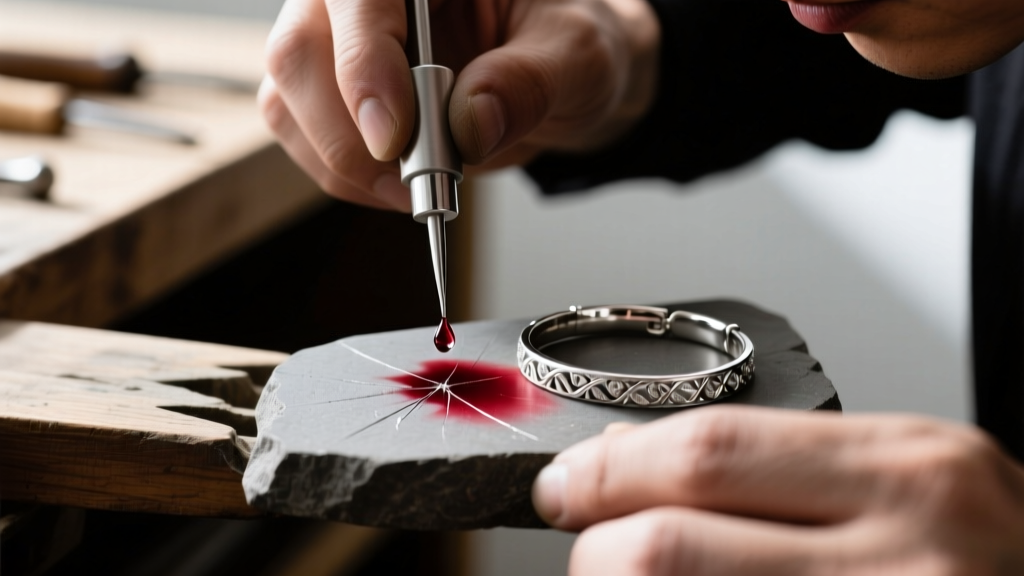
To perform the test, rub the jewelry on an unglazed ceramic scratch stone to leave a small metal streak, then apply a single drop of acid to the streak. The Gemological Institute of America (GIA) notes that the resulting color reaction indicates the exact fineness of the silver.
| Acid Reaction Color | Silver Fineness | Troubleshooting Diagnosis |
|---|---|---|
| Bright, Blood Red | .999 Fine Silver | Authentic; usually found in bullion or specific artisan wire. |
| Dark, Brick Red | .925 Sterling | Authentic; standard jewelry grade. |
| Brown / Dark Green | .800 Silver | Authentic; common in vintage European flatware and hollowware. |
| Vivid Green | 0% Silver | Fake; indicates a copper, brass, or nickel base metal. |
Identifying Silver-Plated Failure Modes
If you are inspecting a piece that claims to be solid but you suspect it is plated, look for specific structural failure modes that occur as the micron-thin silver layer wears away over decades of use.
- High-Friction Bleed-Through: Inspect the inner shank of rings, the edges of watch bezels, and the interlocking joints of chain links. Plated items will reveal a yellowish (brass) or reddish (copper) underlayer at these specific friction points.
- Clasp and Spring Ring Discrepancies: Sterling silver is too soft for internal spring mechanisms. If a lobster clasp or spring ring is stamped "925" but a magnet sticks to the internal spring, the entire clasp is likely base metal, which often indicates the rest of the chain is plated as well.
- Flaking and Blistering: Solid silver wears down smoothly. If you see microscopic flaking, peeling, or blistering on the surface, you are looking at electroplated metal separating from its substrate.
When to Use XRF Analyzers: The Professional Route
For high-value estate acquisitions or heavy silver hollowware where scratching the item for an acid test would destroy its numismatic or antique value, X-Ray Fluorescence (XRF) analysis is the gold standard. XRF analyzers shoot X-rays into the metal and measure the fluorescent X-rays emitted back, providing an exact elemental breakdown (e.g., 92.6% Ag, 7.1% Cu, 0.3% Zn) without leaving a mark. While consumer-grade XRF guns cost upwards of $15,000, most reputable local jewelers and pawn shops offer XRF verification for a small fee or free of charge as a customer service.
Summary Checklist for Thrifted and Vintage Finds
Keep this rapid troubleshooting sequence in mind the next time you evaluate a potential silver acquisition:
- Inspect hallmarks under a 10x jeweler's loupe for crispness and placement.
- Perform the N52 magnet slide test to check for ferrous cores.
- Execute the odor test to rule out copper/brass substrates.
- Use the ice cube test to verify high thermal conductivity.
- Reserve the acid scratch test for final confirmation on questionable or unmarked pieces.
By combining these metallurgical troubleshooting steps, you can confidently separate genuine 925 sterling silver from modern counterfeits and deceptive silver-plated imitations.


