Best Jewelry Silver Men Should Choose: Sterling vs Argentium
Compare 925 sterling, Argentium, and fine silver for men's jewelry. Discover hardness ratings, tarnish resistance, and the best alloys for daily wear.

The Metallurgical Reality of Men's Silver
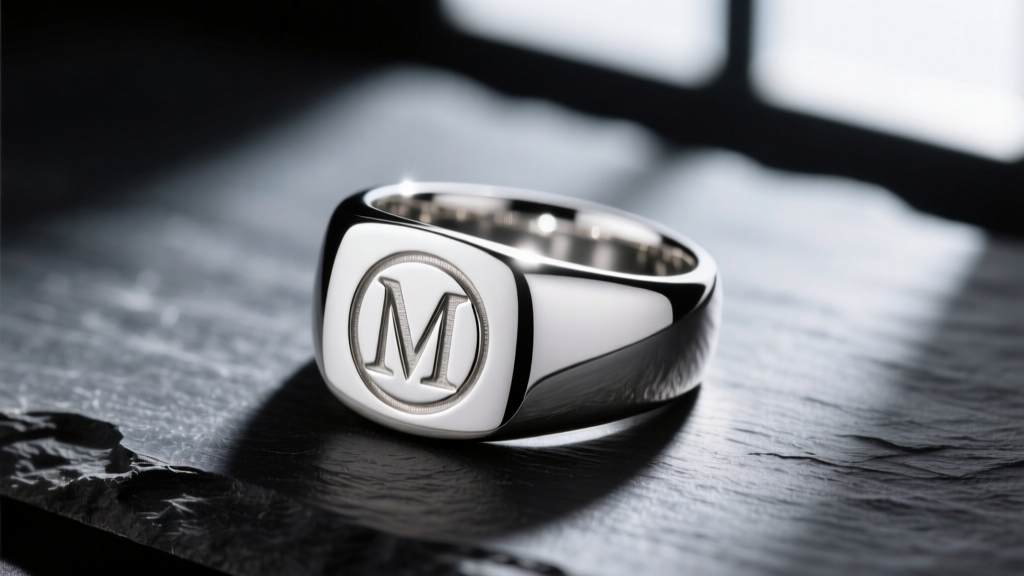
When evaluating the best jewelry silver men can rely on for daily wear, the conversation must shift from mere aesthetics to applied metallurgy. Men's jewelry is subjected to a fundamentally different set of physical demands than women's. Wider ring shanks, heavier chain links, and greater exposure to manual labor, impact, and environmental sulfur mean that the specific alloy composition of your silver will dictate its lifespan. A ring that bends out of shape or a chain that snaps at the clasp is rarely a failure of design; it is almost always a failure of material selection. In 2026, the market offers distinct silver alloys, each with unique crystalline structures, Vickers hardness ratings, and maintenance profiles. Understanding these differences is critical for making an informed investment.
925 Sterling Silver: The Traditional Workhorse
Standard 925 sterling silver is the historical baseline for the industry. By definition, it consists of 92.5% pure silver and 7.5% alloying metals—almost universally copper. According to the Gemological Institute of America (GIA), the addition of copper is necessary because pure silver is far too malleable for functional jewelry. However, copper introduces two significant vulnerabilities: firescale and tarnish.
During the manufacturing and soldering processes, the copper in sterling silver reacts with oxygen to form cuprous and cupric oxides, known as firescale. This creates a deep, stubborn purple-gray discoloration beneath the surface that requires aggressive polishing or chemical stripping to remove. Furthermore, the copper content makes 925 sterling highly susceptible to hydrogen sulfide in the atmosphere, leading to the familiar black tarnish that requires regular maintenance. Despite these flaws, 925 sterling remains widely available, highly workable for jewelers, and generally the most cost-effective option for heavy men's pieces like Cuban link chains and broad cuff bracelets.
Argentium Silver: The Modern Metallurgical Marvel
Developed by Peter Johns at Middlesex University, Argentium silver represents a paradigm shift in precious metal alloys. While it still meets the legal requirement for silver purity (available in 93.5% and 96% grades), Argentium replaces a portion of the traditional copper content with the metalloid germanium. This single substitution fundamentally alters the metal's behavior.
According to the Argentium Silver Institute, the germanium migrates to the surface of the metal and reacts with atmospheric oxygen to form a transparent, self-healing layer of germanium dioxide. This invisible barrier effectively blocks sulfur and moisture from reaching the underlying silver, granting Argentium an extraordinary level of tarnish resistance. More importantly for men's jewelry, the germanium eliminates firescale during manufacturing and allows the metal to be heat-hardened to a degree that traditional sterling cannot achieve, making it vastly superior for rings that endure daily impact.
999 Fine Silver: The Purist's Niche
Fine silver is 99.9% pure silver. It possesses a distinct, bright white luster that is noticeably whiter and less gray than sterling or Argentium. However, its Vickers Hardness (HV) hovers around a mere 25, making it exceptionally soft. While fine silver is completely immune to firescale and highly resistant to tarnish, it is entirely unsuitable for men's rings, structural chain links, or any piece subject to tension. Its primary application in men's jewelry is limited to heavy, solid cast pendants, bezel wire for stone settings, or decorative inlays where impact resistance is not a factor.
Technical Comparison: Hardness and Composition
To truly understand how these metals perform under the stress of daily wear, we must look at the empirical data. The Vickers Hardness (HV) scale measures a material's resistance to deformation and scratching. Below is a technical breakdown of the three primary silver alloys used in men's jewelry.
| Alloy Type | Composition | Vickers Hardness (HV) | Tarnish Resistance | Best Men's Application |
|---|---|---|---|---|
| 999 Fine Silver | 99.9% Ag | 25 HV (Annealed) | Excellent | Heavy pendants, bezels |
| 925 Sterling | 92.5% Ag, 7.5% Cu | 60 - 70 HV | Poor (Requires polishing) | Cuff bracelets, heavy chains |
| Argentium 935 | 93.5% Ag, Cu, Ge | 120 - 160 HV (Heat Hardened) | Exceptional | Daily wear rings, signets |
Work Hardening vs. Heat Hardening Explained
When selecting a men's silver ring, understanding how the metal achieves its final hardness is crucial. Traditional 925 sterling relies primarily on work hardening—the physical manipulation of the metal (rolling, forging, or tumbling) to tangle its crystalline grain structure and increase stiffness. However, work-hardened sterling can become brittle and is prone to stress-fracturing if resized or struck against a hard surface.
Argentium, conversely, can be heat-hardened. By baking the finished piece in a kiln at approximately 300°F (150°C) for a specific duration, the germanium and silver atoms realign into a tighter, more resilient lattice. This allows an Argentium ring to achieve a hardness of up to 160 HV without the brittleness associated with overworked sterling, providing a superior shock-absorbing quality for men working with their hands.
Tarnish, Firescale, and Maintenance Protocols
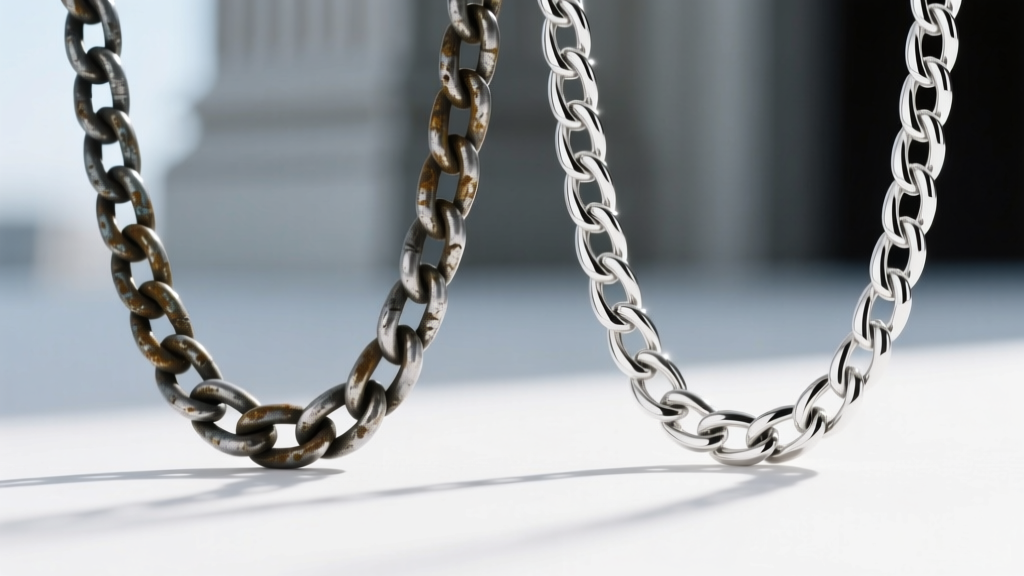
The maintenance reality of men's silver jewelry often dictates long-term satisfaction. A thick sterling silver chain worn daily against the skin will accumulate a layer of silver sulfide within weeks, particularly in humid environments or for individuals with acidic sweat chemistry. While some men appreciate the dark, oxidized 'patina' that builds up in the crevices of a braided rope chain or a skull signet ring, the flat surfaces will eventually look dull and gray.
Argentium's germanium dioxide layer acts as a permanent shield. While it is not 100% impervious to harsh chemicals (like bleach or pool chlorine), it will not tarnish from normal atmospheric sulfur or skin contact. For men who prefer a 'wear and forget' lifestyle, Argentium reduces maintenance from a weekly chore to an occasional wipe-down with a microfiber cloth. Furthermore, because Argentium does not develop firescale, jewelers can perform laser welding and sizing adjustments without the risk of exposing ugly subsurface oxidation, ensuring repairs remain invisible.
Dimensional Standards: Ring Shanks and Chain Clasps
Material properties must be paired with correct dimensional engineering. A common failure point in men's jewelry is designing a piece that is too thin for the chosen alloy. According to guidelines referenced by Jewelers of America, structural integrity relies on mass and geometry.
Ring Shank Thickness
- Minimum Standard: 2.0mm shank thickness (prone to oval deformation in 925 sterling).
- Heavy Duty Standard: 2.5mm to 3.5mm shank thickness. This is highly recommended for men's rings, providing enough mass to resist bending when gripping steering wheels or hand tools.
- Comfort Fit: For rings wider than 8mm, a domed interior (comfort fit) is mandatory to allow blood circulation and prevent the ring from acting as a tourniquet during temperature-induced finger swelling.
Chain Clasps and Gauges
Men's silver chains typically range from 20 to 24 inches in length and 3mm to 8mm in width, resulting in significant tensile weight. The weakest point is invariably the clasp. Spring-ring clasps are entirely inadequate and will snap under the weight of a 5mm chain. Always insist on solid lobster clasps, heavy-duty box clasps with dual safety latches, or custom toggle clasps engineered from the same alloy as the chain. If you are buying a heavy 925 sterling chain, ensure the end caps and jump rings are laser-welded rather than simply soldered, as traditional torch soldering can anneal (soften) the surrounding links.
Final Verdict: Which Silver Should You Buy?
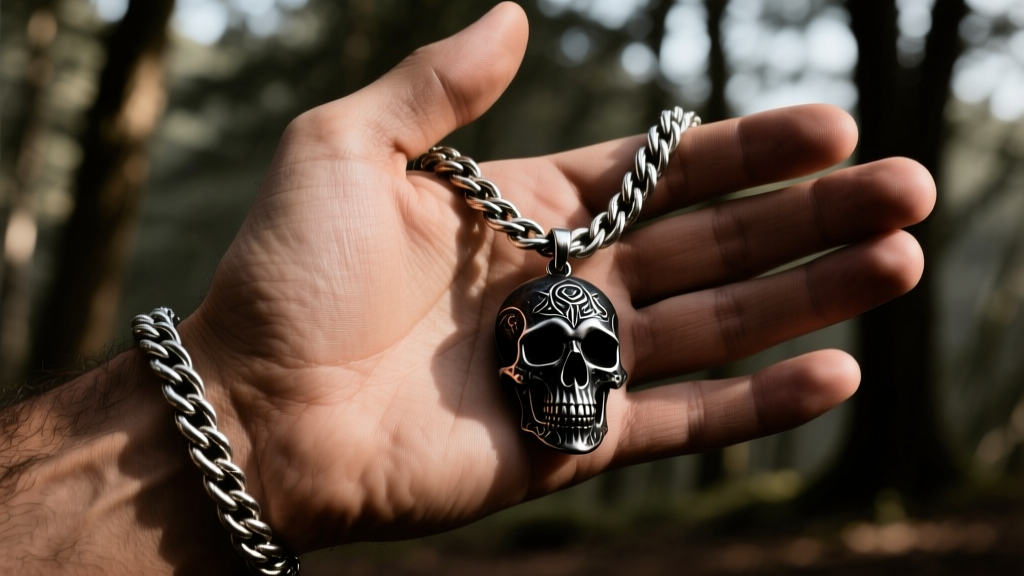
The choice of alloy ultimately depends on the specific function of the jewelry piece and the wearer's lifestyle. If you are purchasing a wide, heavy cuff bracelet or a thick Cuban link chain where structural bending is less of a concern and budget is a primary factor, traditional 925 Sterling Silver remains a robust, classic choice—provided you are willing to embrace the maintenance routine or the dark, oxidized aesthetic.
However, for men's rings, signets, and pieces subjected to daily manual wear, Argentium Silver is objectively the superior material. Its ability to be heat-hardened to double the Vickers rating of sterling, combined with its firescale-free manufacturing and exceptional tarnish resistance, makes it the ultimate modern alloy for men's jewelry. While it commands a 15% to 25% price premium over standard sterling, the elimination of structural deformation and chemical tarnish makes it a definitive long-term investment.


