Fake 925 Jewelry Mark? Troubleshooting Sterling Silver Authenticity
Suspect a fake 925 jewelry mark? Learn expert troubleshooting steps to test sterling silver authenticity, spot counterfeits, and solve tarnish issues.

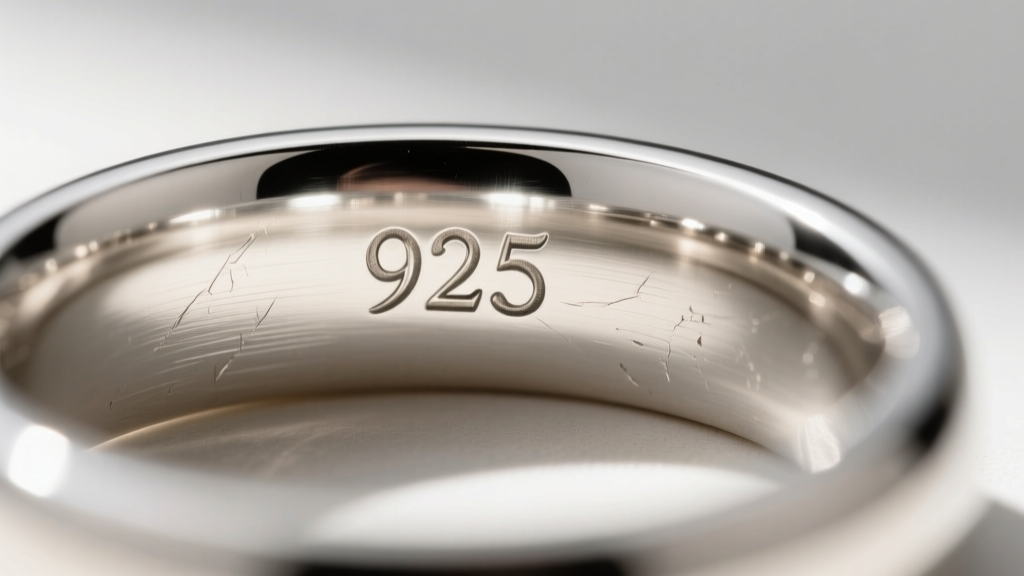
The 925 jewelry mark is universally recognized as the ultimate seal of authenticity for sterling silver. By definition, it guarantees that a piece contains 92.5% pure silver and 7.5% alloy metals (usually copper). However, as we navigate the e-commerce landscape in 2026, sophisticated counterfeiting techniques have made relying solely on a visual stamp incredibly risky. Overseas manufacturing hubs now routinely stamp base metals, brass, and even nickel alloys with the '925' hallmark, deceiving both novice buyers and seasoned collectors.
If your supposedly authentic silver is tarnishing strangely, turning your skin green, or simply feeling 'off,' you are not alone. This comprehensive troubleshooting guide will help you diagnose suspicious hallmarks, verify metal purity, and solve the most common problems associated with stamped silver jewelry.
Why Your Stamped Silver Might Still Be Counterfeit
Before diving into testing methods, it is crucial to understand how counterfeiters exploit the 925 jewelry mark. The stamp itself costs fractions of a penny to replicate. According to the Federal Trade Commission's Jewelry Guides, it is illegal to stamp base metals with a silver quality mark without proper plating, but enforcement on international direct-to-consumer marketplaces remains notoriously difficult.
The Electroplating Deception
The most common counterfeit involves a brass or copper core that is heavily electroplated with a microscopic layer of fine silver. The manufacturer then stamps the piece. Initially, the item looks, smells, and feels like genuine sterling. However, once the friction of daily wear breaches the plating layer, the base metal is exposed. This leads to rapid, aggressive oxidation that cannot be polished away with standard silver cloths.
The 'Cast-In' Mark vs. The Struck Mark
Authentic sterling silver jewelry is typically forged, cast, or die-struck, and the hallmark is added after the piece is finished using a hardened steel punch. This leaves a crisp, deeply indented 925 jewelry mark with sharp edges. Counterfeit items are often cast directly from molds taken from authentic pieces. This results in a 'cast-in' mark that looks soft, shallow, and slightly blurred under magnification.
Troubleshooting Matrix: Diagnosing Your Silver
When evaluating a suspicious piece, use this diagnostic matrix to narrow down the material composition before moving to destructive testing.
| Symptom / Observation | Likely Culprit | Troubleshooting Action |
|---|---|---|
| Stamp looks blurry, raised, or shallow | Cast-in counterfeit mark | Perform magnet and specific gravity tests |
| Item turns skin green within hours | Copper/Brass core with worn plating | Check for wear points; perform acid test on exposed area |
| Magnet strongly attracts the piece | Ferrous core (Steel/Iron) | Immediate return; genuine sterling is non-magnetic |
| Tarnish is flaky or peels off in sheets | Silver-plated base metal | Inspect edges for chipping; do not use chemical dips |
| Piece is unusually lightweight | Hollow-core or aluminum alloy | Calculate specific gravity (Sterling = 10.36 g/cm³) |
Advanced Verification: Beyond the Magnet Test
The classic 'fridge magnet' test is a good first step, but it is deeply flawed. Genuine sterling silver contains 7.5% copper, which is non-magnetic. However, many counterfeiters use non-magnetic base metals like zinc, lead, or austenitic stainless steel to bypass the magnet test. To truly verify the 925 jewelry mark, you must employ advanced diagnostic techniques.
Schwerter's Solution (Acid Testing)
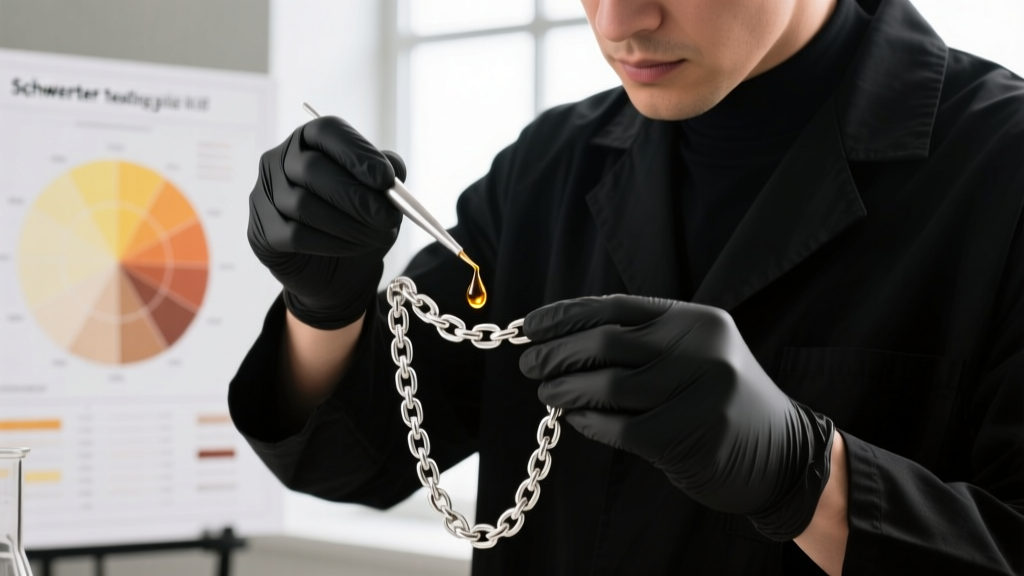
For definitive results without expensive machinery, jewelers use Schwerter's solution—a mixture of potassium dichromate and nitric acid. By filing a tiny, inconspicuous notch into the jewelry (to bypass any surface plating) and applying a drop of the acid, you can read the metal's true nature based on the color reaction:
- Bright Creamy White: Genuine 925 Sterling Silver.
- Dark Green: Base metal or heavily silver-plated brass.
- Blue: Nickel or rhodium-plated nickel alloy.
- Brown/Red: Lower purity silver (e.g., 800 silver or coin silver).
Safety Warning: Always wear nitrile gloves and eye protection when handling nitric acid solutions, and work in a well-ventilated area.
The Specific Gravity Test
If you are troubleshooting a high-value item like a heavy silver chain or a solid bangle and refuse to damage it with a file, use the specific gravity (SG) water displacement test. Genuine 925 sterling silver has an SG of approximately 10.36. By weighing the piece on a digital scale, then weighing it suspended in distilled water, you can calculate its density. If your 50-gram chain yields an SG of 8.4, you are holding brass, regardless of what the 925 jewelry mark claims.
What If the 925 Mark is Missing Entirely?
Absence of a stamp does not automatically mean a piece is fake. Vintage jewelry, antique flatware, and heavily worn rings often lose their hallmarks due to decades of friction, resizing, or aggressive polishing. In many European countries, hallmarks are strictly regulated by assay offices, but in the US, a maker's mark is often required alongside the purity stamp, and both can wear away.
Solving the Missing Stamp Dilemma
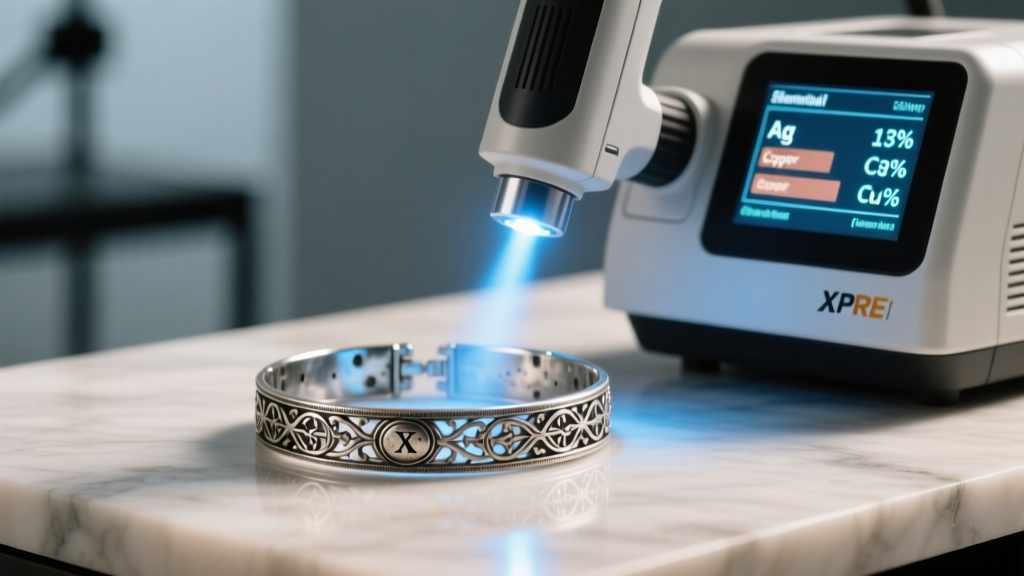
If you are sourcing estate jewelry to resell or restore, invest in a portable XRF (X-ray Fluorescence) analyzer if your budget permits. While these devices cost several thousand dollars, they provide instant, non-destructive elemental breakdowns. For the average consumer, taking the piece to a local bench jeweler for a free or low-cost acid test is the most practical solution. Never attempt to re-stamp a piece yourself, as this can devalue antiques and fracture work-hardened silver.
Troubleshooting the 'Green Skin' Phenomenon
One of the most frequent complaints we see in 2026 is a buyer assuming their stamped 925 ring is fake because it turned their finger green. This is not necessarily proof of a counterfeit.
The Copper Oxidation Factor
Pure silver is too soft for jewelry, which is why 7.5% copper is added to create sterling. When copper reacts with the acids, salts, and lotions on your skin, it creates copper chloride—a green compound that transfers to your epidermis. If your authentic stamped ring causes this, try these troubleshooting fixes:
- The Polymer Barrier: Paint the inside of the band with a thin layer of clear, hypoallergenic nail polish or a specialized jewelry coating like JewelSkinCote. Reapply every few months.
- Upgrade to Argentium: If you are highly reactive to copper, seek out Argentium Silver (usually stamped 935 or 960). It replaces some copper with germanium, making it highly tarnish-resistant and far less likely to cause skin discoloration.
- Rhodium Plating: Have a jeweler electroplate the inner band with rhodium. This platinum-group metal creates a permanent, bright white barrier between the copper alloy and your skin.
Final Verdict: Trust but Verify
The 925 jewelry mark remains a vital indicator of quality, but in an era of advanced manufacturing and globalized e-commerce, it must be treated as a starting point rather than a guarantee. By combining visual inspection of the stamp's depth, utilizing specific gravity calculations, and understanding the chemical realities of copper alloys, you can confidently troubleshoot any silver piece in your collection. When in doubt, always consult a certified gemologist or master bench jeweler to preserve the integrity and value of your precious metals.


