Is Jewelry Marked With 925 Always Real? A Metallurgist's Guide
Discover what jewelry marked with 925 really means. Our expert metallurgy guide covers hallmark authentication and alloy composition.

The Metallurgical Truth Behind the 925 Stamp
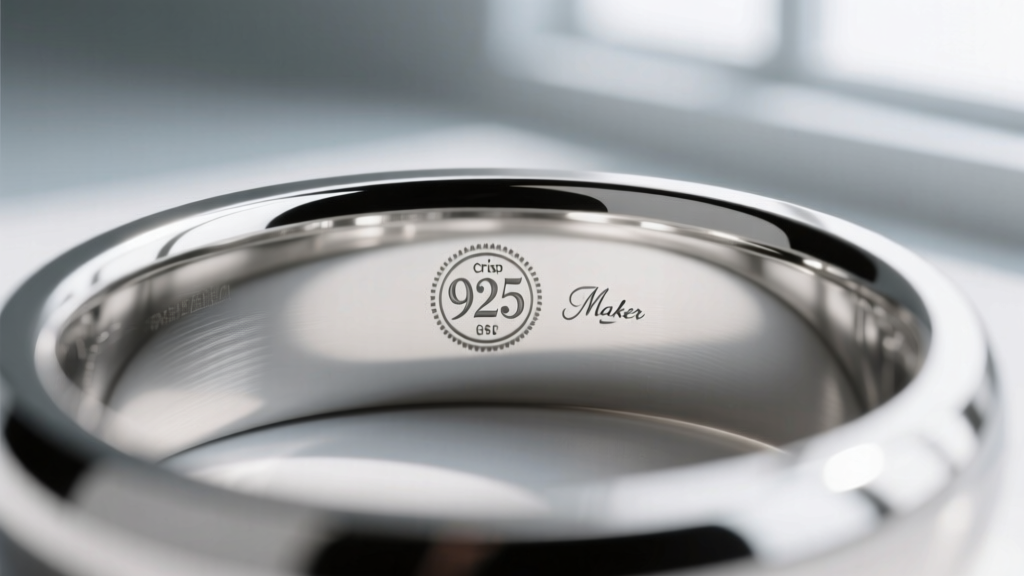
When evaluating jewelry marked with 925, consumers often assume the stamp is an infallible guarantee of quality and authenticity. However, from a metallurgical perspective, the "925" hallmark simply denotes a specific elemental ratio: 92.5% pure silver and 7.5% alloying metals, predominantly copper. Pure silver (99.9%) is too malleable for functional jewelry; it bends, scratches, and loses structural integrity under daily mechanical stress. The addition of copper creates a substitutional solid solution that dramatically increases the Vickers hardness of the metal, making it viable for rings, clasps, and prong settings.
The eutectic point of this specific silver-copper alloy occurs at approximately 893°C (1640°F), which is notably lower than the melting point of pure silver (961°C). This thermal property is critical for jewelers during casting and soldering but also dictates how the metal reacts to environmental stressors. According to the Gemological Institute of America (GIA), the copper content is precisely what makes sterling silver susceptible to tarnish, as copper readily reacts with atmospheric sulfur and moisture to form cupric oxide and silver sulfide layers on the surface.
The Role of Copper and Alternative Alloys
While traditional sterling relies on a 7.5% copper alloy, modern metallurgy has introduced advanced alternatives to combat firescale and rapid tarnishing. Argentium silver, for instance, replaces a portion of the copper with germanium (typically around 1.2% to 1.5%). When exposed to oxygen, the germanium forms a transparent, self-healing layer of germanium dioxide on the surface, which severely restricts the diffusion of sulfur to the underlying copper atoms. Consequently, jewelry marked with 925 that is forged from Argentium will exhibit vastly superior tarnish resistance compared to traditional copper-alloyed sterling, despite sharing the exact same 92.5% silver purity requirement.
How Hallmarks Are Applied: Stamped vs. Laser vs. Cast
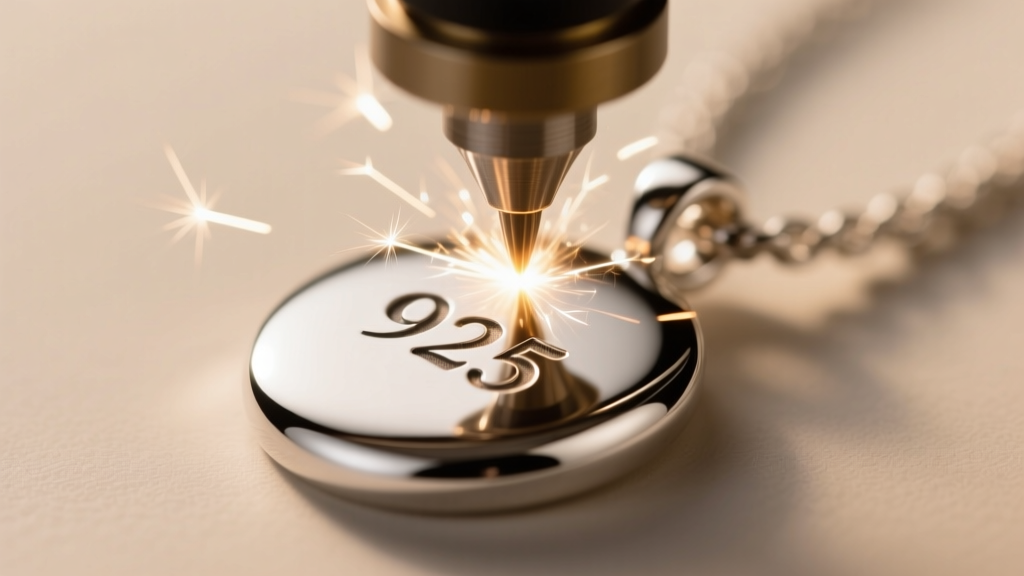
Authentication experts do not merely look for the presence of a 925 stamp; they analyze the physical morphology of the mark to determine the manufacturing method and potential authenticity. The technique used to apply the hallmark leaves distinct microscopic signatures.
Die Stamping: In mass production, a hardened steel punch is driven into the metal via a mechanical or hydraulic press. This displaces the surrounding silver, creating a slight raised rim or "bur" around the edges of the numbers. Under 10x magnification, you will observe compression lines and a uniform depth, indicating a solid piece of work-hardened sterling.
Laser Engraving: Modern CNC laser engravers vaporize microscopic layers of metal to etch the 925 mark. This method leaves zero physical displacement and no raised burrs. The floor of the engraving will appear matte and slightly textured due to the rapid thermal melting and cooling cycle. This is common in high-end CAD/CAM designed jewelry and delicate chains where mechanical stamping would warp the piece.
Cast-in-Place Marks: If the 925 stamp was carved into the original wax model before investment casting, the resulting silver mark will have soft, rounded edges and lack the sharp, crisp corners of a steel die strike. While legitimate in bespoke casting, excessively blurry or shallow cast marks are a primary red flag for low-quality overseas mass production.
The Counterfeiter’s Playbook: Faking the 925 Mark
The secondary market and unverified e-commerce platforms are saturated with base metals fraudulently stamped with 925. The most common culprit is rhodium-plated brass (an alloy of copper and zinc). Because rhodium is a platinum-group metal that mimics the bright, white luster of polished silver, it easily fools the naked eye. However, the underlying brass core has a drastically different density and magnetic permeability.
Another prevalent deception is "Nickel Silver" or "Alpaca." Despite the name, these alloys contain absolutely zero elemental silver. They are composed of copper, nickel, and zinc. Unscrupulous manufacturers will stamp these base alloys with 925, relying on the consumer's ignorance of metallurgical nomenclature. The Silver Institute frequently issues advisories regarding these deceptive trade practices, emphasizing that a stamp is merely a claim, not a certified assay.
Advanced Authentication Framework
To move beyond guesswork, professional appraisers and informed buyers utilize a matrix of non-destructive and micro-destructive tests to verify jewelry marked with 925.
| Testing Method | Mechanism of Action | Expected Result for True 925 | Limitations |
|---|---|---|---|
| XRF Spectrometry | X-rays excite atoms, emitting secondary fluorescent X-rays unique to each element. | Reads 92.0% - 93.0% Ag, with Cu or Ge making up the remainder. | Surface-level reading; cannot detect thick silver plating over lead or brass. |
| Specific Gravity | Measures density via water displacement (Weight in Air / [Weight in Air - Weight in Water]). | Yields a density of approximately 10.36 g/cm³. | Inaccurate if the piece contains heavy gemstones or hollow resin cores. |
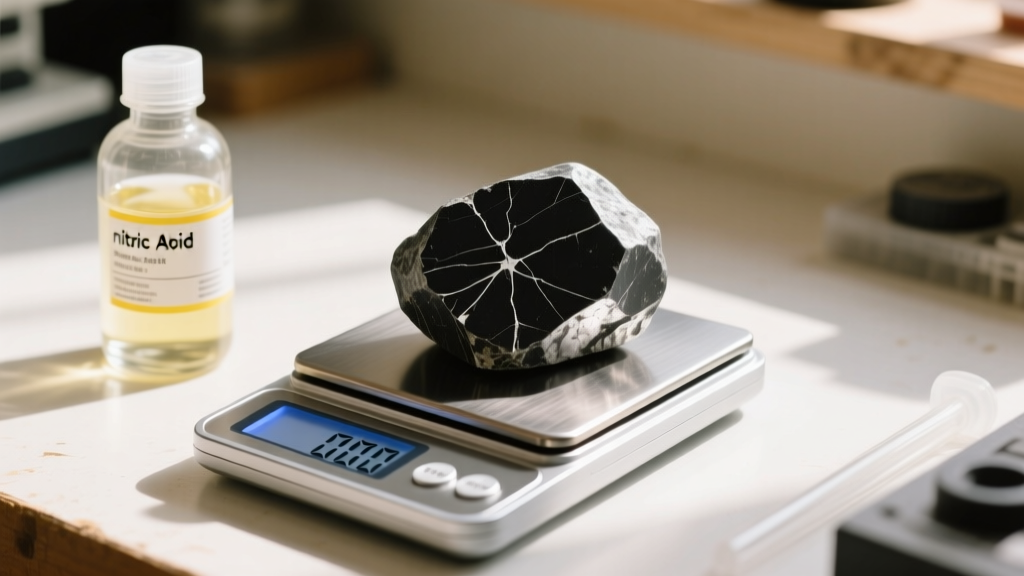
| Nitric Acid Assay | Nitric acid reacts with copper and silver at different oxidation rates. | Turns a creamy, cloudy white. (Pure silver turns brick red; brass turns green). | Micro-destructive; requires filing a discreet notch to bypass potential surface plating. |
| Magnetism | Tests for ferromagnetic elements like iron, cobalt, or nickel. | Zero magnetic attraction. Silver is diamagnetic. | Copper and brass are also non-magnetic, so this only rules out steel/iron cores. |
Troubleshooting Tarnish and Plating Failures in "925" Pieces
Not all tarnish is created equal. When authenticating or restoring jewelry marked with 925, the color and behavior of the oxidation layer provide vital clues about the metal's true composition and manufacturing history.
"Firescale is the silent enemy of the silversmith. It is not surface tarnish, but a deep-seated copper oxide intrusion that occurs when sterling is heated in an oxygen-rich environment without proper flux or a reducing atmosphere."
Firescale vs. Surface Tarnish: Standard silver sulfide tarnish is black or yellowish and sits on the surface, easily removed via chemical dips or gentle abrasives. Firescale, however, appears as a stubborn purple or greyish-blue shadow beneath the polished surface. It occurs when oxygen penetrates the metal grain boundaries during soldering, oxidizing the internal copper. If a piece marked 925 exhibits deep, unremovable purple blotches, it is likely authentic sterling that was poorly finished by the manufacturer, rather than a fake.
Flaking and Delamination: If the "tarnish" on your 925 jewelry is flaking off in microscopic sheets or revealing a yellowish or reddish hue underneath, you are not dealing with solid sterling silver. Solid silver alloys do not delaminate. Flaking is the definitive hallmark of electroplated base metals where the microscopic silver layer has failed due to poor adhesion or galvanic corrosion.
Sourcing and Verifying: A Buyer’s Technical Checklist
Whether you are sourcing vintage lots or evaluating modern artisan work, apply this rigorous technical checklist before trusting a 925 hallmark:
- Inspect the Maker's Mark: A legitimate 925 stamp is almost always accompanied by a maker's mark or sponsor's mark. Cross-reference this symbol with international hallmarking databases or the manufacturer's official registry.
- Perform the Acoustic Ring Test: Gently strike the piece with a wooden dowel or plastic tool. Solid sterling silver emits a high-pitched, sustained resonant chime. Base metals like zinc or lead alloys produce a dull, immediate thud.
- Check the Clasp and Jump Ring Hardware: Counterfeiters often use solid sterling findings (clasps, ear wires) purchased from legitimate suppliers, but attach them to base-metal chains or pendants. Always test the main body of the piece, not just the clasp.
- Evaluate the Weight-to-Volume Ratio: Train your hand to recognize the heft of 10.36 g/cm³. Sterling silver feels substantially heavier than aluminum or hollow brass equivalents of the exact same dimensions.
Ultimately, a 925 stamp is a declaration of intent by the manufacturer, not a legally binding guarantee unless backed by an independent assay office. By combining visual hallmark analysis with fundamental metallurgical testing, you can confidently separate genuine sterling silver from deceptive imitations.


