Seeing 925 on Jewelry What Does It Mean? A Silver Purity Guide
Discover what 925 on jewelry means. Learn about sterling silver purity, alloy compositions, tarnish rates, and how to verify authentic silver hallmarks.

The Metallurgy Behind the Stamp: What 925 Actually Means
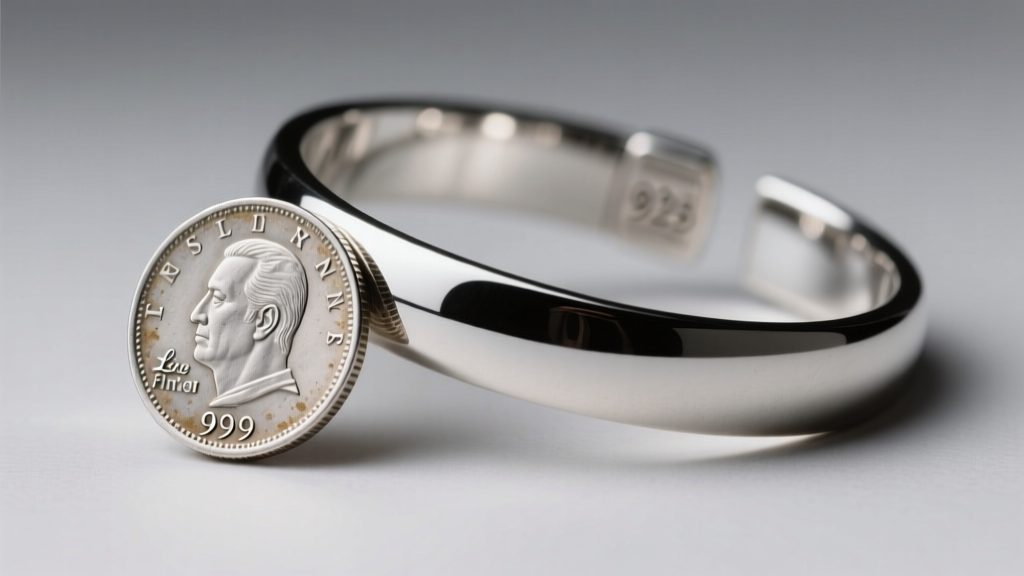
When you turn over a silver ring or inspect the clasp of a chain, you are likely to encounter a tiny stamp reading '925'. But seeing 925 on jewelry what does it mean for the metal's durability, value, and chemical composition? In the jewelry industry, this hallmark is the universal standard for sterling silver. It signifies that the alloy consists of exactly 92.5% pure silver and 7.5% secondary metals, most commonly copper.
Pure silver, also known as fine silver (stamped 999), is exceptionally beautiful but metallurgically unsuited for everyday jewelry. According to the Gemological Institute of America (GIA), fine silver registers at just 25 on the Vickers Hardness (HV) scale. This makes it far too malleable; a prong set with a diamond would bend open upon catching a sweater, and thin bands would warp out of shape within weeks. By introducing 7.5% copper into the crystal lattice, metallurgists increase the hardness to approximately 65-70 HV, creating a material that retains the brilliant luster of silver while possessing the structural integrity required to secure gemstones and withstand daily wear.
Fine Silver vs. 925 Sterling: A Structural Comparison
Understanding the practical differences between pure silver and the 925 alloy is critical for both jewelry makers and consumers. The table below breaks down the physical properties and ideal use cases for the most common silver grades available in the 2026 market.
| Metal Grade | Purity | Hardness (HV) | Tarnish Resistance | Best Use Case |
|---|---|---|---|---|
| 999 Fine Silver | 99.9% | ~25 HV | Excellent (No copper) | Bezel wire, investment coins, metal clay |
| 925 Sterling Silver | 92.5% | ~65 HV | Moderate (Prone to CuS) | Ring bands, chains, gemstone prongs |
| Argentium 935 | 93.5% | ~75 HV | Exceptional (Germanium) | High-end bridal, low-maintenance wear |
As The Silver Institute notes, the addition of copper is a necessary compromise. It grants the metal its necessary tensile strength but introduces the primary vulnerability of sterling silver: oxidation and tarnish.
The Copper Factor: Why Sterling Silver Tarnishes
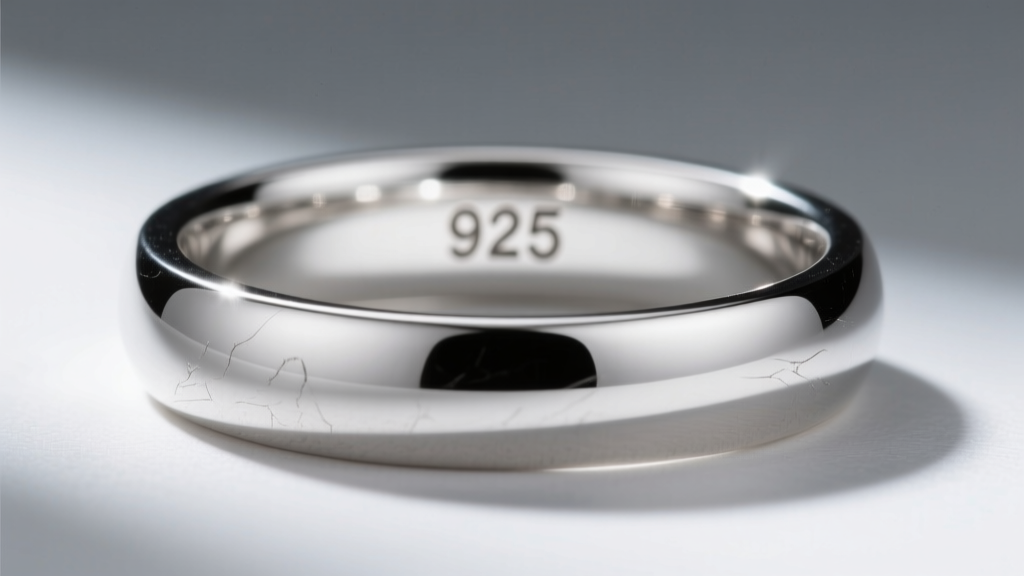
A common misconception is that silver itself tarnishes. In reality, pure silver is highly resistant to oxidation. The black, gray, or yellowish film that forms on your 925 jewelry is actually copper sulfide (CuS). The 7.5% copper in the alloy reacts with hydrogen sulfide (H2S) and sulfur dioxide (SO2) present in the atmosphere, as well as sulfur compounds found in human sweat, cosmetics, and household cleaners.
The Role of Rhodium Plating
To combat this chemical vulnerability, many modern jewelers electroplate 925 sterling silver with a microscopically thin layer of rhodium, a platinum-group metal. Rhodium is entirely inert to atmospheric sulfur and provides a brilliant, mirror-like finish that mimics white gold. However, this plating is not permanent. On high-friction areas like the inside of a ring shank or the links of a bracelet, rhodium plating typically wears away within 12 to 24 months, eventually exposing the underlying 925 alloy to the air and requiring professional re-plating.
Modern Alternatives: Argentium and Deox Silver
For those seeking the 925 standard without the maintenance, advanced alloys like Argentium silver have revolutionized the market. By replacing a portion of the copper with the metalloid germanium, Argentium forms a transparent, self-healing layer of germanium dioxide on the surface. This barrier completely blocks sulfur from reaching the copper, rendering the alloy virtually tarnish-proof while also eliminating 'firestain' (the deep purple oxidation layer that forms when traditional sterling is heated with a torch during soldering).
How to Verify a 925 Stamp (And Spot Fakes)
Because silver prices fluctuate and hold intrinsic value, counterfeiters frequently stamp base metals like nickel silver (which contains zero actual silver) or brass with a fake '925' hallmark. Relying on the stamp alone is insufficient. Here are three definitive, non-destructive testing methods used by appraisers:
- The Neodymium Magnet Test: Silver is diamagnetic, meaning it weakly repels magnetic fields. If you place a strong neodymium magnet at a 45-degree angle on a thick 925 silver chain or coin, it should slide down slowly, as if moving through syrup. If it snaps instantly or sticks firmly, the core is ferromagnetic (steel or iron) and the piece is counterfeit.
- The Ice Cube Test: Silver possesses the highest thermal conductivity of any metal on Earth (429 W/m·K). If you place an ice cube on a 925 silver coin or thick bangle at room temperature, the ice will begin melting almost instantaneously, and the opposite side of the metal will become freezing cold to the touch within seconds.
- Schwerter's Solution (Acid Test): For absolute certainty, jewelers use a specialized silver testing acid (a mixture of potassium dichromate and nitric acid). When a drop is applied to a discreet file-mark on the metal, genuine 925 silver will turn the liquid a creamy, dark red color. If the acid turns brown, green, or blue, the item is heavily plated or made of base metals.
Price Benchmarks: What You Should Pay for 925 Silver
Understanding what 925 means also requires understanding how it is priced. The retail cost of sterling silver jewelry is a combination of its melt value (the raw commodity price of the silver content) and the craftsmanship premium.
The Melt Value Formula: To calculate the raw silver value of a piece, weigh it in grams, multiply by 0.925, and then divide by 31.103 (the number of grams in a troy ounce). Multiply that result by the current spot price of silver.
For example, a heavy 50-gram 925 sterling silver Cuban link chain contains roughly 1.48 troy ounces of pure silver. If the spot price is $30 per ounce, the melt value is approximately $44.40. However, retail prices will range from $120 for machine-made, mass-produced chains to over $600 for hand-forged, artisan-crafted pieces. When buying 925 jewelry, you are paying for the labor of casting, soldering, polishing, and stone-setting. Be highly suspicious of 'solid 925 silver' jewelry being sold for less than its calculated melt value, as this is a primary indicator of silver-plated fraud or hollow-core manufacturing disguised as solid metal.


