What Does the Number 925 on Jewelry Mean? A Troubleshooting Guide
Discover what the number 925 on jewelry means, troubleshoot green skin issues, and learn expert methods to spot fake sterling silver hallmarks.

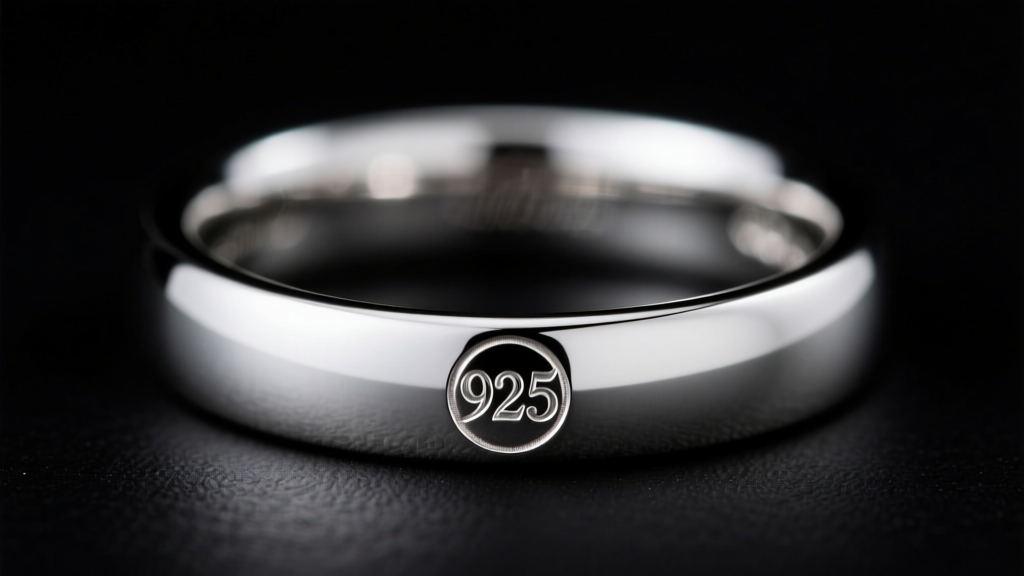
When you turn over a silver ring or inspect the clasp of a necklace, you are likely searching for a tiny, often poorly stamped sequence of digits. If you are asking, what does the number 925 on jewelry mean, you are looking at the universal hallmark for sterling silver. However, in the modern jewelry market, a stamp is no longer a guarantee of quality. Counterfeiters routinely stamp base metals with '925', and even genuine sterling silver can behave in ways that confuse owners, such as turning skin green or tarnishing rapidly.
This troubleshooting guide moves beyond the basic definition. We will dissect the metallurgy of the 925 alloy, diagnose why your stamped jewelry might be failing, and provide a professional verification framework to separate genuine sterling from deceptive fakes.
The Metallurgy of 925: Why Pure Silver Fails in Jewelry
To troubleshoot silver issues, you must first understand its chemical composition. The '925' stamp indicates that the piece consists of 92.5% pure silver and 7.5% alloy metals. Fine silver (99.9% pure, stamped '999') is too soft for functional jewelry. On the Vickers hardness scale, fine silver sits at roughly 25 HV, meaning it will scratch, dent, and deform under the minimal pressure of daily wear.
By introducing 7.5% alloy—traditionally copper, though modern variations like Argentium silver use germanium and zinc—metallurgists increase the hardness to approximately 65-70 HV. This alloying process is what makes sterling silver durable enough for ring prongs, chain links, and earring posts. According to the Gemological Institute of America (GIA), this 92.5/7.5 ratio has been the international standard for sterling silver since the 14th century, balancing structural integrity with the prized luster of precious metal.
Troubleshooting: Why Your '925' Jewelry Turns Skin Green
The most common complaint we receive from readers is: 'My 925 ring is turning my finger green. Is it fake?' The short answer is: not necessarily. The green discoloration is rarely a sign of counterfeit silver; rather, it is a predictable chemical reaction involving the 7.5% copper alloy.
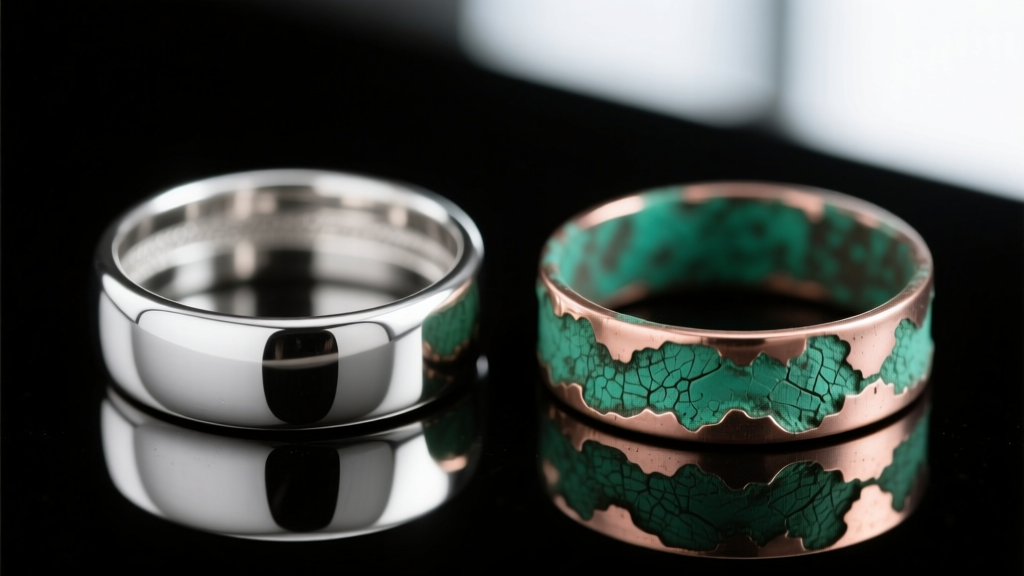
Human sweat contains water, salts, lactic acid, and urea, with a pH that typically ranges from 4.5 to 7.0. When the copper in sterling silver is exposed to these acidic compounds, it oxidizes and forms copper chloride or copper sulfate. This green compound transfers directly to your skin. Several specific scenarios accelerate this reaction:
- Rhodium Plating Wear: Most modern 925 silver is electroplated with a microscopically thin layer of rhodium (a platinum group metal) to prevent tarnish and provide a bright white finish. Once this plating wears off at high-friction areas (like the inside of a ring band), the copper alloy is exposed to your skin's chemistry.
- Hormonal and Dietary Shifts: Changes in diet (high sulfur or acidic foods), medications, and hormonal fluctuations can lower your skin's pH, making your sweat more corrosive to the copper alloy.
- Environmental Exposure: Swimming in chlorinated pools or using harsh household cleaners introduces reactive chemicals that rapidly break down the silver-copper matrix, leading to severe localized tarnishing and skin staining.
The Fix: If a genuine 925 piece is turning your skin green, take it to a local jeweler to be re-plated with rhodium. Alternatively, coat the inside of the band with a clear, jewelry-safe polymer barrier (like liquid latex or specialized nail polish) to block the moisture transfer.
The Counterfeit Crisis: When the 925 Stamp Lies
While green skin can happen with genuine silver, a piece that is heavily magnetic, flakes off to reveal yellow brass, or causes severe allergic contact dermatitis is likely a fake. The barrier to entry for metal stamping is incredibly low. Overseas manufacturers routinely cast cheap brass, cupronickel, or nickel-silver alloys and strike a '925' die into the metal before applying a heavy silver electroplate.
To compound the problem, counterfeiters use deceptive suffix variations. Be highly suspicious of the following stamps:
Warning: Stamps reading '925 EP', '925 F', or '925 HGP' do not indicate solid sterling silver. 'EP' stands for Electroplated, 'F' means Filled (usually gold-filled over a base metal core), and 'HGP' means Heavy Gold Plated. The '925' in these contexts refers only to the purity of the microscopic surface plating, not the structural core of the jewelry.
Step-by-Step Authenticity Verification Framework
When troubleshooting a questionable piece, rely on empirical testing rather than visual inspection. Below is a comparative framework of diagnostic methods used by gemologists and pawnbrokers to verify the 925 standard.
| Test Method | Mechanism of Action | Result for Genuine 925 | Result for Fake/Plated | Reliability |
|---|---|---|---|---|
| Neodymium Magnet | Tests for ferromagnetic metals (iron, nickel, cobalt). | No magnetic pull; silver is diamagnetic. | Strong attraction if the core is steel or nickel. | High (for detecting steel/nickel fakes) |
| Schwerter's Acid | Chemical reaction with silver vs. base metals. | Turns blood red or dark brown. | Turns green (copper/brass) or blue (nickel). | Very High (requires filing through plating) |
| Ice Thermal Test | Measures thermal conductivity. | Ice melts instantly upon contact. | Ice melts at a standard, slower rate. | Medium (subjective, best for coins/bullion) |
| XRF Spectrometry | X-ray fluorescence analyzes elemental composition. | Reads exactly 92.5% Ag, 7.5% Cu/Zn. | Reveals underlying brass, lead, or cadmium. | Absolute (requires expensive lab equipment) |
| Ping / Sound Test | Acoustic resonance of the metal alloy. | Produces a high-pitched, sustained ringing. | Produces a dull, flat 'thud'. | Low (requires trained ear, risky for delicate jewelry) |
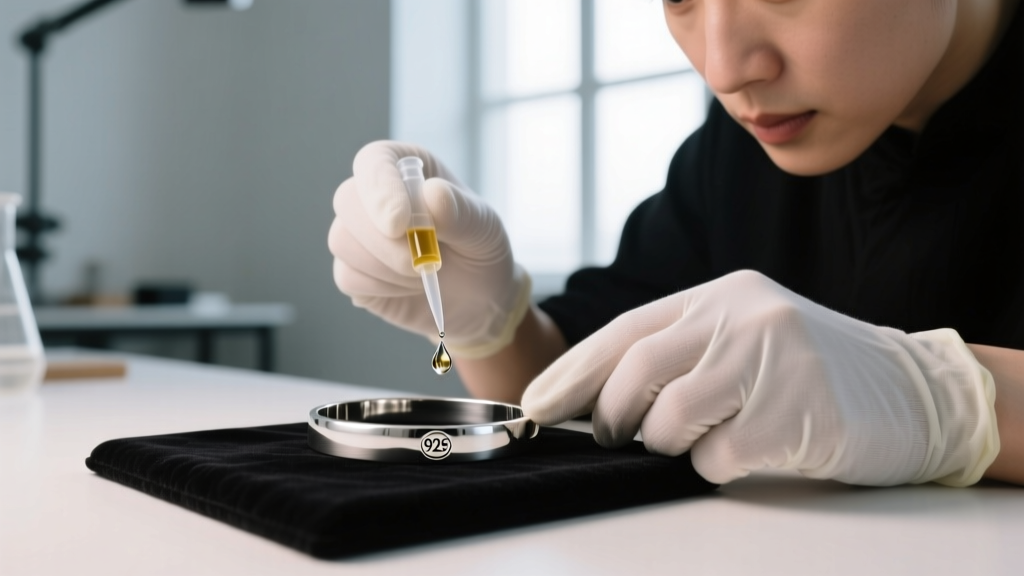
Pro-Tip for the Acid Test: If you are using a standard silver testing acid kit, you must use a jeweler's file to create a small, discreet notch in an inconspicuous area of the piece. If you apply the acid directly to the surface of a silver-plated fake, the acid will react to the surface silver and give you a false positive (blood red). Filing through the plating exposes the base metal core, which will turn bright green if the piece is a counterfeit.
International Hallmark Variations and Legal Standards
The '925' stamp is the most globally recognized millesimal fineness mark, but it is not the only legal indicator of sterling silver. Depending on where and when the jewelry was manufactured, you may encounter different hallmarks that mean the exact same thing. The UK Assay Office strictly regulates these marks to protect consumers from fraud.
- The Lion Passant (UK): A small stamp of a walking lion facing left. This is the traditional British hallmark guaranteeing 925 purity. Modern UK pieces will also feature an Assay Office mark (e.g., an anchor for Birmingham) and a date letter.
- 'STERLING' or 'STER' (USA): The Federal Trade Commission (FTC) Jewelry Guides permit the use of the words 'Sterling' or the abbreviation 'Ster.' in lieu of the 925 numerical stamp, provided the piece meets the 92.5% threshold.
- 800 or 835 (Continental Europe): Often found on vintage European silverware and jewelry. These are not sterling silver. They indicate 80% or 83.5% pure silver, with a much higher copper content, making them more prone to heavy tarnishing and patina development.
How to Restore and Protect Genuine 925 Silver
If your testing confirms the piece is genuine 925, but it is heavily oxidized (blackened), avoid abrasive commercial dips. These liquids contain harsh thiourea chemicals that strip the silver layer at a microscopic level, leaving the piece porous and more susceptible to future tarnishing.
Instead, use the electrochemical reduction method to reverse the tarnish without removing any silver:
- Line a glass or ceramic bowl with heavy-duty aluminum foil, shiny side up.
- Place the tarnished 925 jewelry directly on the foil.
- Sprinkle a generous amount of baking soda (sodium bicarbonate) over the jewelry.
- Pour boiling water into the bowl. You will see bubbling and smell a distinct sulfur (rotten egg) odor as the sulfur atoms are pulled from the silver and transferred to the aluminum.
- After 3 to 5 minutes, remove the jewelry with wooden tongs, rinse thoroughly in distilled water, and dry with a microfiber cloth.
To prevent future troubleshooting, store your verified 925 jewelry in airtight polyethylene ziplock bags alongside 3M anti-tarnish strips or Pacific Silvercloth. These materials absorb ambient hydrogen sulfide and sulfur dioxide from the air, effectively neutralizing the primary catalysts for silver oxidation before they can reach your jewelry.


