Troubleshooting Tarnish on Silver Feather Jewelry St Augustine FL
Discover expert troubleshooting for silver feather jewelry in St Augustine FL. Learn to combat salt-air tarnish and clean intricate 925 sterling textures.

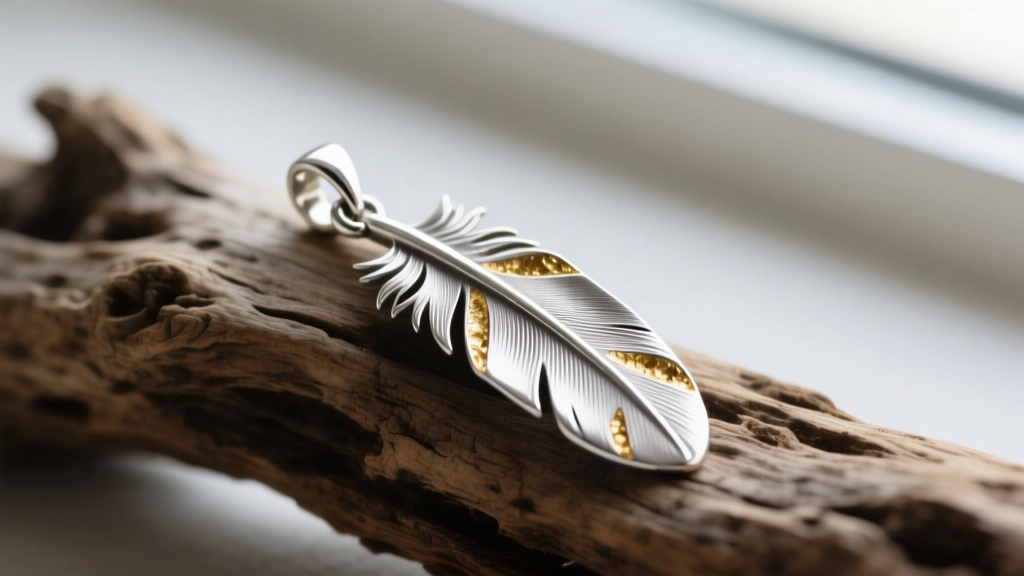
The Coastal Chemistry: Why St. Augustine Air Attacks Sterling Silver
Owning intricate silver pieces in a coastal subtropical environment presents a unique set of metallurgical challenges. If you are researching how to maintain your silver feather jewelry St Augustine FL residents and collectors know that the local climate is notoriously unforgiving on precious metals. St. Augustine sits directly on the Atlantic coast, where the ambient air is heavily laden with microscopic salt aerosols and consistently high humidity levels that frequently exceed 75%. While pure 999 fine silver is relatively resistant to corrosion, the vast majority of artisan feather jewelry is cast in 925 sterling silver. This alloy contains 7.5% copper to provide the structural rigidity needed for the delicate barbs and vanes of a feather design. Unfortunately, copper is highly reactive to chloride ions found in sea salt. When salt-laden moisture settles into the microscopic crevices of a textured silver feather, it triggers a localized galvanic reaction, leading to rapid tarnishing and, in severe cases, micro-pitting.
Anatomy of a Feather: The Micro-Crevice Trap
To troubleshoot cleaning issues, you must first understand the physical structure of your jewelry. Artisan silver feathers are typically created using the lost-wax casting method. The wax original is carved with deep undercuts to mimic the overlapping barbules of a real bird feather. When molten 925 sterling silver is poured into the mold, it captures every detail, but it also creates thousands of microscopic pores and deep, narrow grooves. Standard polishing cloths are entirely useless for these areas; in fact, dragging a treated polishing cloth across a highly textured feather pendant will often cause the microfibers to snag on the delicate silver tips, potentially bending 20-gauge or 22-gauge wire accents and tearing the cloth. Furthermore, these deep grooves trap dead skin cells, cosmetic lotions, and environmental sulfur, creating a dense, black sludge that accelerates the formation of silver sulfide (Ag2S).
Troubleshooting Guide: Restoring Intricate Silver Feathers
When standard wiping fails, you must rely on chemical and mechanical troubleshooting methods tailored for high-relief textures. Below are the two most effective protocols for restoring heavily tarnished coastal silver.
Method 1: The Electrochemical Reduction Bath (For Uniform Tarnish)
If your feather jewelry has developed a uniform yellow, brown, or black patina without heavy localized salt crusting, an electrochemical bath is the safest approach. This method reverses the tarnish without removing any base silver.
- Line a glass or ceramic bowl with heavy-duty aluminum foil, shiny side up.
- Place your silver feather piece on the foil, ensuring direct contact between the silver and the aluminum.
- Boil distilled water and pour it into the bowl to submerge the jewelry.
- Add two tablespoons of sodium bicarbonate (baking soda) per cup of water. Expect immediate effervescence.
- Allow the piece to sit for 3 to 5 minutes. The chemical reaction (3Ag2S + 2Al → 6Ag + Al2S3) transfers the sulfur from the silver to the aluminum foil.
- Remove with wooden tongs, rinse thoroughly in distilled water, and dry immediately with a blast of compressed air to force moisture out of the deep feather grooves.
Method 2: Precision Swabbing (For Stubborn Salt Corrosion)
If the feather has been exposed to direct ocean spray, you may notice crusty, greenish-black deposits in the deepest vanes. This is copper chloride corrosion. The electrochemical bath will not remove this. Instead, you need targeted mechanical action.
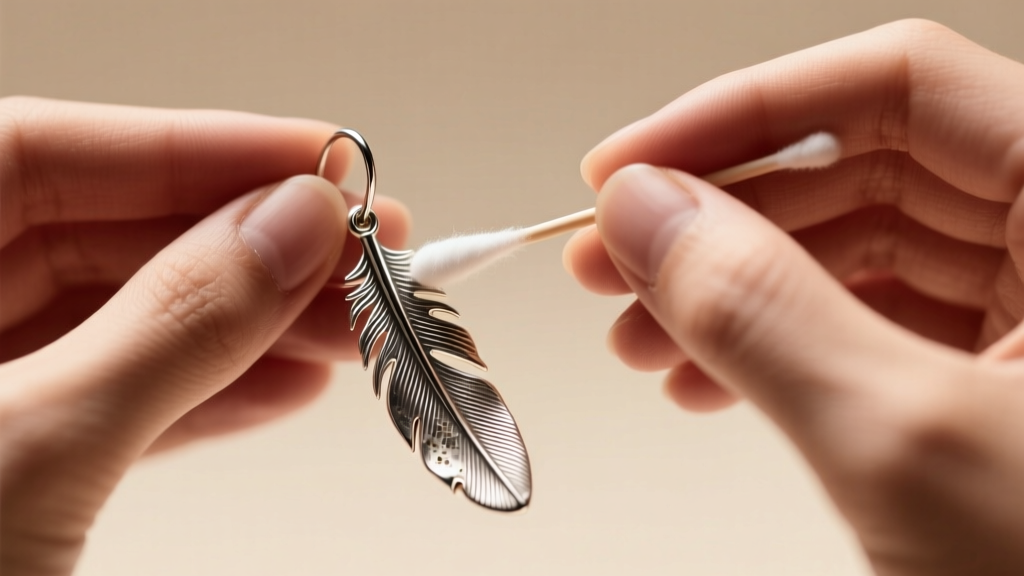
Wrap a small piece of microfiber cloth around the tip of a bamboo skewer or a wooden toothpick. Dip the tip into a high-quality, ammonia-free silver polishing cream (such as Wright's Silver Cream or Goddard's Silver Polish Foam). Gently work the swab into the grooves of the feather, following the natural direction of the barbs. Avoid using cotton swabs (Q-tips), as the cotton fibers will inevitably tear and leave lint trapped in the silver crevices. Once the corrosion is lifted, use a soft-bristled makeup brush to sweep away the residual polish dust.
Cleaning Agents Comparison Chart for Textured Silver
Choosing the wrong chemical agent can permanently ruin the finish of your jewelry. Use this troubleshooting matrix to select the correct intervention.
| Cleaning Method | Best Use Case | Risk to Feather Texture | Estimated Cost |
|---|---|---|---|
| Aluminum Foil Bath | Uniform yellow/black sulfide tarnish | Very Low (Non-abrasive) | < $1 (Pantry items) |
| Polishing Cream + Swab | Localized salt crusting and grime | Low (Requires careful manual work) | $8 - $15 |
| Liquid Silver Dips | None (Avoid for textured pieces) | High (Strips oxidation, leaves residue in pores) | $6 - $12 |
| Ultrasonic Cleaners | Heavy grease/lotion buildup | Medium (Can loosen glued gemstone accents) | $35 - $60 (Machine) |
| Toothpaste + Brush | None (Never use on sterling) | Severe (Hydrated silica causes micro-scratches) | $3 - $5 |
Preserving Antiqued and Oxidized Feather Details
Many silversmiths apply an intentional chemical oxidation (often using liver of sulfur) to the deep grooves of a feather design to create high contrast, making the intricate details pop against the polished high points. If you use a liquid silver dip or leave your piece in an electrochemical bath for too long, you will strip this antiquing, leaving the feather looking flat and lifeless. To troubleshoot a piece that has lost its contrast, you can re-oxidize it at home using a diluted liver of sulfur solution, or you can carefully apply a black enamel paint pen to the deepest recesses, wiping away the excess from the high points immediately with a damp cloth. For professional results, a local jeweler can re-antique the piece for roughly $20 to $35.
Long-Term Storage Protocols for Florida Homes
Prevention is always more effective than restoration. In St. Johns County, where air conditioning cycles on and off, indoor humidity can fluctuate wildly, causing condensation on metal surfaces. Never store your silver feather jewelry in open-air dishes or on bathroom vanities.
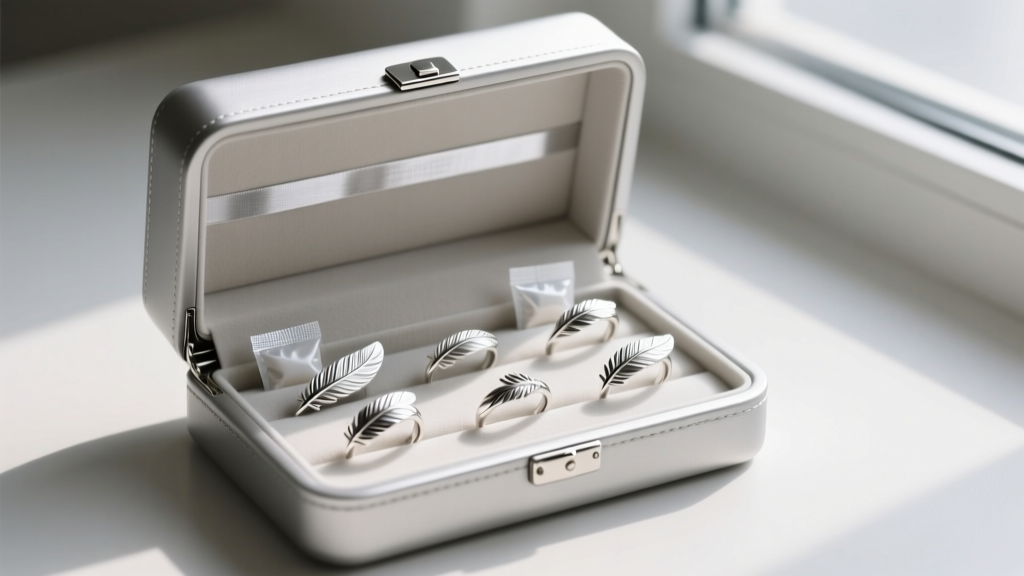
For optimal preservation, seal each piece individually in an airtight, PVC-free polyethylene ziplock bag. Inside each bag, include a 3M Anti-Tarnish strip and a small packet of indicating silica gel. The anti-tarnish strip absorbs airborne sulfur and hydrogen sulfide, while the silica gel maintains a micro-climate with humidity levels below 40%, effectively halting the galvanic corrosion caused by salt air. Replace the anti-tarnish strips every six months, or when they turn from white to dark brown. According to the Smithsonian Museum Conservation Institute, controlling relative humidity is the single most critical factor in preventing silver degradation.
When to Seek Professional Silversmithing in St. Johns County
While chemical cleaning can restore the surface luster, it cannot repair structural damage. Silver is a highly malleable metal, and the thin, protruding tips of a feather design are prone to bending and work-hardening. If you notice that the central quill (rachis) of your pendant is warping, or if the 18-gauge jump ring connecting the feather to the chain shows signs of micro-fractures, stop wearing the piece immediately. Continued stress will cause the silver to snap. Seek out a professional silversmith equipped with a laser welder, which can repair fine silver joints without generating the widespread heat that would melt the delicate textured barbs of the feather. For more information on silver alloys and structural integrity, refer to the Gemological Institute of America (GIA) silver encyclopedia.


