Connoisseurs Jewelry Cleaner for Silver: Budget & Value Review
Is Connoisseurs jewelry cleaner for silver worth the cost? We break down the chemistry, price-per-ounce, and real-world value against DIY alternatives.
The True Cost of Tarnish: Why Silver Needs Specialized Care
Every collector and daily wearer of 925 sterling silver eventually faces the same chemical reality: silver sulfide. When silver reacts with hydrogen sulfide in the atmosphere, it forms a dark, dull layer of tarnish. While the instinct for many budget-conscious jewelry owners is to grab the nearest abrasive paste or kitchen remedy, these methods often strip away microscopic layers of the silver itself. Over time, this abrasion softens intricate details, wears down rhodium plating, and diminishes the overall value of your pieces. This brings us to a critical budget and value assessment: is a dedicated commercial solution like connoisseurs jewelry cleaner for silver actually worth the premium over household alternatives?
To determine true value, we must look beyond the initial price tag and evaluate the cost-per-use, the preservation of the metal's integrity, and the safety of secondary materials like gemstones and enamel. According to The Silver Institute, proper chemical care that avoids abrasion is paramount for maintaining the longevity and resale value of fine sterling silver.
Breaking Down the Chemistry and Cost
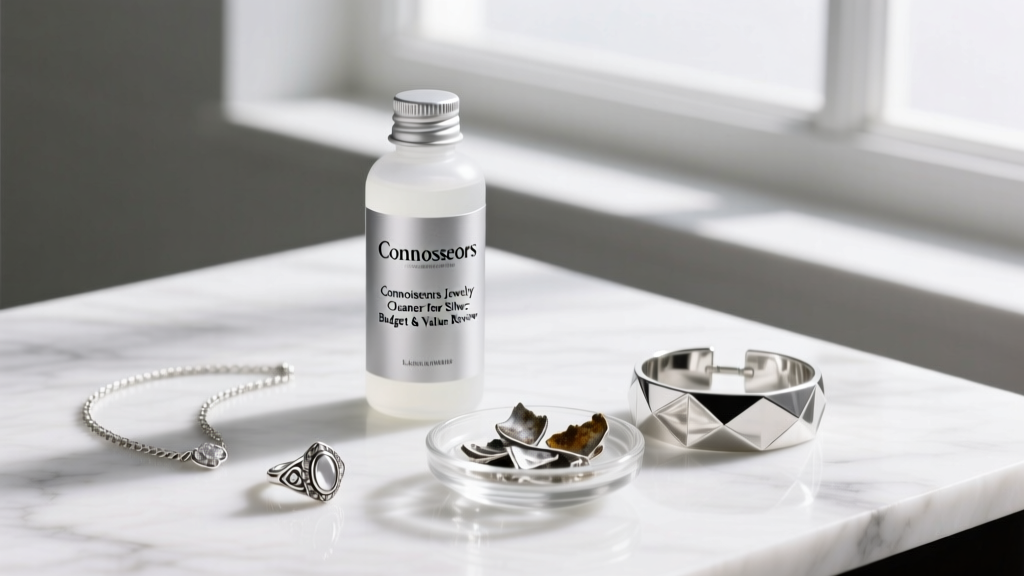
Connoisseurs liquid silver dip relies on a non-abrasive chemical complexing formula. Rather than physically scrubbing the tarnish away, the solution breaks the sulfur-silver bond at a molecular level, lifting the tarnish into the liquid. This is a massive advantage for pieces with deep crevices, filigree work, or oxidized 'antiqued' finishes where a polishing cloth simply cannot reach.
However, the upfront cost of commercial cleaners is undeniably higher than pantry staples. An 8-ounce bottle of Connoisseurs liquid dip typically retails between $8.00 and $11.00. By contrast, a DIY aluminum foil and baking soda bath costs mere pennies per use. But does the DIY method offer the same value when factoring in potential damage?
Cost-Per-Ounce vs. DIY Alternatives: The Data
To properly assess the budget impact, we need to compare the leading silver cleaning methods across several critical vectors: cost, abrasiveness, and material safety. The table below outlines the real-world value proposition of each method.
| Cleaning Method | Avg. Cost (8 oz) | Abrasiveness | Gemstone Safety | Best Use Case |
|---|---|---|---|---|
| Connoisseurs Liquid Dip | $9.50 | None (Chemical) | Safe for hard stones (Diamond, Sapphire) | Intricate filigree, chains, heavy tarnish |
| DIY Aluminum + Baking Soda | $0.15 | None (Electrochemical) | High Risk (Alkaline/Heat damages porous stones) | Solid chains, plain bands, cutlery |
| Wright's Silver Cream | $6.00 | Mild to Moderate | Poor (Paste traps in settings) | Large, flat silver surfaces, cuffs |
| Hagerty Silversmiths Spray | $12.00 | None (Chemical) | Safe for hard stones | Light maintenance, quick touch-ups |
While the DIY aluminum bath wins on pure upfront cost, it requires boiling water and creates a highly alkaline environment. If your sterling silver piece features turquoise, opal, lapis lazuli, or pearls, the heat and alkalinity will permanently fracture, cloud, or dissolve the gemstones. In this context, the $9.50 investment in a specialized commercial dip acts as an insurance policy against ruining a $300 piece of jewelry.
Real-World Performance: Heavy Tarnish vs. Light Maintenance
When evaluating the value of connoisseurs jewelry cleaner for silver, you must consider your specific wearing habits. If you wear your silver daily, the natural oils from your skin and the friction against your clothing will prevent heavy sulfide buildup. For these pieces, a $15 treated polishing cloth is a more budget-friendly and appropriate maintenance tool.
However, if you own silver that sits in a jewelry box for months, or if you live in a high-humidity coastal environment where sulfur and salt air accelerate tarnishing, liquid dips become essential. The value here is measured in time and effort. Soaking a heavily blackened sterling silver chain in the Connoisseurs solution for exactly 10 to 15 seconds will restore it to a brilliant white shine instantly. Attempting to achieve the same result with a polishing cloth on a delicate cable chain could take 45 minutes and risks stretching or snapping the links.
The Gemstone Caveat
It is vital to note that no liquid silver dip is universally safe for all jewelry. The Gemological Institute of America (GIA) consistently warns against submerging porous or fracture-filled gemstones in any chemical bath. If your silver jewelry features amber, coral, malachite, or emeralds, the chemical agents can seep into microscopic fissures and cause irreversible discoloration. For these pieces, the value of a liquid cleaner drops to zero, and you should rely on a damp, lint-free microfiber cloth instead.
Pro Tips for Maximizing Your Bottle's Lifespan
To ensure your budget stretches as far as possible, you must use the product correctly. Many users ruin their jewelry and waste the solution by treating the dip like a marinade. Leaving silver in the solution for more than 30 seconds can cause a secondary chemical reaction, leaving a stubborn, cloudy white oxidation on the metal that requires professional buffing to remove.
- Use the Included Basket: Never drop silver directly into the bottle. Use the provided strainer basket to ensure you can remove the piece instantly after 10 seconds.
- Agitate Gently: Move the basket up and down slightly to force the fresh solution into intricate links and settings.
- The Distilled Water Rinse: This is the most overlooked step. Tap water contains chlorine and dissolved minerals that will immediately begin reacting with the freshly exposed, highly reactive silver. Always rinse your jewelry in distilled water after using a chemical dip.
- Dry Completely: Use a hair dryer on a cool setting or a lint-free cloth to ensure no moisture remains in the clasps or settings before storing.
The Verdict: Is the Premium Price Justified?
From a strict budget perspective, connoisseurs jewelry cleaner for silver is not the cheapest option on the market. If you are only cleaning plain silver chains, wedding bands, or silverware, the DIY electrochemical aluminum bath offers superior financial value.
However, for jewelry enthusiasts, vintage collectors, and anyone owning pieces with intricate metalwork or hard gemstone settings, the value proposition shifts dramatically. The non-abrasive nature of the formula preserves the microscopic details of the silver, prevents the gradual thinning of the metal, and safely navigates around diamonds and sapphires. When you factor in the time saved and the prevention of accidental damage to expensive gemstones, the $10 price tag represents an excellent, highly cost-effective investment in the long-term preservation of your jewelry collection.