The Jewelry Stamp 925: Trend Analysis and Fake Detection
Discover what the jewelry stamp 925 really means in today's market. We analyze silver trends, counterfeit hallmarks, and authentication.

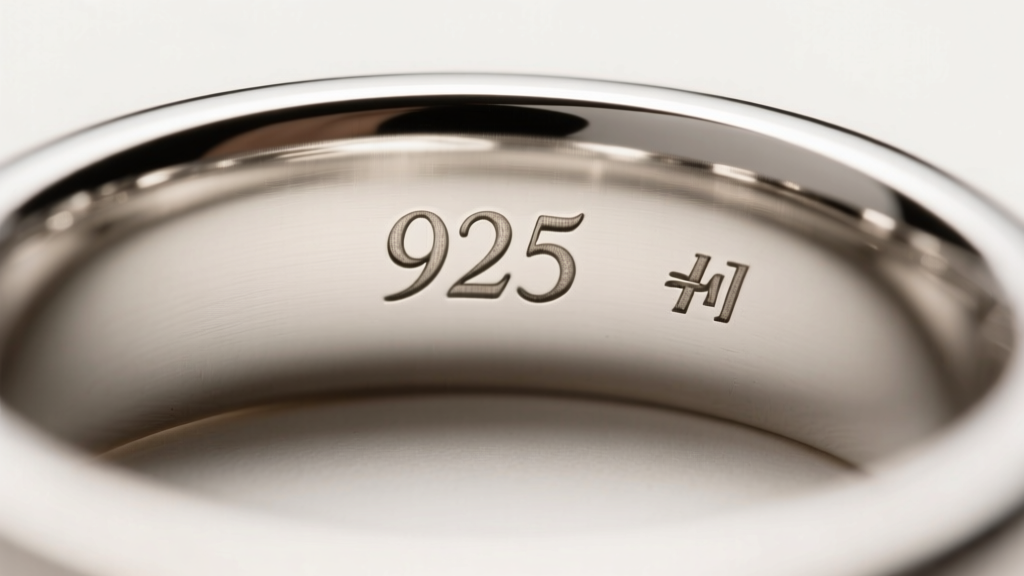
In the contemporary jewelry market, few symbols carry as much weight—and attract as much deception—as the jewelry stamp 925. As we navigate the 2026 landscape of precious metals, the hallmark is no longer just a regulatory requirement; it has become a focal point of style analysis, consumer trust, and a booming secondary market for vintage silver. Whether you are a collector hunting for mid-century Taxco pieces or a modern minimalist investing in solid silver staples, understanding the metallurgy, market trends, and counterfeit realities behind this tiny stamp is essential.
The Resurgence of Heritage Silver: Why the 925 Stamp is Trending
Over the past few years, the fashion industry has pivoted sharply toward 'quiet luxury' and material transparency. Consumers are increasingly rejecting heavily plated base metals in favor of solid, enduring materials. In 2026, the visible hallmark has transitioned from a hidden functional mark to a celebrated design element. Designers are now intentionally placing the jewelry stamp 925 on the exterior of heavy chain links, signet ring shoulders, and oversized toggle clasps, turning the assay mark into a badge of authenticity and industrial-chic aesthetics.

This trend is heavily driven by the archival and vintage market. Buyers are actively seeking out pieces with crisp, legible stamps alongside maker's marks (such as '925 ITALY' or specific Navajo silversmith hallmarks) because they guarantee the piece's provenance and material integrity. According to recent market analyses, vintage sterling silver pieces with verifiable, stamped maker's marks command a 40% to 60% premium over identical but unmarked pieces in the secondary market.
Anatomy of a Hallmark: What '925' Actually Guarantees
To understand the value of the stamp, we must look at the metallurgy. Pure silver (99.9%) is too malleable for daily wear; it will bend, scratch, and lose its shape rapidly. To create a durable alloy, copper is traditionally added. The jewelry stamp 925 guarantees that the item is composed of exactly 92.5% pure silver and 7.5% alloy metals (usually copper).
However, modern metallurgy has introduced variations that collectors and buyers must recognize. For instance, Argentium Silver replaces some of the copper with germanium, resulting in an alloy that is highly tarnish-resistant and hypoallergenic. While Argentium is often stamped 935 or 960, some legacy pieces may still carry standard marks depending on the region's assay laws.
| Silver Grade | Purity | Common Stamp | Primary Use & Characteristics |
|---|---|---|---|
| Fine Silver | 99.9% | 999 | Investment bullion, bezel wire (highly malleable) |
| Argentium | 93.5% - 96% | 935 / 960 | Tarnish-resistant luxury jewelry, bright white finish |
| Sterling | 92.5% | 925 | Standard durable jewelry, global benchmark |
| Coin Silver | 90.0% | 900 / Coin | Vintage American flatware, antique jewelry |
| European Silver | 80.0% | 800 | Continental vintage pieces, slightly harder alloy |
The Counterfeit Crisis: Spotting Fake Markings
As the price of silver has surged past historical averages, the market has been flooded with counterfeit goods. The most insidious deception is not the absence of a stamp, but the presence of a fake one. Unscrupulous manufacturers routinely stamp base metals—such as brass, copper-nickel alloys, or 'Tibetan Silver' (which often contains zero actual silver and may include toxic levels of lead or nickel)—with a fraudulent jewelry stamp 925.
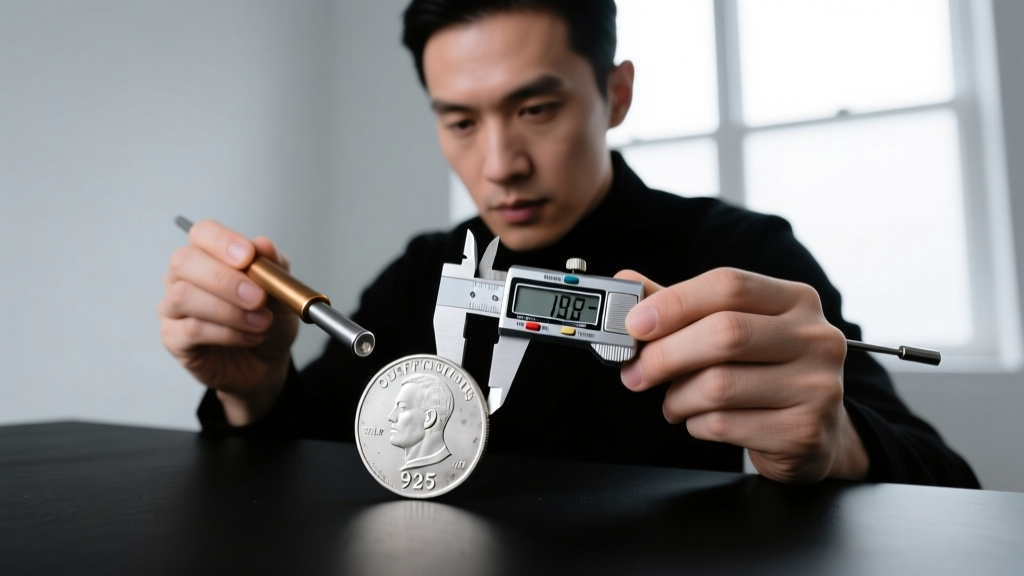
'A stamp is merely a claim of purity, not a guarantee. In an era of advanced laser etching, counterfeiters can replicate the exact font and depth of a legitimate 925 hallmark in seconds. Physical and chemical verification remains the only true standard.' — Gemological Institute of America (GIA) guidelines on precious metal verification.
Steel Punch vs. Laser Etching: Authentic vintage and high-end modern stamps are typically struck with a hardened steel punch, displacing the metal and leaving a deep, sharp, and slightly raised border around the numbers. Counterfeits often use laser etching, which burns the numbers into the surface, leaving a shallow, perfectly uniform, and sometimes slightly discolored (burnt) impression.
Unmarked vs. Stamped: The Artisan Rebellion
Interestingly, a growing counter-trend in 2026 involves high-end bespoke silversmiths intentionally omitting the 925 stamp. Why? Aesthetic purity. Many master artisans argue that a deep steel punch mark disrupts the fluid lines of a hand-forged, sculptural piece. Furthermore, the Federal Trade Commission Jewelry Guides dictate that if a piece is stamped with a quality mark (like 925), it must also bear a registered trademark or maker's mark to hold the manufacturer accountable. Artisans who have not registered a formal trademark with the assay office legally cannot stamp their work with a purity mark in many jurisdictions. Therefore, an unmarked piece from a reputable, documented artisan is not inherently less valuable; it simply relies on a certificate of authenticity rather than a physical hallmark.
Actionable Authentication Framework for Buyers
Never rely on the jewelry stamp 925 alone when purchasing from secondary markets, estate sales, or unverified online vendors. Use this multi-step authentication framework:
- The Neodymium Magnet Test: Silver is paramagnetic, meaning it exhibits no noticeable attraction to magnets. Slide a strong rare-earth neodymium magnet down a silver chain or coin. If it sticks, or if you feel a dragging magnetic resistance, the core is ferromagnetic (steel or iron). Note: This does not rule out silver-plated copper, which is also non-magnetic.
- The Ice Test (Thermal Conductivity): Silver possesses the highest thermal conductivity of any common metal. Place an ice cube on the piece at room temperature. On genuine sterling, the ice will begin melting almost instantaneously, as if placed on a hot surface, and the silver will become painfully cold to the touch within seconds.
- Specific Gravity (Density) Test: For solid pieces without gemstones, use a digital scale and water displacement. Sterling silver has a specific gravity of approximately 10.36 g/cm³. If your calculations yield a density closer to 8.9 (copper) or 7.8 (steel), the piece is a fake, regardless of the stamp.
- Nitric Acid Testing: The definitive test. File a tiny, inconspicuous notch into the metal and apply a drop of testing acid. Genuine 925 sterling turns a creamy, cloudy white. Pure 999 silver turns brick red. Base metals or silver-plated brass will instantly turn green.
Market Value Impact: How Hallmarks Dictate Pricing
The presence, clarity, and origin of a 925 stamp directly influence resale and retail pricing tiers. Mass-market imported jewelry stamped '925' with no maker's mark generally trades at a slight premium over raw melt value—often just 15% to 25% above the spot price of the silver content. Conversely, a vintage piece bearing a recognized stamped hallmark, such as '925 TAXCO' or a specific Native American silversmith's pictograph stamp, transitions the item from a commodity to a collectible. These pieces are valued on artistic merit, historical significance, and rarity, frequently selling for 5 to 10 times their intrinsic melt value. In the modern silver market, the stamp is your first clue to the item's true narrative and financial worth.


