Silver Cleaners Jewelry Pros Use: A Chemical Deep Dive
Discover the chemical mechanics behind top silver cleaners jewelry experts trust. Learn how to safely remove silver sulfide without damaging 925 alloys.

The True Chemistry of Silver Tarnish
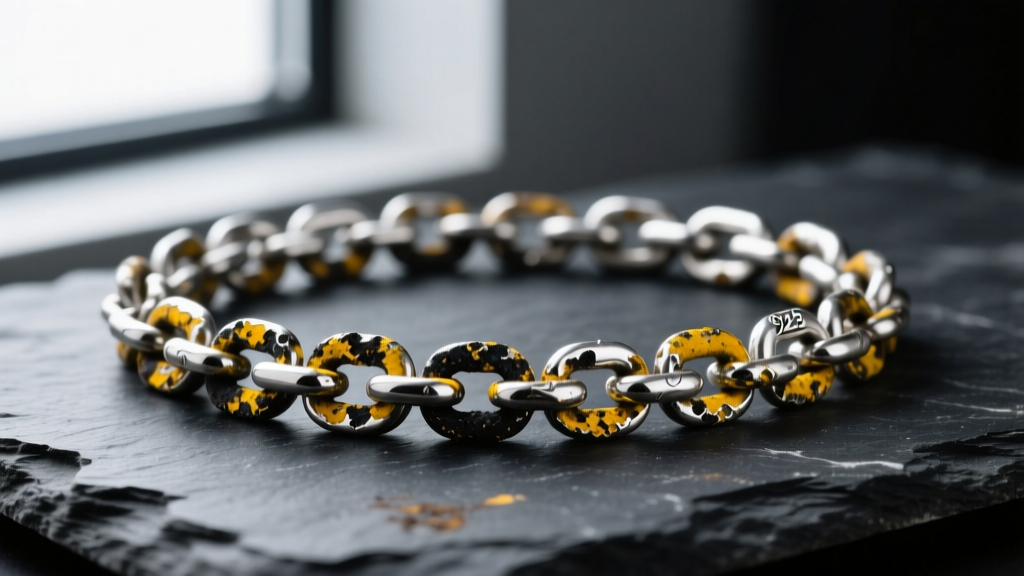
Many consumers mistakenly refer to silver tarnish as 'oxidation.' However, pure silver and 925 sterling silver do not oxidize at room temperature. The dark, unsightly layer that forms on your jewelry is actually silver sulfide (Ag2S). This occurs when silver reacts with hydrogen sulfide (H2S) or sulfur dioxide (SO2) present in the atmosphere, a process accelerated by high humidity, perspiration, and exposure to sulfur-rich foods, cosmetics, or vulcanized rubber.
Understanding this chemical reality is the first step in selecting the right silver cleaners jewelry professionals rely on. Different cleaning agents interact with the Ag2S layer in fundamentally different ways—some physically strip it away, while others chemically convert it back into elemental silver. According to the Gemological Institute of America (GIA), improper cleaning methods can remove microscopic layers of the precious metal itself, eventually eroding hallmarks and intricate detailing over time.
Categorizing Commercial Silver Cleaners
When evaluating commercial silver cleaners jewelry brands market to consumers, it is vital to look past the branding and examine the active chemical agents. We can categorize these solutions into three distinct mechanical and chemical processes.
1. Abrasive Polishes (Physical Removal)
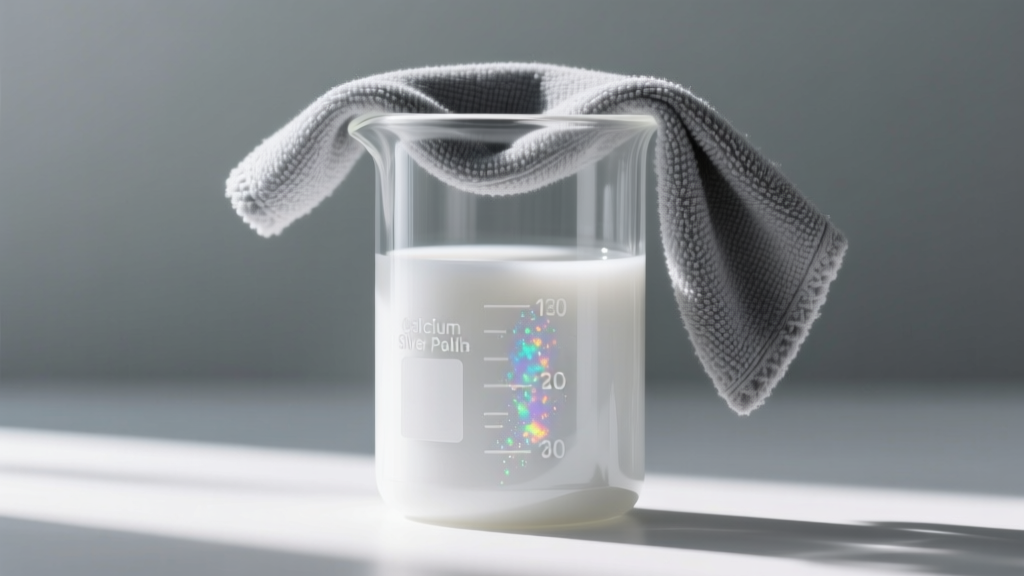
Abrasive pastes and liquids rely on suspended particulate matter—most commonly calcium carbonate (chalk), precipitated silica, or aluminum oxide. Silver is a remarkably soft metal, ranking between 2.5 and 3.0 on the Mohs hardness scale. When you apply a silica-based polish (Mohs 7), you are essentially using a harder material to scrape the softer silver sulfide layer off the surface.
Technical Drawback: While highly effective at removing severe, black-stage tarnish, abrasive polishes inevitably remove a microscopic layer of the underlying silver alloy. Repeated use over several years will result in a measurable loss of metal mass, rounding off sharp edges on cast pieces and eventually obliterating maker's marks. Furthermore, abrasives leave behind micro-scratches that can actually increase the surface area, making the piece more susceptible to rapid re-tarnishing.
2. Chemical Dips (Thiourea & Acid Bases)
Instant 'dip' cleaners are highly controversial in the professional jewelry community. These solutions typically utilize thiourea (CH4N2S) combined with a mild acid base, such as hydrochloric or sulfuric acid. The acid etches the tarnish, while the thiourea acts as a complexing agent, binding to the silver ions and dissolving the silver sulfide layer almost instantly.
Technical Drawback: Chemical dips are incredibly aggressive. They strip the tarnish but leave the bare silver in a highly reactive, 'naked' state. Without immediate and thorough neutralization and rinsing, the residual acids will cause 'flash tarnishing,' where the piece turns yellow or black again within hours. Furthermore, thiourea is a known carcinogen, requiring careful handling and disposal.
3. Electrolytic Reduction (Galvanic Conversion)
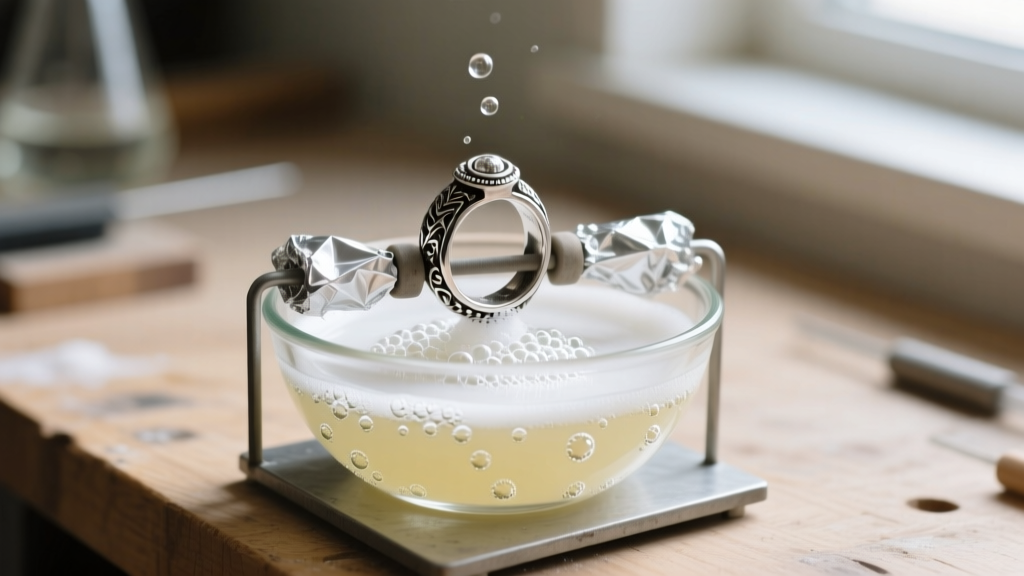
This method does not remove any silver from the piece; instead, it converts the silver sulfide back into elemental silver. By placing the tarnished jewelry in a hot aqueous solution of sodium bicarbonate (baking soda) or sodium carbonate (washing soda) while it is in direct physical contact with aluminum foil, you create a galvanic cell.
Because aluminum is higher on the galvanic series (standard electrode potential of -1.66V) than silver (+0.80V), the aluminum acts as a sacrificial anode. The sulfur atoms are chemically pulled away from the silver and bond with the aluminum, forming aluminum sulfide (Al2S3). The silver is left intact, and the electrolyte solution facilitates the electron transfer. This is the only method that preserves 100% of the original metal mass.
Technical Comparison: Efficacy vs. Metal Removal
To provide a clear framework for selecting silver cleaners jewelry experts use in the workshop, refer to the technical comparison below. This data highlights the trade-offs between speed, efficacy, and long-term metal preservation.
| Cleaner Type | Active Agent | Silver Loss (µm) | Best Application |
|---|---|---|---|
| Abrasive Paste | Calcium Carbonate / Silica | 2.0 - 5.0 | Heavy, black-stage tarnish on solid, un-set bands and flatware. |
| Chemical Dip | Thiourea & Acid Base | 0.1 - 0.5 | Intricate filigree, chains, and hard-to-reach crevices (with strict rinsing). |
| Electrolytic Bath | Aluminum & NaHCO3 | 0.0 | Moderate yellow/brown tarnish on flat surfaces and simple rings. |
| Mild Surfactant | Phosphate-free Dish Soap | 0.0 | Light surface oils and daily maintenance; does not remove Ag2S. |
The Danger of Anti-Tarnish Strips and Over-Cleaning
A common mistake in jewelry maintenance is the belief that silver should always be mirror-bright. In reality, a slight patina in the recesses of a piece provides visual contrast that highlights the design's topography. Over-cleaning with aggressive silver cleaners jewelry stores sell can result in a flat, lifeless appearance.
Expert Insight: Anti-tarnish strips (often containing activated carbon or copper salts) are excellent for storage, but they do not clean jewelry. They work by scavenging atmospheric sulfur before it can reach the silver. However, if placed in an unsealed environment, they become saturated within weeks and lose efficacy. Always store 925 sterling in airtight polyethylene zip-lock bags with fresh 3M anti-tarnish strips to reduce the need for chemical cleaning altogether.
The London Assay Office notes that maintaining the integrity of the hallmark is a legal and historical necessity. Aggressive polishing over decades can wear down the microscopic indentations of a 925 stamp, making authenticity verification difficult for future appraisers.
Professional Protocols for Gemstone-Set 925 Sterling
The presence of gemstones drastically alters the cleaning protocol. The chemical agents used in silver cleaners jewelry formulations can be catastrophic to certain mineral structures. Always cross-reference the Mohs hardness and porosity of the stone before applying any chemical or electrolytic method.
- Turquoise and Lapis Lazuli (Mohs 5-6, Highly Porous): Never use chemical dips or electrolytic baths. These stones are essentially microscopic sponges. They will absorb the thiourea or sodium bicarbonate, leading to internal crystallization, discoloration, and eventual structural fracturing. Use only a dry, untreated silver polishing cloth around the bezels.
- Opals (Mohs 5.5-6.5, Water Content 6-10%): Opals are highly sensitive to thermal shock and dehydration. The boiling water required for electrolytic reduction will cause the opal to 'craze' (develop a network of internal cracks). Furthermore, ultrasonic cleaners will shatter them. Clean the silver shank with a localized application of mild abrasive paste, carefully avoiding the stone.
- Emeralds (Mohs 7.5-8, Fracture-Filled): Over 90% of commercial emeralds are fracture-filled with cedar oil or synthetic resins to improve clarity. The solvents and acids in chemical dips will dissolve these fillers, leaving the stone looking cloudy, white, and heavily included. Emerald-set silver must only be cleaned with a soft brush, lukewarm water, and a pH-neutral surfactant.
Ultrasonic Cleaners: When to Use and When to Avoid
Ultrasonic jewelry cleaners use high-frequency sound waves (typically 40-45 kHz) to create microscopic cavitation bubbles in a liquid solution. When these bubbles collapse against the surface of the silver, they generate localized shockwaves that blast away dirt and tarnish.
While ultrasonics are highly effective for removing polishing compound residue from the prongs of a diamond-set silver ring, they are not a substitute for chemical silver cleaners. Ultrasonics do not dissolve silver sulfide; they merely dislodge loosely bound particles. Furthermore, the intense vibrations can loosen friction-set stones, shatter brittle gems like tanzanite, and cause 'frosting' (micro-pitting) on the surface of the silver if left in the bath for too long. Use ultrasonics strictly as a post-polish rinsing step, not as a primary tarnish-removal tool.
Final Synthesis
Selecting the correct silver cleaners jewelry requires a nuanced understanding of metallurgy and chemistry. For heavy, neglected tarnish on solid pieces, a calcium carbonate abrasive is necessary despite the minor metal loss. For intricate chains where physical rubbing is impossible, a brief thiourea dip followed by immediate alkaline neutralization is the professional standard. For everyday maintenance and moderate tarnish, electrolytic reduction remains the gold standard for metal preservation. By matching the chemical mechanism of the cleaner to the specific structural and gemological constraints of the jewelry, you ensure that 925 sterling pieces remain pristine for generations without sacrificing their physical integrity.


