How to Know If Jewelry Is Real Silver: 7 Expert Auth Tests
Learn how to know if jewelry is real silver with 7 expert tests. Discover troubleshooting tips for hallmarks, magnetism, and acid testing.

The Counterfeit Silver Crisis: Why Visual Inspection Fails
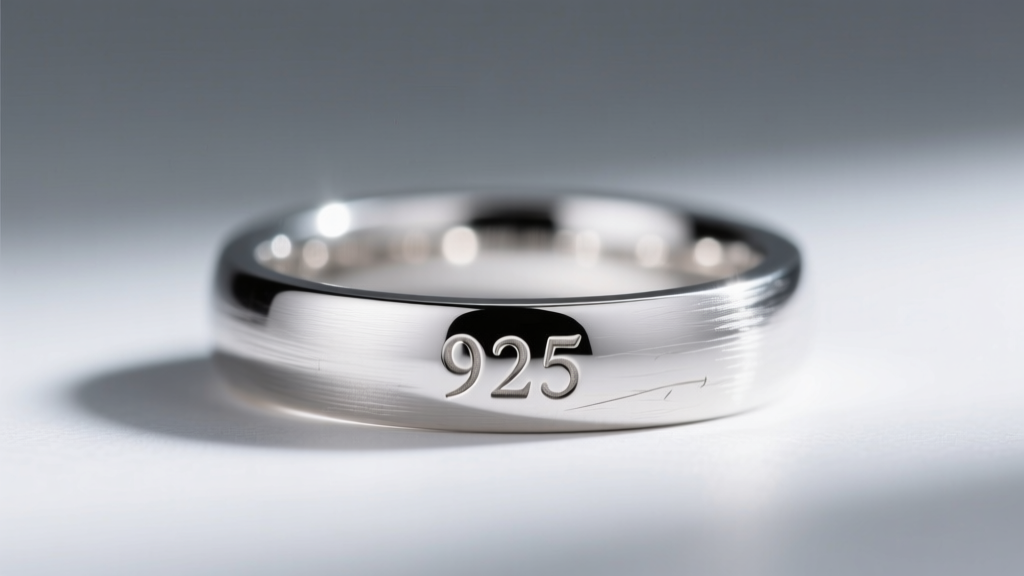
The secondary jewelry market and online marketplaces are currently saturated with deceptive silver imitations. If you are trying to figure out how to know if jewelry is real silver, relying solely on visual inspection or weight is a critical error. Modern manufacturing techniques allow base metals like copper, brass, and zinc alloys to be heavily electroplated or coated to perfectly mimic the lustrous, bright white finish of genuine sterling. Furthermore, misleading trade names like "Tibetan Silver," "Nickel Silver," and "Alpaca" contain exactly 0% elemental silver, yet they are frequently marketed to unsuspecting buyers. Authentic 925 sterling silver chains typically start at $30 to $50 for basic cable links, while these base-metal lookalikes flood the market at $2 to $5. To protect your investment, you must move beyond aesthetics and apply a systematic, multi-step troubleshooting protocol grounded in metallurgy and physics.
Step 1: Decoding Hallmarks and Stamps (The First Line of Defense)
The first step in authentication is locating and interpreting the hallmark. According to the Federal Trade Commission (FTC) Jewelry Guides, it is illegal to stamp an item with a silver quality mark unless it meets the exact minimum fineness requirements. However, counterfeiters frequently forge stamps, so a hallmark is a starting point, not a guarantee.
| Stamp / Mark | Meaning | Silver Content | Troubleshooting Note |
|---|---|---|---|
| 999 / Fine Silver | Pure elemental silver | 99.9% | Too soft for most rings; usually found in investment bars or bezel settings. |
| 925 / Sterling | Sterling Silver | 92.5% | The global standard for jewelry. The remaining 7.5% is usually copper for tensile strength. |
| 958 / Britannia | Britannia Silver | 95.8% | Common in antique British pieces; softer than sterling but highly tarnish-resistant. |
| 800 / 830 | Continental Silver | 80.0% / 83.0% | Frequent in vintage European flatware and jewelry; slightly more prone to oxidation. |
| EPNS / A1 | Electroplated Nickel Silver | 0% (Base metal core) | Red Flag: Nickel silver is a copper/nickel/zinc alloy. This is plated jewelry, not solid. |
Step 2: Non-Destructive Physics Tests (Magnetism & Thermal)
If the hallmark is missing, rubbed away, or suspicious, you must test the physical properties of the metal.
The Magnetism Misconception
Silver is diamagnetic, meaning it is weakly repelled by magnetic fields. In practical troubleshooting terms, real silver will never stick to a magnet. If a clasp, chain link, or earring post snaps to a neodymium magnet, you are dealing with a ferrous base metal like steel or iron. However, this is a negative test. Copper, brass, and aluminum are also non-magnetic. Passing the magnet test rules out steel, but it does not confirm silver.
The Ice Cube Thermal Conductivity Test
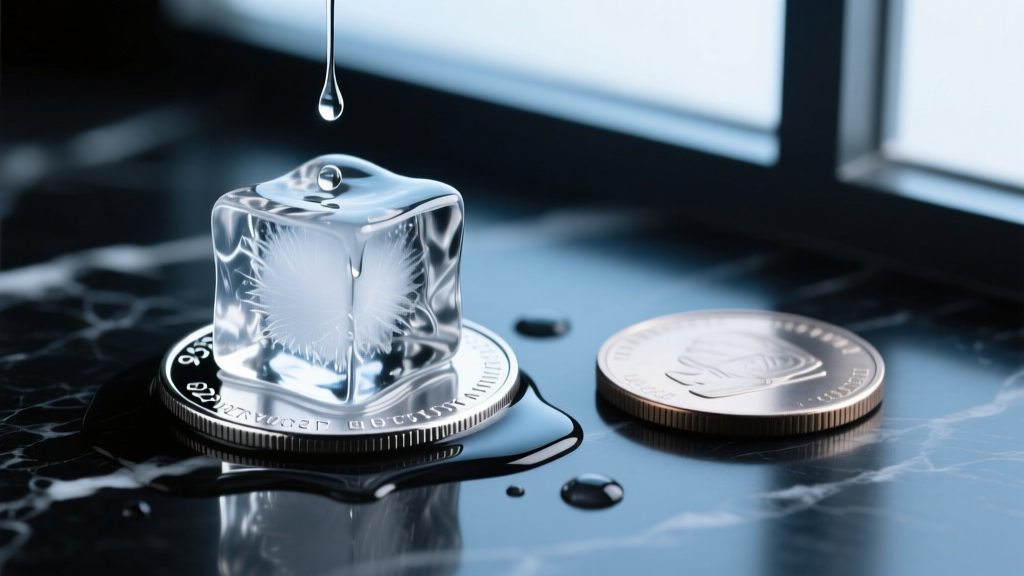
Silver possesses the highest thermal conductivity of any metal on the periodic table, measuring an exceptional 429 W/m·K. This means it transfers heat away from a source faster than copper (401 W/m·K) or gold (318 W/m·K).
How to execute: Place an ice cube directly onto the suspected silver item at room temperature. On genuine sterling or fine silver, the ice will begin melting almost instantaneously, far faster than it would on a countertop or a piece of stainless steel. The metal itself will become painfully cold to the touch within seconds as it rapidly pulls ambient heat into the ice.
Step 3: Sensory Troubleshooting (Sound and Smell)
Your senses of hearing and smell are highly underutilized tools in jewelry authentication.
- The Smell Test: Genuine silver is entirely odorless. Rub the jewelry vigorously between your palms to generate friction and heat, then smell it. If you detect a distinct metallic, sulfurous, or "penny-like" odor, the item is heavily alloyed with copper or brass. This is a massive red flag for silver-plated pieces where the base metal is reacting with your skin's oils.
- The Ping Test (Acoustic Resonance): This works best for solid silver coins, thick bangles, or heavy chains. Strike the item gently with a wooden dowel or another piece of known silver. Real silver produces a high-pitched, clear, and long-resonating "ping" that sustains for 1 to 2 seconds. Base metals and heavily plated brass emit a dull, flat "thud" with almost zero sustain due to their different crystalline structures and density.
Step 4: Chemical Acid Testing (When Doubt Remains)
When non-destructive methods yield inconclusive results, chemical testing is the definitive gold standard used by pawnshops and gemological laboratories. You will need a commercial silver testing kit containing Schwerter's solution (a mixture of potassium dichromate and nitric acid) and a black testing stone.
Troubleshooting the Acid Reaction:
- Rub the jewelry firmly against the black testing stone to leave a visible metallic streak. (If testing a finished piece directly, apply a drop of acid to an inconspicuous area, but be aware this will etch the metal).
- Apply one drop of Schwerter's solution to the streak.
- Observe the immediate color change:
- Blood Red: .999 Fine Silver
- Cherry Red / Dark Red: .925 Sterling Silver
- Brown / Dark Brown: .800 Continental Silver
- Green / Blue: Base metal (Copper, Brass, or Nickel Silver)
Expert Warning: If you are testing a suspected silver-plated item, the acid will eat through the microscopic top layer of silver and react with the base metal below, resulting in a green or brown flash. Always file a tiny, discreet notch into the metal before applying acid if you heavily suspect a thick silver-plated over brass core.
Step 5: Spotting Silver-Plated "Bleed" and Wear Patterns
Electroplated silver (often marked EPNS or "Silver on Copper") eventually fails. The most common failure mode occurs at high-friction zones: the inner shank of a ring, the contact points of a lobster clasp, or the edges of a pendant bail.
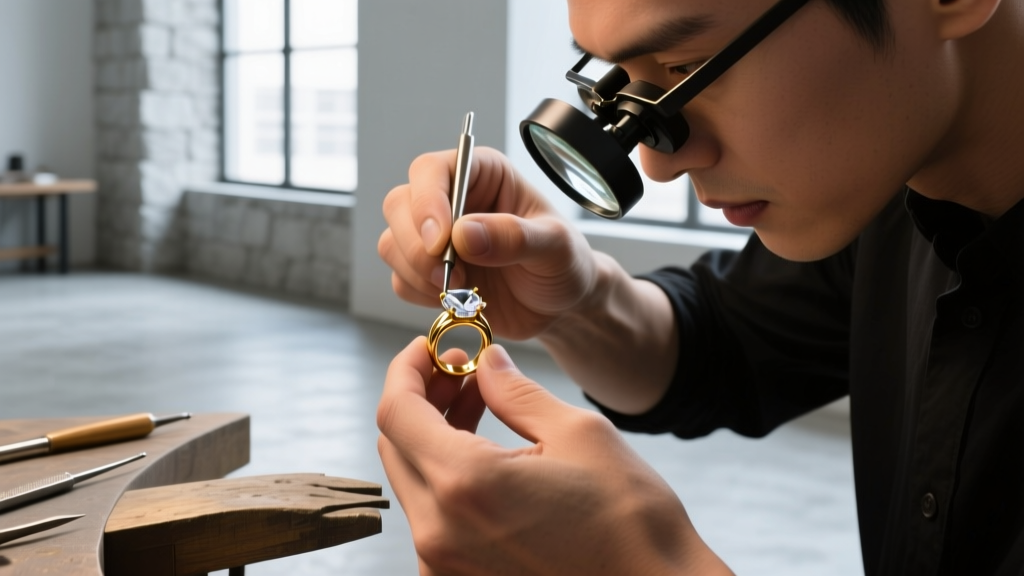
Inspect these areas under a 10x jeweler's loupe. If you see a yellowish, reddish, or grayish "bleed" showing through the white silver layer, the piece is plated. Furthermore, genuine silver tarnish (silver sulfide) is typically black or dark yellow and can be polished away to reveal bright white metal. If the "tarnish" is flaking off in microscopic chips or revealing a pitted, porous green underlayer, you are looking at copper corrosion beneath a failed plating job.
Summary Checklist: What to Do If Your Piece Fails a Test
If your jewelry fails the magnet test, smells like copper, or turns acid green, stop wearing it immediately. Base metals like nickel and brass are common contact allergens that can cause severe contact dermatitis. For definitive, legally binding authentication—especially for antique flatware or high-value estate pieces—take the item to a certified Assay Office or a Graduate Gemologist who can perform X-ray Fluorescence (XRF) spectrometry. XRF provides a non-destructive, exact elemental breakdown of the alloy, completely eliminating the guesswork in your silver troubleshooting process.


