Decoding Silver Markings on Jewelry: A Buyer's Authentication Guide
Learn to decode silver markings on jewelry. This buyer's guide covers purity stamps, assay marks, and how to spot fake hallmarks.

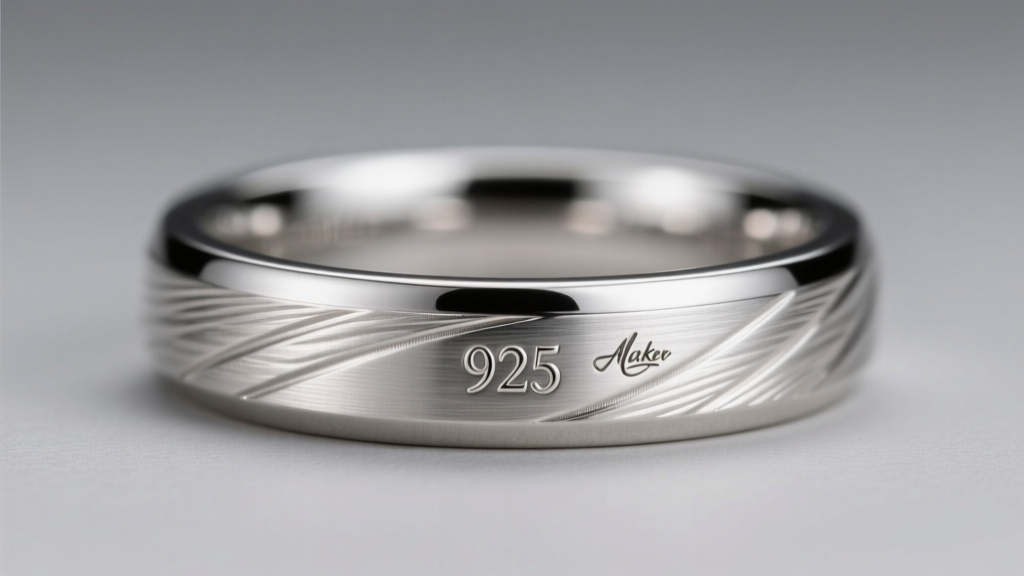
When investing in precious metals, understanding the tiny stamps hidden on the inside of a band or the clasp of a necklace is the difference between acquiring a generational heirloom and overpaying for base metal. For collectors and everyday buyers alike, deciphering silver markings on jewelry is a non-negotiable skill. The secondary market and even some retail spaces are currently flooded with sophisticated reproductions, making visual inspection and hallmark literacy your first line of defense.
This comprehensive buying guide breaks down the anatomy of silver hallmarks, decodes international purity standards, and provides actionable testing frameworks to ensure your next purchase is genuinely authentic.
The Anatomy of Authentic Silver Hallmarks
A true hallmark is not just a single number; it is a legally regulated guarantee of metal content. In countries with strict assay laws, such as the United Kingdom, a complete hallmark consists of three to four distinct marks. According to The Goldsmiths' Company Assay Office, a full traditional hallmark includes:
- The Sponsor's (Maker's) Mark: The registered mark of the company or artisan that submitted the item for assaying. This is usually two or three initials inside a specific shield shape.
- The Standard (Purity) Mark: The numerical or symbolic stamp indicating the millesimal fineness of the silver (e.g., 925 or the Lion Passant).
- The Assay Office Mark: Indicates which regional office tested and stamped the piece (e.g., an anchor for Birmingham, a leopard's head for London).
- The Date Letter (Optional but common in antiques): A specific letter in a specific font and shield shape that denotes the exact year the piece was assayed.
In the United States, the Federal Trade Commission (FTC) Jewelry Guides mandate that if a quality mark (like 925) is applied, it must be accompanied by a registered maker's mark or trademark. If you see a '925' stamp with absolutely no maker's mark on a heavy piece, proceed with caution.
Purity Stamps: What the Numbers Actually Mean
Silver is naturally too soft for most functional jewelry applications, which is why it is alloyed with other metals—usually copper—to add structural integrity. The numbers stamped on your jewelry represent the parts per thousand of pure silver in the alloy.
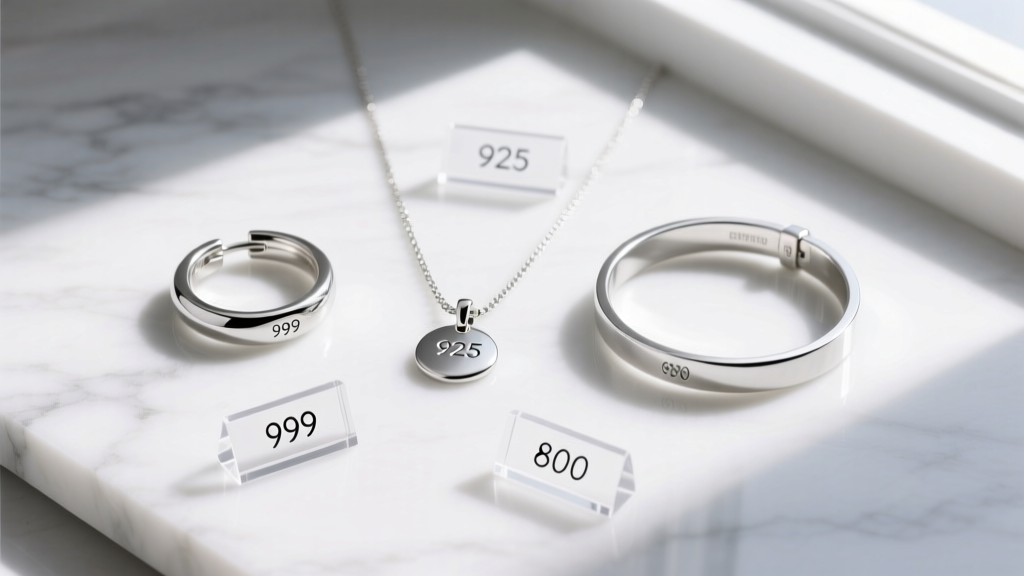
| Stamp | Purity | Designation | Best Application | Tarnish Rate |
|---|---|---|---|---|
| 999 | 99.9% | Fine Silver | Investment bullion, bezel wire, delicate filigree | Very Low |
| 958 | 95.8% | Britannia Silver | High-end hollowware, antique British pieces | Low |
| 925 | 92.5% | Sterling Silver | Everyday rings, chains, earrings, structural jewelry | Moderate |
| 900 | 90.0% | Coin Silver | Vintage American flatware, historical coin jewelry | Moderate-High |
| 800 | 80.0% | Continental Silver | European antique jewelry, heavy watch cases | High |
Expert Insight: Fine silver (999) is highly resistant to tarnish because it lacks the copper that reacts with sulfur in the air. However, it is entirely unsuitable for ring shanks or prong settings, as it will bend and lose gemstones under daily wear. Always look for 925 sterling silver for structural jewelry components.
International Assay Marks & Country of Origin
Not all countries use numerical stamps. If you are buying vintage or imported estate jewelry, you will encounter symbolic silver markings on jewelry that denote origin and purity. Recognizing these can help you date and value a piece accurately.
The United Kingdom: The Lion Passant
Since 1544, the sterling standard in England has been denoted by a Lion Passant (a lion walking with its right forepaw raised). If you are buying a British antique, the presence of this lion, alongside a town mark and date letter, is a guarantee of 925 purity. Scotland uses the Thistle, and Ireland uses the Hibernia figure.
France: The Minerva Head
French silver is renowned for its high purity standards. The Minerva head profile inside a hexagonal or barrel-shaped punch indicates a minimum purity of 800/1000 for the second standard, and 950/1000 for the first standard. French hallmarks are notoriously tiny and often require a 30x jeweler's loupe to read properly.
Mexico: The Eagle and Taxco Marks
Mexican silver, particularly from the Taxco region, exploded in popularity during the mid-20th century. Vintage pieces often feature an Eagle mark with a number indicating the manufacturer. Later pieces (post-1979) use a letter-number system (e.g., 'TC-102'), where the first letter indicates the city (T for Taxco) and the second letter indicates the silversmith's surname initial.
Spotting Fakes: When Silver Markings on Jewelry Lie
As metal prices fluctuate, counterfeiters have become increasingly adept at forging hallmarks. A stamped '925' is no longer a guarantee of authenticity. Here is how modern fakes operate and how to dismantle them.
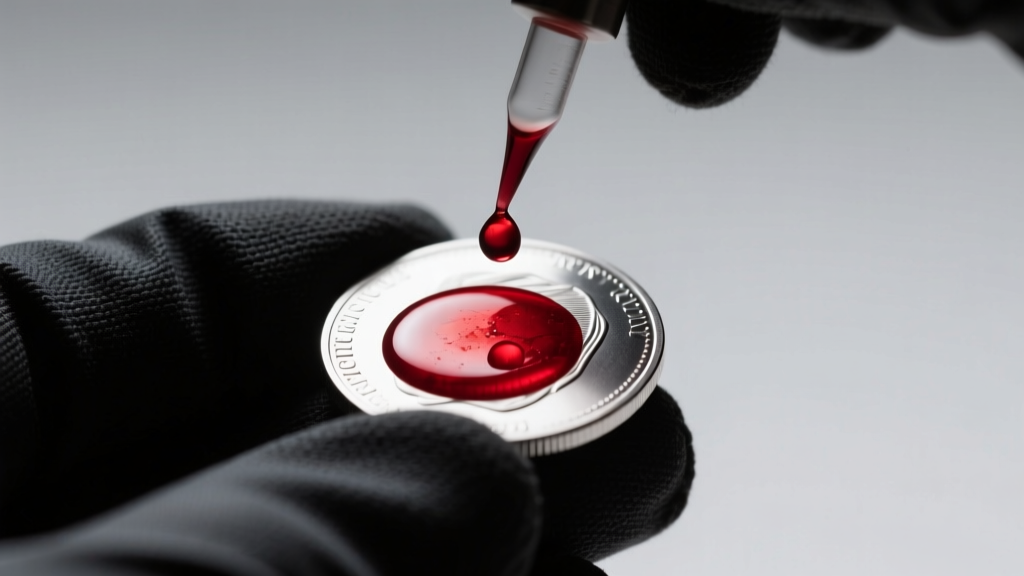
The 'Tibetan' and 'Nickel' Silver Trap
Under FTC guidelines, terms that do not contain actual silver are heavily scrutinized, yet they persist in online marketplaces. Tibetan Silver, Nickel Silver, and German Silver contain exactly 0% silver. They are copper-nickel-zinc alloys designed to mimic the color of tarnished silver. If a listing uses these terms but claims a '925' purity, it is an immediate red flag.
Electroplated Deception (EPNS)
Electroplated Nickel Silver (EPNS) or silver-plated items feature a microscopic layer of silver over a base metal core. Counterfeiters will often file away the 'EPNS' mark and stamp '925' over it. Inspect the high-friction areas of the piece (like the back of a ring band or the edges of a clasp). If you see a yellowish or reddish hue bleeding through the silver surface, the piece is plated, regardless of the stamp.
The Paramagnetic Test
Silver is paramagnetic, meaning it exhibits a very weak attraction to magnetic fields, but it is not ferromagnetic like iron or steel. If you slide a strong neodymium magnet down a silver chain or hold it to a silver coin, the magnet should not stick. Furthermore, due to the eddy current effect, a strong magnet dropped through a silver tube or slid down a thick silver bar will experience a noticeable braking effect, sliding slowly rather than snapping to the metal.
Specific Gravity and XRF Testing
For high-value purchases, visual inspection is insufficient. Professional jewelers use X-Ray Fluorescence (XRF) analyzers to determine the exact elemental composition of a piece without damaging it. For the at-home buyer, a specific gravity test using a precision scale and water displacement can confirm authenticity. Pure silver has a specific gravity of 10.49 g/cm³, while sterling silver sits around 10.36 g/cm³. Brass, a common core metal for fakes, sits much lower at roughly 8.5 g/cm³.
The Modern Buyer's Checklist for Authenticated Silver
Before completing your next silver acquisition, run the piece through this strict authentication framework:
- Magnification Inspection: Use a 20x or 30x loupe. Authentic stamps are usually deeply and cleanly struck. Laser-etched or shallow, blurry stamps on cast jewelry often indicate a mold taken from an authentic piece, resulting in a 'mushy' hallmark.
- Verify the Maker: Cross-reference the maker's mark with online hallmark databases or the manufacturer's official registry. A 925 stamp without a maker's mark on a heavy, modern piece is highly suspicious.
- The Ice Test: Silver possesses the highest thermal conductivity of any common metal. Place an ice cube on the piece; it should begin melting almost instantaneously, far faster than on stainless steel or platinum.
- Check for Wear Points: Examine clasps, jump rings, and the interior of bands. Look for flaking, peeling, or underlying brass/copper tones that betray a silver-plated core.
- Request an XRF Readout: If buying from a reputable dealer or pawn shop, ask if they can provide an XRF printout verifying the elemental breakdown of the alloy.
'A hallmark is a promise, but a loupe and a magnet are the enforcers. Never let a tiny 925 stamp override your physical testing protocols.' — Master Silversmith Adage
Mastering the interpretation of silver markings on jewelry transforms you from a passive consumer into an informed collector. By understanding the intersection of historical assay laws, metallurgical properties, and modern counterfeit tactics, you can navigate the market with absolute confidence, ensuring your collection retains both its intrinsic and aesthetic value for decades to come.


