How to Tell if Jewelry is Sterling Silver: 7 Expert Tests
Learn how to tell if jewelry is sterling silver with 7 expert tests. Discover hallmarks, magnet checks, and acid testing to verify your 925 pieces.

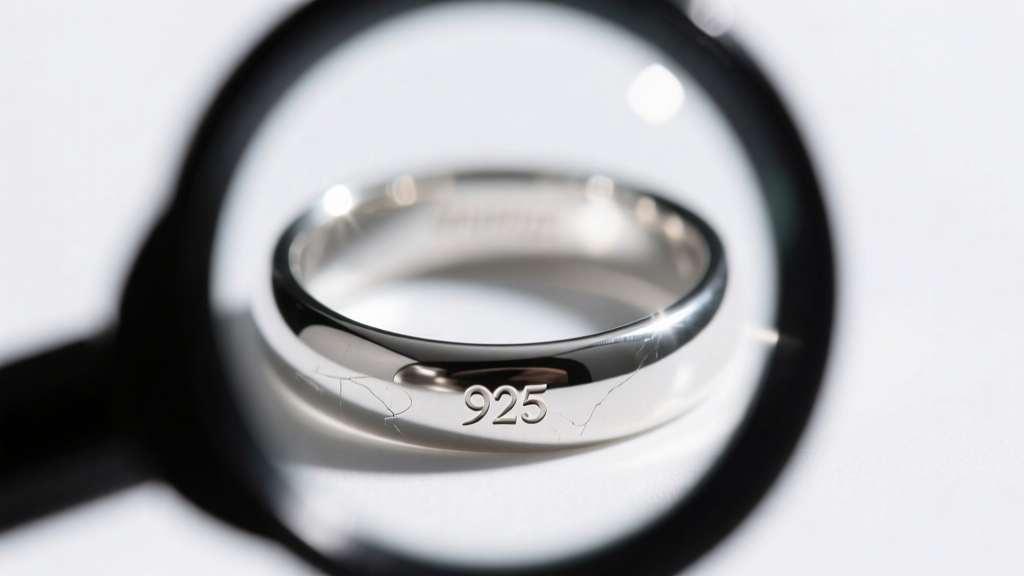
The 925 Standard: Why Counterfeits Are Flooding the Market
With the rising cost of precious metals, the secondary jewelry market has seen a massive surge in sophisticated counterfeits. Silver-plated brass, copper-core chains, and alloys deceptively marketed as "Tibetan Silver" or "Nickel Silver" (which contain exactly 0% actual silver) are frequently passed off as genuine sterling. According to the Federal Trade Commission (FTC) Jewelry Guides, it is illegal to market an item as "silver" or "sterling" unless it contains at least 92.5% pure silver by weight. Yet, enforcement in online marketplaces remains inconsistent.
Whether you are sourcing vintage estate pieces, shopping at flea markets, or verifying a recent online purchase, relying solely on visual inspection is no longer sufficient. Modern electroplating techniques can mimic the bright, white luster of rhodium-plated sterling silver perfectly. To protect your investments and avoid skin irritation from base metal alloys, you need a systematic approach to authentication. Below is a comprehensive, step-by-step guide on how to tell if jewelry is sterling silver using both non-destructive at-home methods and advanced chemical testing.
Step 1: The Hallmark and Stamp Inspection
The first and most obvious step is locating the maker's mark and purity stamp. Genuine sterling silver is almost always stamped to indicate its purity. However, the placement of these stamps varies by jewelry type, and counterfeiters frequently fake them.
Where to Look
- Rings: Check the interior of the band, usually near the center or adjacent to the maker's mark.
- Chains and Necklaces: Inspect the flat side of the lobster clasp, the small jump ring connecting the clasp, or a tiny metal tag (often called a "bean") near the clasp.
- Earrings: Look at the back of the post (the part that goes through the ear) or the flat surface of the friction back/butterfly clutch.
- Pendants and Charms: Check the bottom edge, the back, or the inside of the bail (the loop that holds the chain).
Decoding the Stamps
While a "925" stamp is a good sign, it is not definitive proof on its own, as stamps can be easily forged. Conversely, the absence of a stamp does not automatically mean a piece is fake; many vintage or handmade artisan pieces were never stamped.
| Stamp | Meaning | Silver Content | Authenticity Note |
|---|---|---|---|
| 925 / .925 | Sterling Silver | 92.5% | The global standard for sterling jewelry. |
| STER / STERLING | Sterling Silver | 92.5% | Common on vintage American pieces. |
| 900 / Coin | Coin Silver | 90.0% | Common in antique US silverware and jewelry. |
| 800 | Continental Silver | 80.0% | Common in vintage European (German/Italian) pieces. |
| EPNS / SP | Electroplated Nickel Silver / Silver Plate | <1% | Base metal core with a microscopic silver wash. |
| Tibetan / German | Marketing Terms | 0% | Copper/zinc/nickel alloys. Contains zero silver. |
Step 2: The Magnet Test (Ferromagnetic Check)
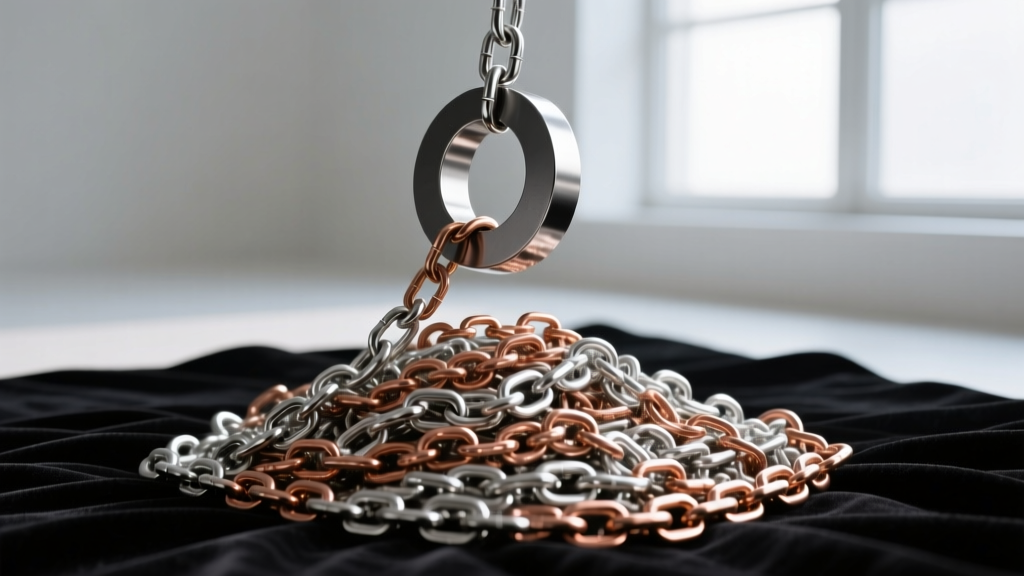
Silver is a paramagnetic metal, meaning it exhibits only a very weak, unnoticeable reaction to magnetic fields. It is not ferromagnetic like iron, steel, or nickel. This physical property makes the magnet test an excellent, non-destructive first line of defense against heavily plated steel or iron cores.
How to Perform the Test
Do not use a standard refrigerator magnet; they are too weak to detect the steel cores inside thin silver-plated chains. Instead, use a strong N52-grade neodymium rare-earth magnet. Dangle the chain or hold the magnet near the clasp and the body of the jewelry.
- If it sticks firmly: The piece is fake. It likely has a steel or iron core.
- If it falls through slowly: Some counterfeit chains use a brass or copper core but include a steel spring inside the clasp mechanism. If only the clasp is magnetic, the chain may still be real, but the clasp is likely a cheap steel replacement.
- If there is no attraction: The piece passes the magnet test, but you must proceed to further tests, as copper and brass are also non-magnetic.
Step 3: The Odor and Temperature Tests
Your senses of smell and touch can provide immediate clues about the underlying metallurgy of a piece.
The Odor Test
Genuine silver is virtually odorless. Base metals, however, react with the natural oils and sweat on your skin to produce distinct smells. Hold the jewelry in your closed fist or rub it vigorously between your fingers for 30 seconds to warm it up and transfer skin oils. Smell the metal immediately afterward.
- Sharp, metallic, or "bloody" smell: This indicates the presence of copper or brass. The odor is caused by the breakdown of skin lipids reacting with copper ions. The piece is likely silver-plated or a fake alloy.
- No smell: The piece passes the odor test, consistent with pure or sterling silver.
The Temperature Test
Silver has exceptional thermal properties. When you touch a piece of real silver at room temperature, it should feel noticeably cool to the touch almost instantly, as it rapidly draws heat away from your skin. Fake metals like stainless steel or titanium will feel closer to ambient room temperature.
Step 4: The Polish and Tarnish Evaluation
As noted by the Gemological Institute of America (GIA), silver naturally tarnishes when exposed to hydrogen sulfide in the air, forming a layer of black silver sulfide. How a piece tarnishes—and how it cleans up—is highly revealing.
Take a soft, white microfiber polishing cloth and rub a tarnished area of the jewelry firmly.
- Real Silver: The tarnish will transfer to the cloth as a black or dark brown residue. The metal underneath will reveal a bright, slightly warm white luster.
- Fake / Plated Silver: If the metal flakes, peels, or reveals a yellowish (brass) or reddish (copper) color underneath, it is plated. Furthermore, if you wipe the piece and the cloth remains completely clean despite the item looking dark and dingy, the item may be coated in a chemical antiquing agent or lacquer rather than genuine silver sulfide tarnish.
Step 5: Chemical and Acid Testing (Advanced)
For absolute certainty, especially when dealing with heavy, solid pieces or high-value estate finds, a silver acid test kit is the gold standard. These kits use a nitric acid-based solution that reacts differently depending on the silver purity.
Warning: Acid testing is mildly destructive. Always perform this test in an inconspicuous area, such as the inside of a jump ring or the back edge of a clasp, and wear protective gloves and eyewear.
The Scratch and Acid Procedure
- File a Notch: Use a small jeweler's file to scratch a tiny notch into the metal. This is crucial because it bypasses any superficial silver plating to test the core metal.
- Apply the Acid: Place a single drop of silver testing acid directly onto the filed notch (or rub the piece on a testing stone and apply the acid to the streak).
- Observe the Color Reaction: Watch the acid closely for 5 to 10 seconds.
| Acid Reaction Color | Indicated Metal / Purity |
|---|---|
| Brick Red | Fine Silver (99.9% Pure) |
| Dark Red / Brownish Red | Sterling Silver (92.5%) |
| Dark Brown | 800 Silver (80%) |
| Green | Base Metal (Copper, Brass, Nickel) or Plated Core |
If the acid turns green immediately, especially after filing through the surface, you have definitively identified a silver-plated fake. The green reaction is the nitric acid dissolving the copper or brass core.
Step 6: The Ice Cube Thermal Conductivity Test
Silver possesses the highest thermal conductivity of any common metal, measuring at an impressive 429 W/m·K (Watts per meter-Kelvin). By comparison, copper is 401 W/m·K, brass is roughly 109 W/m·K, and stainless steel is a mere 16 W/m·K.
To perform this test, place the piece of jewelry flat on a table and set a small ice cube directly on top of it. If the jewelry is solid sterling silver, the ice cube will begin to melt almost instantly, far faster than it would on a piece of glass, plastic, or base metal. The silver rapidly pulls the ambient heat from the room and transfers it into the ice. While this test is excellent for solid silver coins and thick bangles, it is less effective on thin, delicate chains due to the low overall mass of the metal.
When to Seek Professional Appraisal
If you are dealing with antique holloware, heavily gemstone-encrusted pieces where acid testing is too risky, or items with worn-off hallmarks, it is time to consult a professional. Reputable jewelers and pawn shops utilize XRF (X-Ray Fluorescence) scanners. These non-destructive devices shoot X-rays into the metal and measure the fluorescent waves bouncing back, providing an exact elemental breakdown of the alloy in seconds without leaving a single scratch.
Conclusion
Learning how to tell if jewelry is sterling silver requires moving beyond simple visual checks. By combining the hallmark inspection, the N52 magnet test, the odor evaluation, and, when necessary, the nitric acid scratch test, you can build a foolproof framework for authentication. Always remember that "Tibetan" and "German" silvers are marketing misnomers, and a lack of tarnish is often a red flag for rhodium-plated base metals. Armed with these expert techniques, you can navigate flea markets, estate sales, and online auctions with absolute confidence, ensuring you only pay sterling prices for genuine 925 silver.


